Vietnam Assumes Host Role for APEC 2027
Vietnam has officially taken over the responsibility of hosting the Asia-Pacific Economic Cooperation forum for 2027. Established in November 1989, the Asia-Pacific Economic Cooperation is an open economic forum designed to promote economic initiatives, trade, and investment among member economies on a fully voluntary basis. Today, the forum comprises 21 economies, accounting for about 60% of global gross domestic product and nearly half of world trade. The upcoming summit follows previous hosting years in 2006 and 2017, placing Vietnam among a small number of economies to manage the responsibility three times. The official theme for the 2027 meetings, announced as creating a new era of resilience, innovation and shared prosperity together, was proposed by General Secretary and President To Lam.
Contents
The formal preparations were launched on the evening of July 28 at the government headquarters in Hanoi. Prime Minister Pham Minh Chính chaired the founding ceremony of the National Committee for Asia-Pacific Economic Cooperation 2027, which consists of 19 members. During the event, Deputy Prime Minister and Minister of Foreign Affairs Bùi Thanh Sơn, who serves as the chairman of the national committee, outlined a three-year timeline for the preparations. Under this schedule, 2025 is designated for comprehensive preparation, 2026 for completing the arrangements, and 2027 for hosting the actual events.
Setting the Strategic Priorities for the Region
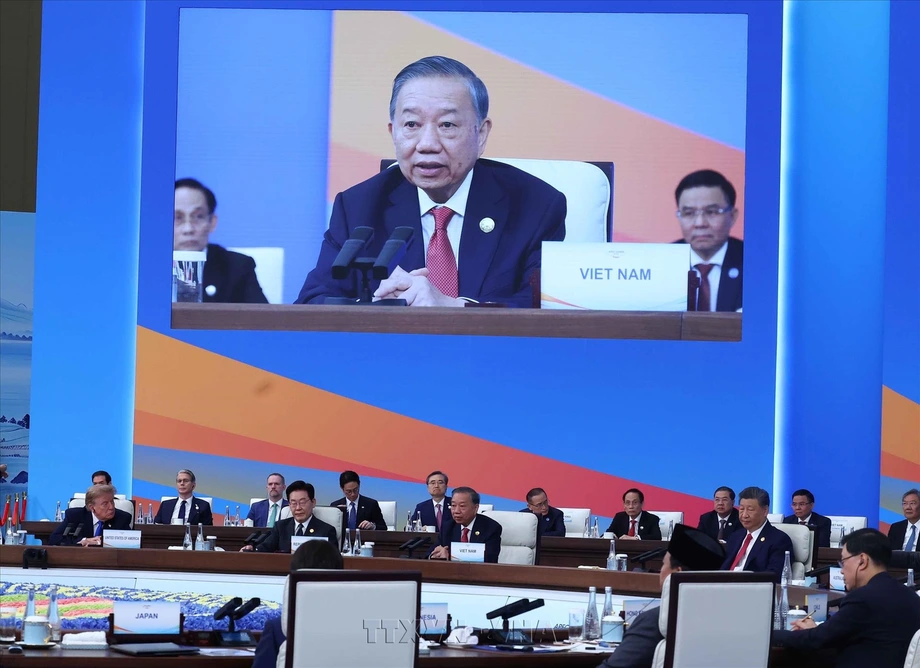
Preparations for the 2027 summit build upon discussions held during the 33rd APEC Economic Leaders' Week in Shenzhen, China. Minister of Foreign Affairs Lê Hoài Trung noted that the Shenzhen gathering marked the first time in four years that leaders from all 21 member economies attended in person, providing a stable foundation for the upcoming Vietnamese chairmanship. Building on consultations with member economies, Vietnam has proposed three main priorities for 2027: enhancing economic productivity, promoting regional trade and investment, and strengthening economic resilience while improving people quality of life.
These priorities address the rapid evolution of technology and shifting global trade patterns. Artificial intelligence offers opportunities to transform production and business models, but it also creates challenges regarding technological divides and workforce readiness. Professor Carl Thayer of the Australian Defence Force Academy at the University of New South Wales observed that linking digital transformation with workforce training and support for small and medium-sized enterprises aligns national goals with broader regional needs. Ambassador Bùi Giang, former Deputy Head of Vietnam Permanent Mission to the United Nations, noted that the country total trade in goods and services has equaled nearly twice its gross domestic product for many years, highlighting why open markets and stable supply chains remain central to national interests.
The practical execution of the summit involves substantial logistical coordination. Deputy Prime Minister Bùi Thanh Sơn confirmed that more than 150 meetings and conferences will take place throughout the year. The southern island of Phu Quoc will serve as the primary venue for the Economic Leaders Week, the most significant gathering of the program. Infrastructure enhancements are already underway on the island, including the expansion of Phu Quoc International Airport, the construction of a new conference center, and the upgrading of local water, electricity, and transport networks. To ensure continuity, the national committee will establish five specialized subcommittees and a secretariat, while coordinating closely with South Korea as the host of the 2025 meetings and China as the host of the 2026 meetings.
Industry Perspectives and Technology Infrastructure
Foreign investors have responded positively to Vietnam growing role in international trade and technology. Lang Yiding, a representative of Ningbo Fujia Co. Ltd. in China Zhejiang province, which employs more than 3,000 workers in an active Vietnamese project, expressed strong confidence in the country investment climate. Speaking through interviews with the Vietnam News Agency, Lang described the nation as a safe location for foreign capital and noted that recent government reforms have streamlined project approval procedures.
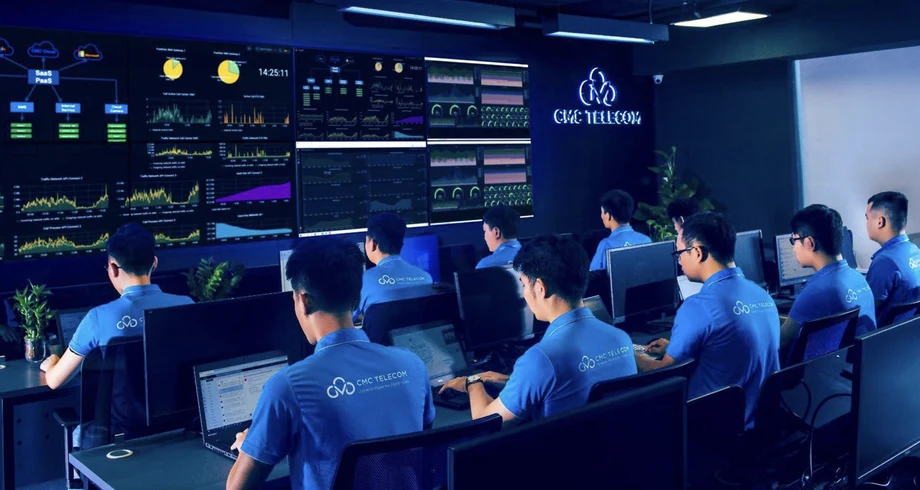
The company and its partners have expressed readiness to support the development of infrastructure for artificial intelligence, including advanced computing centers. However, business representatives have also pointed out areas requiring administrative attention, such as accelerating customs clearance speeds and ensuring a stable energy supply. These operational factors carry direct weight for data facilities and manufacturing plants that require continuous power.
Addressing Energy Costs and Data Center Regulations
The expansion of digital infrastructure intersects directly with ongoing domestic policy debates regarding utility pricing for technology facilities. As technology firms scale up operations, government agencies have moved to resolve cost pressures that affect data processing centers. Following discussions on industrial electricity tariffs for data centers, regulators have worked to clarify how specialized digital facilities are billed. A data center is a specialized facility housing buildings, stations, cabling systems, computers, electrical systems, and supporting equipment used to process, store, and manage data for organizations or individuals.
The Ministry of Industry and Trade previously advanced regulatory changes to address cost discrepancies. Under previous frameworks, facilities providing services to external clients often faced commercial utility rates rather than the lower industrial rates applied to traditional manufacturing. The pricing difference could alter operating expenses significantly. The proposed adjustments follow recommendations from the Ministry of Science and Technology to apply production electricity tariffs uniformly to the technical infrastructure of data centers, while maintaining commercial rates for office spaces and customer service areas, addressing concerns raised during Vietnam proposed production electricity rates for digital facilities.
Global Perspectives on Regional Cooperation
International observers have emphasized the broader geopolitical and economic significance of Vietnam leadership role. Speaking in New Delhi, Dr. Anmol Mukhia of South Asian University noted that the 2027 meetings will take place amid geopolitical tensions, supply chain disruptions, and rapid technological advancements. Mukhia stated that the host economy primary duty is not to eliminate all differences among members, but to create a constructive environment where 21 distinct economies can identify common ground.
Further elaboration on these themes occurred during the St. Petersburg International Economic Forum in Russia. Deputy Foreign Minister Lê Thị Thu Hằng addressed a dedicated panel session discussing long-term economic cooperation up to 2035. Joined by senior officials including Russian Deputy Prime Minister Alexey Overchuk and APEC Secretariat Executive Director Eduardo Pedrosa, the Vietnamese delegation outlined strategic proposals for sustainable trade, economic resilience, and digital transformation.
Participants at the international forum commended Vietnam for its proactive preparations and its consistent advocacy for open multilateral trade systems. Analysts suggest that the convergence of domestic digital reforms, major infrastructural investments on Phu Quoc island, and the diplomatic responsibilities of the 2027 chairmanship will test the country capacity to translate high-level declarations into tangible benefits for citizens and businesses across the Asia-Pacific region.
The Essentials
- Vietnam officially assumed the host role for the Asia-Pacific Economic Cooperation forum for 2027, marking its third time hosting following editions in 2006 and 2017.
- Prime Minister Pham Minh Chính established a 19-member National Committee for Asia-Pacific Economic Cooperation 2027, with Deputy Prime Minister Bùi Thanh Sơn serving as chairman.
- The official summit theme is creating a new era of resilience, innovation and shared prosperity together, with the Leaders Week scheduled to take place on Phu Quoc island.
- More than 150 meetings and conferences are planned throughout the host year, supported by infrastructure upgrades including airport expansion and new conference facilities.
- Foreign business representatives have expressed strong interest in supporting artificial intelligence infrastructure and digital computing centers in Vietnam.
- Domestic policy adjustments are addressing energy pricing frameworks to apply industrial electricity tariffs to the technical infrastructure of data processing facilities.