Transforming Higher Education to Keep Talent at Home
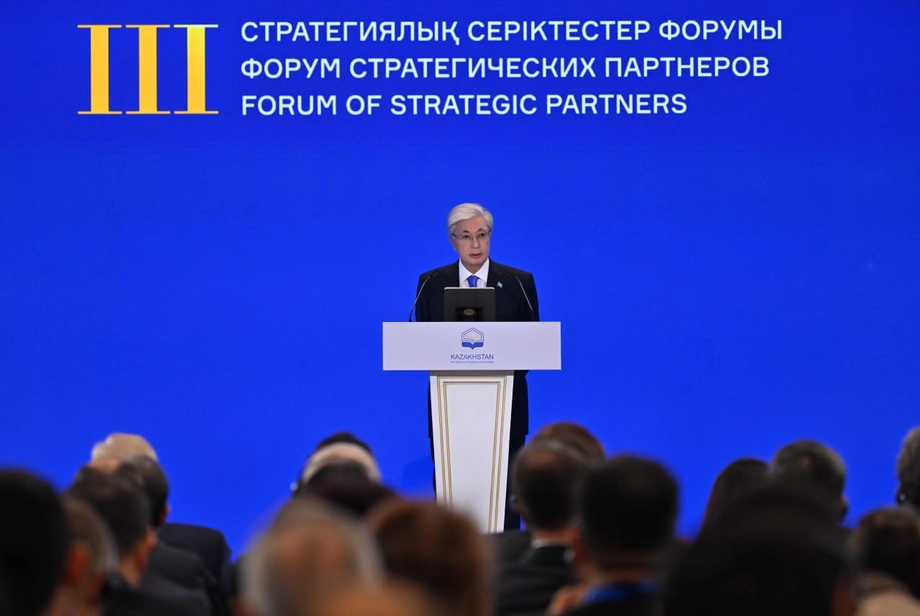
President Kassym-Jomart Tokayev wants to stop talented students and top researchers from leaving Kazakhstan by turning the country into a major academic center for Central Asia. Speaking at the third Strategic Partners Forum in Astana on November 19, 2026, he explained that the country must move past simply inviting foreign universities to set up local campuses. The new goal is to keep valuable knowledge, scientific breakthroughs, and skilled professionals inside the country so they can help build a stronger economy. The Ministry of Science and Higher Education plans to introduce stricter rules for foreign university branches to ensure they contribute directly to local scientific progress rather than just teaching classes.
Contents
- Transforming Higher Education to Keep Talent at Home
- Building International Partnerships and Branch Campuses
- Shifting Focus Toward Joint Research and Practical Science
- University Rankings and Global Recognition
- Preparing Specialists for Infrastructure and Artificial Intelligence
- Shymkent as a Southern Regional Education Hub
- At a Glance
Kazakhstan's educational network currently includes 132 universities teaching more than 800,000 students. The number of international students reached 41,000, which is an increase from 31,000 the previous year. More than 8,000 of those international students receive financial support from the Kazakh government. Officials have set a target to attract 100,000 international students by 2029 through a national initiative known as Study in Kazakhstan. This push follows earlier improvements in technology and governance, such as the digital initiatives discussed when digital jobs were linked to national infrastructure and the economic debates that emerged when higher taxes on wealth were proposed by lawmakers.
Building International Partnerships and Branch Campuses
Universities from 11 different countries have already opened branch campuses in Kazakhstan, enrolling over 12,000 students and employing nearly 1,500 academic staff members, which includes more than 600 foreign professors. During a roundtable discussion with international education leaders on November 19, 2026, President Tokayev announced that several new international university campuses are scheduled to open in Astana next year. These upcoming campuses will join existing branch efforts by institutions such as Cardiff University, Coventry University, and the Moscow State Institute of International Relations.
To make local degrees more acceptable around the world, Kazakhstan joined two major international agreements on the recognition of academic qualifications. The country became the first in the region to sign the Lisbon Recognition Convention, which covers Europe, and the Tokyo Convention, which covers the Asia-Pacific region. These steps allow students who graduate from Kazakhstani institutions to have their diplomas officially recognized in distant countries. President Tokayev specifically credited Zhanseit Tuimebayev, Rector of Al-Farabi Kazakh National University, for his diplomatic efforts in securing this international recognition.
The academic expansion also relies on strong legal frameworks and clean administration. President Tokayev emphasized that anti-corruption efforts and the rule of law remain essential for maintaining a stable environment for foreign academic partners. Similar high-level administrative changes and leadership accountability were addressed after last year's corruption arrests involving major state asset management and railway executives.
Shifting Focus Toward Joint Research and Practical Science
The first phase of Kazakhstan's higher education strategy focused on building physical infrastructure and signing partnership agreements. President Tokayev noted that this initial stage is complete, and the focus must now shift to joint research laboratories and practical technological projects. Speaking to academic leaders, he pointed out that global scientific cooperation is increasingly tied to national security and economic competition rather than being treated as a shared global resource.
Highlighting this shift, Kazakhstan's Ministry of Science and Higher Education signed an agreement with the United Nations University to establish a regional research hub in Almaty. This new hub will focus heavily on water security, which Tokayev described as an urgent priority for economic and social stability in Central Asia. The initiative involves managing transboundary rivers, creating modern monitoring systems, and introducing advanced water-saving technologies.
University Rankings and Global Recognition
Kazakhstan's universities have steadily climbed in international academic evaluations, reflecting years of investment in educational quality. Eighteen Kazakh universities now appear in the QS World University Rankings for 2026, while 10 institutions have entered the Times Higher Education rankings for 2027. In the Asian university rankings, 51 Kazakh institutions secured places, marking an increase of seven universities compared to the previous year. Three local universities placed inside the top 100 in Asia, led by Al-Farabi Kazakh National University at 46th place, the Eurasian National University named after Gumilyov at 62nd place, and Satbayev University at 89th place. These regional results demonstrate that local graduates and research centers are gaining wider recognition alongside the influx of foreign branch campuses.
Universities in Asia have made notable strides in specialized technical subjects as well, matching the broader trends seen when top computer science rankings highlighted leading institutions in Singapore and China, or when global education evaluations placed programs at the University of Hong Kong near the top of international tables.
Preparing Specialists for Infrastructure and Artificial Intelligence
Higher education in Kazakhstan is directly tied to the nationwide People's Construction program, a large-scale initiative focused on renewing national infrastructure. This renewal covers energy production, nuclear power development, transportation networks, water management, and digital systems. President Tokayev called on international university partners to help train a new generation of engineers and technical researchers who can support these heavy industrial projects.
Artificial intelligence integration forms another pillar of the educational modernization strategy. Rather than simply purchasing software, universities are updating curricula, training teachers, and building digital infrastructure. Kazakhstan has launched national language models named KazLLM and AlemLLM, opened the Qazaq AI Research University, and introduced artificial intelligence programs across dozens of local universities. Educational projects utilizing digital tools, such as the AI-Talapker chatbot for university applicants, demonstrate how automated systems are actively reshaping administrative processes within the student admissions system.
Shymkent as a Southern Regional Education Hub
While Astana and Almaty have traditionally served as the primary centers of intellectual and scientific development in Kazakhstan, the government is actively expanding academic opportunities to other regions. President Tokayev announced that Shymkent will become a major scientific and educational hub for southern Kazakhstan. The city has already launched a cooperative educational program with Arizona State University and opened a branch of Türkiye's Gazi University.
To support this regional expansion, the government granted national university status to South Kazakhstan University named after Mukhtar Auezov. This status is designed to elevate the institution into a prominent center for advanced research and high-quality education, ensuring that students in southern regions have access to world-class academic resources without needing to relocate to the capital.
The broader growth of the country's research community is reflected in the rising number of young scientists. Government data shows that the number of young researchers in Kazakhstan increased from 9,704 in 2019 to 14,323 in 2025, supported by targeted grant funding and mandatory requirements for early-career participation in state-backed scientific projects.
At a Glance
- President Kassym-Jomart Tokayev announced a target to attract 100,000 international students to Kazakhstan by 2029 through the Study in Kazakhstan initiative.
- Branch campuses from universities in 11 countries currently educate over 12,000 students and employ approximately 1,500 academic staff members.
- Kazakhstan became the first country in the region to join the Lisbon Recognition Convention and the Tokyo Convention, securing international recognition for local university degrees.
- An agreement was signed between Kazakhstan's Ministry of Science and Higher Education and the United Nations University to establish a regional research hub in Almaty focusing on water security.
- Eighteen Kazakh universities secured spots in the QS World University Rankings for 2026, while 10 institutions entered the Times Higher Education rankings for 2027.
- South Kazakhstan University named after Mukhtar Auezov in Shymkent was granted national university status to serve as a regional center for advanced research.