Security leadership changes five days after arrests
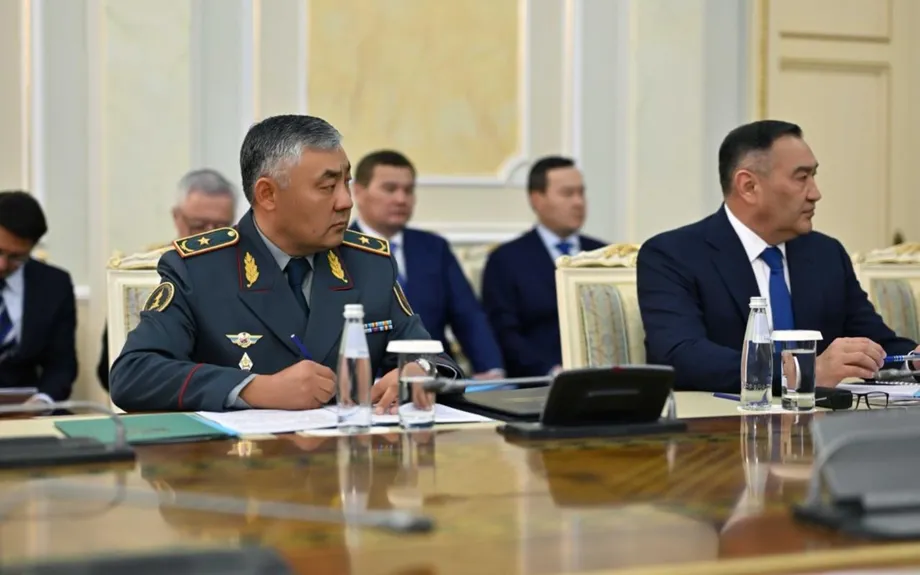
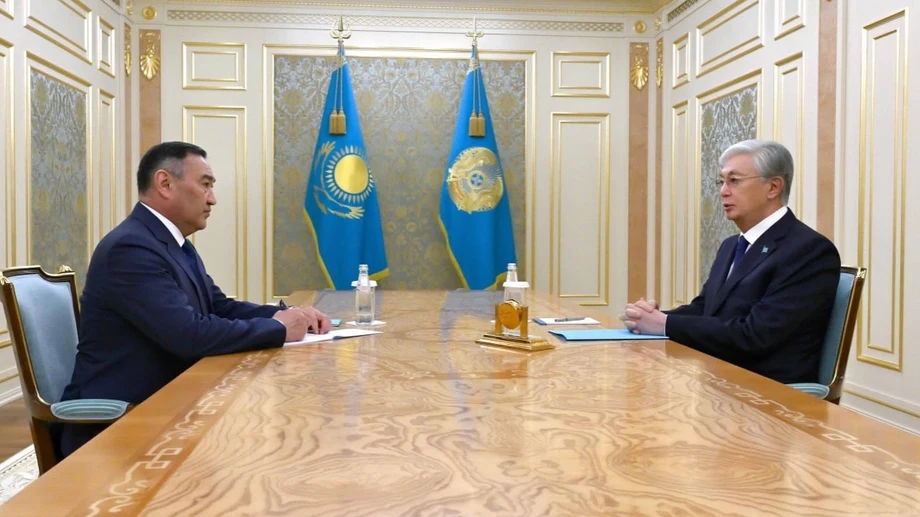
Kazakhstan's President Kassym-Jomart Tokayev appointed Major General Marat Irmenov to lead the National Security Committee on November 16, 2026, replacing Yermek Sagimbayev five days after the agency detained the heads of the country's sovereign wealth fund and national railway company on suspicion of corruption.
Contents
- Security leadership changes five days after arrests
- Why Sagimbayev was removed
- The arrests at the centre of the shakeup
- A rapid sequence of decisions
- Who is Marat Irmenov?
- What Tokayev wants the agency to change
- Police discipline becomes part of the response
- Why the state companies matter
- A second leadership transition rooted in January 2022
- Key Points
The shakeup also reached the Interior Ministry. Interior Minister Yerzhan Sadenov received a disciplinary sanction after Tokayev concluded that law enforcement bodies had made mistakes, presidential adviser and spokesman Aibek Smadiyarov said.
Smadiyarov explained that Sagimbayev was leaving for another job and that changes among senior managers were needed to carry out reforms of the security service. He also said the president had taken the recent corruption arrests into account when deciding to replace him.
Irmenov, the committee's deputy chairman since October 2025, now takes charge of an organisation responsible for foreign intelligence, counterintelligence, border security and corruption investigations. Tokayev instructed him to improve recruitment, protect Kazakhstan's economic interests and address corruption risks in major government programmes.
The decision ends Sagimbayev's tenure of nearly five years, which began during the deadly unrest of January 2022. It comes only about three months after his latest reappointment and three days after he briefed Tokayev on the committee's work.
The immediate stakes extend beyond the security service. The detained executives led Samruk-Kazyna, which manages major state assets, and Kazakhstan Temir Zholy, or KTZ, which operates the national railway network. Their organisations connect Kazakhstan's energy industries, domestic transport and international cargo routes.
Why Sagimbayev was removed
Tokayev signed a decree relieving Sagimbayev of his duties and appointed Irmenov through a separate decree. The initial personnel announcements did not explain the dismissal; Smadiyarov subsequently set out the presidential reasoning.
The spokesman described two considerations: rotation among senior managers to support the reform of the security service, and the circumstances surrounding the corruption case. He said Tokayev believed law enforcement agencies had allowed shortcomings in their work.
Sagimbayev's replacement therefore combines a management change with a broader demand for accountability. The president is changing the leadership of the agency conducting the corruption investigation while also disciplining the minister responsible for the police.
The presidential explanation did not specify Sagimbayev's next job, the precise mistakes attributed to law enforcement bodies or the form of Sadenov's disciplinary sanction. Investigators have also withheld the details of the alleged corruption, including the amount involved, and no next hearing date or timetable for the security reforms was announced.
The arrests at the centre of the shakeup
The KNB's Anti-Corruption Service detained Samruk-Kazyna chief executive Nurlan Zhakupov, KTZ chief Yelzhas Otynshiyev and several other people on November 11. The committee confirmed the detentions on November 12. Otynshiyev was also identified as Yerlan in descriptions of the case, although most accounts used Yelzhas.
The committee said investigative work was under way to establish the circumstances. It cited Article 201 of Kazakhstan's Criminal Procedure Code when declining to release further information. That provision governs disclosure of information from a criminal investigation before trial.
The executives are suspected of a corruption offence. Public descriptions have included an allegation involving an attempted bribe, while the committee's own announcement gave no detailed account of the suspected transaction.
At a Security Council meeting on November 13, Tokayev, Kazakhstan's president, described the arrests as a warning about the condition of state companies:
an extremely serious signal of large-scale corruption in state-owned companies.
Tokayev also called for protection of Kazakhstan's international reputation and the confidence of foreign businesses and financial institutions. His comments connected the criminal investigation to the way the country manages public assets and its relationships with investors.
A rapid sequence of decisions
November's personnel changes began before the corruption arrests and gathered pace over less than two weeks. The sequence also includes Sagimbayev's final briefing to the president.
- November 3: Tokayev dismissed Transport Minister Nurlan Sauranbayev and appointed Assel Zhanassova as deputy prime minister and transport minister.
- November 5: KTZ approved Sultan Shabidinov's appointment as head of its Passenger Transportation subsidiary.
- November 11: The KNB's Anti-Corruption Service detained the heads of Samruk-Kazyna and KTZ, together with other individuals.
- November 12: The KNB publicly confirmed the detentions.
- November 13: Sagimbayev briefed Tokayev on the security agency's work. Tokayev also addressed the arrests at a Security Council meeting.
- November 16: Irmenov replaced Sagimbayev, and Tokayev presented the new chairman to the KNB leadership.
Sagimbayev's November 13 briefing covered the committee's performance since the beginning of 2026, including corruption, cybersecurity and information security. Tokayev issued instructions to the national security agencies after that meeting.
The November 16 decision followed just three days later, making the leadership transition particularly abrupt after Sagimbayev's reappointment in August.
Who is Marat Irmenov?
Irmenov brings three decades of service inside Kazakhstan's security institutions. He graduated from the West Kazakhstan Agricultural Institute in 1993, the KNB Institute in 1996 and the International Academy of Law and Market in 2000.
He entered the national security service in 1996 and spent his first four years in operational posts before moving into management. His career record groups the period from 2000 to 2025 under senior leadership positions. He received the rank of major general in 2019.
Several of his regional appointments followed serious violence. In July 2016, he became the security chief in Aktobe after gunmen attacked two firearms shops and a military base, killing seven civilians and service personnel.
In February 2020, Irmenov moved to Jambyl region after attacks on predominantly ethnic Dungan villages in Korday district killed 11 people and forced residents to flee across the border into Kyrgyzstan.
On January 13, 2022, he became the KNB's Almaty chief following the unrest that spread across Kazakhstan that month. Tokayev later awarded him the second degree Danq Order. His promotion to deputy chairman in October 2025 brought him into the central leadership just over a year before his appointment to the top job.
What Tokayev wants the agency to change
Tokayev told the KNB leadership to reform the national security system, develop new approaches to its tasks and improve its performance. He placed the principle of "Law and Order", protection of economic interests and action against corruption among its priorities.
The president's instructions covered both investigations and prevention. Irmenov was told to improve the selection of personnel, identify threats to economic and social stability, and address corruption risks in priority government programmes.
For those programmes, the practical focus is on finding opportunities for abuse before public resources are lost. That puts attention on the people selected for sensitive positions and the decisions made while major projects are being carried out.
Irmenov inherits a wider institution than the one Sagimbayev first took over in 2022. Tokayev brought the previously separate anti-corruption agency into the KNB in June 2025, while responsibility for anti-corruption policy moved to the civil service agency.
Under that arrangement, the KNB handles corruption investigations alongside its intelligence and border duties. The arrests of the state company executives were carried out by the committee's own Anti-Corruption Service, placing the new chairman directly in charge of the institution pursuing the case.
Police discipline becomes part of the response
Tokayev also held a working meeting with the Interior Ministry's leadership on the day of the security reshuffle. He instructed the ministry to strengthen service discipline and improve police training while maintaining public order under the "Law and Order" principle.
Sadenov was specifically told to strengthen work on professional conduct among ordinary police personnel and officers. The instructions concern the police chain of command as well as the behaviour and preparation of individual employees.
The disciplinary action against the interior minister broadens the response beyond the KNB. Smadiyarov connected it to Tokayev's assessment that law enforcement bodies had made mistakes, while the ministry meeting translated that criticism into demands for better discipline and professional standards.
For residents, those instructions concern how officers carry out everyday public order duties. For ministry managers, they create a direct presidential demand to improve training and supervision.
Why the state companies matter
Samruk-Kazyna manages some of Kazakhstan's largest state assets, including businesses in oil, gas, other energy industries and transport. Allegations involving its leadership therefore reach institutions with a major role in the country's economy.
KTZ operates the railway network, carrying domestic freight and cargo moving between China and Europe. Its activities include shipments along the Middle Corridor, which crosses the Caspian Sea and continues through Azerbaijan and Georgia.
Those responsibilities help explain Tokayev's concern about the confidence of foreign companies and financial institutions. Businesses using Kazakhstan's transport routes or working with its state enterprises depend on the decisions of these organisations.
Transport management was already changing before the arrests. Sauranbayev, dismissed as minister on November 3, had previously led KTZ before joining the government in June 2025. His replacement, Zhanassova, had headed the postal operator Kazpost and served in senior presidential administration roles.
At Passenger Transportation, Shabidinov moved up from deputy head to replace Anuar Akhmetzhanov, who retained his position as deputy chairman of KTZ's management board. KTZ approved that appointment on November 5, six days before its chief's detention; the change became public on November 16.
A second leadership transition rooted in January 2022
Sagimbayev became KNB chairman on January 6, 2022, during the unrest known in Kazakhstan as Qantar, or January. Protests initially triggered by a sharp rise in liquefied petroleum gas prices escalated into violence and armed clashes. Official figures put the death toll at 238.
He replaced Karim Massimov, a longtime associate of former president Nursultan Nazarbayev. Massimov was arrested during the crisis and sentenced in April 2023 to 18 years in prison for treason and the violent seizure of power.
Before taking charge of the KNB, Sagimbayev had headed the Presidential Security Service and the State Security Service. He was reappointed as KNB chairman in November 2022 and again in August 2026.
Irmenov's appointment keeps the agency under an experienced security officer whose own career included a senior role in Almaty immediately after the January violence. The central change is at the top of the institution: a chairman appointed during the 2022 crisis has been replaced by his deputy, with economic security and corruption prevention now explicit priorities.
Key Points
- Tokayev appointed Marat Irmenov as KNB chairman on November 16, 2026, replacing Yermek Sagimbayev.
- The presidential spokesman cited a move to another job, management rotation and consideration of the recent corruption arrests.
- The KNB detained the heads of Samruk-Kazyna and KTZ on November 11 and confirmed the arrests the following day.
- Interior Minister Yerzhan Sadenov received a disciplinary sanction, and Tokayev ordered stronger police discipline and training.
- Irmenov was instructed to improve recruitment, protect economic interests and address corruption risks in government programmes.
- Detailed allegations, the amount involved and the next court dates have not been announced.