Six months of training, then six months in military units
Kazakhstan approved a Military Reform Plan on October 21, 2026, that would divide compulsory military service into six months at training centres followed by six months in military units. The package also calls for unmanned systems forces, a Military Ombudsman and changes to how the Armed Forces are commanded, staffed and prepared for combat.
Contents
- Six months of training, then six months in military units
- How compulsory service would work
- A broader change to military command
- Unmanned systems get a dedicated force
- New institutions to protect service members
- Military education begins before unit service
- Discipline and public trust are linked
- Two reform deadlines, separate from the service stages
- Government and Security Council to coordinate delivery
- Key Points
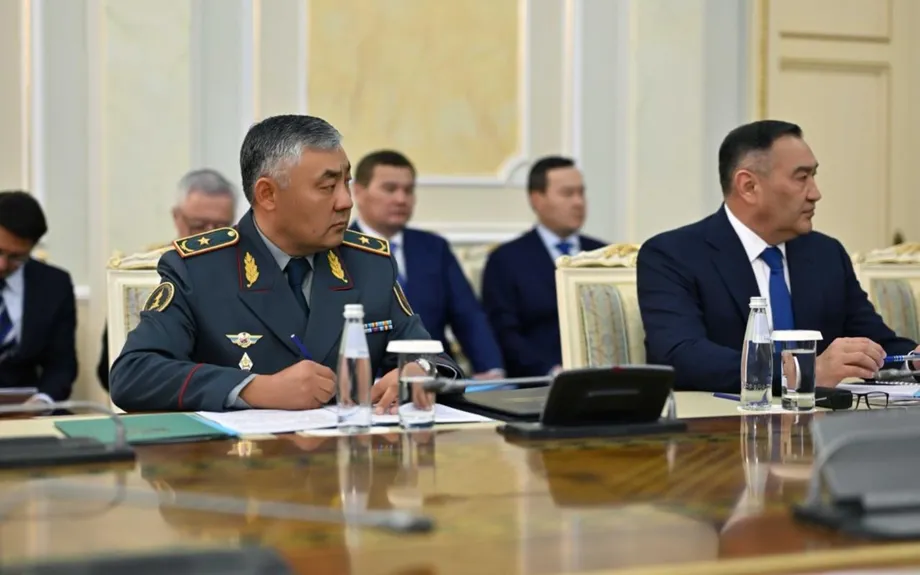
President Kassym-Jomart Tokayev chaired the Security Council meeting that approved the plan. Organisational measures are scheduled for completion by the end of 2026, while the main conceptual measures are planned for 2027. A commission conducting a comprehensive review of the Ministry of Defense must also finish its work by the end of this year.
Deputy Chairperson of the Security Council Aida Balayeva presented the plan's main provisions. Defense Minister Aidos Myrzakhmetov separately outlined the planned modernisation of the Armed Forces, including a new communication strategy and educational work intended to strengthen discipline and public trust.
For recruits and their families, the most immediate proposed changes concern where soldiers train, how they move into operational units and how their rights and safety will be protected. For military leaders, the programme reaches further: it covers command, defence planning, personnel policy, education, technology and the use of public money.
How compulsory service would work
Recruits would spend their first six months in dedicated training centres. They would then serve for another six months directly in military units, where the focus would be combat training and carrying out tasks as part of their units.
The two stages add up to 12 months, with half the proposed service period allocated to training centres and half to military units. The practical sequence is straightforward: preparation comes first, followed by service alongside the unit with which a soldier must work.
The second stage would still include training. Its stated focus combines combat preparation with performing unit tasks, rather than treating a soldier's education as finished on leaving a training centre. That connects the reform of compulsory service to the wider effort to improve troop readiness.
A broader change to military command
Balayeva said the plan was developed with international experience in military organisation, modern methods of warfare and proposals from Kazakh specialists in mind. It calls for a review of the Armed Forces' structure and composition, improvements to command and defence planning, and the strengthening of key army components.
Command concerns how military leaders make decisions and direct personnel. Defence planning connects those decisions to the forces, training and equipment the country needs. Changing both together would affect how military units are organised as well as how they prepare to carry out orders.
Tokayev, who is also commander in chief, described the programme as a comprehensive reform. He identified troop training, personnel policy, military education and technological modernisation among the areas requiring change, alongside command and control.
Tokayev also called for changes in the army's relationship with society and warned against incomplete measures:
The army's interaction with society must also change. We are talking about a comprehensive reform. Halfway solutions will not yield the necessary results,
His instructions put leadership practices and service conditions alongside military capability. The plan therefore combines changes to the organisation of the army with measures affecting the daily treatment and preparation of its personnel.
Unmanned systems get a dedicated force
Kazakhstan plans to establish unmanned systems forces as part of the review of its military structure. Unmanned systems are machines operated without a person aboard, such as remotely controlled drones. Creating a dedicated force would give this area a formal place in the military organisation.
The proposal sits alongside improvements to command, defence planning and technological equipment. Those measures address related needs: acquiring and organising technology, deciding how it will be used, and preparing personnel to operate within the resulting military structure.
Tokayev called for a modern, mobile and technologically advanced army to be created as quickly as possible. In practical terms, mobility means forces can move and respond where they are needed, while technological preparation concerns both equipment and the ability of personnel and commanders to use it effectively.
New institutions to protect service members
The reform proposes military adviser positions and a Military Ombudsman to help protect service members' rights and safety. An ombudsman is an official whose work generally involves examining complaints and helping people seek fair treatment from an institution.
The plan also includes measures to prevent hazing and strengthen military discipline. Hazing refers to abusive or humiliating treatment within a group. In military service, preventing such behaviour is directly connected to the safety of personnel and the responsibilities of commanders.
Tokayev placed command culture among the subjects demanding special attention. That brings the conduct of military leaders into the reform, alongside the behaviour expected from soldiers. Rules governing service and the way commanders apply them are both part of the proposed changes.
The safety agenda follows an earlier demand by Tokayev for a military reform plan after 14 service members died during exercises in Mangystau Region. A special commission was established to conduct a comprehensive examination of the situation in the Ministry of Defense, and its work now has a deadline at the end of 2026.
Military education begins before unit service
The plan calls for development of the unified Zhas Aibyn military and patriotic training system, based on the Adal Azamat concept. It also proposes expanding the network of specialised military schools and improving basic military training.
Those measures extend the education agenda beyond the six months that conscripts would spend in training centres. The package addresses preparation through military schools and basic training, as well as education within the Armed Forces.
Military education and personnel policy are also among the areas Tokayev identified for reform. Taken together, these provisions link how people are prepared for service with how the army manages its personnel after they join.
The proposed school expansion and the new service sequence would require coordination across different parts of the education and defence systems. That helps explain why responsibility for carrying out the programme extends beyond the Ministry of Defense alone.
Discipline and public trust are linked
Myrzakhmetov identified a new information and communication strategy for the Armed Forces as an important part of the reform. He also outlined plans to improve educational work based on the constitutional principle of "Law and Order".
The stated aims are stronger military discipline and greater public trust in the army. The communication strategy addresses the Armed Forces' relationship with society, while the proposed safety institutions and measures against hazing address conditions within military service.
Tokayev's demand for a change in the army's interaction with society connects these parts of the programme. Families have a direct interest in how recruits are trained, protected and treated, making service conditions a concrete part of the wider trust agenda.
Two reform deadlines, separate from the service stages
The implementation timetable has two main periods: organisational measures by the end of 2026 and the main conceptual measures during 2027. These deadlines concern the national reform programme. The six months of training followed by six months in units describe the proposed experience of an individual conscript.
The sequence of decisions and deadlines is:
- Before October 21, 2026: Tokayev instructed officials to prepare a concrete military reform plan for Security Council consideration in the second half of October.
- October 21, 2026: The Security Council considered and approved the Military Reform Plan.
- By the end of 2026: Organisational measures are to be implemented, and the commission reviewing the Ministry of Defense must complete its work.
- During 2027: The main conceptual measures are scheduled for implementation.
The announcement gave no exact start date for the new conscript model, detailed budget, timetable for establishing the unmanned systems forces or description of the Military Ombudsman's powers.
Government and Security Council to coordinate delivery
The Government and the Security Council have been assigned to coordinate implementation. Tokayev described military security as a nationwide task requiring coordinated work by all relevant state bodies, and stressed that the planned changes must be carried out fully and on time.
Before the reform meeting, Tokayev had also received reports from First Deputy Defense Minister and Chief of the General Staff Aitkurman Omarbekov and Deputy Defense Minister Tatyana Savelyeva. Those briefings covered the Armed Forces' activities and combat readiness, funding for military training and execution of the ministry's budget.
Those subjects connect the approved programme to its practical demands. Changes to training, military organisation and technology require personnel, funding and management decisions. The commission's deadline and the organisational deadline at the end of 2026 provide the first dated checkpoints, before the main measures planned for 2027.
Key Points
- Kazakhstan approved its Military Reform Plan at a Security Council meeting on October 21, 2026.
- Compulsory service would comprise six months in training centres followed by six months in military units.
- The plan proposes unmanned systems forces, military advisers and a Military Ombudsman.
- Measures cover command, defence planning, military education, service safety, discipline and public trust.
- Organisational measures and the Defense Ministry review are due by the end of 2026; the main conceptual measures are planned for 2027.
- The Government and Security Council will coordinate implementation.