A hiring reform stalls hospital and office recruitment
About 100,000 proposed temporary jobs in Bangladesh's government offices are on hold because a revised outsourcing policy allows departments to contract directly with workers, while public procurement legislation lacks a matching procedure. The stalled proposals include about 20,000 service workers for health institutions and 5,000 workers for government buildings and offices under the Public Works Department.
Contents
- A hiring reform stalls hospital and office recruitment
- What the revised policy changes
- Why departments cannot use the new route
- Where the recruitment backlog is concentrated
- How the policy reached this point
- Why the procurement authority is concerned
- Private participation and the IIFC option
- Workers and suppliers describe different risks
- What must be decided before hiring resumes
- Key Points
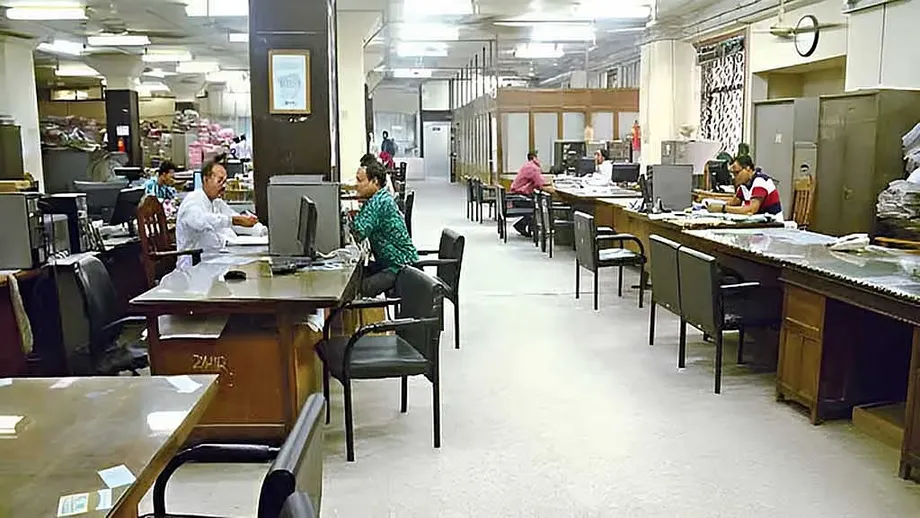
The positions fall within grades 16 to 20, covering support work such as hospital cleaning, laboratory assistance, moving patient trolleys and maintaining public premises. Ministries have staffing needs, but officials say they cannot proceed through either the previous arrangement with private suppliers or the new route involving individual workers.
The Finance Division asked the Bangladesh Public Procurement Authority (BPPA) on September 21 to arrange the necessary legal changes. In an October 14 response, the procurement authority warned that direct contracts with individuals would change the basic structure of outsourcing and could create financial, administrative and contractual problems. The impasse was described in an account updated on October 21, 2026.
The dispute puts two competing concerns into the same hiring process. Workers want relief from recruitment payments and salary deductions they attribute to private suppliers. Procurement officials want a workable system for selecting workers, enforcing contracts and deciding who carries responsibility when services fall short.
For patients and people using public offices, the immediate issue is more practical: institutions cannot recruit the cleaners, assistants and other support staff they say they need. Health institutions and the Public Works Department together account for roughly 25,000 of the 100,000 proposed positions, or about one quarter.
What the revised policy changes
The Ministry of Finance's 2025 outsourcing policy notice records an official publication date of April 16, 2025. The September 21 revision and correspondence concern subsequent changes to how departments would obtain services under that policy.
Under the previous arrangement, a government office selected a private service supplier through a competitive process. The office signed a contract with the company, and the company provided workers. Those workers performed duties in government premises as employees of the supplier.
The revised arrangement removes private suppliers from this recruitment route. Ministries, divisions and departments would instead obtain services directly from individuals. They could also use IIFC, a specialised institution approved by the Finance Division.
The Finance Division said its objectives included faster government operations, obtaining services in less time, greater transparency and accountability, lower public spending and better service quality. Its proposed legal changes are intended to make direct contracting possible within the procurement system.
Why departments cannot use the new route
The Public Procurement Act, 2006 and the Public Procurement Rules, 2025 provide the legal framework for government purchases. Procurement means the process public bodies use to buy goods, works or services with public money.
The Finance Division's September 21 letter said outsourcing is included in that framework as a physical service. However, the legislation does not include the proposed method of obtaining these services directly from individuals. Departments therefore lack the corresponding procurement procedure for temporary appointments in grades 16 to 20.
A policy can describe what a ministry wants to do, while procurement legislation sets out how an office may spend money and enter a contract. Here, the new policy and those purchasing procedures have moved out of step. Officials say that gap has prevented them from putting the revised arrangement into practice.
Ministries also need instructions on tenders already under way to obtain workers through private suppliers. The revision leaves their treatment unclear. Several departments have written to the Finance Ministry seeking an explanation, adding an immediate transition problem to the wider legal disagreement.
Where the recruitment backlog is concentrated
Health Ministry institutions have proposals for approximately 20,000 service workers, according to information attributed to Finance Ministry officials. The affected roles include hospital cleaners, laboratory assistants, trolley attendants and other support workers.
Asib Ahsan, joint secretary of the Health Education and Family Welfare Division, said his division had asked the Finance Ministry what to do about ongoing tenders. Several thousand workers were due to be engaged on daily wages, but recruitment could not proceed because the policy was unclear.
The Public Works Department has proposals for about 5,000 workers to provide cleaning and other services in government residences and offices. Similar recruitment difficulties have affected the ministries responsible for railways, social welfare and agriculture.
Health institutions account for about one fifth of the estimated backlog, using 20,000 proposed workers out of a total of roughly 100,000. Public Works accounts for another 5%. Those figures show that the problem reaches well beyond a single ministry and includes both services for the public and the upkeep of government facilities.
How the policy reached this point
Bangladesh introduced its first outsourcing policy in 2008, according to Finance Ministry officials. The government sought to reduce growing expenditure on salaries, allowances and pensions by changing how it obtained certain categories of support work.
From 2009, temporary outsourcing arrangements replaced direct government recruitment for the categories then described as third and fourth class jobs. The policy required contracts with recognised private institutions, barred contracts with individual workers and prohibited issuing appointment letters in an individual's name under that arrangement.
- 2008: The government introduced its first outsourcing policy.
- 2009: Temporary outsourcing arrangements began replacing direct recruitment for the affected support jobs.
- 2018: The policy was revised.
- April 16, 2025: The Finance Ministry published its notice for the 2025 outsourcing policy.
- September 21: The Finance Division issued the later revision and requested procurement law and rule changes.
- October 14: BPPA responded with concerns about direct contracts, private participation and implementation.
- October 21, 2026: The hiring backlog was described as affecting about 100,000 proposed temporary positions.
The latest change reverses a central feature of the earlier model: keeping the contract between a government office and a supplier rather than between the office and each person doing the work. BPPA's objections focus heavily on the consequences of that reversal.
Why the procurement authority is concerned
BPPA said one purpose of outsourcing was to avoid a direct contractual relationship between government offices and service workers. Another was to limit financial and administrative complications arising from future demands to bring those workers into regular posts funded through the government budget.
Under the supplier model, the government purchases a service from a company, which remains responsible for its employees. Direct contracts would place the office and the individual worker in a different relationship, with the public body taking on contractual responsibilities previously handled through the supplier.
BPPA also questioned whether individual service workers would have the skills needed to follow and implement the prescribed contracts under public procurement law. Its concern covers the practical task of managing contractual duties, alongside the choice of who performs the work.
The authority said worker selection, contractual liability and private sector participation should be reviewed together. Liability means responsibility under a contract, including who must answer when an obligation is not fulfilled. These decisions determine how an office can demand reliable service and how a worker can understand the terms of employment.
Private participation and the IIFC option
BPPA warned that excluding private suppliers could damage the existing service industry and raise concerns about equal participation in government procurement. It said barring the private sector from a purchasing process could conflict with the procurement framework and international practices.
The authority raised a further issue involving purchases from government owned institutions. Under Rule 99(1)(b) of the Public Procurement Rules, 2025, a government owned institution providing physical services through a direct contract must use its own personnel.
That condition makes staffing capacity relevant to any proposed nationwide arrangement through such an institution. BPPA said the institution's workforce, organisational ability and potential conflicts of interest would need consideration.
The IIFC option therefore brings its own operational questions into the discussion. An institution serving offices across Bangladesh would need the personnel and management capacity to deliver the contracted work. BPPA asked the Finance Division and other stakeholders to discuss those requirements alongside the proposed direct hiring route.
Workers and suppliers describe different risks
Workers engaged through private companies have complained that suppliers demand substantial payments before placing them in government offices and then deduct part of their wages each month. They have called for government bodies to engage them directly.
The complaints explain why removing the supplier has appeal for workers: it could change who controls access to the job and who handles their pay. The accounts give no figures for the alleged recruitment payments or monthly deductions.
Private suppliers argue that they provide training, supervision and a means of holding workers accountable when problems occur. They contend that government offices lack the capacity to take on those tasks for a large workforce.
Abu Taleb, president of the Bangladesh Outsourcing Manpower Provider Society, said private firms had placed more than 500,000 workers in government institutions. He warned that direct recruitment could increase disorder, irregularities and corruption among officials, while stretching the capacity of public bodies. His employment figure and predictions are claims from the suppliers' representative.
The two positions put different responsibilities under scrutiny. Workers focus on what they pay to obtain and keep a job. Suppliers focus on who trains, supervises and disciplines staff. A replacement arrangement would have to assign those responsibilities while giving departments a lawful way to recruit.
What must be decided before hiring resumes
The Finance Division has sought changes to the procurement law and rules so departments can obtain outsourcing services directly from individuals. BPPA has requested joint discussions involving the Finance Division, the authority and relevant stakeholders before the next steps are settled.
The immediate decisions concern how to handle tenders already in progress, how individuals would be selected, what contracts they would sign and which body would manage their work. The wider review also covers private suppliers' participation and the capacity of any government institution used to provide services.
No date has been given for a final agreement, legal amendments or the resumption of the stalled recruitment. Departments seeking thousands of workers therefore remain dependent on further instructions and a procurement route they can implement.
The central problem is concrete: Bangladesh has proposed a new way to obtain support services before completing the legal and administrative arrangements needed to use it. Until those arrangements are settled, roughly 100,000 proposed temporary positions remain on hold across institutions that need the work done.
Key Points
- About 100,000 proposed temporary positions in grades 16 to 20 are stalled across Bangladesh's government institutions.
- The backlog includes approximately 20,000 health service workers and 5,000 workers for the Public Works Department.
- The revised policy permits direct arrangements with workers, but the Finance Division says procurement legislation needs corresponding changes.
- BPPA has raised concerns about contracts, future staffing costs, private participation and institutional capacity.
- Workers allege recruitment charges and wage deductions, while suppliers defend their role in training and supervision.
- Departments still need instructions on existing tenders, and no date has been announced for recruitment to resume.