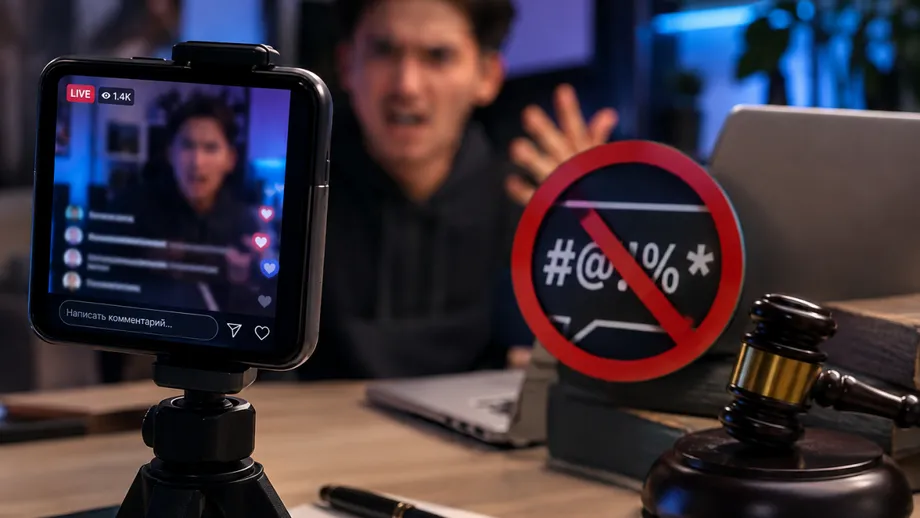
Proposal would bring online profanity under public order rules
Kazakhstan plans to extend its petty hooliganism law to profanity published on online platforms and in mass media, potentially bringing livestreams, talk shows and social media posts within the scope of administrative penalties. The proposed change would cover the production, posting or distribution of content containing profanity, with an exception for reporting on such an offence.
Contents
- Proposal would bring online profanity under public order rules
- What would change, and what is already punishable?
- An insult and public disorder are different offences
- No official list of prohibited words
- How the rules have developed
- What the court figures show
- Support for action, concern about creative work
- Government also points to ethics and prevention
- Key Points
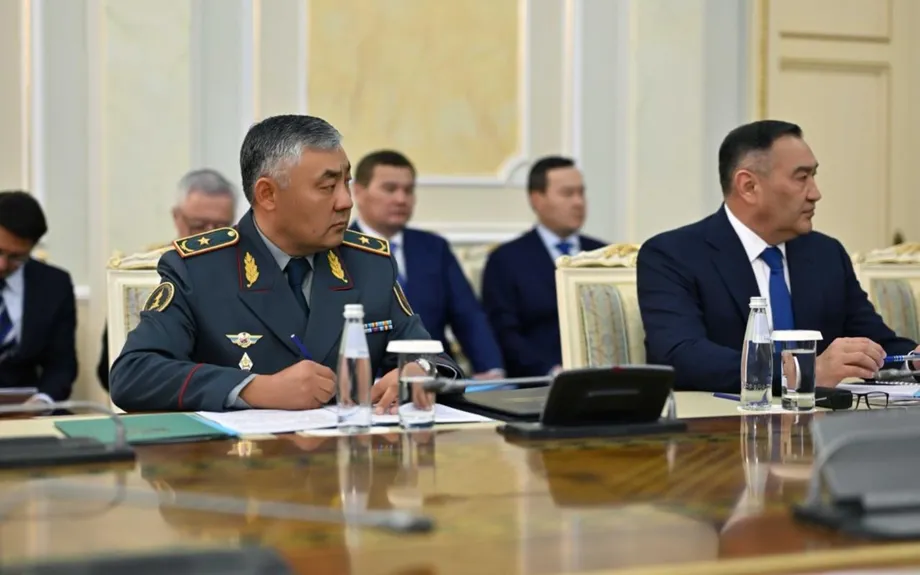
Prime Minister Olzhas Bektenov has said the amendments are planned for parliamentary consideration this year. The proposal concerns Article 434 of the Administrative Offences Code, which already allows penalties for swearing in public places and similar conduct that shows disrespect and disturbs public order.
The central change would be to give online publication an explicit place in that provision. Kazakhstan already punishes some conduct involving online insults and abusive broadcasts, so the proposal would expand a system that police and courts are already using.
The current penalties described for Article 434 include a fine of 20 monthly calculation indices, up to 60 hours of community service, or five to 15 days of administrative arrest. A monthly calculation index, often shortened to MCI, is a government reference amount used to calculate fines and other payments. Its value changes over time.
For people who broadcast, post or share content, the proposal makes the scope of the law especially important: it expressly reaches distribution as well as creation. Former lawmakers have also raised competing concerns about preventing verbal aggression and protecting songs, artistic works and folklore from broad restrictions.
What would change, and what is already punishable?
Article 434 currently addresses petty hooliganism, a category of administrative misconduct involving public order. Its existing wording covers profanity in public places and related behaviour that meets the legal conditions for the offence.
The proposed amendments would add content containing profanity in mass media or on online platforms. The stated exception would allow reporting on an offence involving such language. This matters for coverage in which offensive words are part of the event being described.
Police already monitor online content. Recent enforcement has included fines or administrative arrest involving profanity, insults, disruptive behaviour and dangerous stunts during livestreams. Other cases have concerned comments and messages. Those cases involve different conduct, making the circumstances of each incident central to the legal assessment.
The legislative timetable remains imprecise. The initiative has been described as submitted to Parliament, while Bektenov's account describes Cabinet preparation and a planned submission that month, alongside consideration this year. No exact parliamentary hearing or commencement date is given.
An insult and public disorder are different offences
Article 131 of Kazakhstan's Criminal Code addresses an insult: humiliating another person's honour and dignity in an indecent form. The basic offence can bring a fine of up to 100 MCI, corrective labour or community service.
A public insult, including one made online, can carry a fine of up to 200 MCI, with corrective labour or community service also possible. The maximum fine measured in MCI is therefore twice as high for the public or online form as for the basic offence.
Article 434 takes a different approach. It deals with public order and conduct classified as petty hooliganism. Article 131 focuses on an insult directed at a person. Understanding which provision authorities use helps explain why online cases can lead to different proceedings and penalties.
A negative review of a company or service is not in itself an offence. Criticism and an insult expressed in an indecent form are treated differently. The wording, target, audience and surrounding circumstances all matter when authorities assess a complaint.
No official list of prohibited words
Kazakhstan has no official list of words that automatically triggers punishment. Authorities and courts examine where the words were used, whether they targeted someone and whether the conduct meets the legal definition of an offence.
For an online post, screenshots and screen recordings may serve as evidence. Investigators must also establish who created the content and the circumstances in which it appeared. Identifying the person responsible is a necessary part of connecting a recorded statement to an alleged offence.
A livestream may contain several kinds of conduct at once, such as swearing, a personal insult and a dangerous stunt. The legal assessment must address what happened in that particular incident. This helps explain why a short description of a punishment may leave out details that were important to the court.
The proposed wording also gives people who share material a direct stake in the debate. By covering production, posting and distribution, it reaches several stages through which content can move from its creator to a wider audience.
How the rules have developed
Kazakhstan's debate over public profanity predates the latest online proposal. In January 2023, Azamat Kurimbaev, then identified as deputy head of the Interior Ministry's Administrative Police Committee, described amendments increasing the fine for petty hooliganism from five MCI to 20 MCI.
At the values cited then, that meant an increase from 17,250 tenge to 69,000 tenge, a fourfold rise. Those cash amounts belong to the 2023 calculation and should be understood alongside the changing value of the MCI.
- January 9, 2023: Kurimbaev described a new version of the law with a fine of 20 MCI and detention of five to 30 days.
- Early March 2023: Those amendments were scheduled to take effect.
- 2025: Courts received about 6,200 insult complaints, according to the official figures cited for the current debate.
- First half of 2026: The cited figures record more than 2,700 complaints and 440 applications considered.
- Latest proposal: The government plans to extend Article 434 expressly to profanity in online platforms and mass media.
The detention range Kurimbaev described in 2023, five to 30 days, differs from the five to 15 days stated in the current description of Article 434. Bektenov's account also gives community service as 20 to 60 hours, while the current description states a maximum of 60 hours. The applicable version and provision matter when assessing an individual penalty.
What the court figures show
Official figures cited in the debate put insult complaints received by courts at about 6,200 in 2025, an increase of 1.5% from 2024. More than 2,700 were recorded in the first half of 2026.
The figures separately list 970 applications considered in 2025 and 440 in the first half of 2026. A complaint received and an application considered are different stages in the court process, so readers need both figures to understand the volume reaching courts and the volume being examined.
The figures for public insult cases in the first half of 2026 contain an internal inconsistency. They state that 193 cases were considered, but list 50 convictions, 45 acquittals and 118 discontinued cases. Those outcomes total 213, which is 20 more than the stated case total. No explanation accompanies the discrepancy.
The outcomes nevertheless illustrate the range of decisions courts make after an allegation: a conviction, an acquittal or the discontinuation of proceedings. The numerical inconsistency prevents a reliable calculation of the share resulting in conviction.
Support for action, concern about creative work
Abzal Kuspan, a lawyer and former member of the Mazhilis, Kazakhstan's lower house of Parliament, supports a legal response to verbal aggression. He argues that it can escalate into threats and calls for violence.
Former deputy Rinat Zaiyt also supports tackling profanity, but has warned about restrictions being applied broadly to songs, artistic works and folklore. He has questioned who would conduct the assessments needed to decide whether material falls within the rules.
Their positions identify two practical issues for lawmakers. One is how to respond to abusive behaviour directed at people or a public audience. The other is how to assess language used in creative or cultural works, where words appear within a larger performance or story.
The reporting exception is one stated boundary in the proposal. Zaiyt's concerns put attention on how the law would operate beyond that exception, particularly when a disputed word is part of a song or another artistic work. For creators and publishers, those assessments could affect decisions about what to release or share.
Government also points to ethics and prevention
Bektenov has said legal penalties should be accompanied by prevention and efforts to promote respectful communication. The government points to social projects, grants, media articles and programmes directed at young people as part of that work.
Public training courses are another area of concern. Bektenov said coaches are covered by a professional standard in force since the preceding December, with requirements concerning higher education, relevant international certificates and regular validation.
The prime minister described the responsibility of coaches under that framework:
Coaches are personally responsible for complying with the Code of Ethics and providing services according to the principles of honesty, equality and non-discrimination,
The professional standard and the proposed administrative amendment address different responsibilities. One sets expectations for people providing coaching services. The other would give authorities explicit grounds under Article 434 to act against profanity distributed through online platforms and mass media.
For audiences and content creators, the immediate issue is the proposed expansion of an existing enforcement system. Parliament's treatment of the wording, the reporting exception and the concerns about artistic works will determine how broadly that expansion operates.
Key Points
- Kazakhstan plans to extend Article 434 on petty hooliganism to content containing profanity in online platforms and mass media.
- The proposal covers production, posting and distribution, with an exception for reporting on an offence.
- Existing laws already allow penalties for public disorder and personal insults, including some online conduct.
- Kazakhstan has no official list of words that automatically triggers punishment. Context and the legal definition of the offence matter.
- Former lawmakers support action against abuse but have raised concerns about assessments of songs, art and folklore.
- The cited public insult case statistics contain a discrepancy: listed outcomes total 213 against a stated 193 cases.
- No exact parliamentary hearing or commencement date is given.