Ramlila Maidan becomes the centre of an election dispute
India's opposition is gathering at Delhi's Ramlila Maidan on Sunday, November 1, 2026, to demand the resignation of Chief Election Commissioner Gyanesh Kumar over a voter registration exercise that has removed about 130 million names from draft electoral rolls. Police are preparing for around 50,000 people, while Congress and its INDIA alliance partners say attendance could reach one million.
Contents
- Ramlila Maidan becomes the centre of an election dispute
- What the voter revision changes
- Why opposition leaders want Kumar to resign
- A month of protests leads to Sunday's rally
- The rally has permission, but the march faces uncertainty
- Police prepare for crowds beyond the ground
- CJP supports the cause but will stay independent
- Traders weigh disruption against extra customers
- What opposition leaders plan after the rally
- Key Points
The gap between those expectations presents an immediate challenge. Ramlila Maidan can accommodate an estimated 45,000 to 50,000 people when empty, falling to roughly 30,000 to 40,000 once stages, chairs, enclosures and passageways are installed. Police plan to contain any overflow on surrounding roads.
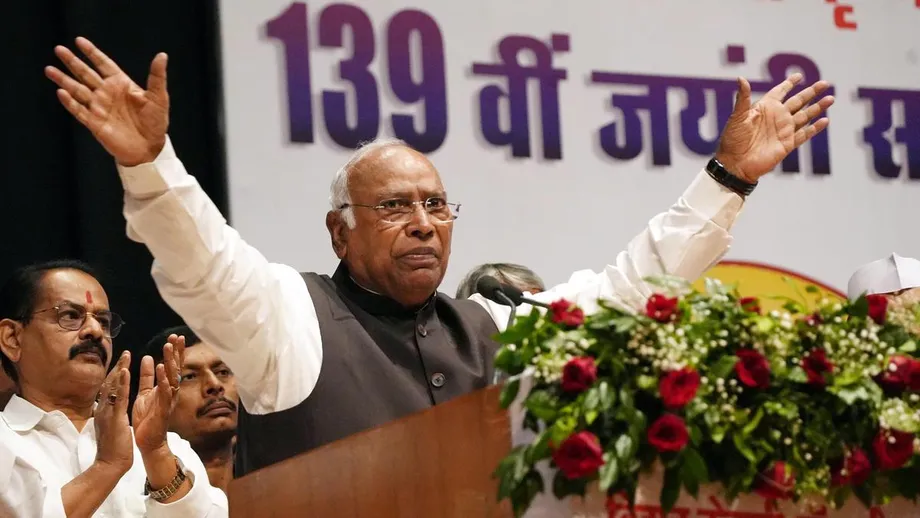
Supporters began arriving early in the morning. Rahul Gandhi, a Congress MP and leader of the opposition in the Lok Sabha, is expected to join Congress president Mallikarjun Kharge, Trinamool Congress leader Mamata Banerjee, Samajwadi Party chief Akhilesh Yadav and other alliance figures.
The confrontation brings together three disputes: whether eligible voters have been wrongly removed, whether the Election Commission has handled the revision fairly, and how authorities should manage demonstrations challenging its decisions. The Commission and Prime Minister Narendra Modi's Bharatiya Janata Party reject opposition allegations that the exercise favours the ruling party.
What the voter revision changes
The Special Intensive Revision, known as SIR, checks the lists that election officials use to determine who can vote. The Election Commission says it is updating those records by removing entries for people who have died or moved away from their registered addresses.
Figures describing the exercise include 28 million deceased voters, 63 million people classified as having relocated and 30 million who could not be traced. Those categories add up to 121 million, below the stated total of about 130 million deletions; a breakdown of the remaining entries has not been given.
People classified as having relocated form the largest of those three categories. Their number, 63 million, exceeds the combined 58 million classified as deceased or untraced. That makes the treatment of people who have moved especially important to the dispute.
Opposition parties allege that eligible citizens have been removed, with Muslims and other minorities disproportionately affected. The Election Commission denies favouring any party and says voters whose names were wrongly deleted can register again.
For an affected voter, the practical issue is getting an eligible entry restored before an election. A draft roll is a provisional list that can be corrected before it becomes final. The Commission's promise of re-enrolment puts attention on whether people learn about a deletion and can complete the steps needed to return to the list.
Why opposition leaders want Kumar to resign
Congress and its allies accuse Kumar and the BJP of "vote chori", meaning vote theft. They want electoral reforms alongside his resignation, arguing that the scale and handling of the revision have damaged confidence in the institution responsible for conducting elections.
The controversy intensified in September after disclosures that Kumar had made key decisions without the agreement of the two other election commissioners. They had raised objections on more than a dozen occasions concerning the revision, registration procedures and digital systems. The Commission responded that differences of opinion were normal within an institution and did not affect its functioning.
Gandhi has described the protest as a defence of voting rights and has invited participation from people outside political parties. Explaining why the opposition was gathering, the Congress MP said:
We are all standing together because we are defending the Constitution. We are defending the idea of India. We are defending the vote, which is the expression of all Indians.
The BJP says opposition parties are undermining legitimate electoral processes and attacking constitutional institutions after failing to win voters' confidence. The next general election is due in 2029, giving the dispute a longer political horizon than Sunday's mobilisation.
A month of protests leads to Sunday's rally
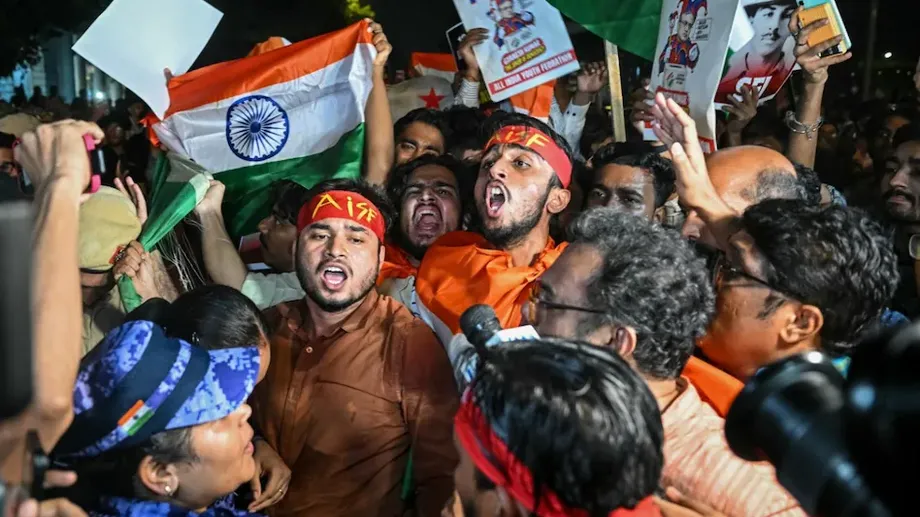
Delhi has seen repeated confrontations over the revision. Demonstrations have taken place almost daily since October, with opposition parties, student organisations and the youth led Cockroach Janta Party pressing for Kumar's departure.
The rally follows the detention of opposition leaders during protests in early October. Rahul Gandhi, Priyanka Gandhi Vadra and other lawmakers were stopped as they tried to reach protest sites or approach the Election Commission, then released later.
The main developments leading to Sunday's gathering include:
- September: Disclosures about disagreements among election commissioners intensified criticism of Kumar's decisions.
- October 8: Rahul Gandhi and Priyanka Gandhi Vadra were detained for a second consecutive day during opposition protests in Delhi.
- October 10: Police detained senior Cockroach Janta Party leaders during protests against Kumar. Journalists covering the demonstrations witnessed officers using batons and dragging protesters away.
- October 12: Jantar Mantar lost its designation as an authorised protest site, with Ramlila Maidan, Burari Ground and CBD Ground named instead.
- October 21: CJP leaders Saurav Das and Ashutosh Ranka were released after more than a week in custody, having given written undertakings not to call protests at Jantar Mantar.
- October 31: Opposition leaders held a symbolic public impeachment of Kumar at Kharge's residence.
- November 1: Supporters began gathering for the Ramlila Maidan rally and a planned march from the Connaught Place area.
Gandhi also led tens of thousands of demonstrators from Connaught Place towards the Supreme Court during October. Congress organisers say Sunday's gathering will be several times larger, although a final attendance count will depend on how many people arrive and how police manage access.
The rally has permission, but the march faces uncertainty
Delhi Police have authorised the Ramlila Maidan rally between 10 a.m. and 5 p.m. Organisers plan a march beginning at noon near the Minto Road–Connaught Place junction and ending at the ground, about 1.5 kilometres away. Announced routes run through the Minto Road and Ajmeri Gate area.
The procession has a different permission status from the gathering at the ground. Police say organisers had neither sought nor received permission for the march, while officers have also said they are coordinating arrangements along its route.
Rohit Rajbir Singh, deputy commissioner of police for central Delhi, described the police position:
The organisers have not approached us seeking permission for the march. However, we are trying to facilitate it as smoothly as possible.
The rally must finish by 5 p.m., and overnight stays are prohibited. Conditions include CCTV coverage, details of invitees, volunteers and buses, and speeches that do not disturb communal harmony. Organisers have been asked to provide drinking water, separate toilets for women and volunteers to guide the crowd.
Opposition leaders accuse the government of obstructing travel to Delhi. Congress spokesperson Pawan Khera alleged that trains were cancelled in Telangana and buses carrying party workers were stopped. BJP spokesperson Sambit Patra dismissed the allegations as an attempt to cover poor arrangements.
Police prepare for crowds beyond the ground
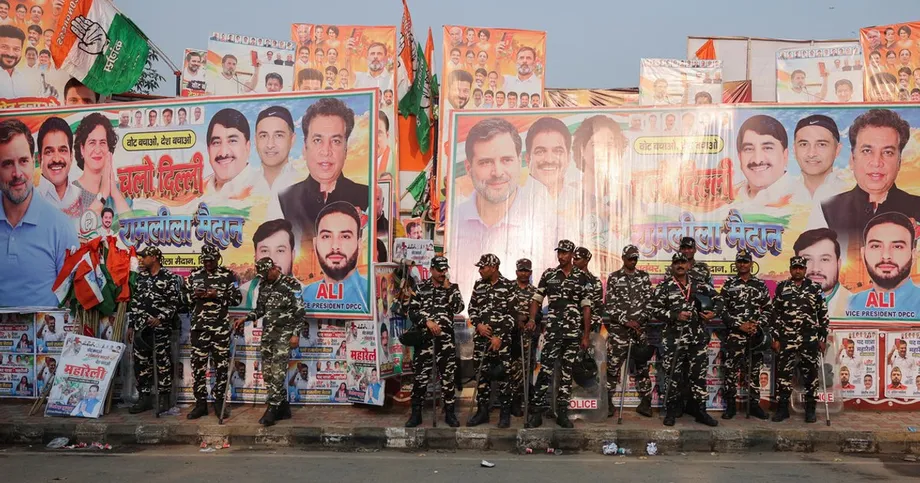
Security plans place Ramlila Maidan within 14 zones, each supervised by an officer of assistant commissioner rank, grouped into eight larger regions. A control room inside the venue will receive surveillance footage.
Deployment estimates range from more than 4,000 personnel to nearly 10,000. The more detailed plan lists about 3,000 Delhi Police officers and 7,000 paramilitary personnel, with another 10 companies held in reserve. Nearly 250 CCTV cameras with artificial intelligence capabilities, drones and cameras worn by officers are planned.
Police intend to barricade roads leading to the ground and prevent crowds from moving towards Jantar Mantar or other restricted areas. One entrance has been set aside for the emergency evacuation of senior leaders.
The organisers' highest estimate of one million attendees is 20 times the police planning figure of 50,000. Even the lower figure exceeds the estimated capacity of the ground once event arrangements are installed, making clear passageways and crowd overflow arrangements central to safety.
Traffic diversions are planned from 10 a.m. to 5 p.m. around ITO, Delhi Gate, Rajghat, Ajmeri Gate and Turkman Gate. Roads near Minto Road, Jawaharlal Nehru Marg and Bahadur Shah Zafar Marg are among those likely to be affected. Emergency access to LNJP and G.B. Pant hospitals is to remain open, while passengers travelling to New Delhi railway station have been advised to plan ahead.
CJP supports the cause but will stay independent
The Cockroach Janta Party has clarified its position after earlier uncertainty about whether its senior leaders would attend. Founder Abhijeet Dipke said the organisation supports the protest but will not participate, preserving its identity outside the opposition alliance.
Dipke made the comments after meeting Mamata Banerjee on Saturday. Explaining the group's decision, he said:
We support the protest tomorrow, we stand in solidarity, but the Cockroach Janta Party is an independent organisation; it is a neutral platform, and we want to keep it that way.
Dipke said CJP would support organisations challenging alleged vote theft. The group has separately called for Kumar to resign, arguing that he has lost the trust needed to oversee free and fair elections.
The meeting also reflected ties formed during earlier youth demonstrations. Dipke thanked Banerjee for supporting CJP's protest at Jantar Mantar over an alleged NEET examination paper leak and for backing its leaders after their arrests. Banerjee invited the activists to organise programmes in West Bengal, leaving decisions about any event to them.
Traders weigh disruption against extra customers
Chandni Chowk, less than a kilometre from Ramlila Maidan, is divided over the rally during a busy shopping period before Diwali. Some traders fear blocked roads and large crowds will keep customers away. The Chamber of Trade and Industry has opposed the event, while the Confederation of All India Traders has begun a petition about frequent rallies in central Delhi.
Other traders support the opposition gathering and say a BJP march through the market on Thursday caused greater disruption. Their disagreement places local access and sales at the centre of a national political confrontation.
Gandhi has urged visitors to buy from small shops during their trip, mentioning Diwali, Chhath and Bhai Dooj. In his appeal to rally participants, he said:
Along with protesting, marching and attending the rally tomorrow, do a little shopping too.
The benefit for individual shops will depend on whether visitors can reach them and whether regular customers avoid the area. Police restrictions, crowd spillover and changes to bus routes will shape movement around the market throughout the day.
The BJP is also organising a rival mobilisation focused on the 1984 anti-Sikh riots to challenge Congress. A separate Sikh community march is planned, adding another gathering for authorities to manage in central Delhi.
What opposition leaders plan after the rally
Saturday's symbolic public impeachment at Kharge's residence set out the opposition's accusations before Sunday's demonstration. Former Lok Sabha Speaker Meira Kumar presided, Kharge read the INDIA bloc resolution, and Gandhi delivered concluding remarks before its adoption.
The resolution accused Kumar of participating in a conspiracy with the BJP to manipulate national and state elections. The BJP rejected the exercise, saying the opposition had mocked Parliament and democracy. Kumar's resignation remains a political demand, with the alliance now planning further action beyond Delhi.
Opposition leaders intend to present what they describe as evidence of vote theft to President Droupadi Murmu and continue protests in the states. No date has been announced for that presentation. Union Home Minister Amit Shah has offered to convene a special parliamentary session on the allegations, while criticising Gandhi's street protests.
The security presence will extend beyond Sunday's event. The deployment of 270 Central Armed Police Forces companies brought into Delhi during the protests has been extended until November 16.
For voters affected by the revision, the immediate task remains checking their registration and seeking restoration where an eligible name has been removed. For the opposition, Sunday's rally tests its ability to turn weeks of demonstrations into a broader campaign. The Election Commission continues to defend the revision as a necessary update to electoral records.
Key Points
- The Congress led INDIA alliance is rallying at Ramlila Maidan on November 1 to demand Chief Election Commissioner Gyanesh Kumar's resignation and electoral reforms.
- About 130 million names have been removed from draft voter rolls. Opposition parties allege eligible voters were excluded; the Election Commission and BJP deny political bias.
- Organisers predict up to one million attendees, while police are planning for around 50,000.
- The rally is permitted until 5 p.m. Police say permission was not sought for the planned noon march, although officers are coordinating its route.
- CJP supports the protest but says it will not participate, maintaining its independent identity.
- Opposition leaders plan to approach President Droupadi Murmu and continue demonstrations in the states.