Indiana batteries secure a larger role in US power storage
Samsung SDI has secured a contract to supply 16 gigawatt-hours of lithium iron phosphate batteries to US energy storage developer Jupiter Power over three years beginning in 2029. The agreement lifts their combined contracted volume to about 27 GWh and gives the South Korean battery maker another major customer commitment for its factory in Indiana.
Contents
- Indiana batteries secure a larger role in US power storage
- What 16 GWh means for an electricity grid
- A repeat customer with a large development pipeline
- An electric vehicle factory shifts toward storage
- Why Samsung SDI is adding LFP to its battery range
- Materials procurement extends beyond the factory
- How the latest order fits a broader contract buildout
- Revenue is recovering as storage orders grow
- What changes for the companies involved
- Key Points
Samsung SDI announced the agreement on November 16 through its US subsidiary, Samsung SDI America. The contract is estimated to be worth several trillion won, with industry estimates putting its value at 3 trillion to 4 trillion won. The companies have not disclosed the exact price or identified the individual projects receiving the batteries.
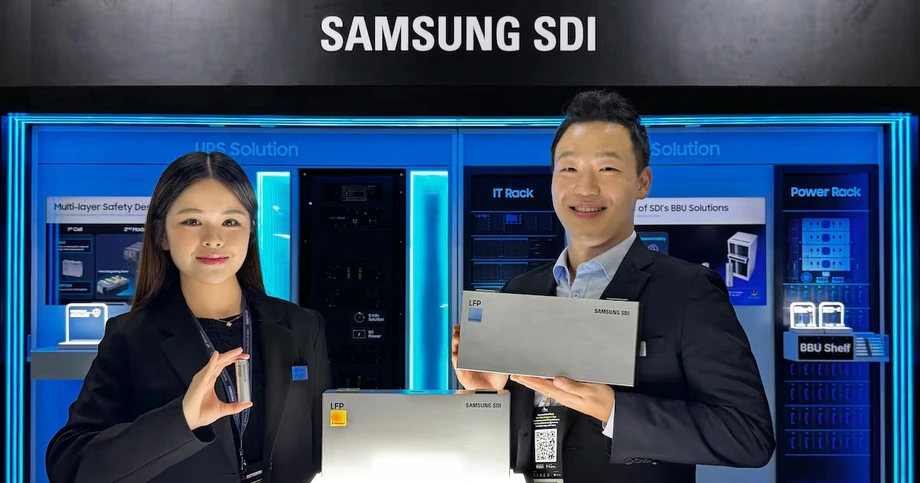
The batteries will be manufactured at StarPlus Energy, Samsung SDI's joint venture with automaker Stellantis. The factory recently began mass production of lithium iron phosphate, or LFP, batteries after converting some production lines previously intended for electric vehicle batteries.
Jupiter Power develops, owns and operates large battery installations that store electricity for later use. It is backed by Global Infrastructure Partners, an investment business that is part of BlackRock. For Jupiter, securing equipment made in the United States is part of planning construction and managing supply risks.
The agreement connects two business shifts: Samsung SDI is putting more factory capacity into stationary energy storage, while US developers are seeking equipment and materials with less dependence on China. Deliveries under the new contract are scheduled for 2029 through 2031, extending the relationship well beyond the Indiana plant's initial production period.
What 16 GWh means for an electricity grid
A gigawatt-hour measures an amount of energy. One GWh equals one million kilowatt-hours, so the new contract covers batteries with a combined energy capacity of 16 million kWh. A kilowatt-hour is the electricity used by a device drawing one kilowatt for one hour.
Energy storage systems charge when electricity is available and release it later. They can help a grid meet periods of high demand or use electricity generated earlier by wind turbines and solar panels. Unlike a power station that burns fuel, a battery shifts electricity from one time to another.
The 16 GWh will be supplied across Jupiter's projects rather than installed as one enormous battery. Spread evenly over three years, deliveries would average about 5.3 GWh annually, although the companies have not given an annual delivery schedule.
GWh describes how much energy batteries can hold. The speed at which they deliver that energy is measured separately, in gigawatts or megawatts. A project's design determines whether its stored electricity is released over a shorter or longer period.
A repeat customer with a large development pipeline
Jupiter Power had already contracted for 11 GWh of Samsung SDI LFP batteries before the latest agreement. Adding 16 GWh increases that volume by about 145%, taking the total to approximately 27 GWh. The new order accounts for nearly three fifths of their combined contracted capacity.
Jupiter's project portfolio shows why a developer would seek equipment years before delivery. Figures accompanying the announcement put its projects operating, under construction or committed at 19,700 megawatt-hours, equivalent to 19.7 GWh. Another 110,000 MWh, or 110 GWh, is in development across the United States.
The development figure is about 5.6 times the operating, construction and committed total. Projects in development still need to move through planning and execution before joining the operating fleet, making equipment procurement one part of a much longer construction program.
Andy Bowman, Jupiter Power's chief executive officer, described domestic procurement as central to that program:
Securing reliable, domestically manufactured equipment is central to how Jupiter Power plans and de-risks our build program.
Bowman said Samsung SDI's batteries would strengthen the company's supply chain as it delivers power and capacity where the grid needs them. For a developer managing numerous projects, a large supply agreement creates a basis for coordinating equipment orders with future construction.
An electric vehicle factory shifts toward storage
StarPlus Energy's Indiana plant is central to Samsung SDI's ability to fulfill the agreement. The joint venture with Stellantis converted some electric vehicle battery lines to manufacture LFP batteries for stationary storage, with mass production beginning in October.
The conversion followed weaker demand for electric vehicle batteries and lower use of production capacity. Moving some equipment toward energy storage gives the factory another market to serve while retaining battery manufacturing in the United States.
Samsung SDI is producing prismatic cells, which have rigid, typically rectangular cases. Cell shape is separate from battery chemistry: prismatic describes the package, while LFP describes the materials used inside. Those cells are assembled into larger systems for storing electricity.
Samsung SDI describes itself as the only company outside Chinese ownership mass producing prismatic batteries for stationary energy storage in North America. That is a specific claim about ownership, cell format, application and manufacturing location.
Fabrice Hudry, who leads Samsung SDI America's ESS business, said the agreement reflected the strength of the local operation:
This agreement reflects the competitiveness and supply capabilities of our locally produced prismatic LFP batteries in the U.S.
Why Samsung SDI is adding LFP to its battery range
Samsung SDI is expanding an energy storage business previously centered on nickel based batteries, including nickel cobalt aluminum, or NCA, chemistry. LFP gives it another product to sell alongside those existing batteries.
LFP uses lithium iron phosphate in the cathode, one of a battery's main working components. NCA uses nickel, cobalt and aluminum. The choice of chemistry affects characteristics such as energy density, cost and operating behavior, while the customer's project determines which combination matters most.
Stationary storage has different design priorities from an electric vehicle. A vehicle must carry its battery wherever it goes, making weight and driving range especially important. A grid battery remains at its site, giving developers more room to balance physical size against cost, service life and other operating needs.
Samsung SDI's recent contracts show it is maintaining both product lines. A separate US agreement announced in March covers NCA and LFP batteries, while its Alpha Omega Power business includes NCA batteries. Jupiter's latest order expands LFP volumes within that broader range.
Materials procurement extends beyond the factory
Samsung SDI has signed LFP materials supply agreements with South Korean companies POSCO Future M and L&F. Those arrangements include cathode materials, extending its procurement plans beyond the assembly of finished cells in Indiana.
A cathode helps determine how a rechargeable battery stores and releases energy. Building cells locally therefore requires more than a factory: manufacturers also need dependable supplies of the materials that go into them.
US increases in tariffs on Chinese energy storage batteries and restrictions involving Chinese materials and components in tax credit rules have added commercial reasons to seek alternative suppliers. Samsung SDI is positioning its Indiana production and materials agreements around that demand.
For Jupiter, the practical benefit is a procurement route built around US manufacturing. For POSCO Future M and L&F, Samsung SDI's expansion creates a connection between Korean materials production and batteries destined for American electricity projects.
Hudry said Samsung SDI would continue expanding its global energy storage business using its prismatic technology and stable supply chain. The Jupiter agreement gives that strategy a substantial volume commitment beginning in 2029.
How the latest order fits a broader contract buildout
Samsung SDI has secured several other US storage agreements alongside its Jupiter business. One contract with an energy infrastructure developer and operator is worth more than 2 trillion won and covers LFP deliveries for three years beginning in 2027.
A separate agreement announced in March is valued at 1.5 trillion won. It covers NCA and LFP batteries for a major US energy company over four years beginning in 2029.
Alpha Omega Power added a further 1 GWh order in October, taking its total contracted volume with Samsung SDI to 1.5 GWh. Those batteries use NCA chemistry and are also to be produced at StarPlus Energy. The latest 1 GWh order is twice the earlier 0.5 GWh commitment.
Samsung SDI said it had secured more than 60 GWh of energy storage battery orders through October. It linked that order book to its goal of keeping production lines in the United States and Ulsan, South Korea, fully occupied through 2028.
The sequence of factory changes and delivery commitments spans several years:
- March: Samsung SDI announced a separate US storage agreement worth 1.5 trillion won, with deliveries beginning in 2029.
- October: LFP mass production began at StarPlus Energy, and Alpha Omega Power added a 1 GWh order.
- November 16: Samsung SDI announced the new 16 GWh Jupiter Power agreement.
- 2027: Deliveries begin under another LFP contract worth more than 2 trillion won.
- 2029 to 2031: The new Jupiter agreement's three years of supply are scheduled.
Revenue is recovering as storage orders grow
Samsung SDI reported third quarter revenue of 4.6856 trillion won and operating profit of 407.8 billion won. Revenue increased 52.6% from a year earlier, while the company returned to an operating profit.
Those figures put its operating margin at about 8.7%, calculated by dividing operating profit by revenue. Operating profit measures earnings from business operations before items such as financing costs and taxes.
Samsung SDI told investors that renewable power expansion, replacement of aging grid infrastructure and rising electricity demand from artificial intelligence data centers were supporting larger storage contracts with longer delivery periods. It also expected rising NCA volumes and the start of LFP production to support revenue growth in the fourth quarter.
DB Securities forecast that Samsung SDI's energy storage battery shipments would rise from 17 GWh in 2026 to 35 GWh in 2027. That would be an increase of 18 GWh, or about 106%. The figures are the securities firm's forecast, while the Jupiter agreement sets deliveries beginning in 2029.
Samsung SDI shares were down 2.82% at 464,500 won at 1:20 p.m. on November 16, despite the contract announcement. The quoted price was an intraday reading rather than a closing price.
What changes for the companies involved
Samsung SDI gains a larger repeat order for a chemistry it has only recently begun producing at scale in Indiana. The 2029 start also extends its contracted business beyond the period covered by its stated goal of filling US and Ulsan lines through 2028.
Jupiter gains a commitment for another 16 GWh of batteries as it advances a much larger development pipeline. The agreement places US production at the center of that supply relationship, matching Bowman's stated priority of securing domestic equipment.
StarPlus Energy now serves both vehicle and stationary storage markets, with LFP and NCA orders contributing to the storage business. Execution will depend on matching factory output, materials procurement and delivery schedules with customers' project construction.
Key Points
- Samsung SDI America will supply Jupiter Power with 16 GWh of LFP batteries over three years beginning in 2029.
- The agreement raises their cumulative contracted volume from 11 GWh to about 27 GWh.
- Industry estimates value the new contract at 3 trillion to 4 trillion won; the exact price was not disclosed.
- Production will take place at StarPlus Energy, Samsung SDI's Indiana joint venture with Stellantis.
- The factory began mass production of LFP batteries in October after converting some electric vehicle battery lines.
- Jupiter has 19.7 GWh of projects operating, under construction or committed, plus 110 GWh in development.
- Samsung SDI's materials agreements with POSCO Future M and L&F support its push to supply US storage projects with less dependence on China.