MVR 29.7 Million Allocation Faces Calls for an Increase
Maldives opposition parliamentary leader Ibrahim Nazil has urged Parliament's Budget Review Committee to give the Human Rights Commission of the Maldives at least the minimum funding it requested, after the commission warned that its proposed MVR 29.7 million allocation leaves salary increases and operational needs unfunded.
Contents
- MVR 29.7 Million Allocation Faces Calls for an Increase
- How the Commission's Funding Gap Developed
- Salary Changes Arrived After the Budget Request
- Why Nazil Wants Funding Confirmed Now
- No Official Vehicle for Visits and Investigations
- Northern Interviews Add to Pressure on Resources
- Anti-Corruption Commission Reports a Similar Squeeze
- Pay and Office Space Complicate the Choices
- Key Points
The commission, known as HRCM, requested an additional MVR 7.7 million during scrutiny of the proposed 2027 state budget. Its president, Dr. Aishath Rameela, said the allocation was about MVR 1 million below even the proposal it had revised to fit the government's spending ceiling.
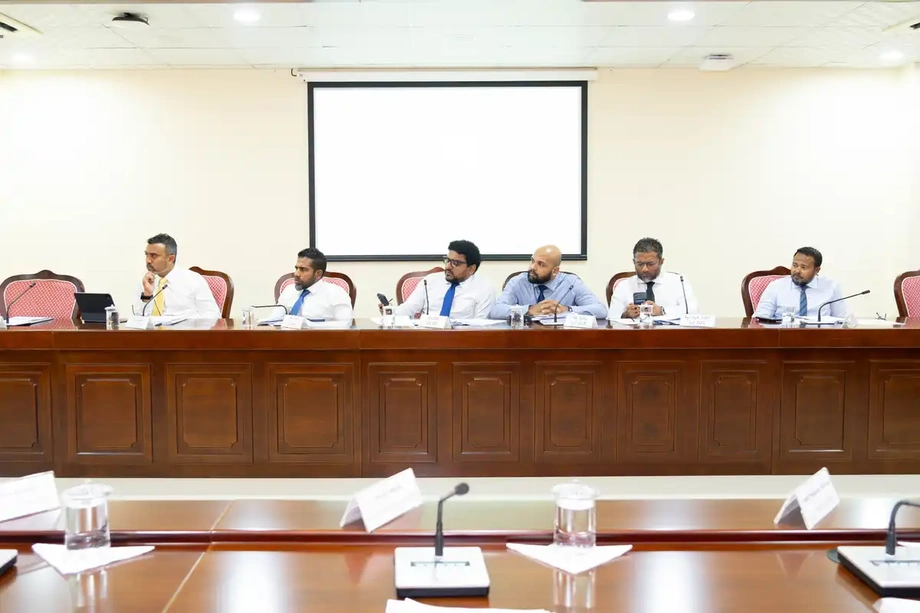
Speaking at the committee's Monday meeting, Nazil, the Maldivian Democratic Party parliamentary group leader and member for Hithadhoo South, challenged assurances that extra money could be found later. Institutions need confirmed funding before they can plan programmes, he argued, rather than promises of support once shortages arise.
Committee chair Ahmed Saleem, the member for Eydhafushi, said funding would be provided if the commission faced a shortfall. Nazil pressed for the money to be included at the outset, pointing to repeated complaints from institutions that planned programmes could not proceed.
The dispute reaches beyond the size of one institution's budget. Rameela described a commission without an official vehicle, facing difficulties interviewing people in northern atolls and needing money for a new salary structure. The Anti-Corruption Commission raised similar concerns at the hearing, saying only MVR 1.2 million would remain for its activities after routine expenses.
How the Commission's Funding Gap Developed
Rameela described two stages of reductions affecting HRCM's request. First, the difference between the budget the commission prepared and its spending ceiling was approximately MVR 8 million. A spending ceiling is the maximum amount an institution is told to use when preparing its budget.
HRCM then revised its proposal to fit that limit. Even after that revision, Rameela said, the allocation submitted to Parliament by the Ministry of Finance and Public Enterprises was approximately MVR 1 million lower.
Rameela explained the initial gap to the committee:
"When we compare the budget we prepared with the budget ceiling, there is a considerable difference of approximately MVR 8 million," Rameela said.
The commission's request for an additional MVR 7.7 million would bring its allocation to MVR 37.4 million if added in full to the proposed MVR 29.7 million. That would be an increase of about 26% over the amount currently before Parliament.
The figures describe different stages of the budget process: the original request, the proposal revised to fit the ceiling, and the allocation eventually submitted to lawmakers. The immediate decision for the committee is whether to increase that final allocation so HRCM can meet the needs it presented.
Salary Changes Arrived After the Budget Request
HRCM's salary problem arose partly from timing. Rameela said the commission sent its budget proposal to the Finance Ministry before employees moved into the Pay Commission's new salary structure in November. The submission therefore excluded the additional pay costs.
Rameela, explaining why the salary allocation needed to rise, told the committee:
"After setting and sending this year's budget, the employees entered into the Pay Commission's salary structure. Therefore, that amount will not be in the submitted budget, the salary portion newly decided by the Pay Commission to be given to employees is not included," she stated.
A salary framework sets the rules used to determine employee pay. For HRCM, introducing the new structure means the commission must budget for higher salary payments, alongside the transport and programme expenses it already faces. Rameela said meeting those obligations would require a substantial increase in the salary allocation.
The sequence presented to the committee was:
- HRCM prepared and sent its budget request before including the new salary amounts.
- In November, commission employees entered the new Pay Commission salary structure.
- At Monday's budget hearing, HRCM asked lawmakers to address the missing salary costs and other funding needs in the proposed 2027 allocation.
The hearing left the final allocation, the detailed breakdown of the additional MVR 7.7 million request and a date for deciding it unresolved.
Why Nazil Wants Funding Confirmed Now
Nazil's main argument concerned the difference between money an institution can plan around and money it might receive later. He said programmes depend on funding being allocated first, and that institutions repeatedly tell the budget committee they cannot carry out planned work.
Saleem's assurance offered the possibility of later support. Nazil wanted the committee to approve the minimum requested amount during the budget review itself. For HRCM, that would provide a firmer basis for decisions about salaries, travel and the expansion of its presence outside the capital.
Nazil also pointed to a death penalty bill under consideration in Parliament, saying it would assign responsibilities to the commission that would require funding. His concern was that lawmakers were discussing additional duties while the institution was already describing shortages.
The opposition leader linked his criticism to wider government spending choices, referring to the Rasmale development project and alleging that receipts were benefiting a person he called "Brother Abdullah" rather than the Treasury. He used that allegation to question where money for later institutional support would come from. His concrete proposal remained that HRCM receive at least the minimum amount it had requested.
No Official Vehicle for Visits and Investigations
Rameela said HRCM's lack of an official vehicle had increased taxi expenses and made its work harder. Staff regularly need to visit places where people are held, including custodial facilities and prisons, as well as other locations connected to the commission's responsibilities.
The HRCM president described the transport problem in direct terms:
"It is a commission that is over 18 years old, yet to this day we do not have our own vehicle to drive. We are a place where employees have to travel to quite a lot of locations. Not a single day goes by without having to visit a custodial facility, or a prison, or some location," she stated.
Rameela said transport was particularly important in cases involving deaths, when staff may need to carry special kits. Her request concerned both the cost of repeated journeys and the practical difficulty of moving people and equipment when needed.
For the budget committee, the vehicle request provides a specific example of how an operating expense connects to the commission's work. Travel is part of reaching the places and people involved in cases, rather than an expense separate from those duties.
Northern Interviews Add to Pressure on Resources
HRCM already has a Southern Branch and has decided to establish a Northern Branch, Rameela told the committee. She said ongoing cases in northern atolls presented major difficulties when the commission needed to conduct interviews.
A northern office would give the commission a presence closer to those cases. Interviews allow an institution to hear from people involved and gather information needed to examine complaints. Difficulties arranging them can affect the progress of that work.
Rameela expressed hope that the next budget would support the planned branch. Her account placed regional access alongside salaries and transport as a reason for increasing the allocation. The commission is seeking resources both to sustain its existing work and to extend its reach to people farther from its current offices.
Anti-Corruption Commission Reports a Similar Squeeze
The Anti-Corruption Commission, or ACC, told the same committee that its proposed 2027 allocation was MVR 47.5 million, compared with a baseline request of MVR 53.9 million. The difference is MVR 6.4 million, or approximately 12% of the amount requested.
ACC Secretary General Fathimath Nilfa said most of the proposed funding would be absorbed by staff pay and the costs of keeping the institution operating. She told lawmakers:
"After allocating funds for staff salaries, allowances, utilities and service expenses, only MVR 1.2 million remains to carry out the commission's responsibilities and activities," Nilfa said.
Nilfa described that remainder as approximately 2% of the allocation. Using the rounded figures she presented, MVR 1.2 million is about 2.5% of MVR 47.5 million. Her central concern was how little remained for activities once recurring bills were covered.
The ACC's outlined activity allocations included MVR 200,000 for investigation travel, MVR 100,000 for public awareness, MVR 100,000 for corruption prevention programmes, MVR 391,000 for staff refresher training and MVR 371,000 for cooperation with international institutions.
Those figures show how a budget of tens of millions of rufiyaa can leave much smaller amounts for individual areas of work. Salaries, utilities and services keep the institution functioning, while the remaining allocation must support travel, prevention, training and other responsibilities.
Pay and Office Space Complicate the Choices
The ACC also reported problems with the new National Pay Framework, although its experience differed from HRCM's. The ACC said the transition had reduced salaries for some employees and that existing allowances did not adequately reflect their responsibilities. HRCM said its salary spending needed to rise to cover increases.
The two institutions therefore brought different pay pressures to the hearing. One described missing funding for higher salaries; the other raised concerns about reductions affecting some staff and the adequacy of allowances. Both sought allocations that would allow them to meet staffing obligations while continuing their work.
Nilfa also said the ACC operated from a residential building and needed funding to address a shortage of office space. Alongside HRCM's vehicle and branch requests, the accommodation problem showed that the hearing covered basic working conditions as well as programme spending.
Parliament's review must now weigh those stated needs against the proposed allocations. Nazil's request focuses on approving sufficient money before the year begins, while the commissions have identified specific pressures that lawmakers can examine: pay, transport, regional interviews, investigation expenses and premises.
Key Points
- HRCM has a proposed 2027 allocation of MVR 29.7 million and requested an additional MVR 7.7 million.
- Ibrahim Nazil urged the budget committee to approve minimum funding now rather than rely on later support.
- HRCM said its budget submission excluded salary increases introduced under the new pay structure in November.
- The commission also raised transport difficulties and sought support for a planned Northern Branch.
- The ACC requested MVR 53.9 million but received a proposed allocation of MVR 47.5 million.
- ACC officials said only MVR 1.2 million would remain for activities after salaries and other recurring expenses.