A prison appeal over failing eyesight and rising blood pressure
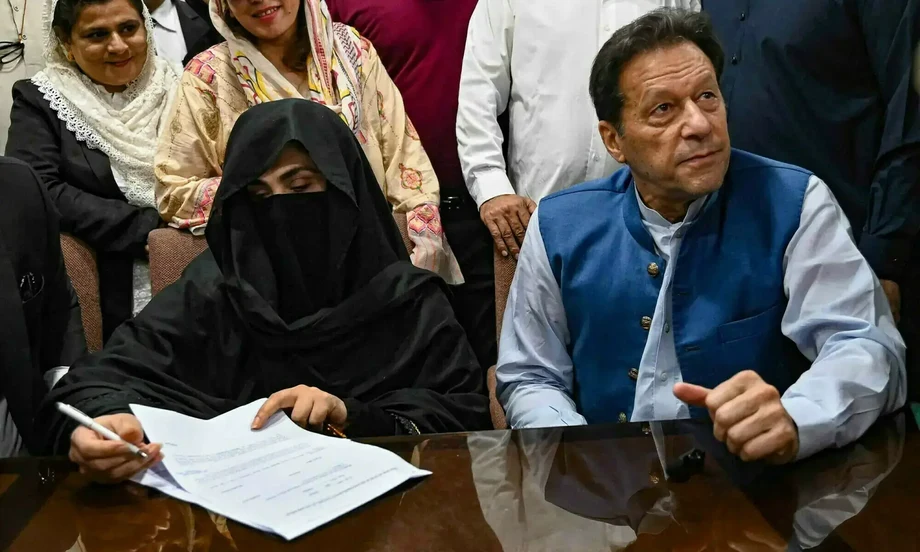
Pakistan's jailed former prime minister Imran Khan has asked the chief justices of three courts to secure medical treatment for him and his wife, Bushra Bibi, saying his blood pressure reached 192 and 193 on November 10 and warning that she could permanently lose her sight without further surgery.
Contents
- A prison appeal over failing eyesight and rising blood pressure
- What Khan is asking the courts to do
- His eye treatment and blood pressure concerns
- How an earlier eye examination entered the case
- Bushra Bibi seeks another eye operation
- Why the choice of hospital matters
- Isolation and limits on family contact
- Legal consultations brought the concerns back to court
- The dates behind the latest appeal
- Key Points
In an open letter dated November 16, 2026, the 74-year-old founder of Pakistan Tehreek-e-Insaf (PTI) called for enforcement of an August 18 Supreme Court order directing his transfer to Shifa International Hospital in Islamabad. He also sought action on court directions concerning medical examinations and contact with his family.
Barrister Salman Safdar shared the letter on X, saying Khan had instructed him during a November 11 meeting at Adiala jail in Rawalpindi to convey his words to the judges. The appeal was addressed to the chief justices of the Supreme Court, Federal Constitutional Court and Islamabad High Court.
Khan, who has been imprisoned since August 5, 2023, said doctors had warned him about the risk of a brain haemorrhage and cardiac arrest. A brain haemorrhage is bleeding in or around the brain; cardiac arrest means the heart suddenly stops pumping blood effectively.
The former prime minister described his fears in the letter:
At 74, this unrelenting state is taking me to a place from which I may not return alive.
The government gave no immediate response to the letter. It has maintained that Khan receives the prison facilities required by law. Following a recent hospital visit, the Pakistan Institute of Medical Sciences (PIMS) described his condition as clinically stable.
What Khan is asking the courts to do
Khan's central request is for the judiciary to enforce treatment and contact arrangements that he says it has already ordered. He said the Supreme Court's August 18 directions required his transfer to Shifa International Hospital within two days, examination by a medical board and interaction with his family.
The directions also included weekly family meetings and telephone conversations with his sons twice a week. Khan alleged that these arrangements had not been carried out and said his case was now awaiting a hearing at the Federal Constitutional Court.
No date for a hearing on the latest medical appeal was given. Khan also complained that his appeal in the Al-Qadir Trust case was being taken up ahead of older matters involving the couple's health and court orders awaiting implementation.
Explaining the relief he wanted, Khan wrote:
I do not ask your Lordships for any favour. All I request as justice is the implementation of the orders of the honourable SC and proper treatment for our medical conditions.
His eye treatment and blood pressure concerns
Khan's right eye condition, central retinal vein occlusion, became public in late January. The condition involves a blockage in the vein that carries blood away from the retina, the light sensitive tissue at the back of the eye. It can cause swelling and damage vision.
On the night of November 10 into November 11, doctors at PIMS administered an intravitreal anti-VEGF injection in his right eye. This is medicine injected into the eye to reduce swelling and leakage from blood vessels. He was discharged at about 2:30 a.m. and returned to prison.
Authorities said he had received an eye examination the previous week. An official also said he had been treated for blood pressure problems before being returned to his cell.
Khan's letter described a wider deterioration. He said his blood pressure readings had risen from 130 to 150 and then 170, reaching 192 and 193 on November 10. He said doctors had told him his heart had already suffered damage. The clinical records behind those claims were not made public alongside the appeal.
How an earlier eye examination entered the case
Safdar met Khan on February 10 after the Supreme Court appointed the lawyer as amicus curiae, a person asked to assist a court with information or legal advice. Khan said the visit came after months without access to his lawyer.
According to Khan, Safdar found that he had lost 85 per cent of the vision in his right eye and that neither his family nor his legal counsel had been informed. Khan said restrictions on contact resumed after that visit.
The February meeting and November hospital procedure show how his medical concerns have become tied to access to lawyers and relatives. Khan is seeking hospital care alongside regular contact with people who can raise his condition before the courts.
Bushra Bibi seeks another eye operation
Bushra Bibi suffered a retinal detachment in April and underwent surgery. A detached retina pulls away from its normal position at the back of the eye and can threaten sight.
Khan alleged that her surgery took place in secrecy and that she was returned to solitary confinement afterward. He said her medical records had been withheld and access to her doctors denied.
Describing a meeting with his wife that month, Khan wrote:
When I saw her this month, she could neither bear the light nor open her eyes, and without another surgery she may lose her sight permanently.
Bushra Bibi has separately asked the courts for an immediate examination by an ophthalmologist, a doctor who specialises in eye care, and permission to receive treatment from doctors of her choice at her own expense. In her application, she said doctors had diagnosed a mature cataract and advised another operation. A cataract is clouding of the eye's natural lens, a different problem from a detached retina.
Sardar Latif Khosa, a senior PTI member and lawyer, said on November 12 that both prisoners had serious health problems. He described Bushra Bibi's eye condition as critical and said she needed relief so she could receive treatment at a doctor and hospital of her choice.
Why the choice of hospital matters
The Supreme Court's August 18 direction named Shifa International Hospital, a private hospital in Islamabad. The government instead took Khan to PIMS, a public hospital, and then returned him to Adiala jail.
Information Minister Attaullah Tarar attributed that diversion to security problems created by PTI workers on the route to and outside the hospital. PTI denied the allegation and accused the government of deliberately disregarding the court's instructions.
Khan's latest appeal therefore concerns both access to treatment and compliance with a particular court direction. PIMS has provided eye care, while Khan and his family continue to seek transfer to the hospital specified by the Supreme Court.
The hospital's statement that he was clinically stable describes its assessment following treatment. Khan's appeal seeks further medical care and monitoring for the eye condition, blood pressure problems and heart concerns described in his letter.
Isolation and limits on family contact
Khan alleged that he had been held in isolation since December 20, 2025, for up to 22 hours a day. He described periods without family visits, lawyers, telephone calls to his sons, books or television.
He said prolonged isolation had harmed his mental health and that the jail's own medical board had recorded his anxiety. According to the letter, the board recommended more frequent contact with his wife and family, reading material and television, but those recommendations had not been followed.
The Islamabad High Court has allowed meetings on Tuesdays and Thursdays with family members, lawyers and other associates. Khan nevertheless said he had met his lawyers only four times during the year, while Bushra Bibi had met her counsel once.
He also alleged that authorities had skipped weekly meetings with his wife and prevented calls with his sons, Kasim and Sulaiman, despite court orders. The restrictions described in the letter remain allegations by Khan; the government's stated position is that his prison facilities comply with the law.
Legal consultations brought the concerns back to court
A recent meeting lasting four hours followed an Islamabad High Court order allowing Khan and Bushra Bibi to consult their lawyers about appeals in the £190 million corruption case, also known as the Al-Qadir Trust case. The discussions covered legal matters and the couple's health.
Safdar said he met Khan on November 2 and November 11 and received instructions for the letter during the latter visit. Khosa's public comments on November 12 described the serious medical concerns raised during the lawyers' access to the couple.
Khan lost office in a parliamentary vote of no confidence in 2022 and has since faced numerous criminal proceedings. He denies wrongdoing and describes the cases as politically motivated. The government rejects that accusation.
His letter linked a tightening of prison restrictions to the judgment in the Toshakhana-2 case, in which he and Bushra Bibi received sentences of 17 years. That case concerned the purchase at a steeply reduced price of a Bulgari jewellery set presented by the Saudi crown prince during an official visit in May 2021. Bushra Bibi has been in custody since January 17, 2025, following her arrest in a separate case involving the couple.
The dates behind the latest appeal
The medical dispute has developed over several months, with hospital visits, legal consultations and court directions preceding the November letter:
- August 5, 2023: Khan's current period of imprisonment began.
- January 17, 2025: Bushra Bibi was arrested in a separate case involving the couple.
- December 20, 2025: Khan says the prolonged isolation described in his letter began.
- February 10, 2026: Safdar visited Khan after being appointed to assist the Supreme Court. Khan says the lawyer learned of severe vision loss in his right eye.
- April 2026: Bushra Bibi suffered a retinal detachment and underwent surgery.
- August 18, 2026: The Supreme Court directed Khan's transfer to Shifa International Hospital within two days.
- November 10 to 11, 2026: Khan received an injection in his right eye at PIMS and returned to prison.
- November 16, 2026: His open letter appealing for treatment was made public.
Khan's sons responded publicly to the appeal. Kasim described reading the letter as devastating. Sulaiman called for his father's transfer to Shifa International Hospital and said access to proper medical care was a basic requirement rather than a request for special treatment.
Khan also invoked his work establishing hospitals that provide free treatment to patients unable to pay. He ended his appeal by asking judges to act so that he could remain alive to contest the cases against him.
Key Points
- Imran Khan's November 16 letter asks three chief justices to secure medical treatment for him and Bushra Bibi.
- Khan says his blood pressure reached 192 and 193 and that doctors warned of serious risks to his health.
- Bushra Bibi is seeking further eye treatment after retinal surgery in April and a later diagnosis of a mature cataract.
- The Supreme Court directed Khan's transfer to Shifa International Hospital on August 18; the government took him to PIMS, citing security concerns.
- PIMS described Khan as clinically stable after recent treatment. The government gave no immediate response to the letter.
- Khan also seeks enforcement of family contact arrangements. No hearing date for the latest medical appeal was given.