Two countries, millions of vaccinations and children still missed
Afghanistan recorded 42 cases of wild poliovirus by October 20, 2026, twice its total for 2025, while Pakistan recorded six, according to figures cited by the Pan American Health Organization (PAHO). Together, the countries remain the last places where wild poliovirus has never stopped circulating, despite vaccination campaigns reaching tens of millions of children.
Contents
- Two countries, millions of vaccinations and children still missed
- What polio means for a child and a family
- Why Afghanistan's vaccination method matters
- Pakistan's vaccinators face violence and mistrust
- Why sewage testing tells a different part of the story
- Three transmission centres connect across the border
- India shows how detailed delivery can stop transmission
- The risk reaches countries far from South Asia
- Funding and the next tests of progress
- Key Points
Pakistan's National Emergency Operations Center announced a seventh case on October 19, involving a child in Karachi, while PAHO's figures for October 20 still listed six. The centre put Pakistan's distribution at five cases in Khyber Pakhtunkhwa and two in Sindh. Afghanistan's latest six cases, attributed to World Health Organization figures, included three in Kandahar, two in Nangarhar and one in Kabul's Musahi district; Taliban health authorities described those six as suspected cases still under investigation.
The central problem is access. Afghanistan has stopped vaccination teams from routinely visiting homes. Pakistan permits those visits, but attacks, refusals and uneven campaign quality leave children unprotected. Families moving between the countries can miss vaccination on both sides of the border.
April's coordinated campaigns reached 44.8 million children in Pakistan and 12.8 million in Afghanistan. Yet the virus continues to find communities where too few children have received enough doses. National totals can look impressive while particular villages, neighbourhoods or mobile families remain repeatedly missed.
World Polio Day on October 24 therefore brings two contrasting realities: vaccination has driven an enormous decline in disease, but finishing eradication depends on reaching the children whom large campaigns still fail to reach.
What polio means for a child and a family
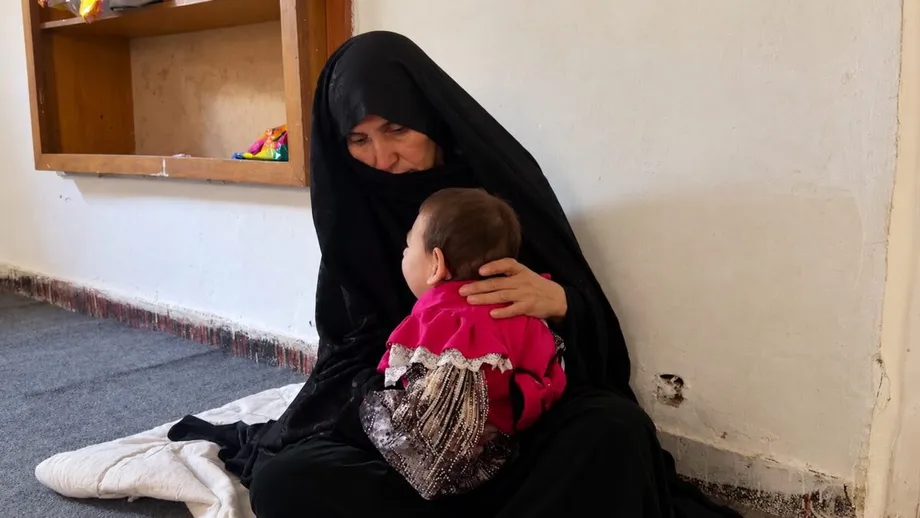
Zahra, a five-year-old girl in Afghanistan's Baghlan province, has been paralysed for two years, according to her mother, Noor Begum. Her mother said the family could not obtain the vaccine where they lived and doctors could not reverse the paralysis after Zahra became ill.
Noor Begum described the daily care her daughter needs:
She has been paralyzed for two years. I struggle a lot caring for her. She cannot eat properly. One of her hands works, but the other does not.
Polio mainly affects children younger than five. The virus spreads primarily when material contaminated with human faeces reaches someone's mouth, including through unsafe water or dirty hands. Poor sanitation gives it more opportunities to move between people.
Most infections cause no obvious symptoms. In a small proportion, the virus attacks the nervous system and causes permanent paralysis. PAHO says that among people who develop paralysis, 5% to 10% die when the muscles needed for breathing stop working.
Vaccination prevents polio; it cannot reverse paralysis that has already occurred. Repeated oral vaccine doses and completion of routine immunisation help children build protection. Reaching a child once during a campaign is therefore only part of the task.
Why Afghanistan's vaccination method matters
Afghanistan briefly expanded vaccination through home visits in 2024. In June that year, teams reached 95% of targeted children in the South Region, the first time coverage had reached that level in more than five years, although Kandahar continued to use designated vaccination sites.
Restrictions returned in September 2024. WHO says campaigns visiting individual homes have not taken place since October that year, citing security concerns. Families now generally have to take children to mosques or other designated locations.
A fixed site can serve many families, but it depends on an adult being able to bring each child. WHO says this approach often misses children, particularly the youngest. Restrictions on women's movement and the limited participation of female health workers add practical difficulties for mothers and infants.
Ferozuddin Feroz, a former Afghan public health minister, described home visits as the most effective approach:
If we want to eradicate polio in Afghanistan, the best, easiest and most effective strategy is to go to people's homes. No household should be missed during a campaign.
Abdul Quddus Baryali, who headed the Taliban health ministry's polio programme, said in late 2024 that the shift to vaccination at mosques followed a decision requested by Kandahar's religious council and representatives from Kandahar, Helmand and Uruzgan.
The consequences are most pressing in southern Afghanistan, where transmission remains intense. The independent Technical Advisory Group on Polio Eradication has called for a rapid review of vaccination methods, more opportunities for home visits and stronger participation by female workers within culturally appropriate arrangements.
Pakistan's vaccinators face violence and mistrust
Pakistan's vaccination teams can visit homes, but their access can disappear when gunmen attack, security conditions deteriorate or communities refuse entry. On May 18, two police officers guarding vaccination teams were killed in Bajaur as a campaign began to reach more than 19 million children across 79 districts.
Two more police constables protecting a vaccination team were killed in Balochistan in September. Pakistani officials say more than 200 polio workers and police escorts have died since the 1990s. Government data covering attacks since 2012 record 96 deaths and 170 injuries, using a shorter reporting period.
Militants have spread false claims that vaccination is a foreign scheme to sterilise children. Suspicion also draws on the CIA's use of a fake hepatitis B vaccination operation in Abbottabad in 2011 during its search for Osama bin Laden.
Some refusals reflect anger about services rather than opposition to vaccines alone. Families who lack clean water, sanitation or dependable health care may question why vaccination teams return repeatedly while other needs remain unmet. More than 420,000 children missed vaccination during Pakistan's 2024 campaigns, according to findings attributed to the eradication programme's independent monitoring board.
Sindh Governor Syed Muhammad Nehal Hashmi used his World Polio Day message to urge parents to have every child younger than five vaccinated during each campaign. He also praised vaccination workers and called reaching every child a national responsibility shared by parents, health services and communities.
Why sewage testing tells a different part of the story
Pakistan's latest case involved a baby boy from Jamali Colony in Karachi East. His vaccination status was not confirmed. The National Emergency Operations Center said Karachi's previous reported case was in December 2024, but environmental testing had continued to detect poliovirus in the city during 2026.
Health teams test sewage because infected people can carry the virus in their intestines and release it in faeces without developing paralysis. A positive sample gives an early warning that the virus is circulating in the community served by that sewage system.
By mid-August, 176 environmental samples across Pakistan and Afghanistan had tested positive for wild poliovirus: 118 in Pakistan and 58 in Afghanistan. Pakistan had reported only three paralytic cases at that point. The two measures answer different questions: cases count people who become ill, while sewage testing helps locate transmission that would otherwise be difficult to see.
WHO's emergency committee statement, dated August 25 and describing a May 14 meeting, recorded four cases and 74 positive environmental samples through April 30. For 2025, it recorded 747 positive samples, including two in Germany, alongside the 745 recorded across Pakistan and Afghanistan.
Balochistan Chief Minister Sarfraz Bugti said his province had reported no polio cases for two years. He called for continuous surveillance, strict monitoring and effective strategies to sustain progress. Monitoring remains necessary because sewage testing can reveal circulation before a child develops paralysis.
Three transmission centres connect across the border
Southern Afghanistan, southern Khyber Pakhtunkhwa and Karachi are the three areas WHO and its technical advisers identify as critical remaining centres of transmission. Improving results there matters to communities far beyond their boundaries because travellers can carry the virus elsewhere.
The Technical Advisory Group's priorities and benchmarks, published June 4, said transmission had narrowed geographically compared with the same period in 2025. It reported progress in Afghanistan's East Region and Pakistan's Peshawar and Quetta Blocs, while calling for more dependable access in the remaining centres.
Genetic sequencing has linked virus samples found in Karachi with reservoirs in Jalalabad in eastern Afghanistan. Sequencing compares the virus's genetic material, helping investigators trace relationships between infections and understand how transmission moves.
WHO also identified corridors connecting southern Afghanistan with Pakistan's Quetta region and northwestern Pakistan with southeastern Afghanistan. More than 600,000 people returned from Pakistan to Afghanistan in 2024, and WHO found evidence that returning populations had carried some virus strains into Afghanistan.
Mobile families need vaccination opportunities at crossings, transit points and their destinations. The April effort illustrated the scale possible: the Global Polio Eradication Initiative's coordinated campaign account recorded a combined 57.6 million children reached, with more than 413,000 workers mobilised in Pakistan and 42,000 vaccinators in Afghanistan. Children aged six to 59 months also received vitamin A.
India shows how detailed delivery can stop transmission
India faced many of the same practical difficulties: dense populations, extensive migration and large numbers of newborn children needing protection. Uttar Pradesh and Bihar together had about 300 million residents and roughly 500,000 births a month during the eradication effort.
India's response combined visits to homes with vaccination at railway stations, bus stops and on trains. During national immunisation days from 2000 onward, more than 2.3 million vaccinators visited about 209 million households and reached over 170 million children younger than five. Transit teams vaccinated nearly 10 million children during each campaign.
Teams included women and local residents, worked with religious and community leaders, numbered homes in detailed plans and marked both vaccinated children and visited households. Independent checks helped identify children who had been missed. India also introduced more effective vaccine formulations in 2005 and 2010.
The milestones show both the length of the effort and the speed of its final gains:
- 1988: The World Health Assembly launched the global eradication effort, when polio caused an estimated 350,000 cases annually across more than 125 endemic countries.
- 1995: India began its Pulse Polio programme, with an estimated 50,000 to 150,000 cases a year.
- 2009: India still accounted for about 60% of the world's cases.
- January 13, 2011: India recorded its last wild polio case in Howrah, West Bengal.
- March 27, 2014: WHO certified its 11-country South-East Asia Region free of polio.
India continues annual immunisation days and includes injectable polio vaccine in routine childhood immunisation. Its experience offers a concrete lesson for Afghanistan and Pakistan: repeated vaccination works when detailed local planning makes missed children visible and teams can return to reach them.
The risk reaches countries far from South Asia
Wild poliovirus was detected in a routine sewage sample in Hamburg, Germany, in October 2025. WHO's emergency committee concluded that international spread continued to constitute a Public Health Emergency of International Concern and recommended extending temporary recommendations for three months. It classified the event below the separate threshold of a pandemic emergency.
The Americas illustrate why countries must maintain protection long after eliminating local transmission. PAHO's World Polio Day statement marked 35 years since the region's last wild poliovirus case, recorded in Peru on August 23, 1991.
PAHO reported that 2025 coverage with the first, second and third doses of injectable polio vaccine reached 91%, 89% and 87%, respectively. Third dose coverage improved from 80% in 2021, but remained eight percentage points below the organisation's 95% target.
PAHO Director Dr. Jarbas Barbosa explained the continuing exposure:
"As long as poliovirus circulates elsewhere, the risk of importation remains. Maintaining high vaccination coverage and strong surveillance is essential to protect children and prevent the virus from regaining a foothold."
PAHO also reported weaknesses in monitoring sudden muscle weakness in children, a warning sign investigated for possible polio. The Americas recorded 0.85 such cases per 100,000 children younger than 15, below the surveillance target of at least one. That target measures how actively health systems search for possible cases.
Other countries, including the Democratic Republic of the Congo, Nigeria, South Sudan and Chad, face outbreaks caused by circulating vaccine derived polioviruses. These develop when the weakened virus used in oral vaccine circulates for a prolonged period among populations with low immunity and changes genetically. High vaccination coverage is essential to stop that circulation too.
Funding and the next tests of progress
The Global Polio Eradication Initiative cut its 2026 operating budget by 30%. Its oversight board approved about $778 million for 2027, roughly $65 million less, while surveillance funding remains at its reduced level. The programme says cuts have affected the speed and scale of eradication work in some places.
The squeeze follows the US withdrawal from WHO in January and the earlier dismantling of USAID, which disrupted $85 million for surveillance and health communication. Other commitments include $500 million pledged by Saudi Arabia, $154 million by Pakistan and $1.2 billion from the Gates Foundation for 2026 to 2029. Rotary members raise about $50 million annually.
The initiative is reviewing its timetable after assessing progress in 2026. Its stated goal has been certification of wild poliovirus eradication by the end of 2027, following the original global target of 2000. Wild poliovirus types 2 and 3 have already been declared eradicated; type 1 is the remaining wild strain.
Pakistan's next vaccination campaign is scheduled to begin November 2 across 97 selected districts. Technical advisers established assessment milestones for September 2026, December 2026 and June 2027, giving the programmes further points at which to judge whether transmission is shrinking.
Afghanistan's immediate task is to reach more children in the south, particularly infants and those missed by fixed sites. Pakistan's priorities include protecting teams, improving campaign quality in southern Khyber Pakhtunkhwa and carrying out the Karachi Action Plan with regular monitoring. Both countries need sustained coordination for families crossing the border.
Global vaccination has reduced polio cases by more than 99% since 1988. WHO warns that failure to finish eradication could allow the disease to cause as many as 200,000 new cases annually within a decade. The remaining work is specific: find missed children, make vaccination accessible and safe, and keep testing for transmission until it stops.
Key Points
- Afghanistan recorded 42 wild poliovirus cases in 2026 by October 20, twice its 2025 total.
- PAHO listed six Pakistani cases; Pakistan's emergency operations centre announced a seventh on October 19.
- Afghanistan's restrictions on home visits and Pakistan's insecurity leave gaps in vaccination.
- Southern Afghanistan, southern Khyber Pakhtunkhwa and Karachi remain the main transmission centres.
- April's coordinated campaigns reached 57.6 million children across the two countries.
- Sewage testing continues to detect circulation beyond the children identified with paralysis.
- Pakistan plans a campaign beginning November 2; further technical milestones fall in December 2026 and June 2027.