Nearly half the girls targeted are outside school
Khyber Pakhtunkhwa is targeting 2.9 million girls aged 9 to 14 for free vaccination against human papillomavirus, or HPV, with community teams expected to reach 1.3 million girls who are not attending school. The Health Department campaign also aims to vaccinate about 1.6 million girls enrolled in educational institutions, including public and private schools and religious seminaries.
Contents
- Nearly half the girls targeted are outside school
- Where girls will receive the vaccine
- Why vaccination begins before adolescence ends
- A disease that reaches families late
- Who is organising the provincial effort?
- Trust will matter alongside vaccine supplies
- Pakistan's earlier campaign shows what follow-up can achieve
- How the rollout has developed
- Women still need screening and timely care
- Key Points
The campaign timetable runs from November 11 to 24, 2026, and includes Khyber tribal district. Peshawar alone has a target of 374,000 girls, roughly 13% of the provincial total. An earlier schedule published on September 27, 2026, listed November 2 to 14, so families should confirm their local vaccination session dates with schools or government health centres.
The effort is intended to protect girls before exposure to HPV types that cause most cervical cancers. Cervical cancer develops in the cervix, the lower part of the uterus. Vaccination during childhood can prevent infections that might otherwise lead to cancer many years later.
For the provincial Expanded Programme on Immunisation, known as EPI, the challenge extends far beyond arranging injections at schools. Girls outside education make up about 45% of the target population, calculated from 1.3 million out of 2.9 million. Reaching them requires visits to communities and villages, mobile teams in remote areas, and vaccination sites at public health facilities.
Where girls will receive the vaccine
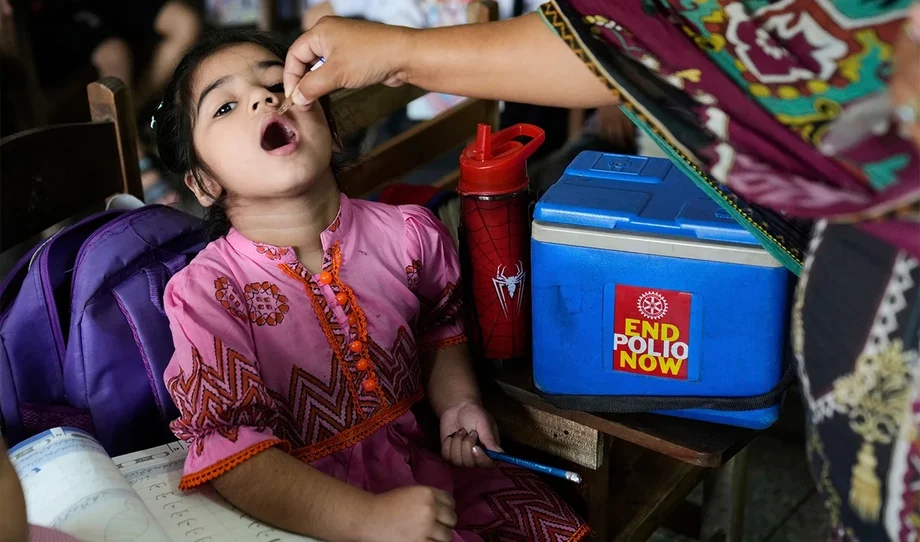
Public and private schools will host special vaccination sessions, while religious seminaries are also included in the campaign. This gives health workers a way to reach large numbers of eligible girls where they already gather.
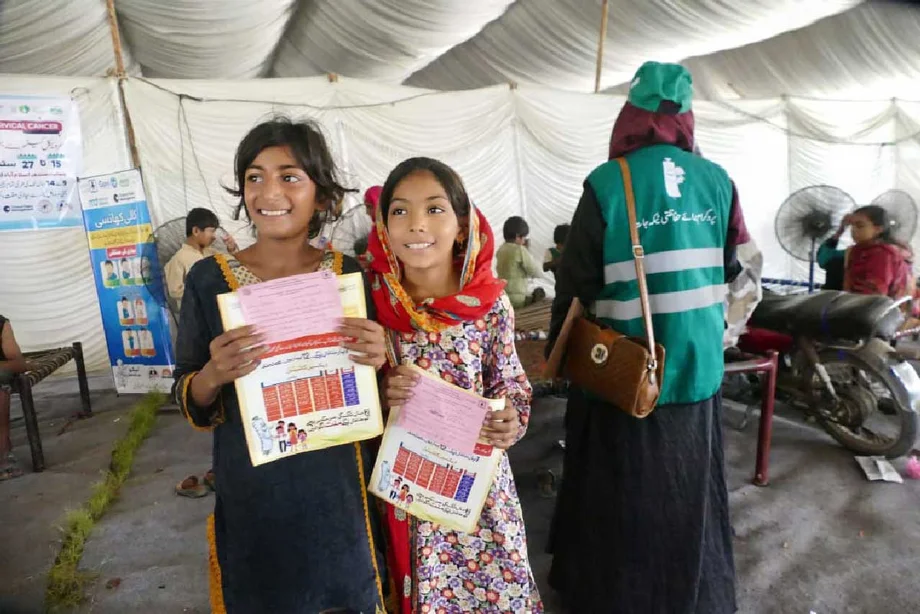
Girls who are not enrolled in school will be reached through community outreach. Dedicated teams will visit localities and villages, mobile teams will serve remote areas, and government health centres will provide fixed vaccination sites. For families living far from a school or clinic, the location and timing of these visits will be central to access.
The vaccine is being offered free of charge. Parents and caregivers of girls aged 9 to 14 are being urged to use the campaign, whether their daughters attend school, study at a seminary or are outside education.
The figures released by the Health Department are vaccination targets. A final tally of girls vaccinated during the KP campaign has not been announced.
Why vaccination begins before adolescence ends
HPV is a common virus with many types. Some types can cause cancer when an infection persists for a long time. Types 16 and 18 are among those responsible for a large proportion of cervical cancer cases.
Vaccination prepares the body's immune system to recognise the virus and defend against it. The reason for targeting girls aged 9 to 14 is to provide protection before possible exposure. The vaccine prevents infection with the HPV types it covers; women already experiencing symptoms need medical assessment and appropriate care.
Dr Shaheen Afridi, director general of Health Services in Khyber Pakhtunkhwa, has urged parents, teachers, religious scholars and community leaders to support the campaign. She described the vaccine as safe and effective, with lasting protection against the HPV types responsible for most cervical cancers.
At an awareness session in Peshawar, health professionals told journalists from Khyber district that HPV vaccination was being used in 162 countries. For parents encountering the vaccine for the first time, the campaign is introducing a prevention measure already used widely elsewhere.
A disease that reaches families late
Health Department campaign information puts Pakistan's annual cervical cancer burden at more than 5,000 new cases and about 3,000 deaths. Gavi's account of the national vaccine introduction cites around 3,500 deaths annually and describes that figure as a probable underestimate.
Doctors at medical teaching institutions in KP have described seeing women whose disease is already advanced when they arrive for outpatient care. Cervical cancer can develop slowly, and early changes may cause few obvious symptoms. Families may therefore face a serious diagnosis after opportunities for earlier detection have passed.
Sameena Bibi, 48, from Ismailabad village in Swabi district, is among the women living with that burden. A mother of five whose husband works in a workshop, she experienced lower back pain, unusual tiredness and weight loss before her diagnosis. Hospital visits, tests and medicines have added to the costs faced by a family living in rented accommodation on an uncertain income.
Dr Safoora Shahid, a former director of IRNUM Hospital in Peshawar and a senior consultant at Shaukat Khanum Hospital in the city, has urged parents to vaccinate eligible girls and women to seek timely advice about persistent symptoms. She described prevention in these terms:
Cervical cancer is one of the cancers that can be prevented through vaccination and screening,
Who is organising the provincial effort?
The Health Department has established a Provincial Steering Committee chaired by the health secretary to guide and oversee the campaign. A Technical Committee chaired by the director general of Health Services is responsible for technical planning, implementation and coordination across departments.
Education authorities have a direct role in arranging access to girls at schools and other institutions. The Elementary and Secondary Education Department, Higher Education Department and Private Schools Regulatory Authority are among the bodies involved. The Auqaf, Social Welfare, Local Government and Information departments are also supporting implementation.
Provincial and district focal persons have been designated to coordinate work between health teams and other departments. Preparations have included staff training, while UN agencies are collaborating with the provincial EPI and education authorities.
The Society of Obstetricians and Gynaecologists of Pakistan and the Pakistan Pediatric Association are providing professional support. Dr Muhammad Sohail Farooqi, director of EPI KP, has linked the campaign to Pakistan's longer term goal of eliminating cervical cancer as a public health problem.
Trust will matter alongside vaccine supplies
Khyber district journalists attended an awareness session at the Deputy Commissioner's House in Peshawar with Additional Deputy Commissioner Shahabuddin and doctors including Dr Mohibullah, Dr Sher Amin and Dr Qazi. Representatives from the Jamrud, Landikotal and Bara press clubs also participated.
Dr Mohibullah identified limited public awareness as a major challenge. He urged journalists to explain the disease and the vaccine accurately, address misconceptions and encourage parents to protect their daughters.
Provincial officials have also pointed to earlier refusals of polio and other vaccines as a reason to invest in public communication. Their plans include posters, brochures, banners, radio messages and social media content, supported by civil society organisations working with communities.
Parents, teachers, religious scholars and local leaders are central to that effort because families often turn to people they know when deciding whether to accept an unfamiliar vaccine. Discussions that answer a parent's specific concern can determine whether a girl receives protection during a short campaign.
Pakistan's earlier campaign shows what follow-up can achieve
Gavi's national campaign account describes an introductory effort across Punjab, Sindh, Azad Jammu and Kashmir, and Islamabad that targeted 13 million girls aged 9 to 14. After an initial September campaign and an extension through October 1, government data showed 9.2 million girls vaccinated, equivalent to 71% coverage.
The three additional campaign days contributed 1.4 million vaccinations. That was about 15% of the final 9.2 million total, showing how much the final outreach period added. Eighteen districts still recorded coverage below 60%, and the government recommended more intensive follow-up there.
Gavi also cited a Jhpiego survey in which only 19% of caregivers had heard of cervical cancer and just 2% knew a preventive vaccine existed. Health workers faced questions about fertility, religious acceptability and why vaccination was free.
Farkhunda Feroz, an EPI Sindh vaccinator, described how repeated conversations helped families make decisions:
At first visit, parents are often reluctant, due to negative videos,
She said acceptance often changed after another discussion:
But after follow-up discussions, many change their minds.
Sindh deployed 3,611 teams to reach a target of 4.1 million girls, including 2.2 million outside school. KP's planned community visits address a similar practical need: a vaccination programme relying mainly on classrooms would leave a large part of the eligible population beyond its reach.
How the rollout has developed
Pakistan's introduction of HPV vaccination is taking place in stages. Gavi describes an initial campaign in four jurisdictions, followed by further phases in 2026 and 2027 intended to reach another 5 million girls elsewhere in the country.
KP's preparations and campaign announcements set out the following sequence:
- September 15 to 27: Pakistan's introductory campaign targeted 13 million girls across Punjab, Sindh, Azad Jammu and Kashmir, and Islamabad.
- September 29 to October 1: Additional vaccination days helped bring the introductory campaign total to 9.2 million girls.
- July 10: KP preparation announcements set out a campaign planned for November 2026, targeting 2.9 million girls through schools and community services.
- November 11 to 24, 2026: The detailed KP campaign timetable covers girls aged 9 to 14, including those in Khyber tribal district.
The national experience gives KP a practical lesson in campaign delivery. Teams need time to identify missed girls, answer questions and return to households. The provincial target will depend on participation across schools, communities and health facilities, rather than any single route.
Women still need screening and timely care
Adult women have a different immediate need from the girls being offered vaccination. Screening checks for HPV infection or abnormal changes in the cervix before cancer develops. Methods include HPV testing, Pap tests, which examine collected cells, and visual inspection by trained health workers.
Vaccination and screening act at different points. Vaccination helps prevent infection before it happens. Screening can find changes that need monitoring or treatment, including in women who feel well.
Dr Idrees Khan, an assistant professor at Lady Reading Hospital, has supported the safety of vaccination while stressing the need for screening later in life. Dr Shahid has urged women to seek medical advice for unusual or persistent symptoms, including abnormal bleeding, unexplained weight loss and weakness.
Health professionals briefing journalists in Khyber also listed lower abdominal pain, persistent tiredness and loss of appetite among symptoms requiring assessment. A clinician can investigate the cause and decide which tests or treatment are needed.
For families such as Sameena Bibi's, access to care is already an urgent concern. For the 2.9 million girls targeted in KP, the campaign offers a chance to reduce the risk of facing the same disease in adulthood. Reaching girls outside school and giving families clear answers will be essential to turning that target into protection.
Key Points
- KP aims to provide free HPV vaccination to 2.9 million girls aged 9 to 14.
- The target includes 1.6 million girls in education and 1.3 million outside school.
- The detailed campaign timetable runs from November 11 to 24, 2026.
- Peshawar's target is 374,000 girls, about 13% of the provincial total.
- Vaccination will be offered through educational institutions, community visits, mobile teams and government health facilities.
- Pakistan's introductory campaign reached 9.2 million girls, or 71% of its target, after an extension.
- Adult women still need screening and medical advice about unusual or persistent symptoms.