Seventh in Education, First in Hong Kong Across Nine Subjects
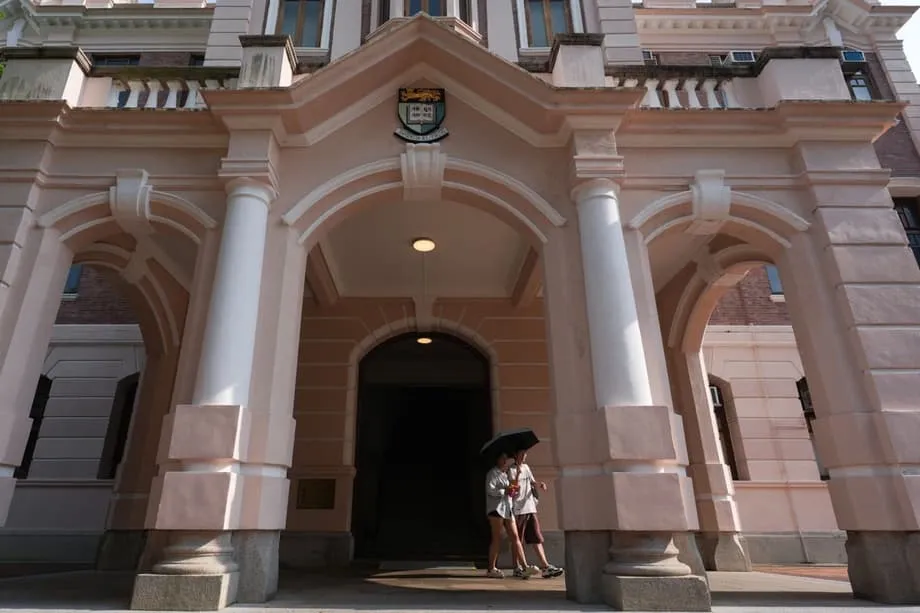
The University of Hong Kong (HKU) has ranked seventh globally in Education Studies in the Times Higher Education (THE) World University Rankings by Subject 2026, making it the only Hong Kong university to reach the top 10 in any subject this year. The city's oldest university also rose three places to 18th in Medical and Health, combining its strongest subject result with a gain in another major field.
Contents
- Seventh in Education, First in Hong Kong Across Nine Subjects
- Where HKU Leads the City's Universities
- Education Builds on an Earlier Global First
- How the Rankings Measure Universities
- International Reach Supports HKU's Overall Rise
- Mainland Universities Take More Top 10 Places
- Six Hong Kong Universities Reach the Top 200
- Rankings Add Weight to Education Hub Plans
- HKU Looks Toward Its 115th Anniversary
- Key Points
HKU led Hong Kong in nine of the 11 subjects assessed, including Engineering for the first time. Its results come as universities elsewhere in East Asia make further gains: Peking University entered the global top 10 for Computer Science for the first time, while Tsinghua University reached the top 10 in Physical Sciences.
The results, released recently as of January 23, 2026, show both the strength of Hong Kong's universities and a wider shift in the international rankings. Mainland Chinese institutions secured seven places among the top 10 across the subject tables, compared with four the previous year.
American and British universities still dominate the highest positions. Asian institutions, however, are taking more places near the top, supported by investment in research, recruitment of international talent and a focus on science and technology.
For HKU, the subject results accompany a rise of two places to 33rd in the THE World University Rankings 2026. The subject tables assess performance in particular academic fields, while the overall table gives a broader view of a university's teaching and research. Together, the results show HKU's performance across several disciplines, alongside its particularly high position in education.
Where HKU Leads the City's Universities
HKU's nine leading positions in Hong Kong cover Education Studies, Medical and Health, Law, Social Sciences, Physical Sciences, Life Sciences, Arts and Humanities, Psychology, and Engineering. The range stretches from teacher education and health research to the sciences, technical disciplines and the study of society and culture.
Engineering's first place locally is a new achievement for HKU this year. It moves the university ahead of its Hong Kong competitors in that field and adds a technical discipline to the areas where it already leads the city.
Medical and Health rose three places to 18th globally. The improvement reflects HKU's work in medical training and health research, while its seventh place in Education Studies places that subject within the highest tier of the global table.
Nine leading positions out of 11 ranked subjects also show how widely HKU's local success is spread. Computer Science and Business and Economics are the other two subjects, with the Hong Kong University of Science and Technology leading locally in the former and the Hong Kong Polytechnic University leading in the latter.
Education Builds on an Earlier Global First
HKU's Faculty of Education entered the latest THE table with another international distinction already recorded. U.S. News & World Report had previously ranked it first globally in the Education and Educational Research category.
The seventh place in THE Education Studies follows that earlier result, giving the faculty prominent positions in two different rankings. Each table assesses education under its own category and framework, so the figures describe the faculty's standing within each assessment.
Professor Yang Rui, HKU's Dean of Education, attributed the success to the relentless efforts of faculty members and their dedication to pioneering research. The faculty serves as a research nexus connecting China, Asia and the wider academic community, bringing work across those settings into contact.
Professor Xiang Zhang, HKU's President and Vice-Chancellor, credited the university's standing to the collective effort of its community. He said HKU remained committed to its tradition of excellence through teaching and research at the forefront of their fields, while strengthening its contribution to the high quality development of Hong Kong and the nation.
How the Rankings Measure Universities
Times Higher Education assesses 11 subject areas using 18 performance indicators. Its subject rankings use the same framework as the overall World University Rankings, but adjust the weight given to different measures to suit each discipline.
The indicators fall into five groups: Teaching, Research Environment, Research Quality, International Outlook, and Industry. Together, they examine the learning environment, research activity and influence, international connections, and work with industry.
Teaching includes measures such as the number of staff relative to students and the ratio of doctorate students to bachelor's students. These figures help describe the environment in which students learn and the place of advanced study within an institution.
Research Environment considers research income, research volume and reputation. Research Quality examines citation impact, research strength and research excellence. A citation occurs when an academic publication refers to another piece of research, providing one way to track how widely that work is used.
International Outlook measures the diversity of staff and students, together with collaboration on research across countries. Industry assesses how universities help businesses through innovation, consulting and patents. Patents protect inventions, making them one measure of how research can lead to practical applications.
The adjusted subject weightings matter because different academic fields have different patterns of teaching and research. THE keeps the five broad groups while changing their relative importance, allowing each subject table to reflect the discipline it assesses.
International Reach Supports HKU's Overall Rise
HKU's overall position rose two places to 33rd in the THE World University Rankings 2026, supported by high scores in research influence and international outlook. Its performance in citations indicates that researchers around the world use and refer to its work.
Students at HKU come from 94 countries, and more than 72% of its professoriate staff are non-local. Those figures contribute to the international measures used in the rankings and describe a university community with extensive connections beyond Hong Kong.
HKU's international staff and student exchange programmes also support a cosmopolitan campus culture that appeals to talent from around the world. Its performance across the indicators reflects the breadth of a university organised around both teaching and research.
Mainland Universities Take More Top 10 Places
Peking University's first entry into the Computer Science top 10 and Tsinghua University's top 10 position in Physical Sciences are major developments in fields long dominated by institutions in the United States and the United Kingdom.
Mainland China secured seven top 10 subject places this year, up from four a year earlier. That is three additional places, a 75% increase. The count refers to positions across subject tables, where a university can appear in more than one field.
THE described the progress as an "emerging new world order" in academia. Although American and British universities remain dominant at the top, the mainland results show a change in the distribution of leading positions in research and higher education.
Phil Baty, THE's chief global affairs officer, described the shift as dramatic and accelerating. He said the balance of power was moving from historically dominant Western institutions toward Asian nations:
The US and much of western Europe have lost significant ground in the World University Rankings while Asian nations, led by China, continue to surge up the rankings. This clear trend is set to persist as research funding and international talent attraction continue to be stymied in the West.
China's gains were attributed to increased state funding for research, investment in research infrastructure and staffing, aggressive recruitment of international talent, and a focus on STEM. The term stands for science, technology, engineering and mathematics, the fields that underpin much scientific and technical research.
Baty's assessment links the rankings to the resources and people universities need to conduct research. Funding supports that work, while the ability to attract researchers helps institutions build teams with knowledge and connections across countries.
Six Hong Kong Universities Reach the Top 200
A record six Hong Kong institutions appeared among the world's top 200 universities in the overall 2026 rankings. HKU's rise was part of a broader performance across the city's higher education sector.
The Chinese University of Hong Kong (CUHK) climbed three places to 41st globally. The Hong Kong University of Science and Technology (HKUST) rose eight places to 58th. City University of Hong Kong and the Hong Kong Polytechnic University also maintained strong positions within the top 100.
HKUST retained its position as Hong Kong's leader in Computer Science for the tenth consecutive year. Both its Computer Science and Business and Economics subjects ranked among the global top 30.
The Hong Kong Polytechnic University achieved global top 100 positions in six subjects. Business and Economics was its standout result at 25th globally and first in Hong Kong.
These results show that the city's strengths extend beyond one university. HKU leads locally in most of the subject tables, while HKUST's long run in Computer Science and Polytechnic University's position in Business and Economics give other institutions leading roles in specific fields.
Rankings Add Weight to Education Hub Plans
Ken Wong Kam-leung, a lawmaker and president of the Hong Kong Federation of Education Workers, said the results reflected the deep academic foundation of Hong Kong's higher education system. He also saw them as evidence of progress in the government's efforts to develop the city into an international education hub.
Wong pointed to opportunities for more collaboration between Hong Kong and mainland universities, particularly through the development of the Northern Metropolis University Town. The project aims to create a cluster of higher education institutions that can combine Hong Kong's international connections with the mainland's resources and market.
Joint laboratories and programmes leading to degrees from two institutions were among the forms of cooperation he proposed. Joint laboratories would allow universities to organise research together, while the proposed degree programmes would connect students' studies across institutions.
Wong gave a specific example involving Computer Science. Students could study foundational theories and algorithms at mainland universities, then take part in research in Hong Kong on specialised applications such as artificial intelligence and fintech, or financial technology.
Algorithms are sets of instructions used to solve problems or perform tasks. Wong's proposed arrangement would connect the underlying theory with work on practical uses, while giving students both academic depth and an international perspective.
The proposals would also encourage exchanges between faculty members and students in Hong Kong and the mainland. No date was given for the proposed laboratories or degree programmes. The Northern Metropolis University Town is intended to provide infrastructure for this kind of partnership.
HKU Looks Toward Its 115th Anniversary
HKU is approaching its 115th anniversary with its Vision for 2026 to 2035 guiding its ambitions. The university seeks to become a world leading institution that transforms humanity's future, attracts and nurtures future leaders, and inspires them to address global challenges.
Sustainability is part of that vision, alongside contributions to Hong Kong and the nation's development. The latest rankings support the university's direction by recognising performance in education, health and a broad range of other subjects.
HKU's results bring together several strands of its strategy: influential research, international recruitment and collaboration, and strength across disciplines. Hong Kong's wider results add another dimension, with six institutions in the global top 200 and different universities leading in different subjects.
Key Points
- HKU ranked seventh globally in Education Studies in the THE subject rankings for 2026, the only Hong Kong institution with a top 10 subject result this year.
- Medical and Health rose three places to 18th globally, while HKU led Hong Kong in nine of 11 subjects, including Engineering for the first time.
- HKU climbed two places to 33rd in the overall THE World University Rankings 2026.
- Peking University entered the Computer Science top 10 for the first time, and Tsinghua University reached the Physical Sciences top 10.
- Mainland China secured seven top 10 subject places, up from four the previous year.
- A record six Hong Kong universities ranked among the world's top 200.
- THE uses 18 indicators across Teaching, Research Environment, Research Quality, International Outlook, and Industry, with weightings adjusted by subject.
- Ken Wong Kam-leung proposed closer university cooperation through joint laboratories, programmes leading to two degrees, and the Northern Metropolis University Town.