First Cases Bring Fines and Cleaning Orders to Johor Bahru
An Indonesian woman has been fined RM500 and ordered to perform six hours of community service after throwing a cigarette butt and a drink bottle onto a pavement in Johor Bahru. Her case and a charge against a Bangladeshi man are the first prosecutions under Malaysia's newly enforced littering provisions.
Contents
- First Cases Bring Fines and Cleaning Orders to Johor Bahru
- A Guilty Plea and a Mother's Appeal
- Why the Second Case Was Postponed
- What the New Provisions Cover
- Why Cleaning Work Is Part of the Punishment
- What Offenders Will Do During Service
- 418 Notices in the First Three Weeks
- Officers Blend Into Commuter Crowds
- What Foreign Visitors Face
- The Bottom Line
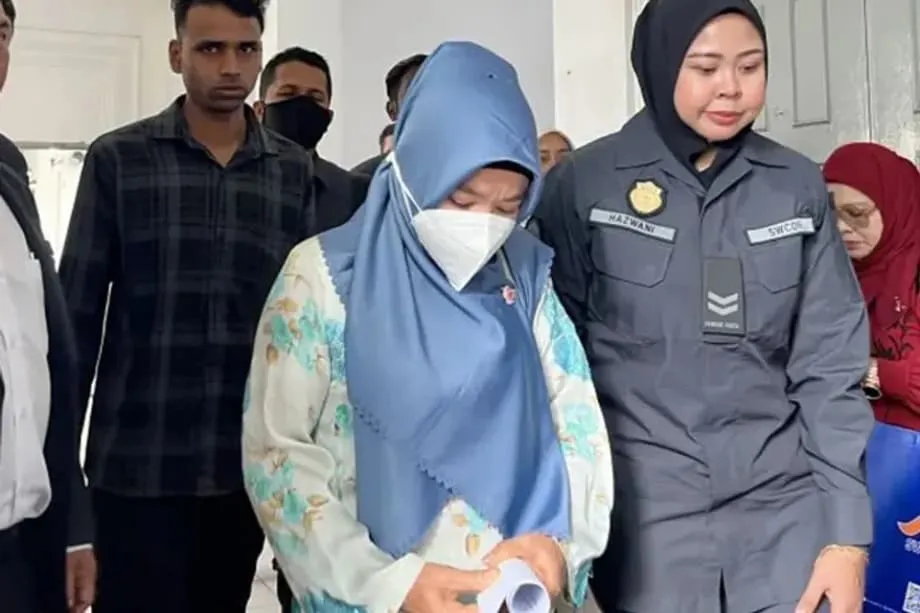
Anita Lukman, 49, and Sultan Md, 28, appeared at the Sessions Court in Johor Bahru on the morning of January 23, 2026. Both cases concern separate incidents along Jalan Ibrahim Sultan in Stulang Laut, a busy district in the city centre, during the early hours of New Year's Day.
Anita pleaded guilty before Sessions Judge Nor Aziati Jaafar. Sultan did not enter a plea because he requested a Bangladeshi translator, saying he did not fully understand the charge. His case was postponed to January 28.
The proceedings put Malaysia's tougher approach to public cleanliness into practice just over three weeks after enforcement of the new provisions began on January 1. Under the Solid Waste and Public Cleansing Management Act 2007, known as Act 672, offenders can face a fine of up to RM2,000 and a court order requiring them to carry out supervised cleaning work.
The changes connect punishment with the public spaces affected by littering. A person who drops rubbish can be required to spend time cleaning streets, drains or other public facilities, alongside paying a financial penalty. The first cases also show how the courts must address individual circumstances, including a defendant's finances and ability to understand the proceedings.
A Guilty Plea and a Mother's Appeal
Anita, an odd-job worker, admitted throwing a cigarette butt and a drink bottle onto the pavement at about 12:41am on January 1. Designated rubbish bins were nearby, but she did not use them.
Solid Waste and Public Cleansing Management Corporation prosecution officer Siti Adora Rahtiman asked for a sentence that would deter Anita and other members of the public from littering. The corporation, known as SWCorp, is responsible for enforcing the provisions.
Anita had no lawyer. In a tearful appeal for leniency, she told the court that she was a single mother supporting two children, aged eight and 15, who were still at school. She said that losing income through an inability to work or having to meet financial penalties would affect their education.
Anita explained her circumstances to Judge Nor Aziati:
I am only helping my friend with odd jobs, and my children will risk skipping school if I do not send enough money home.
The judge imposed a fine of RM500, approximately S$160, together with six hours of community service. Anita must complete the work within six months, performing up to two hours a day. At that daily limit, completing her sentence would require at least three days of service.
The court also set out separate consequences for failing to meet the sentence. Defaulting on payment of the fine would result in 15 days in prison. Failure to comply with the community service order could bring a further fine ranging from RM2,000 to RM10,000.
Those amounts make compliance with the cleaning order a substantial part of the sentence. Anita's initial RM500 fine is one quarter of the RM2,000 maximum fine for the littering offence, while the potential penalty for disregarding the service order begins at RM2,000.
Why the Second Case Was Postponed
Sultan, a factory worker, was accused of littering in the same area at about 1:27am on January 1. The alleged incident occurred 46 minutes after Anita's offence.
His appearance on January 23 stopped before a plea could be taken. Sultan asked for a Bangladeshi translator because he did not fully understand the nature of the charge against him.
Judge Nor Aziati granted the request and set January 28 for the next mention, allowing time to arrange a qualified interpreter. A mention is a scheduled court appearance at which the court can address the progress of a case and the steps needed before it continues.
The interpreter will allow Sultan to understand the accusation and take part in the proceedings. As of January 24, his plea and the outcome of his case had not been decided.
The key dates in the first prosecutions are:
- January 1, 2026: Enforcement of the new littering provisions began. Anita's offence occurred at about 12:41am, and Sultan's alleged offence at about 1:27am.
- January 1 to January 22: SWCorp issued 418 littering notices across the areas covered by its enforcement campaign.
- January 23: Anita pleaded guilty and was sentenced. Sultan requested a translator, and his case was postponed.
- January 28: Sultan's case is scheduled for its next mention.
What the New Provisions Cover
Section 77A(1) of the Solid Waste and Public Cleansing Management Act 2007 is the provision used in the Johor Bahru cases. Its full enforcement from January 1 brings stronger consequences for improperly disposing of waste in public places.
The enforcement framework applies in Johor, Melaka, Negeri Sembilan, Pahang, Perlis and Kedah, together with the Federal Territories of Kuala Lumpur and Putrajaya. These are the jurisdictions identified for the new measures.
Offenders can be fined up to RM2,000. Courts can also impose a Community Service Order, or CSO, requiring supervised public cleaning work. The order can run over a period of no more than six months, with a maximum total of 12 hours of labour.
The six months is the period allowed for completing the work; the 12 hours is the maximum amount of work that can be ordered. Anita received six hours, half that maximum, to be completed within the six month period.
The provisions move enforcement beyond warnings or small compound fines. A compound fine allows an offence to be settled through payment under the relevant enforcement process. The new approach brings offenders before a court, where a judge can impose both a financial penalty and work intended to address their conduct.
Why Cleaning Work Is Part of the Punishment
SWCorp chief executive Khalid Mohamed has described community service as an enforcement approach focused on accountability and education, rather than monetary punishment alone. The aim is to encourage lasting changes in behaviour by requiring offenders to deal directly with the consequences of littering.
Financial penalties take money from an offender. A cleaning order also takes time and requires personal effort in maintaining the spaces used by other people. The government intends that experience to build civic responsibility where fines have been ineffective.
Housing and Local Government Minister Nga Kor Ming previously said stricter punishment was needed to develop a culture of cleanliness comparable with that of other developed nations. The public nature of the work is also intended to discourage people who might otherwise dismiss a smaller fine.
Anita's sentence illustrates how the two parts operate together. She must pay RM500 and complete the ordered cleaning hours. Paying the fine alone would leave the service requirement outstanding, with a separate financial consequence for failing to comply.
What Offenders Will Do During Service
SWCorp has carried out simulations showing how community service orders will be implemented. Offenders first report to officers for attendance checks and basic health screenings before receiving equipment for their assigned work.
The safety equipment includes masks, gloves and vests designed to make wearers easy to see. The vests carry the words "Community Service Order." Offenders are supplied with tools such as straw brooms, dustpans and sticks for picking up litter.
Assignments can include collecting rubbish from public walkways, sweeping streets, cleaning drains and scrubbing public toilets. Other tasks can involve trimming grass or painting buildings. SWCorp determines the work according to the sentence and the person's physical capabilities.
Officers supervise the work, which is often carried out in public view. Cones and signboards identify the area and tell passersby that the cleaning is being performed under a court order. That visibility adds an element of social embarrassment to the punishment.
SWCorp says health and safety are priorities. Masks provide some anonymity, and one supervisor is assigned for every five offenders to oversee the work and ensure it is carried out correctly and safely.
The general arrangements limit sessions to a maximum of four hours. Anita's individual sentence sets a shorter limit of two hours a day. Her court order therefore determines how her six hours must be divided, within the wider system for supervised service.
418 Notices in the First Three Weeks
SWCorp's enforcement campaign, known as Ops Cegah, produced 418 littering notices between January 1 and January 22. The Johor Bahru prosecutions form part of that wider effort to enforce the new rules.
Kuala Lumpur recorded the largest number in the state and territory figures released, with 127 notices. Kedah followed with 99 and Negeri Sembilan with 61. Johor recorded 58, while Pahang had 30 and Melaka 24.
Kuala Lumpur's 127 notices represent about 30 per cent of the total of 418. Combined with Kedah's 99, the two jurisdictions accounted for 226 notices, more than half of the total.
Of all notices issued during the period, 315 went to locals and 103 to foreigners. Foreigners therefore accounted for about one quarter of the total, while locals received about three quarters. The figures show that enforcement has reached both groups.
A notice begins a process that can lead to a court appearance. The first two prosecutions show the next stage: the court hears the charge, takes a plea when the defendant understands it, and determines the sentence if there is a conviction.
Officers Blend Into Commuter Crowds
Johor's operations include officers working in ordinary clothes around Johor Bahru Sentral near the causeway. Wearing T-shirts, jeans, baseball caps and sunglasses, they blend into the crowds of commuters while watching for littering.
Officers may lean against railings, look at their phones or drink coffee as they observe the area. When someone drops rubbish, such as flicking a cigarette butt into bushes, officers record the act on their phones before moving in to detain the person.
The tactic has caught offenders by surprise. Johor SWCorp director Zainal Fitri Ahmad said many people had been caught littering despite being close to rubbish bins, conduct he described as disappointing.
Proximity to a bin is also part of Anita's case: she admitted discarding the cigarette butt and bottle on the pavement despite designated bins being nearby. The enforcement effort is directed at the act of dropping rubbish in a public place.
SWCorp is continuing the operations and working with local city councils to use CCTV cameras to monitor locations where littering frequently occurs. Phone recordings by officers and camera monitoring give the agency ways to observe conduct in busy public areas.
What Foreign Visitors Face
Foreign residents and tourists are subject to the littering rules. Alongside the total of 58 Johor notices recorded through January 22, an operational account described 55 people caught in the state since January 1, of whom 28 were foreigners.
That group included five Singaporean tourists caught throwing cigarette butts. The 28 foreigners represented slightly more than half of the 55 people in that operational account, compared with roughly one quarter of the 418 notices across the wider campaign.
Foreigners caught littering receive offence notices and are informed of a later court date. The process requires a court appearance, rather than immediate settlement of the kind possible for some minor traffic violations.
They are not barred from leaving Malaysia at the initial stage. Their obligations to attend court and complete any community service order continue, however, and SWCorp has described measures involving the Immigration Department for people who fail to comply.
Zainal Fitri said SWCorp would report foreigners who failed to appear in court or complete their required service. A record of nonappearance would be entered into the immigration system, allowing consequences when the person next tried to cross the border.
The arrangement can prevent a person from entering Malaysia again. It is intended to give the enforcement process continuing effect for visitors who leave the country, including people who evade court proceedings or disregard an order.
For the two defendants in Johor Bahru, the immediate position is different. Anita has a fine and a cleaning order to fulfil. Sultan is awaiting the January 28 mention with an interpreter so that his case can proceed.
The Bottom Line
- Anita Lukman, 49, and Sultan Md, 28, became the first people charged under Malaysia's newly enforced littering provisions on January 23, 2026.
- Anita pleaded guilty and received a RM500 fine and six hours of community service, to be completed within six months at up to two hours a day.
- Sultan requested a Bangladeshi translator. His case was postponed to January 28 without a plea.
- The provisions allow fines of up to RM2,000 and up to 12 hours of supervised community service over no more than six months.
- SWCorp issued 418 notices from January 1 to January 22: 315 to locals and 103 to foreigners. Kuala Lumpur recorded the largest number, with 127.
- Enforcement includes officers in ordinary clothes, phone recordings and cooperation with councils on CCTV monitoring.
- Foreigners who fail to attend court or complete community service can be reported to immigration authorities and face restrictions on entering Malaysia again.