A religious celebration ends in a court fine
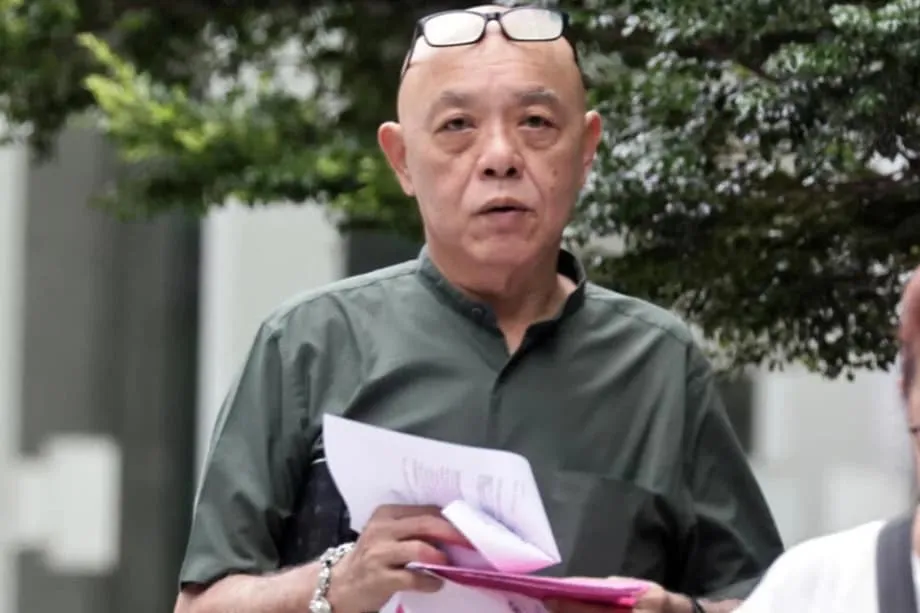
Lim Tong San, 62, chief master of Tien Sen Hua Taoist temple on Singapore's Paya Lebar Road, was fined S$2,000 on January 22 after admitting that he organised a public religious procession without a police permit. The procession took place on October 24, 2024, during an annual celebration honouring Baogong, the God of Justice, and welcoming the Jade Emperor, the supreme deity in Taoism.
Contents
- A religious celebration ends in a court fine
- Why the temple held the celebration
- How the events unfolded
- Where the procession entered traffic lanes
- What the permit rules require
- How organisers seek permission
- Why the court imposed S$2,000
- Comparisons with other procession rules
- Religious traditions in a crowded city
- How other festivals use public space
- Suggestions for avoiding similar cases
- A digital audience and a shared public responsibility
- Key Points
Lim led devotees and volunteers onto public roads at about 9pm. Participants occupied traffic lanes on Paya Lebar Road and Ubi Avenue 2, walked approximately 400 metres and returned to the temple. The court heard that their movement inconvenienced motorists and people using the pavement.
The prosecution sought a fine of S$2,000 to S$3,000. Lim received the lowest amount in that range after pleading guilty at the earliest opportunity. He had no previous similar convictions, another factor presented in his favour during sentencing.
Singapore permits religious processions when organisers secure the necessary approval. Lim's case concerned an event for which no permit had been obtained, rather than a procession that departed from conditions attached to an existing permit. That difference was central to the prosecution's assessment of his responsibility.
The case brings together three practical concerns: a temple's religious observance, the shared use of busy roads and pavements, and the requirement to arrange police approval before taking a procession into public space. The celebration also reached viewers online through a live broadcast on YouTube, extending its audience beyond those physically attending.
Why the temple held the celebration
Baogong is the chief deity of the temple, which is also referred to as Tien Sen Tua Temple. Revered as a symbol of justice and integrity, he is often depicted as a stern judge who punishes the wicked and protects the righteous. The annual celebration centred on this religious figure.
Lim and the devotees began the event on October 23, 2024, with a journey to approximately 80 to 90 places of worship across western Singapore. They carried out prayers and rituals at each location. Visiting several temples during a festival is a practice in Chinese folk religions and Taoism, expressing devotion and building spiritual connections between places of worship.
Participants returned to the temple on October 24 using chartered buses and private vehicles. Further rituals took place inside the temple and in an adjacent open field before the evening procession began.
The procession had a specific religious purpose: welcoming the Jade Emperor to the temple. In Taoist cosmology, the Jade Emperor is the Supreme Ruler of Heaven, governing the celestial realm and overseeing human affairs on Earth.
Deputy Public Prosecutor Maximilian Chew described the procession's timing, participants and purpose during the court proceedings:
Towards the end of the event at about 9pm... the devotees and volunteers of the temple participated in a foot procession organised and led by the accused. The purpose of the procession was to welcome the 'Jade Emperor' – the Supreme Ruler of Heaven in Taoism – to the temple.
The religious meaning helps explain why devotees took part. Once the group entered public roads, however, the event also involved traffic management and the use of space shared with people outside the temple community.
How the events unfolded
The celebration lasted two days, while the court proceedings addressed the procession held on the second evening. The principal dates were:
- October 23, 2024: Lim and devotees began visiting approximately 80 to 90 places of worship in western Singapore, conducting prayers and rituals.
- October 24, 2024: Participants returned by chartered buses and private vehicles, then attended rituals at the temple and an adjacent open field.
- About 9pm on October 24, 2024: Lim organised and led the foot procession to welcome the Jade Emperor.
- January 22: Lim was fined S$2,000 after admitting the offence.
The road procession followed the temple visits and rituals. Its route, the absence of a permit and the inconvenience caused to other road and pavement users became the main elements of the prosecution's case.
Where the procession entered traffic lanes
Paya Lebar Road was the starting point of the disputed road movement. Lim and the devotees occupied its leftmost lane while heading towards Ubi Avenue 2. They then used the left filter lane turning into Ubi Avenue 2.
A filter lane allows vehicles to turn away from the main flow of traffic. By walking in that lane, the procession entered space normally used by motorists making the turn. Participants also used the pavement along Ubi Avenue 2 and occupied vehicle lanes during the approximately 400 metre walk before returning to the temple.
Motorists had to navigate around the group. People using the pavement were also inconvenienced, according to the court account. The effect therefore extended beyond traffic to pedestrians sharing the route.
Singapore's dense urban setting makes the scheduling and management of road use important. Roads must accommodate substantial traffic, and an unplanned procession can interrupt movement and create safety concerns. A group may appear orderly to its participants while still requiring other people to change direction or wait.
The inconvenience mattered to the prosecution because it showed how the event affected the wider public. The legal issue was tied to the procession's movement through shared space, alongside the failure to obtain approval before that movement began.
What the permit rules require
Singapore's Public Order Act formed the basis of the case against Lim. Introduced in 1966, the framework described in the case was intended to maintain public order and prevent activities that could disrupt social harmony or stability in the young nation.
Under the Section 4 requirements described in the proceedings, an unauthorised procession involving three or more people moving along a public road for a common purpose constitutes an offence. Organisers must obtain a police permit before conducting a public procession.
A permit gives the authorities an opportunity to consider the proposed event before it happens. Police can assess whether a route is workable, whether participants and other road users will be safe, how traffic might be affected and whether there is a risk of public disorder.
A police spokesperson explained the stated purpose of the regulations:
Our laws and policies balance the need to provide adequate space for the conduct of public assemblies and processions, with the need to maintain public order and peace in Singapore.
The Road Traffic Act, cited as Cap. 276, also provides a route for addressing road obstruction. Section 67 was described as imposing fines for causing unnecessary hindrance to traffic. The two legal frameworks address public gatherings and the effects of activities on road movement.
How organisers seek permission
Religious organisations planning a public procession must submit an application to the police well before the event. The application process requires details such as the proposed route, expected number of participants, timing and security arrangements.
Police assess possible traffic disruption, risks to public safety and the likelihood that an event could cause disorder or offend other sections of society. For religious processions, authorities typically work with organisers on arrangements that allow the observance to proceed while limiting disruption to the public.
Thaipusam and Vesak celebrations illustrate how religious processions can take place legally with police cooperation. Approval allows organisers and authorities to make arrangements together, rather than leaving motorists and pedestrians to respond to an unexpected group on the road.
Lim's event had neither a permit application nor approval. The prosecution treated the complete absence of permission as more serious than breaching conditions attached to a permit already issued. In practical terms, police had not approved the procession's use of the route.
The permit requirement therefore concerns preparation as well as permission. Organisers need to establish where participants will walk, when they will do so and how the procession will share public space with everyone else.
Why the court imposed S$2,000
Lim admitted organising the unlawful procession. The prosecution asked the court to impose a fine between S$2,000 and S$3,000, arguing that his responsibility was greater because no permit had been granted at all.
The prosecution's distinction concerned the organiser's awareness of, and compliance with, the approval requirement. A procession operating under a permit has already undergone assessment, even if an organiser subsequently departs from its conditions. Lim's procession had not received that approval.
Lim's early guilty plea counted in his favour. By admitting the offence at the earliest opportunity, he accepted responsibility and saved court resources that would otherwise have been needed to contest the case. His lack of previous similar convictions also supported treating the incident as isolated rather than repeated conduct.
The S$2,000 sentence was S$1,000 below the upper end of the prosecution's requested range. It was also 40 per cent of the stated S$5,000 maximum fine for a first offence. Repeat offenders face higher penalties, including fines of up to S$10,000 and possible imprisonment for up to six months.
The sentence reflected both the unlawful use of public space and the factors in Lim's favour. Its position at the bottom of the prosecution's range shows the practical importance of the early plea and absence of similar convictions in the sentencing account.
Comparisons with other procession rules
The S$2,000 fine falls within the range described for unlawful procession cases in Singapore. A Buddhist festival incident in 2022 involved similar penalties for organisers who held processions without authorisation, providing a local comparison for Lim's sentence.
Singapore's approach requires permission for public processions while allowing them to take place. The wider legal comparison places that approach between systems that give stronger protection to religious activity in public and systems that place greater weight on secular rules.
In the United States, religious processions are generally protected through the First Amendment's guarantee of the free exercise of religion. The comparison cited Widmar v. Robbins and described American courts as typically requiring substantial evidence of public harm before restricting religious expression in public spaces.
France's approach places greater weight on laïcité, the principle of secularism. French laws enacted in 2004 prohibit conspicuous religious symbols in public schools, and the broader approach described here gives priority to secularism in regulating religious expression in public settings.
Singapore's permit model has been described as a middle approach: processions are regulated rather than banned outright. That model fits its stated effort to accommodate religious diversity while maintaining social order through practical rules governing shared spaces.
Religious traditions in a crowded city
Singapore's limited land and high population density create practical difficulties for religious traditions that involve gatherings or movement through public areas. A route meaningful to worshippers may also be a road needed by motorists or a pavement used by residents.
Taoist communities have cultural importance within Singapore's Chinese majority population, while occupying a smaller demographic position than larger religious groups. Their particular rituals and requirements can consequently be less visible to authorities and the wider public.
Many religious practices developed before modern road networks, planning systems and rules governing crowds. A longstanding tradition can therefore encounter requirements that were designed around contemporary traffic and public safety needs. Continued observance may require adjustments to timing, routes or arrangements with authorities.
Singapore has pursued policies supporting racial and religious harmony since independence. Regulation of public assemblies and processions forms part of that broader effort to prevent ethnic or religious conflict and support social cohesion.
Lim's fine may make religious leaders more cautious about events requiring permits. That caution could lead to greater compliance, or it could lead some communities to reduce particular traditional activities. Dialogue between religious organisations and regulators is one way to identify arrangements that preserve observances while protecting public access and safety.
How other festivals use public space
Thaipusam involves a procession between Sri Srinivasa Perumal Temple and Sri Thendayuthapani Temple. Devotees carry kavadi, described as burdens, along a designated route. Advance arrangements allow this important Hindu observance to take place within the permit system.
Buddhist Vesak celebrations can include candlelight processions. Christian groups also sometimes organise public walks of faith during Easter or other important religious periods. These examples show that movement through public space is part of several religious traditions in Singapore.
Such events typically proceed without legal problems when organisers obtain permits and work closely with authorities on safety. Lim's procession lacked that coordination, which authorities viewed as undermining the structured arrangements used to manage religious diversity and public order.
The comparison also explains why a procession's religious purpose and its administrative requirements operate together. A festival can remain a religious observance while its organisers plan crowd movement, road access and security with the police.
Suggestions for avoiding similar cases
Several proposals arising from the case focus on making the rules easier for religious organisations to understand and apply. They range from different permit arrangements for smaller events to closer contact between communities and public agencies.
- Flexible permit systems: Requirements could be organised in tiers for smaller religious processions, drawing on the comparison with Japan's permits for matsuri, or festivals, while keeping official oversight.
- Community liaison arrangements: Interfaith committees or dedicated units within police and regulatory bodies could work with religious communities on procession planning.
- Educational outreach: Clearer explanations of legal requirements and application procedures could help religious organisations avoid unintentional violations.
- Religious accommodation policies: Specific guidance could recognise the needs of religious processions while setting out public safety requirements for organisers and enforcement agencies.
The proposals seek to reduce uncertainty before an event reaches the road. They would require understanding and compromise from both religious organisations and authorities, including practical solutions where traditional activities meet modern traffic arrangements.
No date was given for adopting these suggestions. For Lim's temple and other religious organisations, the immediate requirement remains obtaining the necessary approval before organising a public procession.
A digital audience and a shared public responsibility
YouTube carried a live broadcast of the rituals and procession, allowing people beyond the temple to follow the religious celebration virtually. The event combined longstanding observances with a modern means of reaching worshippers who were not physically present.
The broadcast gave the procession a wider digital audience while its physical participants used roads and pavements. Future discussions about religious events and public order may consider that digital reach alongside the practical arrangements needed on the ground.
Lim's case shows the work involved in maintaining religious traditions within a densely populated city. Authorities must manage safety and access while allowing diverse faiths to practise. Religious leaders, in turn, need to understand the regulatory requirements and engage with the approval process.
The S$2,000 fine was a measured response within the prosecution's requested range, taking account of the offence, the early admission and Lim's record. The broader lesson is practical: advance planning and communication can allow traditions to continue while protecting the people who share the surrounding streets.
Key Points
- Lim Tong San, 62, chief master of Tien Sen Hua Taoist temple, was fined S$2,000 on January 22 for organising a procession without a police permit.
- The procession took place at about 9pm on October 24, 2024, during a celebration honouring Baogong and welcoming the Jade Emperor.
- Devotees had visited approximately 80 to 90 places of worship in western Singapore during the celebration.
- Participants occupied lanes on Paya Lebar Road and Ubi Avenue 2 during a walk of approximately 400 metres, inconveniencing motorists and pedestrians.
- The prosecution sought S$2,000 to S$3,000. Lim pleaded guilty early and had no previous similar convictions.
- The stated maximum fine for a first offence is S$5,000. Repeat offenders face fines up to S$10,000 and possible imprisonment for up to six months.
- Religious processions can take place legally with permits and police coordination, including during Thaipusam and Vesak.
- The rituals and procession were broadcast live on YouTube. Suggestions following the case included clearer guidance, liaison arrangements and flexible permit requirements.