New leadership and an early construction milestone
The Hong Kong University of Science and Technology has recruited veteran blood disease specialist Professor Anskar Leung Yu-hung from the University of Hong Kong as it prepares to admit the first 50 students to Hong Kong's third medical school in the 2028/29 academic year.
Contents
- New leadership and an early construction milestone
- Why Leung chose to move
- Recruitment puts cooperation under scrutiny
- Who else is joining the school?
- What the target of 100 professors means
- A degree built around science and clinical care
- What the new complex will contain
- Hospital training and the route to opening
- Key Points
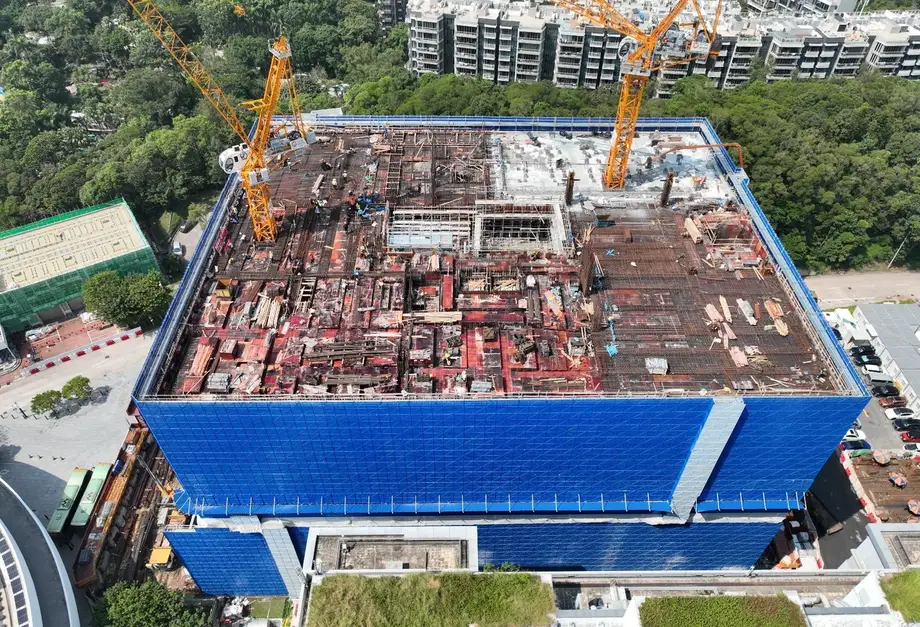
At an October 28, 2026 briefing, HKUST said its eight storey Medical Education and Research Complex at Clear Water Bay had topped out the previous week, ahead of schedule. The approximately 6,000 square metre building is expected to be completed in mid 2028, providing the school's main teaching and research base during its initial phase.
Leung will serve as senior associate dean of medicine and acting head of clinical medicine. His move has brought attention to how the new school will recruit experienced doctors and teachers without weakening Hong Kong's two existing medical schools at HKU and the Chinese University of Hong Kong.
HKUST President Professor Nancy Ip said the university would not actively poach staff and wanted to cooperate with both institutions. HKU's medical faculty said it respected Leung's personal choice while urging HKUST to recruit more talent overseas to reduce damaging competition.
Beyond the appointment, HKUST is working toward three connected goals: completing its facilities, securing approval for its medical curriculum and assembling enough teachers for students to begin clinical training in 2030. The school aims to have at least 100 professors by that year.
Why Leung chose to move
Leung brings almost three decades of experience at HKU, where he rose to chair professor of haematology and served as a vice dean responsible for human capital. He obtained his medical degree at CUHK before joining HKU in the 1990s as a clinical assistant professor.
His research includes acute myeloid leukaemia, a cancer affecting the blood and bone marrow. In May, he presented his HKU team's work on a combination treatment aimed at reducing the chance of the disease returning. His experience spans patient care, laboratory research and the training of future doctors.
Leung said he had discussed his departure with HKU and had resigned about four months earlier. He described the discussions as taking place in an atmosphere of mutual understanding and said he wanted to contribute his clinical, research and teaching experience to the new institution.
Speaking as HKUST's new senior associate dean of medicine, Leung explained the attraction of helping create a medical school:
I share the founding mission of the school and look forward to contributing the clinical, research and teaching expertise I have accumulated.
Leung also expressed gratitude for the opportunities he had received at HKU. For HKUST, his appointment adds a senior clinician with experience of both medical education and managing academic staff, two immediate needs for an institution building its teaching team.
Recruitment puts cooperation under scrutiny
Ip said HKUST had received enquiries from interested candidates in Hong Kong and overseas even before the selection process began. She described recruitment as a global exercise governed by an open and rigorous selection process, with suitable candidates already identified for several key positions.
HKUST's team visited the United Kingdom in July to seek prospective recruits. Founding Dean of Medicine Professor King Li said local and overseas applicants would be assessed fairly according to their qualifications and suitability.
Ip, explaining the university's position on hiring from the existing schools, said:
Poaching is not something that we do. As a new medical school, a vision of ours is to work with the other two medical schools - that is the best way to advance local medical education and healthcare development.
HKU's medical faculty encouraged HKUST to look especially to overseas recruitment so all three schools could develop their own strengths. HKU said it had itself recruited scholars from leading North American universities and established a strategic partnership programme with international institutions, giving academics opportunities for research, further study and professional training abroad.
Practical cooperation is also being explored. CUHK is expected to share an anatomy course, while arrangements with HKU remain under discussion. Anatomy, the study of the body's structure, is a core part of medical training, making the proposed sharing arrangement a concrete example of how the schools could work together.
Who else is joining the school?
HKUST's emerging faculty includes Clinical Professor Roger Ho Chun-man, previously at the National University of Singapore, alongside Professors Elaine Holmes and Jeremy K. Nicholson. Their appointments bring experience from clinical medicine and research institutions outside Hong Kong.
Holmes previously held professorships at Imperial College London and Australia's Murdoch University. She said she joined HKUST in early July. Her work spans systems medicine, research into the microorganisms living in the body, artificial intelligence and precision health. Systems medicine examines how different biological processes work together rather than studying each in isolation.
Nicholson previously served as Murdoch University's pro vice chancellor for health sciences and executive director of the Australian National Phenome Centre. His appointment adds further experience in studying how biological processes relate to health and disease.
Ip said in April that seven clinical professors had taken up posts and about 30 people from the United States, Europe, Australia and Singapore had signed letters of intent to join. Those figures describe different stages of recruitment: some people had started work, while others had expressed a formal intention to do so.
Li declined to give an exact current recruitment total at the October briefing because hiring was continuing. HKUST has submitted a staffing plan covering academic and administrative positions from 2026 to 2030, with priority given to clinical teachers in key departments.
What the target of 100 professors means
Li said HKUST aims to employ at least 100 professors by 2030, when its first students are scheduled to enter clinical internships. The goal is to ensure that the medical disciplines and specialties have appropriate academic leadership and teaching staff.
He described the expected teacher to student ratio as exceeding one to one; another account of his remarks gave the target as one to one. Both descriptions point to an intensive staffing plan for a school starting with a small intake.
The planned 100 professors would be twice the size of the inaugural class of 50 students. More students would enter after that first class, so the staffing target concerns a growing school rather than just its opening cohort.
HKUST is also drawing specialists into the medical school through joint appointments across its existing schools. Li said the eventual balance between local and overseas professors was expected to be fairly even, with appointments determined by the quality of candidates rather than their place of origin.
A degree built around science and clinical care
HKUST plans to offer a four year Bachelor of Medicine and Bachelor of Surgery programme for graduates. Graduate entry means students would begin medicine after completing an earlier university degree.
The curriculum design, academic structure and main subject outlines are largely in place, while detailed course development continues. The proposed framework combines clinical training and medical ethics with precision medicine, artificial intelligence and data science, drawing on HKUST's existing strengths.
Precision medicine uses information about a person's biology and other characteristics to help guide care. Data science helps researchers identify patterns in large collections of information. Alongside these subjects, medical ethics addresses decisions about patients' rights, responsibilities and care.
The Hong Kong Medical Council is reviewing the proposed curriculum. An assessment team visited HKUST for two days in early October, and the university was awaiting the outcome at the time of the briefing. No date for that decision was given.
Students will also need to reach a specified level of Cantonese before graduation. Li said selection would be based on merit without additional distinctions by geographical origin beyond applicable requirements. The exact Cantonese standard and how students will be assessed have not been announced.
For future students, the language requirement connects directly to clinical work: a doctor needs to understand patients and explain care in language they can use. The requirement places that ability alongside the scientific and clinical content of the degree.
What the new complex will contain
The Medical Education and Research Complex has completed its main structural works. Topping out marks the point when a building reaches its highest structural level; work on its interior spaces, equipment and building systems still follows.
Architectural firm SOM confirmed the early milestone in its project announcement. SOM designed the building with Wong Tung & Partners Limited, bringing teaching, research and shared academic spaces together in a single complex.
The building has floors measuring five to six metres in height. Planned facilities include teaching laboratories, research spaces, clinical skills facilities and simulation training centres, where students can practise medical tasks in controlled settings before working with patients. Drone landing facilities are planned for the rooftop.
SOM Design Partner Scott Duncan described the project's intended contribution to Hong Kong:
The new complex is a transformative step for the local community and the broader city,
HKUST said the structure topped out less than six months after groundbreaking and ahead of schedule. Detailed planning is now focused on the teaching spaces, research facilities and simulation centres needed to turn the completed structure into a working medical education base.
Hospital training and the route to opening
Kai Tak Hospital is planned as the school's interim teaching hospital. HKUST and the Hospital Authority are finalising arrangements for clinical teaching and research support, while the Clear Water Bay complex will serve as the primary teaching and research facility until a permanent campus is completed.
Students are scheduled to begin clinical internships in 2030, two years after the planned first intake. Hospital access and the recruitment of clinical teachers therefore need to progress alongside classroom construction and curriculum approval.
HKUST's timetable brings several strands of preparation together:
- November 2025: The government approved HKUST's proposal to establish Hong Kong's third medical school.
- April 2026: Construction began on the Medical Education and Research Complex.
- Early October 2026: A Medical Council assessment team conducted a two day visit to HKUST.
- October 2026: The complex topped out before the university's October 28 progress briefing.
- Mid 2028: The teaching and research complex is expected to be completed.
- 2028/29 academic year: HKUST aims to admit its first 50 medical students.
- 2030: The first students are scheduled to begin clinical internships, with at least 100 professors targeted by that year.
Ip said preparations had advanced steadily since government approval, and the university remained confident about its opening timetable. The next stages involve completing the building, developing the detailed courses, continuing recruitment and securing the necessary curriculum assessment outcome.
Key Points
- Former HKU vice dean Anskar Leung has joined HKUST as senior associate dean of medicine and acting head of clinical medicine.
- HKUST aims to admit 50 students in 2028/29 to a four year medical degree for graduates.
- The eight storey, approximately 6,000 square metre teaching and research complex has topped out ahead of schedule.
- The school targets at least 100 professors by 2030, when its first students are scheduled to begin clinical internships.
- The Medical Council is assessing the curriculum, and students will need to meet a Cantonese requirement before graduation.
- HKUST says it seeks cooperation with HKU and CUHK, while HKU has urged greater overseas recruitment to reduce competition for existing talent.