A bid for more research space, with a warning on costs
The Chinese University of Hong Kong will compete for one of the first three university town sites in Hung Shui Kiu, Vice-Chancellor Professor Dennis Lo has said, while warning that a HK$10 billion government loan allocation could pay for only about five buildings at his illustrative construction cost of HK$2 billion each.
Contents
- A bid for more research space, with a warning on costs
- Why Lo wants a larger footprint
- Research institutes and overseas partners
- Why separate tenders complicate planning
- What the official land plans say
- A timeline stretching into the next decade
- How far can HK$10 billion go?
- CUHK must balance expansion with existing commitments
- Lee's plan connects universities with businesses
- Key Points
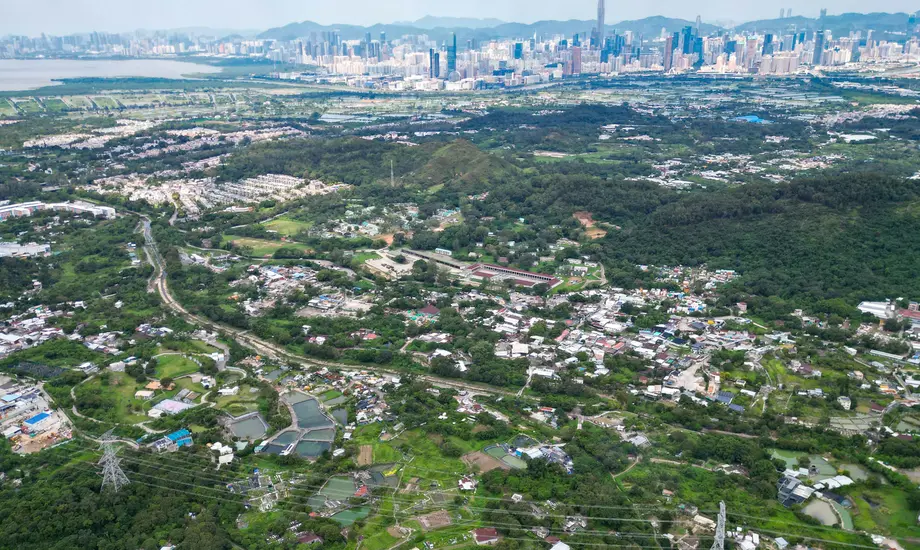
The sites are open for tender, with bids due by the end of the year. Lo sees the Northern Metropolis University Town as a chance for Hong Kong's eight publicly funded universities to expand their research capacity. His concern is how institutions can plan that expansion when land in Hung Shui Kiu, San Tin and Ta Kwu Ling is being offered at different times.
CUHK is considering research institutes rather than a complete campus at Hung Shui Kiu because land is limited. It is also exploring partnerships with overseas institutions and businesses, although Lo withheld details while the university is competing for a site.
Chief Executive John Lee has set out a broader ambition: university districts combining campuses, technology facilities, industry and residential communities. The immediate challenge is to turn that ambition into projects that universities can afford and coordinate.
Why Lo wants a larger footprint
Lo compared Hong Kong's universities to boutique hotels: prestigious and highly ranked, but relatively small. Even CUHK, which has a comparatively large campus within Hong Kong, has less room than leading universities overseas, he said.
Research needs people and places to work. Lo linked campus scale to the number of researchers a university can accommodate, which in turn affects its capacity to produce scientific papers, patents and discoveries. A patent gives an inventor legal rights over an invention, helping research move towards practical use.
For CUHK, a presence in the Northern Metropolis would therefore mean more than an additional address. Dedicated institutes could provide space for research teams and equipment while allowing the university to build relationships with nearby companies and institutions.
Lo's preference also gives a more concrete picture of what the university town may become. Several universities could operate specialised institutes in the same district, rather than each reproducing a full campus with its complete range of teaching, housing and administrative facilities.
Research institutes and overseas partners
CUHK established its InnoHub for New Quality Industries in Qianhai in March. Lo pointed to Qianhai's proximity to Hung Shui Kiu as a reason the two locations could support each other's work.
A Hung Shui Kiu institute would add another location to CUHK's research network. Lo has previously expressed interest in all three university town areas, as well as taking space at the Hetao research and academic building known as Hetao Academic and Research Building No. 1, which was expected to be completed at the end of the year.
Overseas participation is part of CUHK's thinking, but Lo expects the number of foreign institutions establishing campuses in the university town to be small, perhaps one or two. That is his assessment of the space available, rather than a government limit.
Lo argued for balancing international participation with the needs of Hong Kong's existing universities. His position is that bringing in overseas partners should sit alongside giving local institutions enough room to grow.
Why separate tenders complicate planning
The government's approach asks universities to make decisions about individual opportunities before all the sites are offered. Lo said this makes cooperation harder because an institution may feel it cannot pass up an early tender while waiting for a location that could suit it better.
Hang Seng University of Hong Kong President Emeritus Simon Ho, who hosted the interview, questioned whether a competitive bidding system was the best way to encourage universities to work together. A tender selects successful applicants, while the government's wider policy also asks institutions to cooperate.
Lo acknowledged that competition can encourage universities to submit their strongest proposals. His objection focused on timing: if the different locations were offered together, institutions could compare them and discuss which university or partnership was best suited to each.
For example, an institution's choice may depend on nearby research activity or industrial partners. Deciding on one site before the terms for another are available makes it harder to put those relationships into a single development plan.
What the official land plans say
Recent descriptions put the university town's three areas at about 300 hectares in total, spread across Hung Shui Kiu, San Tin and Ta Kwu Ling. The government's dated statements from 2025 described a smaller reservation of about 90 hectares, using the planning area names Hung Shui Kiu/Ha Tsuen, Ngau Tam Mei and New Territories North New Town.
Education Secretary Christine Choi's Legislative Council reply on May 7, 2025, set out approximately five hectares in Hung Shui Kiu/Ha Tsuen, 46 hectares in Ngau Tam Mei and 40 hectares in New Territories North New Town. The government described the combined reservation as about 90 hectares, up from an initial 60 hectares, an increase of roughly half.
The May reply assigned the Hung Shui Kiu land to new campuses for institutions operating on a self financing basis. It said eligible institutions would be invited to submit expressions of interest as planning progressed. CUHK's proposed bid comes amid the more recent description of three Hung Shui Kiu sites being put to tender.
The exact closing date, the areas of those three tender sites and how the reported 300 hectares relate to the earlier 90 hectare reservation were not specified in the announcements and interview details discussed here. Those particulars matter because the amount of land available will shape how much teaching, research and accommodation universities can provide.
A timeline stretching into the next decade
The government's 2025 timetable shows why universities face decisions across several years. Preparing land means making it ready for construction; universities still need to build and equip their facilities afterwards.
- 2020: The first phase of works in the Hung Shui Kiu/Ha Tsuen New Development Area began.
- First half of 2024: The second phase, including the university town land, began in stages.
- May 7, 2025: The Education Bureau said Hung Shui Kiu university land could be ready for building work as early as 2026. It planned to publish a concept development outline in the first half of 2026.
- September 30, 2025: The University Town Planning and Development Task Force held its first meeting, chaired by Chief Secretary Eric Chan.
- 2026, 2028 and 2030: The task force statement listed these as the earliest years that the Hung Shui Kiu, Ngau Tam Mei and New Territories North batches could respectively become available.
- End of the year: Bids for the first three Hung Shui Kiu sites are due.
The government's task force statement gave an earlier broad availability schedule than the May reply for the latter two areas. In May, the bureau had put completion of land preparation for the first Ngau Tam Mei sites at 2029 at the earliest, and for New Territories North at 2030/31.
Eric Chan's task force is responsible for developing recommendations on the concept outline, the development model and construction. Its first meeting considered how Hung Shui Kiu could connect with nearby professional services and vocational training, giving the area a role beyond conventional university teaching.
How far can HK$10 billion go?
Lo said CUHK would manage its finances prudently and develop within its means. The government's HK$10 billion allocation is for loans to support university town campus development, so institutions would be borrowing money that must be repaid rather than receiving an equivalent grant.
Construction costs are central to his warning. Lo said even a relatively small building could cost several hundred million Hong Kong dollars, while more expensive buildings could cost above HK$2 billion or around HK$3 billion. Using HK$2 billion as an example, he calculated that HK$10 billion would cover five buildings.
The calculation explains his call for a larger allocation. Five buildings across a programme intended to accommodate multiple universities, research facilities and international partners would leave institutions making difficult choices about what to build first.
Individual borrowing is also capped, Lo said. A university's practical budget therefore depends on both the total loan pool and how much it is allowed to borrow. Larger loans would bring larger repayment commitments, making the operating costs of new institutes another part of the decision.
CUHK must balance expansion with existing commitments
CUHK's finances already include substantial obligations. Lo said dealing with CUHK Medical Centre's debt was the first priority he identified when asked during his vice-chancellor selection interview what he would tackle on taking office.
The university must also return HK$1.041 billion in surplus funds to the government for the 2025/26 financial year, the largest amount among the eight publicly funded universities. Lo acknowledged pressure on public finances but said universities need investment to develop further, expressing hope that this return of funds would happen only once.
The return is equivalent to just over half the HK$2 billion illustrative building cost used in his university town calculation. It is an existing financial obligation alongside the proposed expansion, while the university town loan programme would create a separate borrowing commitment.
CUHK is also planning within its current campus. Its new strategy includes a postgraduate college in Area 39 near the planned Pak Shek Kok station. Lo described the college as an urgent project that would allow postgraduate students to experience CUHK's college system.
A campus master plan is examining older buildings that may need redevelopment and land available for future use. Area 39 is being considered for a college, research institutes and a medical building, with another parcel still under review. Hung Shui Kiu would therefore form one part of a wider expansion programme.
Lee's plan connects universities with businesses
Chief Executive John Lee presented the university towns as part of the Northern Metropolis's central role in Hong Kong's future and its first five year plan. Speaking at the Global University Presidents and Leaders Summit in Wan Chai on Tuesday, he invited international university leaders to participate.
Lee said the three university towns would each have a distinct focus. He described districts combining campus areas, technology, industry and residential communities, intended to attract leading scholars and students from around the world.
Lee, explaining the commercial role of the planned districts, said:
"The towns are also designed to empower industry," he said.
The government wants universities and other institutions to establish basic research facilities and shared platforms, including computing centres with powerful systems, joint laboratories and research centres bringing different academic subjects together. Shared facilities would let several teams use major equipment or infrastructure.
Lee also set out how people could work across university and business settings:
We will encourage university staff to undertake research at companies. We will encourage industry professionals to contribute to university teaching and research.
Hong Kong already has five universities ranked among the world's top 100, Lee said, with students from more than 100 countries and regions and about 70% of faculty coming from outside Hong Kong. The summit brought together more than 50 university leaders from over 20 countries and regions.
CUHK's proposed research institutes fit the government's interest in closer links between research and industry. Lo's warnings bring the practical decisions into focus: which sites universities can secure, which partners they can work with and how much construction and borrowing they can afford.
Key Points
- CUHK will bid for one of the first three university town sites in Hung Shui Kiu, with tenders due at the end of the year.
- Dennis Lo expects research institutes to be more practical than a complete CUHK campus because land is limited.
- Lo says offering sites at different times makes university planning and cooperation harder.
- He wants more financial support, estimating that HK$10 billion would fund five buildings costing HK$2 billion each.
- The government's 2025 statements reserved about 90 hectares; more recent descriptions put the three university town areas at about 300 hectares.
- John Lee wants the districts to combine education, research, industry and residential communities, with shared facilities and international participation.