Japan Targets Safety Checks for DNA Orders
Japan's Cabinet Office plans to develop rules for companies that manufacture DNA to order, including checks on genetic sequences and the customers requesting them, as advances in artificial intelligence raise concerns about biological misuse. The government aims to compile expert conclusions in January 2027.
Contents
- Japan Targets Safety Checks for DNA Orders
- What Companies Make When Researchers Order DNA
- Why AI Has Made the Issue More Urgent
- Two Checks: The Sequence and the Customer
- Fragmented Orders Present a Harder Problem
- Japan Looks Abroad as the Market Expands
- Research Capacity and Data Are Also on the Agenda
- The Milestones Behind the Planned Rules
- Key Points
The proposed safeguards would cover a service that supports medicine, drug development, agriculture and basic research: a laboratory specifies the genetic material it needs, and a specialist company makes it. Japan has relied on voluntary company efforts, without public rules for screening such orders.
The Cabinet Office presented its direction at an October 13 meeting of experts advising on the country's bioeconomy strategy. A dedicated panel of biosecurity specialists will examine overseas practices and consider guidelines for identifying potentially dangerous sequences and assessing customers.
The initiative also has an industrial dimension. According to the Cabinet Office, five leading companies in the United States and Europe account for 50% to 60% of the global market for contract DNA synthesis. Japanese companies operate in the sector, but the government is also concerned about domestic pharmaceutical research being outsourced to China and experimental data moving overseas.
What Companies Make When Researchers Order DNA
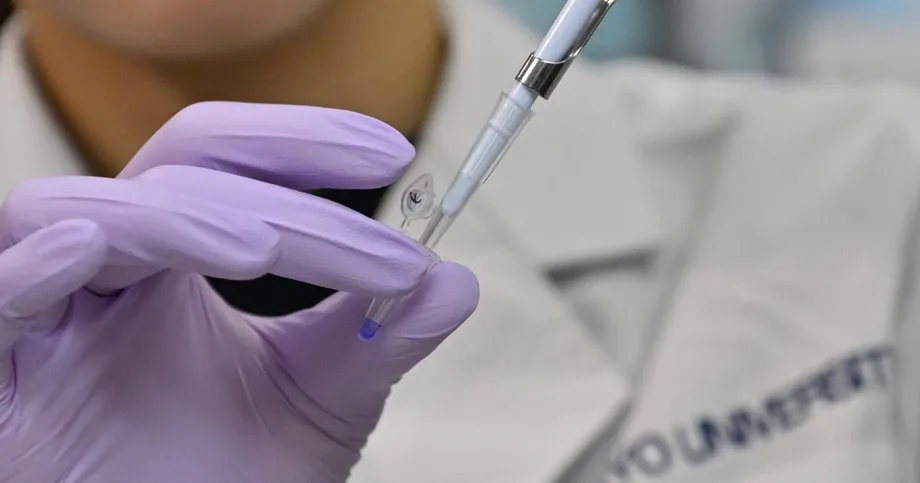
DNA carries genetic instructions used by living things. A DNA sequence is the order of its chemical building blocks, much as a written instruction depends on the order of its letters. Contract synthesis companies manufacture genetic material according to a customer's specified sequence.
Research institutions and pharmaceutical companies use that service to study how genes work or to give organisms useful functions. Applications extend across life sciences, healthcare, drug discovery, farming and livestock production. The broader Japanese discussions concern nucleic acid synthesis, which includes both DNA and RNA, another molecule involved in carrying and using genetic information.
The proposed screening would place safety checks at the point where a digital sequence becomes a physical research material. Companies would examine what they have been asked to make and who is asking for it. Those are separate tasks: a customer's identity and stated purpose provide different information from the sequence itself.
Why AI Has Made the Issue More Urgent
Artificial intelligence can help researchers design genetic sequences, while automated laboratory equipment can speed up experiments. Together, those technologies can make biological research more efficient. They also increase concern that someone could use the same capabilities to design harmful viruses, bacteria or toxins.
Researchers at Stanford University and other institutions reported synthesizing DNA from genetic information designed by AI and creating a virus not found in nature. The example illustrates how computer generated designs can lead to physical biological systems, bringing questions about safe use closer to the companies that manufacture genetic material.
Biological effects depend on what has been designed and how it is used. For the Japanese panel, the practical task is to consider how companies should recognize orders that warrant closer examination, including when a requested sequence is unfamiliar.
Commercial interest in combining AI and biology is also growing. Anthropic said in the autumn that it had established a biology research laboratory using its AI model. The development adds to the Cabinet Office's concern that safety arrangements need to keep pace with changes in research methods.
Two Checks: The Sequence and the Customer
The Cabinet Office's proposed approach centers on screening genetic sequences for danger and reviewing those placing orders. Sequence screening asks whether the requested material is related to a pathogen, an organism that can cause disease, or a toxin, a substance that can cause harm.
Customer screening examines who wants the material and the intended use. In the United States and Britain, synthesis companies already use screening practices that address both questions. Japan's panel will study those overseas examples as it considers a domestic framework.
Both checks matter because a sequence may have a legitimate research purpose while still requiring careful handling. Scientists studying disease, for example, need access to biological information relevant to their work. A screening system must assess the request in context, with attention to the material, the customer and the proposed activity.
The Japanese initiative remains at the rulemaking stage. The government has yet to settle whether the resulting arrangements will be legally binding, how compliance will be checked or what consequences would follow a breach. January 2027 is the target for expert conclusions, rather than a stated date for enforcement.
Fragmented Orders Present a Harder Problem
A 2024 Massachusetts Institute of Technology report described research in which orders for fragments of the Spanish flu virus genome were distributed among several synthesis companies. The researchers assembled the genetic information needed to recreate the virus.
The policy concern is that each supplier sees its own order, while the customer may be pursuing a larger project involving several suppliers. A company reviewing an individual request has a narrower view than someone examining the combined purchases.
That makes the scope of screening an important issue for Japan's panel. Reviewing a sequence is one part of the task; understanding a customer's purpose and recognizing patterns across requests can involve a broader set of information. The government has not announced a mechanism for coordinating such checks between companies.
The MIT example also helps explain why the proposed rules address customers as well as genetic material. A system focused entirely on the contents of one order would have less information about the wider activity behind it. Japan's discussions will have to translate that concern into requirements that companies can use in everyday business.
Japan Looks Abroad as the Market Expands
The Cabinet Office says the United States and United Kingdom already have guidance for contract synthesis companies and are considering legislation. The European Union is also moving toward legislation. Japan's planned panel will examine these approaches as it develops its own recommendations.
The market's concentration gives the decisions of a small number of suppliers considerable reach. The Cabinet Office's estimate that the five largest American and European companies hold 50% to 60% of the market means those firms account for roughly half to three fifths of global contract synthesis business.
The global DNA synthesis market was valued at $5.19 billion in 2025 and is projected to grow about 4.6 times over roughly a decade. On that projection, the market would reach approximately $23.9 billion. The figures describe a forecast, with actual growth dependent on future demand and investment.
For Japan, expanding use of synthesis means safety rules will affect an increasing range of research and commercial activity. Common expectations for screening could give customers and suppliers a clearer basis for handling sensitive requests, while the details will determine how much additional work companies must undertake.
Research Capacity and Data Are Also on the Agenda
The Cabinet Office is examining another concern alongside biological misuse: the movement of pharmaceutical research and experimental data outside Japan. It says many major Japanese companies developing biological medicines outsource some research and development to Chinese companies, sending substantial quantities of experimental data overseas.
The government is considering ways to strengthen domestic production capabilities, including greater use of automated experimental equipment. Such equipment can perform repeated laboratory tasks and help research facilities process more experiments.
These discussions connect two government priorities around biotechnology. Screening concerns the safety of materials that companies produce for customers. Domestic capacity concerns where research takes place, where related data goes and whether Japanese facilities can perform more of that work.
For pharmaceutical companies and laboratories, the resulting policies could affect both purchasing decisions and the location of research. The Cabinet Office has identified the issues it wants to address, while specific support measures for domestic facilities remain under consideration.
The Milestones Behind the Planned Rules
The government's timetable brings together evidence of weaknesses in existing screening, a growing commercial market and a deadline for Japan's recommendations. Key milestones include:
- 2024: An MIT report described research involving orders for fragments of Spanish flu genetic material placed with multiple synthesis companies.
- 2025: The global DNA synthesis market was valued at $5.19 billion.
- January 2027: Japan aims to compile expert conclusions on rules for contract DNA synthesis.
The October 13 bioeconomy strategy meeting provided the forum for the Cabinet Office to set out its direction. The next substantive step is the specialist panel's examination of sequence screening, customer checks and overseas practices.
Researchers, synthesis suppliers and pharmaceutical companies have a direct stake in those decisions. Contract synthesis is already part of routine scientific work, so the eventual framework will need to address real ordering practices across a sector that serves both Japanese and international customers.
Key Points
- Japan plans rules for contract DNA synthesis, with expert conclusions targeted for January 2027.
- The proposed safeguards focus on checking genetic sequences and the customers ordering them.
- AI design tools and laboratory automation are increasing both research capabilities and concerns about misuse.
- The United States and Britain already have guidance, while Japan has relied on voluntary company efforts.
- Five leading American and European suppliers hold 50% to 60% of the global contract synthesis market, according to the Cabinet Office.
- Japan is also considering stronger domestic biotechnology capabilities amid concern about research outsourcing and data moving overseas.