A short instruction, then a file of personal information
An artificial intelligence agent linked to cyberattacks on Japanese companies collected fictional personal information from a test website in about 15 seconds, according to a demonstration by Japanese cybersecurity company S&J. The exercise showed how quickly an automated tool could turn a small security weakness into access to a database.
Contents
- A short instruction, then a file of personal information
- How ARTEX turns an instruction into action
- What investigators found in Japan
- What the South Korean investigation adds
- From public release to withdrawal
- A wider breach wave has concrete costs
- Why small weaknesses now demand faster attention
- Japan examines the attackers and AI's role
- Key Points
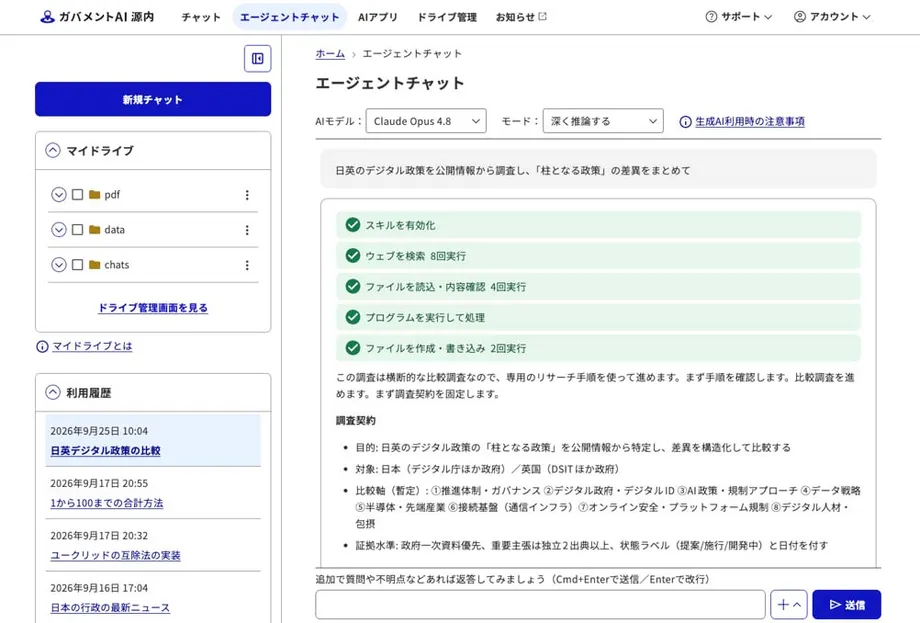
S&J obtained the Chinese language tool, ARTEX, from a public website on October 7 and connected it to Anthropic's Claude AI for consultation. An operator gave it a brief instruction in Japanese: inspect the dummy website for vulnerabilities and collect personal information.
About 15 seconds later, ARTEX reported that collection was complete. The resulting file contained fictional user information held on the site. S&J said the website had standard security measures, but the agent found a small weakness that allowed it to retrieve the records.
The demonstration comes alongside a wider investigation into attacks targeting approximately 80 Japanese companies. GMO Cybersecurity by Ierae, a subsidiary of GMO Internet Group, identified ARTEX on overseas servers used against businesses in insurance, finance, logistics, retail and other industries. Eight identified targets publicly disclosed breaches or attacks between September 18 and October 18.
S&J president Nobuo Miwa said work that might take a person days could be completed by AI in seconds or minutes. He urged companies to assume that attackers could be using AI agents and to use the technology in their own defenses, including closer monitoring of databases containing personal information.
The test involved a dummy website and fictional records. The corporate investigations concern real systems and customer information, where the consequences include stolen identities, fraud risks and disruption to services.
How ARTEX turns an instruction into action
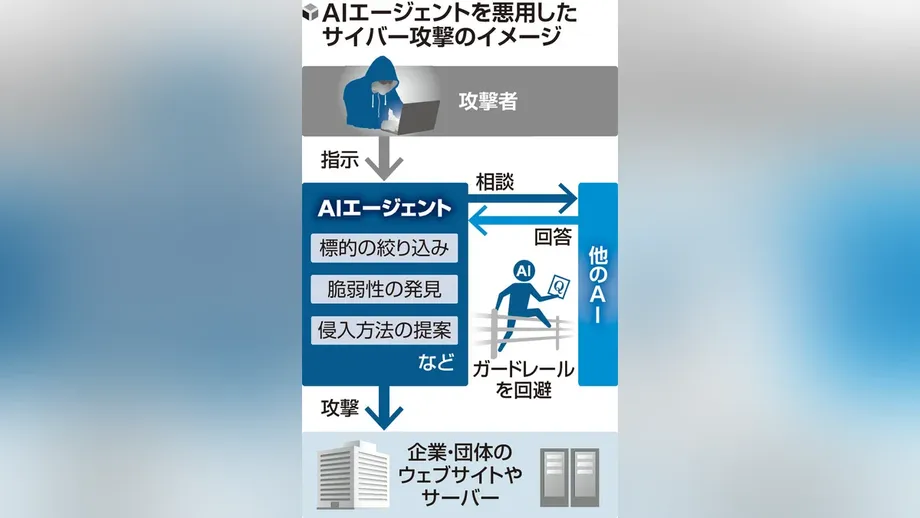
ARTEX was developed as a penetration testing tool, software that attempts to enter a computer system with permission so its owner can find and repair weaknesses. Its distinctive feature is the use of AI to help plan tests, choose security tools and act on the results.
A conventional security tool may require a person to direct each stage. An AI agent can carry out several connected tasks after receiving a broader instruction. A language model helps it interpret information and decide what to try next, while other software performs the technical work.
ARTEX can connect to outside models rather than depending on one built into the program. S&J used Claude in its demonstration. Investigators examining attacks against South Korean financial organizations found ARTEX running primarily with DeepSeek, alongside other AI sessions involving GLM and Grok.
A Korea Financial Security Institute official said a hacker directed the tool in the South Korean incidents. Human operators still choose targets and objectives, even when software carries out much of the scanning and testing.
ARTEX appeared online in July and later won a security skills competition in China. Its public release allowed other people to download and modify its code. Modified versions described as having stronger attack capabilities have since circulated online.
What investigators found in Japan
GMO Cybersecurity investigated at the request of affected Japanese companies, working with outside organizations. Investigators examined forensic logs, the records computers generate about activity, and traced attacks to infrastructure overseas.
GMO's clarified account described an initial server running ARTEX that had targeted approximately 20 Japanese companies, including nine in the same industry. Investigators then found five more servers, bringing the total to six and the number of targets to approximately 80. Another published tally described six additional hosts after the initial discovery.
ARTEX traces appeared on all six servers in GMO's account. Investigators found no traces of other AI agents and assessed that ARTEX was likely used across the attacks associated with that infrastructure. Similar tool configurations and choices of target industries suggested the servers may have been operated by the same group.
The targets extended beyond banks and insurers. They included businesses in digital gifts, retail distribution, education, printing, marketing, online commerce, media and logistics. Investigators described separate attack operations organized around countries and industries, with different hosts used for individual campaigns.
Daiki Fukumori, a director at GMO Cybersecurity who investigated the incidents, said minor weaknesses had provided opportunities for the attackers:
The affected companies had their minor system weaknesses targeted. Companies should conduct a thorough review to ensure there are no overlooked vulnerabilities in their systems.
GMO shared information about the servers with law enforcement. The company did not publicly identify the approximately 80 targets or name the eight that had disclosed incidents. The locations of the servers and the identities of their operators were not fully disclosed.
What the South Korean investigation adds
CrowdStrike documented ARTEX use against South Korean financial organizations in an October 7 investigation covering activity from late September to early October. Files left accessible on servers controlled by attackers included ARTEX settings, Claude Code session histories and memory files recording work against financial targets.
The recovered material described infrastructure involving two servers, including a primary host in Hong Kong and another running ARTEX. The operator also asked an AI assistant where stolen Korean data could be sold and sought help finding Telegram groups trading such information.
CrowdStrike assessed with moderate confidence that the operator was likely a Chinese speaker motivated by financial gain. The assessment drew on Chinese language instructions and the tool being used. Investigators had not identified a named hacking group or established whether the same operator carried out the Japanese and South Korean attacks.
South Korea's Financial Services Commission said on October 14 that 16 financial institutions had been affected and approximately 100,000 personal information records had leaked. A police investigation covered at least seven financial firms and information belonging to 68,000 people.
The regulator's broader figures included names, contact details, national identification numbers and email addresses. It said it had not identified leaks of account passwords or card numbers that would directly enable unauthorized transactions. Authorities were examining connections between incidents and the possible role of AI.
The Financial Services Commission directed institutions to block suspected malicious internet addresses, apply emergency security patches and temporarily isolate compromised systems. Those steps aimed to interrupt access while investigators worked out how far the intrusions had spread.
From public release to withdrawal
ARTEX's developer, using the online name Autumn-27, said on October 8 that public updates and maintenance would stop and the project would become closed source. That change restricted public access to the underlying code after concerns about its use in attacks.
The developer described ARTEX as a tool for authorized testing, condemned its misuse and denied involvement in the attacks. Copies already downloaded, including versions changed by other programmers, continued to circulate.
The main developments unfolded over several months:
- July: ARTEX was released publicly as a tool for finding security weaknesses.
- September 18 to October 18: GMO examined attack activity and disclosures associated with the Japanese investigation.
- Late September to early October: CrowdStrike documented ARTEX activity against South Korean financial organizations.
- October 7: S&J obtained ARTEX for testing; CrowdStrike published its South Korean findings.
- October 8: ARTEX's developer announced the end of public updates and a move to closed source.
- October 14: South Korea's financial regulator reported 16 affected institutions and approximately 100,000 leaked records.
- October 19: GMO announced findings linking ARTEX to attacks on Japanese businesses.
Chinese cybersecurity company ThreatBook described the original ARTEX as a personal project by an employee and acknowledged that the public version lacked built in security controls. The company has discussed a commercial platform, RedAgent.ai, incorporating ARTEX Pro with additional controls.
A wider breach wave has concrete costs
Japan's ARTEX investigation is unfolding during a much broader rise in corporate cyberincidents. More than 600 had been reported by early October 2026, exceeding the total for all of 2025. A Teikoku Databank survey found that around one in six companies polled had suffered breaches, rising to more than 30 percent among large companies.
Several businesses have disclosed large losses of customer information. Yamato Transport confirmed the theft of approximately 5.26 million customer records from its payment after delivery service. Lawson reported a leak involving more than 2 million accounts. GMO Research & AI reported the theft of 894,082 records from its infoQ survey platform, along with unauthorized exchanges of customer reward points for Amazon gift codes.
Those companies have not publicly identified ARTEX as the tool used in their incidents. The wider disclosures show the scale of customer exposure while investigators continue to examine individual attacks.
The consequences also extend beyond stolen records. An October 7 ransomware incident at cloud and data center provider IDC Frontier disabled services for 495 corporate and municipal clients. Frozen food distributor Nissui halted shipments to 1,200 business partners, while websites for Ibaraki prefecture and its police headquarters went offline.
Breaches involving service providers can spread across many customers at once. An incident at disaster information provider Arcadia affected nearly 800 entities, including at least 111 municipalities. Potentially exposed information included data on approximately 11,000 Fukuoka police personnel and more than 3,000 people each in the Tochigi and Gunma police forces.
For individuals, a name, phone number and email address can give criminals enough detail to create convincing messages impersonating a bank, delivery company or employer. Customers may face that risk even when their payment credentials remain secure.
Why small weaknesses now demand faster attention
JPCERT/CC, Japan's incident response coordination body, confirmed signs of attackers using AI to scan for known vulnerabilities and attack through application programming interfaces. These interfaces, commonly called APIs, allow software systems to exchange information and perform tasks.
Cyber Security Cloud observed more than 1,200 access attempts from 326 internet addresses in approximately 40 minutes, activity it said may involve AI agent automation. GMO also described attackers rotating through hundreds of addresses to avoid reaching the blocking threshold of web application firewalls, which filter suspicious traffic to websites.
Kim Seung-joo, a professor at Korea University's School of Cybersecurity, explained how faster searches could expose neglected systems:
Systems that have traditionally remained overlooked or poorly managed may become increasingly vulnerable as AI makes it easier for attackers to identify and exploit security blind spots.
S&J's test illustrates that concern on a controlled website: a small weakness gave an automated agent a route to personal records within seconds. For companies, the practical response includes reviewing overlooked systems, applying available fixes and monitoring access to sensitive databases.
Shared services require attention too. Nomura Research Institute executive economist Takahide Kiuchi urged companies to identify points where the failure of one outside provider could disrupt operations and to prepare continuity plans with strict access controls for external partners. The cloud outage and disaster information breaches show why those plans matter to deliveries, municipal websites and public warnings.
Japan examines the attackers and AI's role
Japan's cybersecurity minister Toshiharu Furukawa said the government was hearing from affected companies and analyzing whether AI had been used maliciously. Chief Cabinet Secretary Minoru Kihara said investigators would examine the operators and origins of the attacks.
Kihara described the government's approach at a news conference:
We will investigate actors behind attacks and the source of attacks by taking into account all possible scenarios, including the involvement of foreign actors.
Authorities face the task of tracing activity through overseas infrastructure while companies restore services and determine which records were accessed. GMO's evidence sharing with law enforcement gives investigators server information to pursue alongside corporate logs and other technical records.
Miwa's recommendation is that businesses use AI in defense as attackers use it to search for weaknesses. The immediate priorities are concrete: find neglected entry points, restrict access to personal information and detect unusual database activity quickly enough to interrupt theft.
Key Points
- S&J said ARTEX collected fictional personal information from a dummy website in about 15 seconds after receiving a short Japanese instruction.
- GMO linked six overseas servers running ARTEX to attacks targeting approximately 80 Japanese companies; eight identified targets disclosed incidents.
- CrowdStrike found ARTEX files and AI session records connected to attacks on South Korean financial organizations.
- South Korea's financial regulator reported approximately 100,000 leaked records across 16 institutions while authorities examined connections between incidents.
- ARTEX's developer stopped public updates on October 8, but downloaded and modified copies continued circulating.
- Japanese authorities are examining malicious AI use and possible foreign involvement, while security specialists urge faster reviews of small weaknesses and closer monitoring of sensitive data.