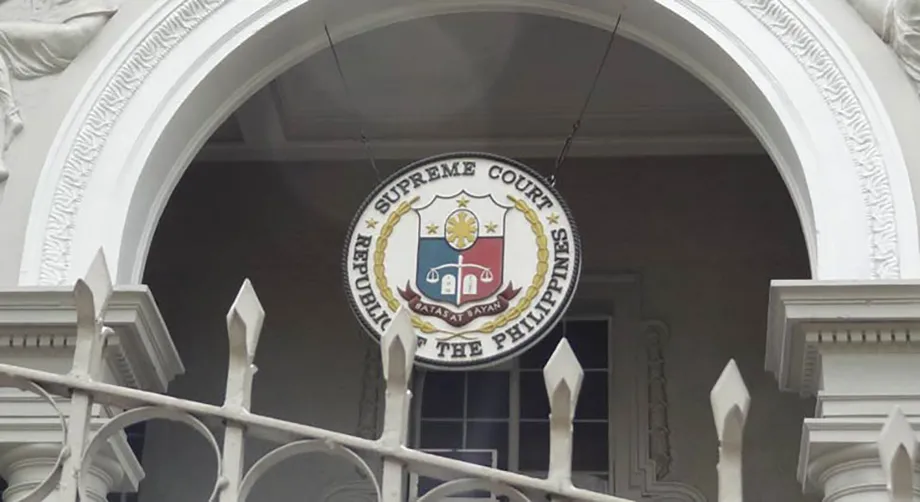
Billions in budget increases face a constitutional reckoning
President Ferdinand Marcos Jr.'s administration will seek reconsideration of a Philippine Supreme Court decision striking down the 2024 and 2025 budget laws over congressional increases of P449.5 billion and P17.99 billion, while invalidating two provisions governing standby spending in 2026.
Contents
- Billions in budget increases face a constitutional reckoning
- What the court struck down
- Why one revenue windfall may be insufficient
- How budget transfers created room for other spending
- Missing records and new rules for standby funds
- What the justices disagreed about
- Past beneficiaries and officials face different legal tests
- What happens to money awaiting release?
- The 2027 budget becomes the next test
- Key Points
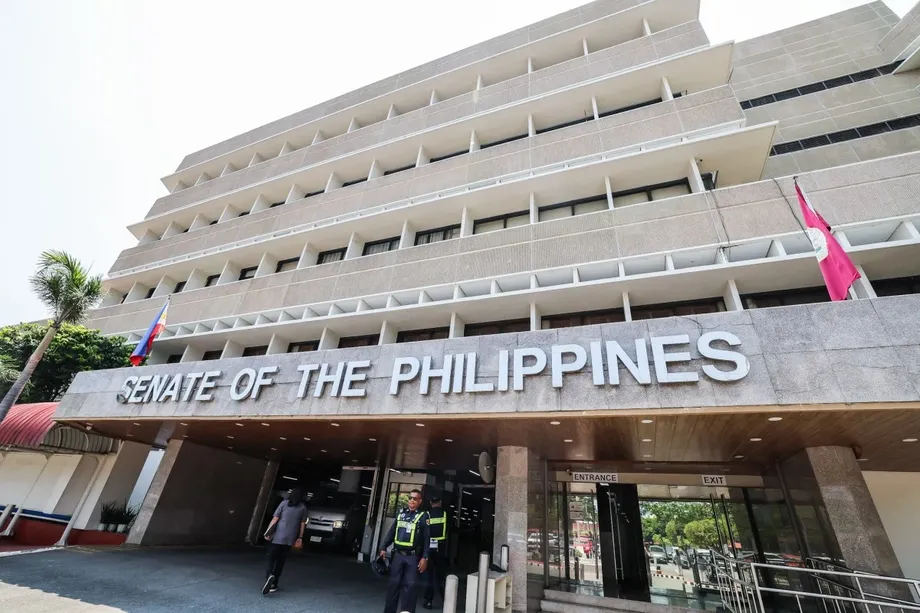
The decision, dated October 7, 2026, and announced on October 20, reaches beyond past spending. It sets limits on how Congress and the Executive may authorize and release unprogrammed appropriations, the standby spending authority available only when specified funding conditions are met. Senators are now applying those limits as they examine the proposed P7.2 trillion budget for 2027.
Palace Press Officer Undersecretary Claire Castro said on October 21 that the Office of the Solicitor General had been directed to ask the court to review its ruling. The administration maintains that it followed existing budget laws and disputes the court's requirement concerning total government revenue collections.
The Supreme Court's official decision summary says standby appropriations remain constitutionally possible, subject to safeguards. The majority held that Congress breached the President's recommended spending ceiling and that the challenged release conditions weakened the government's financial plan.
Senior Associate Justice Marvic M.V.F. Leonen wrote the 121-page decision. Its practical consequences now involve three connected tasks: determining how agencies handle affected funds, establishing responsibility through the proper proceedings, and writing the next budget within the court's limits. For people awaiting infrastructure, medical assistance or other public services, those decisions will shape which projects receive money and under what conditions.
What the court struck down
Republic Act 11975, the 2024 General Appropriations Act, was declared unconstitutional because Congress added P449.5 billion to unprogrammed appropriations, increasing total spending authority above the President's recommendation. The President had proposed about P281.9 billion in standby funds; Congress raised that figure to P731.4 billion.
The increase was roughly 159 percent, making the enacted standby allocation about 2.6 times the original proposal. Those figures show why the dispute concerns the combined spending ceiling, rather than simply the label attached to a budget item.
Republic Act 12116, the 2025 budget law, was declared unconstitutional over a P17.99 billion congressional increase in the Department of Public Works and Highways' Special Road Fund. The court also found that a P12.75 billion increase to certain agencies' Special Accounts in the General Fund violated Book VI, Chapter 4, Section 25 of the Administrative Code, which restricts increases beyond presidential proposals in special provisions.
Special Provisions 1(a) and 1(b), Chapter XLIII of the 2026 budget, were separately invalidated. The court permanently prohibited the Senate, House of Representatives, Office of the Executive Secretary and acting budget secretary from implementing those provisions.
The consolidated cases included petitions brought by the late former Albay representative Edcel Lagman, former senator Aquilino "Koko" Pimentel III, Filipinos for Peace, Justice and Progress Movement, Inc., and representatives Edgar Erice and Leila de Lima. Their challenges addressed different parts of the budgets and the procedures used to approve them.
Why one revenue windfall may be insufficient
Unprogrammed appropriations provide permission to spend if funding conditions are satisfied. Programmed appropriations, by comparison, belong to the government's regular spending plan. The court held that the constitutional ceiling under Article VI, Section 25(1) covers both categories together.
The disputed 2026 provisions allowed releases based on collections above the target for a particular source of revenue other than taxes, or on new revenue outside the original financing estimates. The majority required attention to whether total revenue collections had exceeded the total target.
A government can collect more than expected from one source while receiving less from another. Extra income in one category may therefore arrive while the government is still short of the money needed for its planned spending. Releasing additional standby funds in that situation adds to the financing gap.
The court said the challenged conditions departed from the intended role of unprogrammed appropriations as a mechanism that would avoid adding to the deficit. A deficit is the gap between government spending and revenue. Filling that gap generally requires financing, including borrowing.
Castro argued that Congress had permitted releases since 2015 when collections from at least one identified source of revenue other than taxes exceeded its target, subject to other legal conditions. She said the administration followed that framework and believed the ruling left standby appropriations available on paper but unusable for government programs.
Araullo v. Aquino III is central to the disagreement. The court invoked that earlier ruling in rejecting the release conditions. Castro argued that Araullo interpreted earlier budget laws and that Congress remained free to change their conditions within constitutional limits. The reconsideration request will ask the court to revisit that reading.
How budget transfers created room for other spending
The Supreme Court traced the 2024 increase to changes made by the Bicameral Conference Committee, the group that reconciles the House and Senate versions of a bill. Programs, activities and projects were moved from programmed to unprogrammed appropriations, while allocations for standby items grew.
The court said these changes created artificial room in the regular budget for higher allocations elsewhere. It identified public works infrastructure programs, Sustainable Infrastructure Projects Alleviating Gap, Department of Health medical assistance, the Department of Social Welfare and Development's Ayuda sa Kapos ang Kita Program, and the Department of Labor and Employment's TUPAD employment assistance program.
Strengthening Assistance for Government Infrastructure and Social Programs, known as SAGIP, drew particular scrutiny. Included in the 2024 and 2025 standby budgets and removed in 2026, it allowed the Executive to identify projects and allocate money after the budget became law. The court found that arrangement transferred essential spending choices away from Congress.
The court described SAGIP as a prohibited lump sum and a covert repository for public works allocations, including flood control. A lump sum is a pool of money whose detailed uses have yet to be fixed in the law.
Figures cited in the debate put 2024 SAGIP allotment releases at roughly P200 billion, including P155.9 billion for public works and P85.8 billion for flood control. Using those figures, public works accounted for about 78 percent of releases, while flood control represented roughly 43 percent of the total.
An allotment gives an agency authority to enter spending commitments. A useful public accounting would distinguish that authority from obligations already entered into and money actually paid, allowing citizens to follow an allocation from approval through payment.
Missing records and new rules for standby funds
The Bicameral Conference Committee's documentation was another central concern. The court said there were no records of its discussions, no explanation in its report for budget increases and decreases, and no supporting documents for the changes, contrary to congressional rules.
The majority said the committee's authority arises from actual disagreements between the House and Senate versions. The scope of those disagreements determines the changes the committee may make. That finding makes the final stage of budget negotiations a major focus of the ruling.
Associate Justice Samuel H. Gaerlan, discussing the committee's role in a separate opinion, called for safeguards including written records of major changes, public proceedings and adequate time for both chambers to examine the final report. He described its proper function in these terms:
a bridge between two chambers
The court also laid out requirements for future unprogrammed appropriations:
- No lump sum allocations.
- Clear rules distinguishing the use of new income for programmed spending from its use for standby spending.
- A presumption that new funds support programmed expenditures, with clear and convincing reasons for exceptions, such as projects supported by foreign financing.
- Sufficient standards for deciding which purposes receive priority when several are authorized.
- Consistency with the national fiscal program and the limited, contingent nature of standby appropriations.
Congress must therefore decide both what spending it authorizes and how competing purposes will be ranked. Agencies implementing the budget must then apply those choices within the financing conditions established by law.
What the justices disagreed about
Several justices agreed that unprogrammed appropriations could be constitutional while differing on their limits. Chief Justice Alexander G. Gesmundo viewed them as useful flexibility, especially during crises, provided they remain limited standby authority within the national fiscal program.
Associate Justices Rodil V. Zalameda and Jhosep Y. Lopez disagreed with applying the President's spending ceiling to contingent appropriations in the same way as regular spending. Their position would give Congress greater room to increase standby funds than the majority allowed.
Associate Justices Ramon Paul L. Hernando and Antonio T. Kho Jr. took a stricter position against the mechanism itself. Hernando pointed to the absence of identified funding sources and favored a special appropriations law when additional revenue becomes available. Kho objected to allowing essential project and funding decisions after enactment.
Other disagreements concerned the treatment of past spending and legislative procedure. Associate Justice Amy C. Lazaro-Javier wanted a complete accounting before deciding how to apply protection for completed transactions. Associate Justice Alfredo Benjamin S. Caguioa considered some lump sums potentially permissible if they did not function as pork barrel funds. The majority's safeguards form the governing decision now under challenge.
Past beneficiaries and officials face different legal tests
The court applied the doctrine of operative fact to the affected 2024 and 2025 budgets. In simple terms, the doctrine allows certain consequences of a law to stand when people relied on it in good faith before it was declared unconstitutional.
The protection is limited to irreversible programs whose beneficiaries acted in good faith. Responsibility for authors, proponents and implementers must be assessed through criminal, civil or administrative proceedings, with good faith explicitly determined by the appropriate tribunal.
Castro maintained that Marcos violated no law or constitutional provision by following the budget processes then in place. She said the administration saw no presidential liability and would account for spending. The court separately upheld his certification of the 2024 budget bill as urgent, rejecting that particular procedural challenge.
House Deputy Minority Leader Antonio Tinio urged the Ombudsman and Commission on Audit to study how to hold budget authors accountable. Vice President Sara Duterte called for Marcos and Congress to answer for approving the laws, while de Lima said criminal and administrative cases could follow. Those statements represent demands for accountability; liability will be decided in the relevant proceedings.
What happens to money awaiting release?
Government Watch convenor and director Joy Aceron urged the administration to secure unreleased and unused portions of the P449.5 billion increase in 2024 and P17.99 billion increase in 2025. She proposed directing available resources toward basic services or measures addressing inflation and rising fuel prices, and called for civil society scrutiny of public financial management.
Senator Panfilo Lacson said unused funds from the expired fiscal years might no longer be disbursed. The Department of Budget and Management said it was reviewing the decision with the Solicitor General and other Executive offices before determining its next steps.
Castro described spending under the 2026 budget as continuing as planned while the ruling remained subject to review, but also said the Palace had not decided whether to spend or suspend the affected funds. Agencies and recipients therefore still await a settled government position on those releases.
Supreme Court spokesperson Camille Ting said a motion for reconsideration could be filed within 15 days of notice. The immediate sequence is:
- October 7, 2026: The court dated its decision and separate opinions.
- October 20: The court publicly announced the ruling.
- October 21: The Palace announced its planned reconsideration request, and the budget department confirmed its review.
- Within 15 days of notice: The government may seek reconsideration.
The 2027 budget becomes the next test
The Senate is examining the House version of the proposed P7.2 trillion budget for 2027 amid allegations that representatives realigned P206 billion from the President's National Expenditure Program. Senate Finance Committee Chairman Joseph Victor Ejercito flagged cuts to projects supported by foreign financing, railways and preventive health, alongside increases for flood control and medical assistance.
Lacson questioned uniform allocations of P180 million for evacuation centers in each of 17 regions. Those figures amount to P3.06 billion. He sought details and said the Senate might restore substantial cuts and reverse House realignments.
Senate President Pro Tempore Vicente Sotto III promised transparency measures used for the 2026 budget, including livestreaming bicameral deliberations. Ejercito said both chambers had avoided increasing 2026 unprogrammed appropriations beyond the President's proposal. The court's rejection of that year's release provisions means lawmakers must also examine funding conditions, spending priorities and project detail.
Ejercito pledged that past practices would not be repeated. Castro urged Congress to approve the administration's proposal without unlawful provisions, while Aceron called on both branches to bring the 2027 budget into line with the ruling. The next spending law will test whether those promises produce enforceable limits and a public record of how allocations change.
Key Points
- The Marcos administration will seek reconsideration through the Office of the Solicitor General.
- The court found congressional increases of P449.5 billion in 2024 and P17.99 billion in 2025 breached the President's recommended spending ceiling.
- Two provisions governing releases of 2026 standby funds were invalidated.
- Unprogrammed appropriations remain permissible under the majority ruling, subject to funding safeguards, clear priorities and a ban on lump sums.
- Protection for irreversible programs depends on beneficiaries acting in good faith; officials face separate legal assessments.
- The Senate is reviewing the proposed P7.2 trillion budget for 2027 under the court's limits.