546,000 accounts caught in a chip stock reversal
South Korean retail investors recorded net losses of 6.313 trillion won on products tied to the daily movements of individual shares, principally Samsung Electronics and SK hynix, between their launch on May 27, 2026, and August 14. Financial Supervisory Service figures compiled from 10 securities firms show that investors in their 40s and 50s accounted for 62.1% of the losses, while accounts belonging to people aged 70 and above suffered the largest average loss.
Contents
- 546,000 accounts caught in a chip stock reversal
- What the 6.313 trillion won measures
- Why doubling a daily move can be costly
- Middle age accounts for most losses, older accounts lose more each
- Two brokerages account for 40.3% of the losses
- Prices fell further after the statistical cutoff
- How a warning became a launch in seven months
- What regulators told parliament
- Higher barriers for new buyers
- Key Points
The total combines 2.3242 trillion won lost through completed trades with 3.9888 trillion won in losses on investments still held. Across 546,000 accounts that traded the products at least once, the average net loss was approximately 11.56 million won.
August 14 is the valuation date, although the fuller figures became public in October. Prices of two prominent products fell sharply again by October 20, leaving investors facing a market that had deteriorated further since the statistical snapshot.
The Financial Supervisory Service submitted the figures to lawmakers. Their disclosure has been attributed to People Power Party representatives Park Jun-tae, Park Sung-hun and Shin Dong-wook; a joint account also identifies Kim Hyeong-yeon among the recipients. The central loss total and its two components are consistent across those disclosures.
The losses have turned a product launch into a dispute over financial supervision and political responsibility. Parliamentary hearings have examined why reviews were accelerated, how an earlier warning was handled and whether the presidential office influenced the timetable. Regulators have tightened entry requirements, while opposition lawmakers have demanded further investigations.
What the 6.313 trillion won measures
The statistics cover exchange traded products, or ETPs, including both exchange traded funds, known as ETFs, and exchange traded notes, known as ETNs. Both trade on an exchange. An ETF holds a portfolio of assets or financial contracts, while an ETN represents an issuer's promise to pay a return linked to a specified investment.
The products at the centre of the controversy seek to deliver twice the daily movement of a single stock. The broader trading figures also include inverse products, which seek gains when the underlying share falls. Sixteen products linked to Samsung Electronics and SK hynix made their debut on May 27.
The 2.3242 trillion won in realized losses records the net result of completed trades. The 3.9888 trillion won in unrealized losses measures the difference between the purchase cost of remaining holdings and their value at the August 14 closing price. Those remaining holdings accounted for about 63.2% of the combined loss.
An October 6 disclosure described approximately 2.32 trillion won in realized losses over the same May 27 to August 14 period. The larger October disclosure adds the losses on investments still held. Smaller securities firms were outside the collection covering the 10 major firms.
The account count measures accounts rather than individual people. Someone trading through more than one brokerage can have multiple accounts. The average is the combined net loss divided by all participating accounts, including accounts that made money.
Why doubling a daily move can be costly
Samsung Electronics and SK hynix attracted investors during the artificial intelligence semiconductor rally. Leveraged products gave those investors a way to seek larger gains from the same shares. When the chip rally reversed, the same mechanism increased their exposure to falling prices.
A product targeting twice a stock's daily return aims to gain about 10% when that stock rises 5% in a day, before fees and tracking differences. A 5% fall in the share means a target loss of about 10%. The target resets each day, so returns over several days depend on the sequence of price movements.
A simple illustration shows the effect. A stock starting at 100 that rises 10% and then falls 10% ends at 99. A product delivering twice each daily move would rise from 100 to 120, then fall 20% to 96. The stock has lost 1%, while the leveraged product has lost 4%.
Repeated swings can therefore eat into an investment even when the share price finishes near its starting point. During the downturn described in July, the Kospi had fallen almost 35% over the preceding month, while the leveraged SK hynix product had fallen more than 80% from its June peak and the Samsung equivalent almost 75% from its June peak.
Middle age accounts for most losses, older accounts lose more each
Investors in their 40s recorded losses of 2.053 trillion won across 165,200 accounts. Those in their 50s lost 1.8655 trillion won across 158,000 accounts. Together, the two groups lost 3.9185 trillion won, or 62.1% of the total, through 323,200 accounts, about 59.2% of all participating accounts.
Investors in their 30s lost 1.0912 trillion won across 117,300 accounts. Those in their 60s lost 805.9 billion won across 61,000 accounts, equivalent to approximately 13.21 million won per account.
People aged 70 and above recorded losses of 293.4 billion won across 9,800 accounts. Their average loss was approximately 29.94 million won, about 2.6 times the average across all participating accounts. This group had fewer accounts than the main working age groups, but a much larger average financial loss.
Losses also extended to younger investors: accounts belonging to people in their 20s recorded 195.8 billion won in losses, while accounts for those under 20 recorded 8.2 billion won. The age breakdown shows how widely the products spread, from minors' accounts to investors in their retirement years.
Two brokerages account for 40.3% of the losses
Accounts at Kiwoom Securities recorded the largest net loss, at 1.287 trillion won, followed by Mirae Asset Securities at 1.2576 trillion won. Together, losses through the two firms reached 2.5446 trillion won, or approximately 40.3% of the total.
Samsung Securities accounts lost 999.4 billion won and NH Investment & Securities accounts lost 851.7 billion won. The other figures were 552.1 billion won at Korea Investment & Securities, 379.8 billion won at KB Securities, 319.7 billion won at Shinhan Securities, 295.7 billion won at Meritz Securities, 197.5 billion won at Daishin Securities and 172.5 billion won at Hana Securities.
These are customer investment results grouped by the brokerage through which they traded. Understanding differences between firms would also require figures on customer numbers, investment amounts and the mix of products traded.
The losses continued to grow during the final weeks of the measurement period. Realized trading losses rose from 1.9638 trillion won at the end of July to 2.3242 trillion won on August 14, an increase of 360.4 billion won, or 18.4%. Unrealized losses fell by 50.7 billion won, leaving the combined loss 309.7 billion won higher at 6.313 trillion won.
Prices fell further after the statistical cutoff
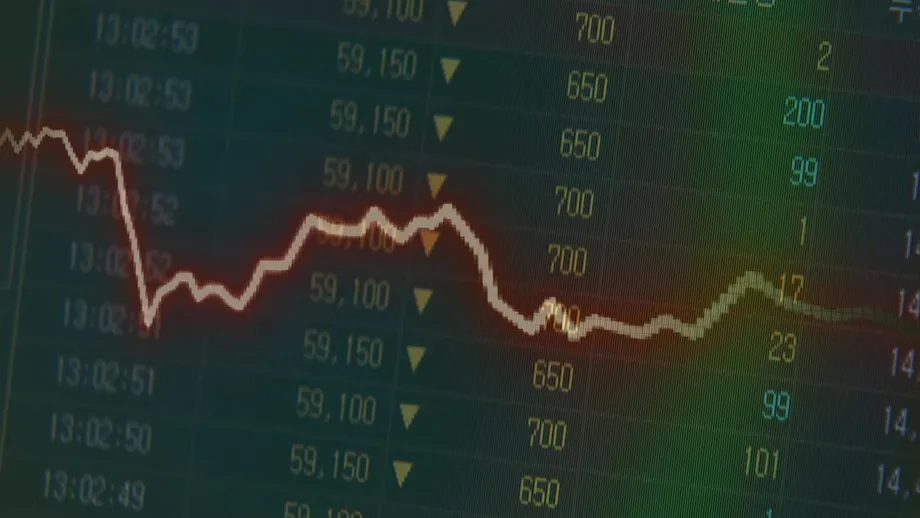
The KODEX SK hynix Single Stock Leverage product reached 44,385 won on June 23, then fell to an intraday low of 6,000 won on July 29. It closed at 10,700 won on October 6, approximately 76% below the June peak.
Later prices show further deterioration. The KODEX Samsung Electronics Single Stock Leverage product fell from 13,530 won on August 14 to 7,700 won on October 20, a decline of about 43.1%. The corresponding SK hynix product fell from 9,780 won to 4,880 won over the same period, a drop of about 50.1%.
An estimate based on the later market decline put losses above 10 trillion won. Citigroup Global Markets also estimated that retail losses across Korea's leveraged ETF market could reach 56 trillion won; the initial disclosure referred to an overseas investment bank estimate of 54 trillion won. Those estimates have a different scope or valuation basis from the Financial Supervisory Service's 6.313 trillion won calculation.
No updated regulatory total through October 20 was given. Calculating one would require later purchases, sales and remaining holdings, as well as prices. Individual investors were still trading while the market moved.
How a warning became a launch in seven months
The scrutiny reaches back to October 2025, when the Korea Capital Market Institute submitted a study commissioned by the Financial Supervisory Service. The report, running to 151 pages, examined successful overseas asset management businesses and lessons for Korea. It advised caution over explicitly permitting single stock leveraged ETFs, citing investor losses, market volatility and the direction of overseas regulation.
The report described how changes to American rules allowed such products to reach the market without individual product approval. It discussed warnings from the US Securities and Exchange Commission and a Financial Industry Regulatory Authority consultation on stronger checks before selling complex products.
The main steps in Korea followed within months:
- October 2025: The commissioned study recommended caution over domestic introduction.
- January 2026: Discussions gathered pace, and the Financial Services Commission announced a proposed amendment to the Enforcement Decree of the Capital Markets Act late in the month.
- April 21: The Cabinet approved the amendment. The regulatory change permitting the products followed on April 28.
- May 15: The Financial Services Commission announced a planned listing date of May 27.
- May 27: Sixteen products began trading.
- July 16: Authorities provisionally suspended new listings of single stock leveraged and inverse products.
- August 14: The loss measurement period ended.
- October 19: A parliamentary audit examined the review process.
President Lee Jae Myung said at a September 18 press conference that the policy was intended to bring investment in overseas leveraged products back to Korea and reduce demand for dollars. According to KB Financial Group figures cited during the controversy, retail investors made net purchases of 14 trillion won, compared with approximately 2 trillion won by foreign investors.
What regulators told parliament
People Power Party lawmaker Park Dae-chul told the parliamentary audit that the listing process took 29 days, compared with an average of 62 days for standard ETFs and 43 days for products tracking major indexes. The Financial Supervisory Service began examining materials while the Korea Exchange's preliminary review was still under way.
Financial Supervisory Service Governor Lee Chan-jin acknowledged that the policy timetable influenced the speed of the process. Explaining the accelerated reviews, he said:
The FSC had announced a listing timetable as a policy matter. We expedited the reviews to meet that timetable.
Lee said he understood there had been no particular problems with the overlapping review work. When lawmaker Choi Eun-seok presented a supervisory report warning about structural risks and asked whether he had read it, Lee said he had not seen it. Vice Governor Hwang Seon-o said he did not clearly remember whether he had opposed the launch at a January meeting chaired by then presidential policy chief Kim Yong-beom.
Opposition lawmakers also questioned whether the May launch had been accelerated ahead of the June 3 local elections. Financial Services Commission Chairman Lee Eog-weon denied that the presidential office had ordered the rollout. The governing Democratic Party blocked requests to summon Kim as a witness.
Park Jun-tae called for a parliamentary investigation and a special counsel inquiry. He also suggested that institutions and foreign investors had made large gains while individuals lost money. The disclosed figures concern retail accounts; a corresponding calculation for those other investor groups was not released.
Higher barriers for new buyers
Authorities raised the minimum deposit from 10 million won to 30 million won from late July and strengthened mandatory investor education. A minimum order of 20 shares was scheduled to take effect in November, alongside the existing provisional suspension of new listings.
Financial Services Commission Chairman Lee Eog-weon also discussed restricting access to professional investors and reducing the leverage multiple if lawmakers prepared the necessary legislation. Those options remained under consideration.
Regulators and ministers have offered apologies at different stages of the crisis. Finance Minister Koo Yun-cheol apologized in parliament on July 29 after criticism that the products had been introduced without careful consideration. At the October 19 audit, Financial Supervisory Service Governor Lee Chan-jin also apologized and said the products had contributed to market volatility to some extent, alongside sharp movements in the underlying chip shares.
The tighter rules make it harder for new buyers to enter. Existing holders remain exposed to changes in the products they own. The next scheduled change identified by authorities was the November minimum order requirement, while parliament continued examining the decisions behind the launch.
Key Points
- Retail accounts recorded net losses of 6.313 trillion won between May 27 and August 14, comprising 2.3242 trillion won in realized losses and 3.9888 trillion won in unrealized losses.
- The figures cover 546,000 accounts at 10 securities firms and include ETFs and ETNs.
- Investors in their 40s and 50s accounted for 62.1% of losses. Accounts belonging to people aged 70 and above lost an average of about 29.94 million won.
- Two prominent Samsung and SK hynix leveraged products fell another 43.1% and 50.1%, respectively, between August 14 and October 20.
- Parliament examined a listing process lasting 29 days, an earlier risk warning and the role of the policy timetable.
- Authorities raised the minimum deposit to 30 million won, suspended new listings and scheduled a minimum order of 20 shares for November.