A $400 premium could put touch at the top of the Mac lineup
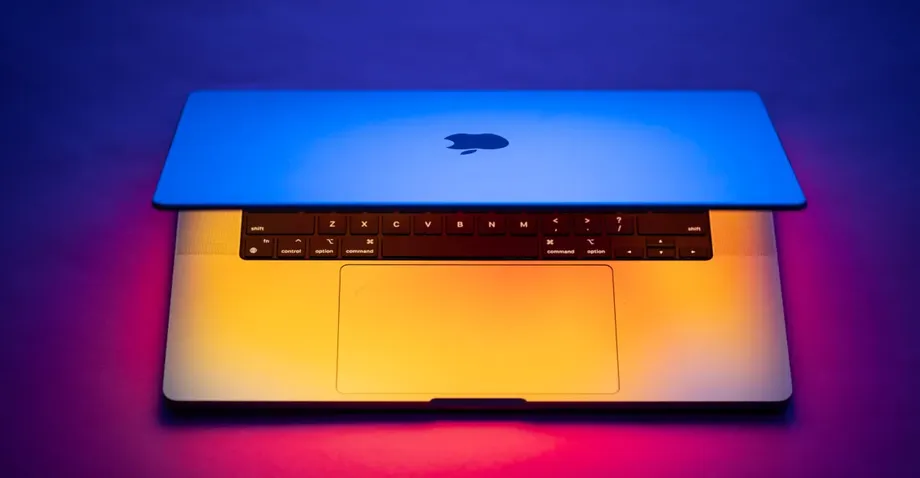
Apple is expected to introduce its first touchscreen MacBooks in Los Angeles on October 28, 2026, pairing OLED displays with its existing M5 Pro and M5 Max processors. The reported starting price under discussion is $2,899 for a 14-inch model, $400 above the current equivalent without touch.
Contents
- A $400 premium could put touch at the top of the Mac lineup
- Why Apple is changing its position
- Touch would supplement the keyboard and trackpad
- OLED would change more than how the screen responds
- A stronger hinge would address a practical problem
- The camera area may become an interactive control
- The higher price would buy a redesign, not a new chip generation
- The M6 launch creates an unusual choice
- The dates to watch
- Key Points
The private event, called Pro and Tell, is scheduled to begin at 10 a.m. Pacific Time. A 16-inch version could start at least at $3,399, compared with $2,999 for the current M5 Pro model. Existing laptops without touch are expected to remain on sale, placing the redesigned machines above them rather than replacing them.
For buyers, the proposed upgrade is chiefly about the screen, physical design and ways of controlling the computer. Apple has already announced a standard 14-inch MacBook Pro with a newer M6 chip, while the more expensive touchscreen machines are expected to retain the processors already used in its premium laptops.
The launch would reverse years of public resistance from Apple executives, who argued that reaching toward an upright laptop screen was uncomfortable. Windows laptop makers have offered touchscreens for more than a decade, and Apple now faces customers accustomed to tapping almost every other screen they own.
Apple has not confirmed the touchscreen specifications, final product name, prices, battery life or release schedule. Preorders are reportedly planned for 10:10 a.m. Pacific Time on October 28, with deliveries potentially beginning November 6. Apple Pencil support and a screen that folds into a tablet remain possibilities rather than announced features.
Why Apple is changing its position
Steve Jobs, Apple's late cofounder, rejected vertical touchscreen computers in 2010 on grounds of comfort. His argument concerned the repeated movement of lifting an arm away from the keyboard to reach a display.
Touch surfaces don't want to be vertical.
Jobs also described touchscreen laptops as "ergonomically terrible." Tim Cook, then Apple's chief executive, compared combining a laptop and tablet in 2012 to combining a toaster and refrigerator. John Ternus, now chief executive, previously argued that Apple already offered a touchscreen computer through the iPad.
Customer expectations appear to have changed the internal calculation. Cook reportedly approved the touchscreen MacBook project roughly four years ago, and Ternus oversaw development. Both supported responding to demand for touch, while Apple's industrial design team reportedly resisted the change.
The resulting compromise keeps the keyboard and trackpad as the main controls, with touch available when a direct tap, swipe or pinch feels easier. Apple is expected to preserve separate identities for the Mac and iPad.
Anshel Sag, an analyst at Moor Insights & Strategy, argued that Apple's earlier opposition had become difficult to sustain.
I believe they were always wrong on pushing back on touch, and this is the long arm of reality setting in," Sag said. "Some things are purely inevitable.
Touch would supplement the keyboard and trackpad
The expected design would let users move between a mouse, trackpad and touchscreen rather than requiring them to control a Mac like an iPad. Someone could type a document normally, tap a menu directly and then return to the keyboard.
Apple is reportedly adapting macOS Golden Gate for that mixture of controls. The laptops have been tested with macOS 27.2, and reported changes include menus positioned around a finger, larger controls after a tap, and adjustments to the Dock and menu bar.
Small desktop buttons can be easy to select with a precise pointer but awkward with a fingertip. An interface that changes according to the input method could provide more room for tapping while keeping the familiar layout for mouse and trackpad users.
Other reported software changes include direct touch interaction through Sidecar, which lets an iPad serve as a Mac display, and an iPhone style gesture for refreshing content by pulling downward. That gesture is expected in applications including Safari, Mail, News, Podcasts and Calendar.
OLED would change more than how the screen responds
The rumored 14-inch and 16-inch displays would replace the current mini-LED technology with OLED. Samsung Display is reportedly the exclusive supplier, connecting Apple's laptop redesign to investment in display manufacturing in South Korea.
OLED pixels produce their own light and can switch off individually. A mini-LED display instead lights the image from behind using many small lighting zones. With OLED, a bright object beside a black background can have a cleaner edge because the surrounding pixels can remain completely dark.
That difference could be useful when editing photographs, watching films or examining dark scenes. OLED generally delivers deeper blacks and stronger contrast, although brightness depends on the panel design and does not always exceed mini-LED.
Some specifications point to tandem OLED, which uses multiple light emitting layers to improve brightness and lifespan. Analyst Ming-Chi Kuo has also been associated with expectations for on-cell touch technology, which integrates touch sensors into the display structure and can help keep the screen assembly thin.
Samsung Display's investment of about 4.1 trillion won in its Asan production line was part of the expected OLED expansion involving Apple's laptops and tablets. The new generation of production equipment handles larger sheets used to manufacture panels, making the anticipated MacBook launch relevant to Korean suppliers as well as computer buyers.
A stronger hinge would address a practical problem
Apple has reportedly developed a reinforced hinge and supporting screen hardware to limit movement when someone taps the display. A touchscreen that rocks backward or wobbles after every touch can make precise selection difficult.
The hinge is also expected to play a role in a redesigned cooling system. Airflow through that area has reportedly been reworked while Apple reduces the laptop's weight. Cooling matters because processors generate heat during demanding work and need to release it to maintain performance.
The latest expectations describe a lighter body and slimmer screen borders. Earlier predictions of a much thinner laptop have become more restrained, with the final design expected to be only slightly thinner, if at all.
For people carrying a MacBook Pro between home, work and travel, lower weight could be a daily benefit. For those running demanding software, sustained performance, fan noise and battery endurance will be equally practical measures of the redesign.
The camera area may become an interactive control
Apple is also expected to replace the current display notch with a smaller camera opening and an interface resembling the iPhone's Dynamic Island. The proposed area could expand according to the application or Mac feature in use.
On a laptop, that could provide a place for information about background activity or contextual controls. Timers and music playback are examples raised in expectations for the feature, although the precise Mac implementation awaits Apple's presentation.
The change would bring together two parts of the redesign: a smaller interruption in the screen and another place where touch might be useful. The present notch extends into the area occupied by the macOS menu bar.
Apple has tried a different form of touch interaction on the MacBook Pro before. The Touch Bar, offered from 2016 to 2023, placed a narrow OLED strip above the keyboard and replaced physical function keys with changing controls. The proposed laptops would instead make the main display itself touch sensitive.
The higher price would buy a redesign, not a new chip generation
The reported $2,899 starting price for the 14-inch touchscreen model is about 16% above the current $2,499 M5 Pro version. A $3,399 starting price for the 16-inch machine would be about 13% above its current $2,999 equivalent. Both comparisons use the proposed $400 premium.
Apple raised MacBook Pro prices by $300 in June 2026. Before that increase, the corresponding starting prices were $2,199 and $2,699. The proposed touchscreen prices would therefore sit at least $700 above those earlier levels.
Indian buyers have also seen an increase: the current 14-inch M5 Pro model starts at Rs 299,900, compared with Rs 249,900 before the June revision. No local touchscreen price has been announced.
The anticipated M5 Pro and M5 Max processors mean customers would be paying chiefly for OLED, touch and the redesigned hardware rather than a new processor generation. Existing models remaining on sale would give buyers a cheaper route to the same chip families.
Jason Calacanis, a technology commentator and host of the All-In Podcast, expressed a different priority for people running artificial intelligence software on their own computers.
The only thing people want is more memory and better processors for local models!
Local models are AI programs that run on the user's machine rather than a remote server. Their usefulness depends heavily on available memory and processing capacity, making those specifications a separate buying consideration from the display.
The M6 launch creates an unusual choice
Apple's M6 MacBook Pro launch has already introduced a standard 14-inch laptop starting at $1,999 in the United States and ¥339,800 in Japan. It keeps the previous screen and aluminum design while changing the processor and wireless connections.
The M6 has a central processor with 12 cores and a graphics processor with 12 cores. Apple claims graphics performance improves by up to 30% and AI workloads run up to 25% faster than on the preceding standard M5. The machine starts with 16GB of memory and 1TB of storage.
The expected touchscreen lineup would therefore put the newer standard M6 alongside older M5 Pro and M5 Max chips in more expensive machines. The generation number alone will give buyers an incomplete comparison: the Pro and Max labels identify different performance tiers, and the cited M6 gains concern its standard M5 predecessor.
Development plans reportedly call for Apple to skip M6 Pro and M6 Max versions and move to M7 Pro and M7 Max chips for a second generation of touchscreen laptops in late 2027. For the first generation, the central proposition is a different screen and interaction system.
The dates to watch
The Los Angeles presentation follows a September event at Apple's Silicon Valley headquarters for the folding iPhone Duo and an October smart home hub launch in New York. Apple has also introduced an OLED iPad mini, an M6 iMac and the standard M6 MacBook Pro during the current launch period.
The sequence puts several products into the market before the holiday shopping season. For customers considering a laptop, the immediate dates are:
- October 27, 2026: Apple announces the standard M6 MacBook Pro and M6 iMac.
- October 28: The Pro and Tell event begins in Los Angeles at 10 a.m. Pacific Time. Touchscreen MacBook preorders are reportedly planned for 10:10 a.m.
- October 29: Orders open in Japan for the announced standard M6 MacBook Pro.
- November 6: Deliveries and store sales begin for the announced M6 Macs. Touchscreen models could become available on the same date.
- Late 2027: A second generation of touchscreen laptops with M7 Pro and M7 Max processors is reportedly expected.
Apple's presentation should give buyers the first direct comparison between the touchscreen machines and the models already announced. The practical choice will involve price, display quality, weight, memory and the value of touch in everyday work.
Key Points
- Apple is expected to unveil 14-inch and 16-inch touchscreen MacBooks in Los Angeles on October 28.
- Reported starting prices are $2,899 and at least $3,399, each $400 above the current equivalent without touch.
- OLED displays, stronger hinges, lighter bodies and a Dynamic Island style camera area are expected.
- Touch would work alongside the keyboard and trackpad, with macOS adapting some controls for fingers.
- The first models are expected to retain M5 Pro and M5 Max processors, while existing versions remain on sale.
- Preorders are reportedly planned for October 28, with availability potentially beginning November 6.