Japan orders open October 29 for Apple's latest pro laptop
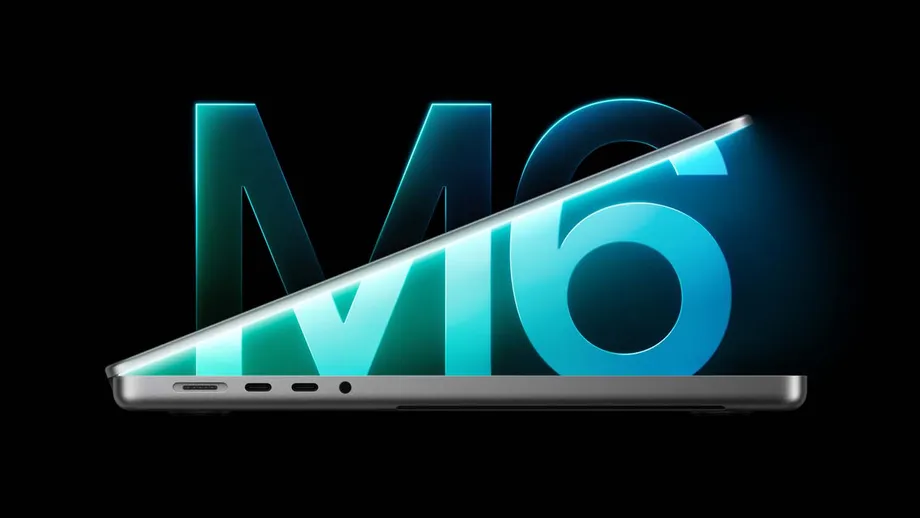
Apple has announced a 14-inch MacBook Pro starting at ¥339,800 in Japan, pairing a new M6 processor with faster wireless connections while retaining the previous model's screen and aluminum design. Orders open October 29 in Japan, and deliveries and store sales begin November 6, 2026.
Contents
- Japan orders open October 29 for Apple's latest pro laptop
- What are the launch dates and regional prices?
- What does the M6 processor change?
- How much faster are actual applications?
- Memory matters for local AI
- The display and body stay familiar
- Battery life depends on the task and charger
- macOS 27 brings AI features with conditions
- The iMac and Creator Studio join the rollout
- Apple details recycled materials and manufacturing
- Key Points
The M6 has a 12-core central processing unit and a 12-core graphics processing unit, each with two more cores than M5. Apple claims graphics performance improves by up to 30% and AI workloads run up to 25% faster than on its predecessor. The laptop starts with 16GB of memory and 1TB of storage, with battery life rated at up to 24 hours.
Apple's Japanese launch announcement lists an education starting price of ¥322,800, including tax, a saving of ¥17,000 against the standard price. Space black and silver remain the two finishes.
The announcement covers the MacBook Pro using the standard M6 chip. Apple also introduced an M6 iMac in seven colors and November updates to its Creator Studio subscription, connecting the hardware launch with new tools for video, music, image editing and office documents.
For buyers, the central change is more computing power inside a familiar machine. Owners of older M1 or Intel computers face a much larger potential improvement than M5 owners, while memory capacity, charging equipment and the timing of new software features remain practical details to check before ordering.
What are the launch dates and regional prices?
Apple's October 27 release lists October 28 as the preorder date in 35 countries and regions, including the United States. The Japanese announcement lists October 29. Both give November 6 as the date deliveries and retail sales begin.
The U.S. starting price is $1,999, or $1,899 for eligible education buyers. Prices elsewhere start at £1,999 in Britain, Rs 239,900 in India and Dh8,499 in the United Arab Emirates. These are local retail prices, with different tax arrangements and market conditions.
The launch schedule is:
- October 27, 2026: Apple announces the M6 MacBook Pro and updated iMac.
- October 28: Preorders begin in the U.S. and India; Apple's Pro and Tell event is scheduled in Los Angeles.
- October 29: Preorders begin in Japan.
- November 6: Customer deliveries and retail sales begin.
- November: Creator Studio updates become available to existing subscribers at no extra charge.
The $1,999 U.S. price matches the outgoing M5 model's current listing, although the M5 originally launched at $1,599 in October 2025. The new laptop therefore costs $400, or about 25%, more than that earlier launch price. Buyers comparing generations need to use the same pricing point.
What does the M6 processor change?
The M6 uses a manufacturing process described as 2 nanometers, replacing the M5's generation of 3 nanometer technology. These labels identify generations of chip manufacturing. Newer processes can pack more transistors, the tiny switches that perform calculations, into a given area.
The 12 CPU cores comprise two super cores, four performance cores and six efficiency cores. Different cores handle different demands, from short bursts of intensive work to lighter tasks that use less power. The GPU also grows from 10 cores to 12 and includes a Neural Accelerator in every core for AI calculations.
Apple's third generation ray tracing engine handles calculations that simulate how light moves through a scene, supporting more realistic reflections and shadows in compatible software. Dynamic Caching manages memory inside the chip as graphics tasks change.
Shelly Goldberg, Apple's vice president of Hardware Engineering, described the processor's purpose in the launch statement:
With the powerful M6 chip, we're taking performance to the next level, with a boost in CPU speed and graphics and even more powerful capabilities for on-device AI.
The chip retains hardware acceleration for H.264, HEVC, ProRes and ProRes RAW video, plus AV1 decoding. Dedicated video hardware helps play, process and export compatible footage efficiently. The listed media formats carry over from M5.
How much faster are actual applications?
Apple gives several application benchmarks that put its broad performance claims into everyday terms. Against the 13-inch MacBook Pro with M1, it reports up to 11.7 times faster rendering with ray tracing in Blender, 3.3 times faster image processing in Affinity and 2.5 times faster project builds in Xcode.
Blender turns a digital scene into a finished image, Affinity handles creative image work, and Xcode converts developers' code into applications. The different results show how much the benefit depends on the job: creating a complex 3D image has a different speed increase from compiling software.
Against the 14-inch M5 MacBook Pro, Apple lists gains of up to 1.3 times in Blender and Xcode, and up to 1.2 times in Affinity. Its comparison notes identify an M5 machine with a 10-core CPU, a 10-core GPU, 32GB of memory and a 4TB SSD.
Apple also reports up to 13 times faster time to first token for large language model prompts than M1, and up to 1.3 times faster than M5. Time to first token measures the wait before an AI model begins producing its response. Apple conducted the tests; results for individual projects will depend on the application, settings and configuration.
Memory matters for local AI
The M6's dual 16-core Neural Engine delivers up to 1.9 times the performance of the M5 Neural Engine, Apple says. It works alongside the GPU on tasks including image generation and AI upscaling, which increases an image's resolution by estimating additional detail.
The laptop offers 16GB, 24GB or 32GB of unified memory. Unified memory is a shared pool used by the CPU, GPU and other parts of the chip. For someone running an AI model locally, capacity affects how large a model can fit alongside the operating system and other applications.
Memory bandwidth describes how quickly data can move between memory and the processor. Apple advertises a maximum of 170GB per second. Configuration details list 153GB per second for the 16GB model and 170GB per second for the 24GB and 32GB versions.
The higher figure is about 11% above 153GB per second. Buyers choosing additional memory therefore gain both more working space and higher bandwidth in those configurations. Storage starts at 1TB, with 2TB and 4TB options for larger collections of footage, photographs, applications and project files.
The display and body stay familiar
The 14.2-inch Liquid Retina XDR display retains a resolution of 3,024 by 1,964 pixels, or 254 pixels per inch. Its mini-LED backlight, P3 wide color support and 1,000,000:1 contrast ratio support detailed images with bright highlights and deep blacks.
Brightness reaches up to 1,600 nits for peak HDR highlights and 1,000 nits for sustained HDR across the screen. HDR, or high dynamic range, allows compatible photos and videos to show a wider range between dark and bright areas. Standard content can reach up to 1,000 nits outdoors.
ProMotion adjusts the refresh rate up to 120Hz, allowing the display to update as many as 120 times a second. True Tone adjusts the screen's color balance to surrounding light. An optional nano-texture finish reduces reflections for people working near windows or under difficult lighting.
The computer measures 31.26 by 22.12 by 1.55 centimeters and weighs 1.55 kilograms, matching its predecessor. It retains the backlit Magic Keyboard, Touch ID and Force Touch trackpad. An OLED touchscreen MacBook was expected at the October 28 event; this announced M6 model uses the existing Liquid Retina XDR display.
Battery life depends on the task and charger
Apple rates the laptop for up to 24 hours of video streaming or 16 hours of wireless web browsing. Those figures match the M5 model's ratings. Against older machines, Apple claims up to four additional hours compared with M1 models and up to 14 additional hours compared with Intel models.
The two battery figures give buyers a more useful guide than a single maximum: browsing and playing video place different demands on the computer. Rendering scenes, exporting projects and running AI models also change power consumption. Apple says battery life varies with use and configuration.
Fast charging can take the battery to 50% in about 30 minutes with a compatible USB-C power source rated at 96W or higher. The listed 70W adapter supplied in the U.S. falls below that requirement. Adapter arrangements vary by market, making the charger another item to check at purchase.
Wireless connections move from Wi-Fi 6E and Bluetooth 5.3 on M5 to Wi-Fi 7 and Bluetooth 6, using Apple's N1 networking chip. Physical connections include three Thunderbolt 4 ports, HDMI, MagSafe 3, an SDXC card slot and a headphone jack. The laptop supports up to two external displays.
A 12-megapixel Center Stage camera helps keep callers in frame and supports Desk View. Three microphones and six speakers with spatial audio complete the built-in calling and audio equipment.
macOS 27 brings AI features with conditions
The MacBook Pro runs macOS 27 Golden Gate. Apple describes tools that organize Safari tabs by topic, watch websites for changes such as restocks, create Shortcuts automations from descriptions and assist with editing in Photos. Liquid Glass gains a setting to adjust its transparency and tint.
Siri AI is designed to search personal information, respond to content on screen and carry out tasks across applications. Apple's release notes place Siri AI in beta in macOS 27.2. No release date for that update is given.
Japanese, English, French, Korean, Portuguese and Spanish are listed as supported Siri AI languages. Availability varies by feature, language and region, and Siri AI is unavailable to children under 13.
Apple's Japanese notes also describe daily usage limits for some features that depend on server models, including Siri AI, intelligent photo editing and Image Playground. Limits can vary with request complexity and system demand, and Apple plans expanded access for a fee. The software combines processing on the Mac with features that use remote servers.
The iMac and Creator Studio join the rollout
The updated 24-inch iMac retains its 4.5K Retina display and comes in blue, green, pink, yellow, purple, orange and silver. It starts at $1,499 in the U.S., Rs 174,900 in India and Dh6,499 in the UAE. The previous iMac generation used M4 and arrived in 2024.
The entry configuration has a 10-core CPU and 10-core GPU, while the version with 12 CPU and 12 GPU cores starts at $1,699 in the U.S. Depending on configuration, buyers get two or four Thunderbolt 4 ports, with a 2.5 Gigabit Ethernet option. Apple claims up to five times faster AI performance on the device than M4. A broader claim of up to 12 times faster AI performance was also given without a named comparison model.
Creator Studio's November update adds MotionVFX content to Final Cut Pro and expands Content Hub to include stock video. A closer connection with Pixelmator Pro lets users edit an image from a video timeline and save it back into the project. Pixelmator Pro also gains Generate Fill, which changes a selected image area using a written description.
Logic Pro gains an AI assistant in beta, a revised sound browser and new Stem Splitter tools for separating or adjusting drum parts. Keynote, Pages and Numbers gain assistants in beta and support for Model Context Protocol, a standard that lets compatible AI tools read and edit application content. Existing subscribers receive the update without an extra charge; in India, standard subscriptions cost Rs 399 monthly or Rs 3,999 annually.
Apple details recycled materials and manufacturing
Apple says recycled materials account for 45% of the MacBook Pro's mass, excluding packaging and included accessories. The enclosure uses 100% recycled aluminum, the battery uses 100% recycled cobalt, and multiple capacitors use 100% recycled tantalum, a first for Apple.
The company says manufacturing uses 60% renewable electricity across the supply chain. Those product figures form part of Apple's stated target to become carbon neutral across its entire footprint by 2030.
Key Points
- The M6 MacBook Pro starts at ¥339,800 in Japan, with orders opening October 29 and sales beginning November 6.
- U.S. preorders begin October 28, with prices starting at $1,999.
- Apple claims up to 30% faster graphics and 25% faster AI workloads than M5.
- Memory options run from 16GB to 32GB, and storage starts at 1TB.
- The existing display and body remain, while Wi-Fi 7 and Bluetooth 6 arrive.
- Battery ratings reach 24 hours for video streaming; fast charging requires a compatible source of at least 96W.
- Siri AI is listed for the macOS 27.2 beta, with language, age and usage conditions.
- An M6 iMac and November Creator Studio updates accompany the laptop launch.