A new proposal builds on taxes introduced in 2026
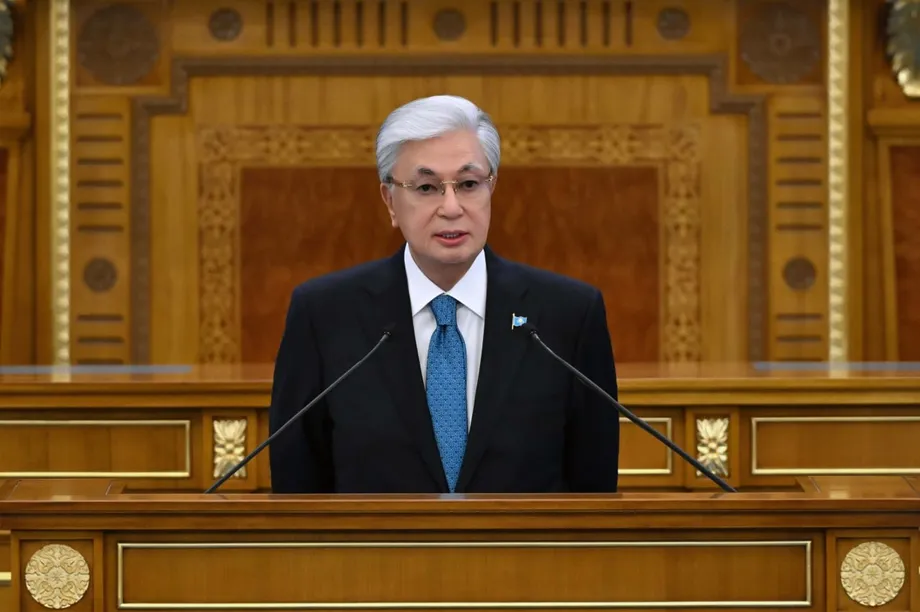
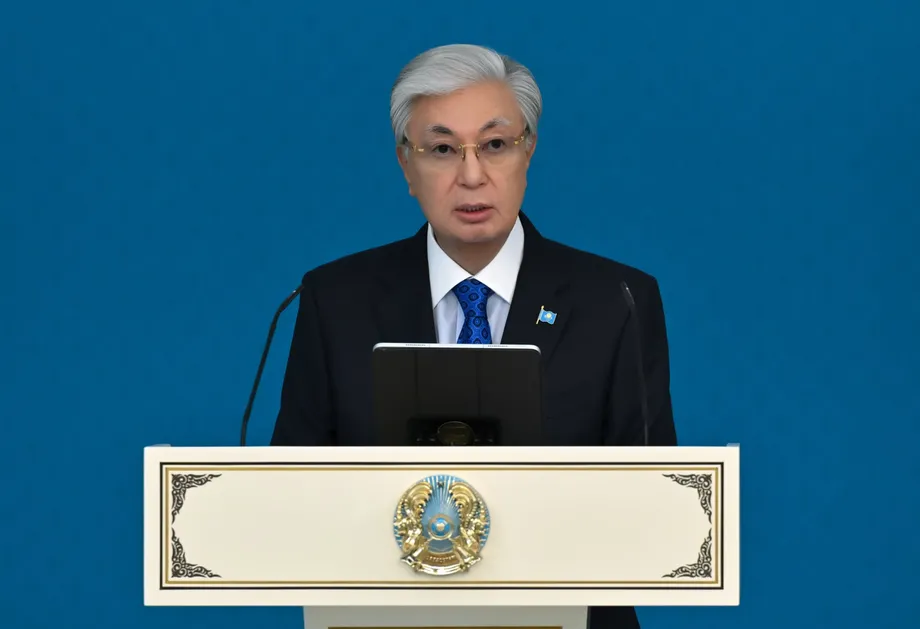
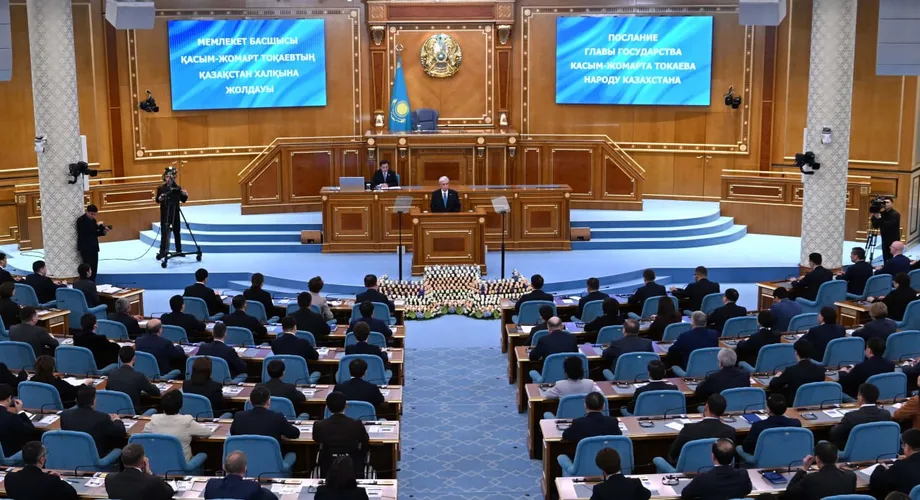
Kazakhstan's President Kassym-Jomart Tokayev called on Oct. 28, 2026, for higher taxes on people with large fortunes, opening a debate over who should pay more and which assets should count. His proposal comes less than a year after a new Tax Code introduced higher charges on expensive property, vehicles, yachts and aircraft, alongside a progressive personal income tax.
Contents
- A new proposal builds on taxes introduced in 2026
- What Kazakhstan already taxes more heavily
- Lawmakers consider a wider list of assets
- Where should the line between wealth and the middle class fall?
- Why digital records are central to the plan
- What AI would change for businesses
- The shadow economy is shrinking, but competition remains a concern
- Tax Code repairs accompany the push for more revenue
- The dates shaping the next stage
- Key Points
In his annual address to the nation, Tokayev instructed the government and the Kurultai, the national legislature, to examine the idea and submit recommendations. The proposed rate, the threshold defining a large fortune, the assets it would cover and a timetable for introducing it have yet to be announced.
Tokayev presented the initiative as a question of sharing the cost of national development. He also said legally acquired property would remain protected, describing restrictions on such assets as contrary to the Constitution.
The president set out his position in the address:
I believe the time has come to discuss introducing a higher rate for those with substantial wealth.
Lawmakers have already put forward several possible approaches: increasing taxes on luxury purchases, raising personal income tax further, or extending additional taxation to other property and income. Those choices matter because taxing an annual salary, an expensive purchase and an accumulated fortune reaches different people in different ways.
Tokayev paired the proposal with instructions to correct problems businesses face under the new Tax Code. His message therefore has two connected parts: seek a greater contribution from wealthy citizens while making tax rules easier for businesses to understand and apply.
What Kazakhstan already taxes more heavily
Kazakhstan has repeatedly discussed a luxury tax, but it currently has no separate tax carrying that name. Instead, the rules introduced in 2026 apply higher taxes and excise duties to certain expensive assets.
Real estate valued above 450 million tenge, approximately $983,858 in the figures accompanying the proposal, is subject to a 2% tax rate. A 10% excise duty applies to cars valued at 18,000 monthly calculation indices or more, and to yachts and aircraft valued at 24,000 indices or more.
The monthly calculation index, or MCI, is a reference amount Kazakhstan uses to calculate various payments and legal thresholds. Expressing a threshold in MCI allows its value in tenge to change when the reference amount changes.
The personal income tax system also became progressive in 2026. Under that system, a 15% rate applies only to the portion of annual taxable income exceeding 8,500 MCI. For 2026, that threshold is 36,762,500 tenge, approximately $80,375.
A person whose taxable annual income exceeds the threshold by 1 million tenge would therefore face the 15% rate on that additional 1 million tenge. The higher rate is applied to the excess rather than the entire income.
Kurultai deputy Askhat Aimagambetov said the existing progressive mechanism was operating without substantial problems. He said further proposals would need study and discussion with the Ministry of Finance.
Lawmakers consider a wider list of assets
Aimagambetov described discussions covering luxury goods, expensive cars, yachts and other property, as well as a further increase in personal income tax and higher taxation of income from other activities.
Deputy Aidos Sarym suggested examining gold, diamonds, cars costing more than $200,000, boats, aircraft, property, unusually high income and inheritances. He cited the purchase of a Bombardier aircraft as an example of a transaction that could deserve closer attention.
Sarym's list brings together several possible tax bases. A tax base is the thing used to calculate a tax bill, such as income received during a year or the value of property someone owns. Choosing that base is as consequential as choosing the percentage charged.
Deputy Olzhas Kuspan said lawmakers had approved rates in the Tax Code and were now discussing what else could face additional taxation. His suggestions included digital assets and valuable artworks, with ownership recorded and expensive paintings valued.
Kuspan also proposed examining categories A and B in a Ministry of Labor classification for social benefits when identifying people who might fall within luxury taxation. He argued that powerful computing systems should help monitor who owns which assets.
These proposals would require different administrative work. A luxury vehicle has a purchase price and registration record. An artwork requires a valuation, while a digital asset requires a way to identify its owner and determine its value for tax purposes.
Where should the line between wealth and the middle class fall?
Sarym said Kazakhstan needed a clearer classification of its population to distinguish wealthy citizens from different parts of the middle class. He argued that the discussion concerned public perceptions of fairness as well as economics.
He described household security as part of that assessment. A family may appear comfortably placed yet lose much of its financial stability if a spouse dies. His point was that income at a particular moment and the ability to withstand a major financial shock are different measures.
Wealth and income also describe different things. Income is money received over a period, such as wages or business earnings. Wealth is the accumulated value of assets, which can include property and business ownership. Someone can own valuable assets while receiving relatively little cash income in a particular year.
For Kazakhstan, the practical decision is therefore broader than selecting a higher rate. Lawmakers must decide whether the new obligation follows earnings, ownership, purchases or transfers such as inheritance. Each option would create a different boundary between people covered by the measure and those outside it.
Sarym said the number of people in the wealthy group still needed to be counted. Establishing that group would give the government a clearer basis for estimating both the reach of the proposal and the revenue it might bring.
Why digital records are central to the plan
Tokayev linked tax fairness to transparency, calling for wider use of artificial intelligence to improve collection, reduce activity hidden from the authorities and lower corruption risks.
Dias Kumarbekov, a senior expert at the Kazakhstan Institute for Strategic Studies under the president, connected the proposed higher rate with the state's ability to identify large fortunes accurately. He explained that substantial wealth may be spread across real estate, business holdings and assets abroad, with information held by different agencies and countries.
Kumarbekov argued that combining those records would help direct a higher rate toward its intended taxpayers. Without a complete picture, people whose finances are already visible could bear more of the burden while assets held elsewhere remain harder to identify.
Kazakhstan signed an agreement for automatic exchange of tax information in 2018, received its first data in 2021 and had 89 partner countries and territories by 2024. That exchange gives tax authorities access to information about accounts outside the country.
At home, the Smart Data Finance system combines information from 80 sources, according to Vice Minister of Finance Aset Turysov. He said checks conducted through the system had generated 322 billion tenge in tax assessments. An assessment is an amount calculated as payable; collection is the later step of receiving the money.
The Ministry of Finance plans to expand declarations partly filled in using existing records. Taxpayers would be able to see the information behind a calculated amount. Kumarbekov argued that people should also be able to challenge the system's conclusions before they become tax assessments.
What AI would change for businesses
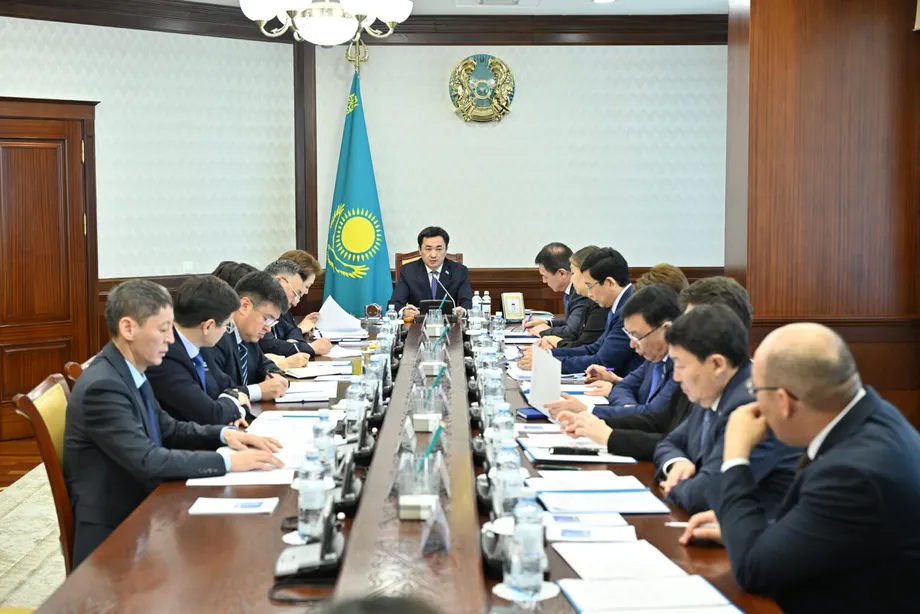
Finance Minister Madi Takiyev said at a government meeting on Oct. 6 that artificial intelligence had helped identify 672 additional tax risks. Such risks are signals that records may need closer examination, for example when purchases and declared income do not match.
Some of those issues are expected to appear in eGov Business and the unified personal account for entrepreneurs. Companies could then see a potential problem and correct an error before an inspection. The ministry aims to halve inspections of compliant taxpayers by 2029.
Turysov illustrated the approach with a person who acquires real estate and several cars over two or three years while having no confirmed income. Linking purchase records with income information allows the system to flag that gap for review.
Kumarbekov also cited international experience with information supplied by third parties. In a Danish tax experiment he described, hidden income accounted for 0.3% of income reported by an employer or bank, compared with 37% of income people reported themselves.
For taxpayers, the intended change is more advance notice and less manual paperwork. For the authorities, it is a more complete view of income and ownership before deciding where to direct inspection resources.
The shadow economy is shrinking, but competition remains a concern
Kazakhstan's Bureau of National Statistics put the share of economic activity hidden from official accounting at 15.69% of gross domestic product in 2025, down from 19.75% in 2021. That is a decline of 4.06 percentage points. The government's target is 13.8% by 2028, requiring a further reduction of 1.89 points from the 2025 level.
The World Bank's enterprise survey for 2024 found that 39.7% of Kazakh companies faced competitors operating without registration or in the shadows. Meanwhile, the share identifying such competition as their biggest problem fell from 16.4% in 2019 to 6.9% in 2024, a drop of 9.5 percentage points.
Businesses that conceal sales can avoid tax costs paid by registered competitors. That can leave companies following the rules with less room to cut prices, retain customers or invest in their operations.
Kumarbekov cited research using enterprise survey data across several countries that linked competition from informal businesses with productivity losses of 20% to 24% among formal companies. He placed the proposed tax on large fortunes within a wider effort to make contributions more consistent across the economy.
Tax Code repairs accompany the push for more revenue
Tokayev acknowledged that businesses were struggling to apply some provisions of the Tax Code, which took effect on Jan. 1, 2026. He instructed the government to resolve contradictions, remove ambiguous wording and reduce disproportionate burdens.
The president described the code as a foundation for reform while calling for changes grounded in business experience:
The Tax Code is not dogma, nor is it sacred scripture, and it must not be detached from reality.
Tokayev said revisions should be carefully prepared so entrepreneurs do not face repeated changes to the rules. He also said taxation should preserve incentives to expand businesses, attract investment and create jobs.
The wider economic agenda focused on household incomes and inflation. Tokayev urged the government and the National Bank to coordinate efforts to contain rising prices, while asking banks to provide more financing for business investment.
He said bank assets exceeded 75 trillion tenge and deposits had reached 52 trillion tenge, with about 78% held in the national currency. He called for more of those resources to support production and business development, alongside financing involving development institutions, international financial organizations and the Unified Accumulative Pension Fund.
Public spending was another part of the same agenda. Tokayev proposed using AI to identify unjustified or inefficient expenditure and fully digitizing the treasury system. His program pairs collecting taxes more accurately with closer scrutiny of how public money is spent.
The dates shaping the next stage
Kazakhstan's latest debate follows several years of expanding access to financial information and a recent overhaul of taxation. The main milestones are:
- 2018: Kazakhstan signed an agreement for automatic exchange of tax information.
- 2021: The country received its first data through that exchange.
- 2024: The network reached 89 partner countries and territories.
- Sept. 8, 2025: Tokayev instructed the State Revenue Committee to lead government digitalization and use AI in taxpayers' interests.
- Jan. 1, 2026: The new Tax Code took effect.
- Oct. 6, 2026: The finance minister outlined the use of AI to identify additional tax risks.
- Oct. 28, 2026: Tokayev asked the government and Kurultai to examine higher taxation of large fortunes.
- 2028: The government aims to reduce the hidden economy's share of GDP to 13.8%.
- 2029: The Finance Ministry aims to halve inspections of compliant taxpayers.
The immediate task for the government and lawmakers is to turn the president's request into concrete recommendations. Their choices about ownership, valuation and the definition of wealth will determine how the proposal fits alongside the taxes already introduced in 2026.
Key Points
- Tokayev proposed higher taxation of large fortunes on Oct. 28, 2026, and asked the government and Kurultai to prepare recommendations.
- Kazakhstan already applies higher taxes and excise duties to certain expensive assets.
- The 15% personal income tax rate applies only to annual taxable income above 36,762,500 tenge in 2026.
- Lawmakers are discussing luxury goods, property, digital assets, artworks, inheritances and additional income taxation.
- Digital records and AI are central to identifying assets and improving tax collection.
- Tokayev also ordered targeted Tax Code changes to address business concerns.