Resignation Amid National Exam Turmoil
South Korean Education Minister Choi Kyo-jin stepped down on Sunday, November 22, 2026, after taking full responsibility for widespread public confusion regarding anti-cheating regulations implemented for the country's college entrance examination. President Lee Jae Myung accepted the resignation within an hour of its submission during the events that followed the high-stakes testing period. Senior presidential spokesperson Kang Yu-jung confirmed that the presidential office processed the departure swiftly to maintain administrative stability. Prime Minister Han Seong-sook received direct instructions from President Lee to oversee all follow-up measures related to the examination irregularities. The leadership change comes after a series of last-minute regulatory adjustments left students, parents, and school administrators struggling to navigate updated safety protocols before the crucial academic assessment.
Contents
- Resignation Amid National Exam Turmoil
- The Confession That Triggered Security Panic
- Unprecedented Security Protocols During the Suneung
- Investigation Findings and Criminal Referrals
- Missing Archives Complicate Historical Fraud Investigations
- Timeline of Key Developments
- Broader Reforms and Retrospective Penalties
- The Bottom Line
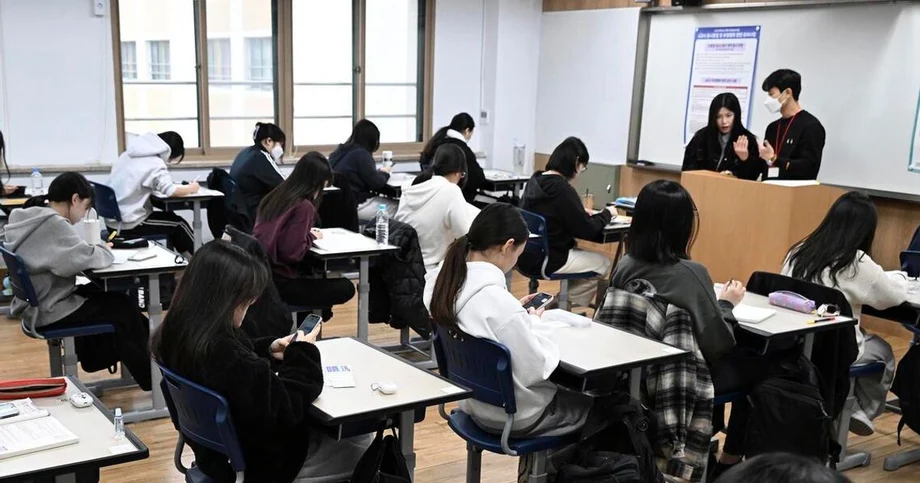
The annual college entrance assessment, formally designated as the College Scholastic Ability Test and widely known as the Suneung, spans an exhausting eight-hour duration for participants. More than 550,000 students registered to take the examination, competing fiercely for limited placement opportunities at the nation's most prestigious universities. Cultural and economic pressures in the country place immense value on academic placement, making the examination a defining moment for young adults and their families. In a written statement released on Sunday, November 22, 2026, the departing minister acknowledged that inadequate preparation time and repeated rule alterations generated considerable inconvenience for test-takers and the broader public.
There were inconveniences to the test-takers and the public due to several changes ahead of the Suneung. As the minister, I cannot be free from the criticism that we were not prepared in advance.
The Confession That Triggered Security Panic
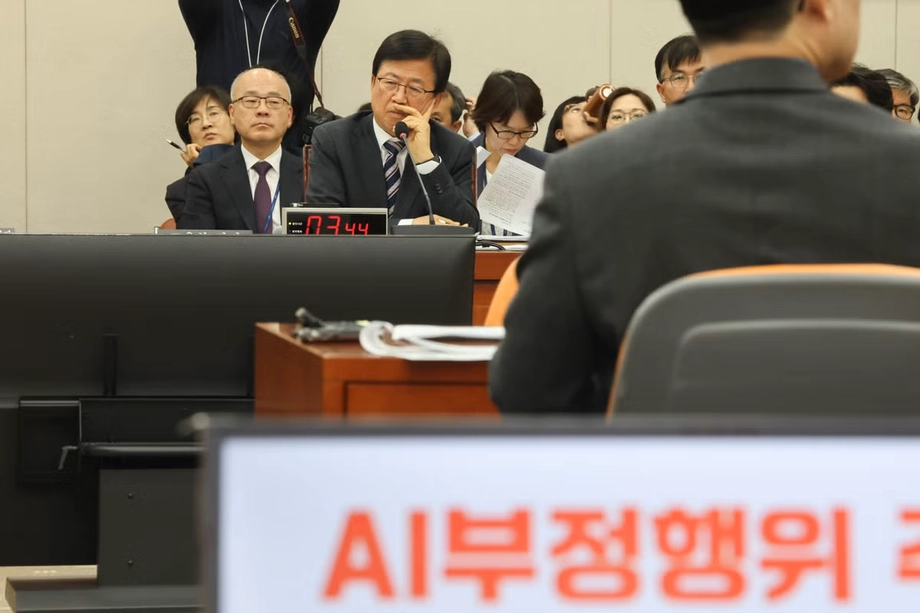
Public anxiety regarding academic dishonesty escalated dramatically just days before the scheduled test date following a shocking confession from a high-profile candidate. A participant who achieved the top overall score in the national certified tax accountant examination admitted to orchestrating an elaborate technological cheating scheme. Investigators learned that the candidate used a miniature camera to photograph test questions, transmitted those images to generative artificial intelligence software, and read the answers delivered to his smartphone. The scandal recalled past concerns concerning smart glasses cheating that had previously surfaced during university entrance essay evaluations. The perpetrator achieved a near-perfect score of 397.5 out of 400 in the first stage of the professional qualification test before securing the top rank in July. Following the public disclosure of his methods through his legal counsel on November 15, authorities invalidated his passing certificate and barred him from the qualification test for five years. The revelation shattered public confidence in traditional examination supervision, which historically relied on visual observation by proctors rather than digital counter-measures. Education Minister Choi Kyo-jin faced intense political backlash after remarking during a parliamentary hearing on November 16 that his age left him unconfident in his ability to detect artificial intelligence-assisted cheating.
Unprecedented Security Protocols During the Suneung
Government authorities deployed a massive security apparatus when the Suneung commenced on Thursday, November 19, 2026, across 1,312 designated testing sites. Officials restricted public wireless networks near examination rooms and deployed specialist staff trained to identify prohibited electronic hardware. Testing facilities enforced strict apparel guidelines, requiring proctors to inspect eyewear, clothing buttons, and clothing collars for hidden miniature cameras and wireless communication receivers. Students were instructed to bring only approved writing implements, while erasers were distributed directly inside the testing rooms to eliminate spaces where digital devices could be concealed. To catch un surrendered mobile phones, the government broadcasted three unscheduled emergency alert notifications to mobile devices nationwide during the testing window. Officials collected mobile phones at the start of the day and conducted random verification procedures by placing unexpected calls to ensure units were completely powered down. Despite the extraordinary precautions, testing authorities identified 111 separate cases of electronic device misconduct during the administration of the Suneung. Nearly half of those violations were uncovered directly as a result of the nationwide emergency alert broadcasts forcing the surrender of hidden communications hardware.
Investigation Findings and Criminal Referrals
The Ministry of Education initiated formal legal proceedings against individuals caught violating examination integrity standards during the national test. Shin Jin-yong, head of the ministry admissions policy division, announced on November 23, 2026, that criminal complaint processes would target five individuals who directly utilized smart glasses and micro-cameras. Educational authorities collaborated closely with law enforcement agencies to investigate instances of fraudulent interference with official duties. The ministry also established a dedicated reporting center to accept tips regarding historical academic dishonesty without any expiration deadline. Government officials engaged in active consultations with the Anti-Corruption and Civil Rights Commission to establish a substantial reward program for whistleblowers. The proposed framework intends to distribute a minimum of 100 million won, roughly equivalent to 75,000 United States dollars, for verified reports of cheating assistance. Additional policy considerations involve offering sentence reductions or immunity for individuals who voluntarily step forward with confessions regarding past examination fraud.
Missing Archives Complicate Historical Fraud Investigations
Government efforts to investigate historical instances of artificial intelligence-assisted cheating encountered a major administrative obstacle concerning missing documentation. Ruling party lawmaker Jung Sung-kook reported on November 23, 2026, that several regional education offices had already destroyed a significant portion of last year's examination papers. Officials from Gyeonggi, Jeonnam, Gwangju, and Incheon education offices informed parliamentary researchers that approximately 60 to 70 percent of previous testing materials had been shredded or discarded. Standard administrative guidelines normally mandate the retention of Suneung examination papers for exactly one year before authorized destruction takes place. The Ministry of Education transmitted an official public document on November 18 instructing regional offices to halt the disposal of previous testing materials. Prime Minister Han Seong-sook issued an emergency directive on November 19 ordering educational authorities to maintain existing storage conditions indefinitely. However, the interval between the conclusion of the previous testing cycle and the issuance of the emergency directive allowed schools to clear storage space according to standard schedules. Critics argued that the absence of core evidentiary documents severely limits the ability of investigators to retroactively verify the prevalence of digital malpractice in prior examination cycles.
Timeline of Key Developments
- April and July 2026: The candidate who later confessed to cheating participates in the two-stage national tax accountant examination.
- November 15, 2026: The top-scoring tax accountant candidate confesses via his lawyer to using artificial intelligence and a miniature camera.
- November 16, 2026: Education Minister Choi Kyo-jin expresses doubt during a parliamentary hearing regarding detection capabilities for tech-based cheating.
- November 18, 2026: The Ministry of Education issues a public document ordering the preservation of previous examination papers.
- November 19, 2026: The Suneung is administered nationwide under high-security conditions, resulting in 111 electronic device violations.
- November 22, 2026: Education Minister Choi Kyo-jin announces his resignation, which President Lee Jae Myung accepts within an hour.
- November 23, 2026: The Ministry of Education finalizes criminal referrals for five individuals and addresses missing test paper archives.
Broader Reforms and Retrospective Penalties
Ruling political factions and government administrators proposed sweeping legislative amendments to establish harsher deterrents against examination misconduct. Officials outlined a proposal to extend the mandatory disqualification period for cheating from one year to ten years, with potential provisions for retroactive application to current violations. The Ministry of Education also reviewed admissions data to determine whether successful early university applicants caught possessing unauthorized devices should face enrollment revocations. Debates emerged online regarding specific candidates, including an accepted applicant at Yonsei University who faced public scrutiny over alleged electronic device possession. Ministry representatives emphasized the necessity of distinguishing between simple unauthorized possession of a device and the active operational use of artificial intelligence tools during testing. University admissions offices retained independence in evaluating whether minor infractions warranted total disqualification from institutional enrollment lists. Concurrently, educational authorities announced plans to evaluate the fairness of internal school evaluations, including mid-term examinations and continuous assessments, to reduce systemic reliance on standardized testing outcomes.
The Bottom Line
- Education Minister Choi Kyo-jin resigned on November 22, 2026, taking responsibility for administrative missteps during the Suneung examination preparation.
- Over 550,000 students participated in the eight-hour national college entrance assessment under unprecedented security measures.
- Authorities detected 111 electronic device violations, leading to criminal referrals for five individuals utilizing advanced smart glasses and micro-cameras.
- Government officials initiated a whistleblower reward program offering at least 100 million won for verified tips regarding examination cheating.
- Investigations into historical cheating faced hurdles after regional offices reported that a majority of last year's test papers had been legally discarded.