341 agricultural technology products still await practical use
Vietnam has set deadlines in November and December 2026 to tackle a gap at the heart of its agricultural development plans: among 451 agricultural science and innovation products reported by 34 localities, 341, or about 76%, remain at the research stage.
Contents
- 341 agricultural technology products still await practical use
- Growth is strong, but the production model must change
- Research has already delivered measurable gains
- Five bottlenecks connect laboratories to farm incomes
- Businesses will be asked to commit before research begins
- Forests and oyster farms show what local priorities mean
- Coffee exports and food safety depend on usable data
- Connecting databases is now a production task
- Funding rules and shared facilities are also under review
- The deadlines that will test delivery
- Key Points
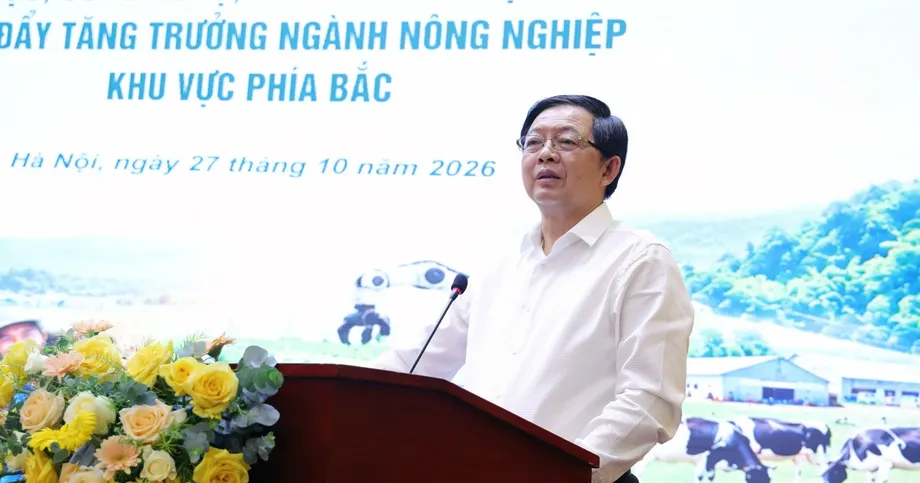
Deputy Prime Minister Ho Quoc Dung called for changes to research funding, business partnerships and agricultural data systems at an October 27 conference in Hanoi. Northern localities must identify three to five priority challenges by November 15, and the Ministry of Agriculture and Environment must complete a national list of major challenges and priority tasks by December 15. Qualifying projects are to begin implementation in the first quarter of 2027.
Deputy Minister of Public Security Nguyen Van Long presented the figures, compiled by his ministry as the standing agency of the Central Steering Committee 57. The 34 localities reported 916 tasks associated with 908 science, technology and innovation products. Agriculture accounted for nearly half of those products, yet only about 24% of its results had reached application or commercialization.
The conference, jointly organized by the agriculture and public security ministries, brought together about 450 representatives from government, research institutions, universities, businesses, cooperatives and other organizations. Its central concern was practical: how to turn publicly supported research into better seeds, lower production costs, safer food and products that farmers can sell.
Dung assigned the agriculture ministry to coordinate a review with the public security and science and technology ministries. The work will identify problems suited to regional strengths and connect local production needs with researchers and businesses capable of solving them.
Growth is strong, but the production model must change
Deputy Minister of Agriculture and Environment Dang Ngoc Diep said agriculture grew 3.78% in 2025, when agricultural, forestry and fishery exports reached $70.63 billion. During the first nine months of 2026, the sector grew 4.02% and exports reached $56.3 billion, up 7.8% from the same period a year earlier.
Agriculture averaged growth of about 3.57% during 2021–2025. Its expansion continued as the national economy grew 9.01% in the first nine months of 2026. With more than 60% of the population living in rural areas, improvements in agricultural production have a direct connection to household livelihoods as well as food supplies and export earnings.
Minister of Agriculture and Environment Trinh Viet Hung said the next phase must depend less on expanding production scale and output, and more on productivity, quality, efficiency and added value. In everyday terms, the aim is to earn more from the resources already being used, rather than simply produce more tonnes.
Hung placed that shift within Politburo Resolution No. 57-NQ/TW on science, technology, innovation and national digital transformation. He also pointed to tougher trade competition, stricter environmental standards and traceability requirements, alongside increasingly unpredictable weather and natural disasters.
Research has already delivered measurable gains
New rice varieties and advanced cultivation practices have helped raise productivity by about 9.9%, adding an estimated 2.4 million tonnes of output annually and around 12 trillion dong in economic value, according to figures presented at the conference. The ministry also reported progress in veterinary vaccines, forestry varieties, aquaculture and processing.
During 2021–2025, the sector implemented 1,373 science and technology tasks. Results included 225 new crop, livestock, aquaculture and forestry varieties recognized and introduced into production, 150 technical advances, and 158 patents and utility model licenses. Utility models protect useful technical inventions through a form of intellectual property protection.
More than 2,000 agricultural models using advanced technology, resource reuse or methods that reduce emissions reported economic gains of around 10–30%. Northern examples included rice varieties tolerant of cold weather, maize grown for plant material used as feed, and technology for producing vaccines against African swine fever.
The sector also initially identified 19 potential strategic technology products. The challenge now is to make successful research easier to adopt across production areas, including places where farms and businesses have less money, equipment or technical support.
Five bottlenecks connect laboratories to farm incomes
Diep identified five main obstacles: small and fragmented production; research and technology transfer spread too thinly; limitations in varieties and production inputs; insufficient preservation and processing technology; and disconnected data combined with weak digital skills.
A farmer may gain from a better seed but still lose income if produce deteriorates before reaching a buyer. A processor may have modern machinery but struggle to obtain a steady supply of suitable raw materials. The proposed response therefore follows the whole value chain, meaning the connected steps from inputs and production through storage, processing and sale.
Livestock farming illustrates the dependence on inputs. About 65% of feed materials are imported, according to Diep, while modern technologies are concentrated mainly in large farms. Priorities include better livestock varieties, feed technology, vaccines and biological products, alongside production methods that prevent disease from entering or spreading through farms.
Marine aquaculture faces weaknesses in breeding stock, infrastructure and market connections. In forestry, acacia, bamboo and cinnamon production face problems involving varieties, pests, processing and export standards. These are the kinds of specific industry problems that ministries want future research commissions to address.
Businesses will be asked to commit before research begins
Only about 12% of research projects over the previous five years maintained links with businesses, according to figures presented at the conference. Across the country, 242 institutes and universities carried out more than 4,800 research tasks backed by tens of trillions of dong in state investment, while bringing results to market continued to be difficult.
Dung called for partnerships involving government, researchers, businesses, cooperatives and farm households throughout a project. Businesses and cooperatives are to register their technology needs, capacity to invest in adoption and ability to purchase products, then work with ministries to commission research.
The agriculture sector plans a list of 187 new science and technology tasks for 2027, with business commitments to apply the results. The approach gives researchers an intended user from the start and gives producers a role in defining the problem being investigated.
For 2026–2030, the sector aims for at least 60% of research results to be applied, transferred, commercialized or used in state management. It also seeks 30–35% of funding for science and innovation tasks with practical potential from resources outside the state budget. Total factor productivity, a measure of gains from using labor and capital more effectively, is targeted to contribute more than 55% of economic growth.
Forests and oyster farms show what local priorities mean
Tuyen Quang offers a concrete forestry test. Provincial Vice Chairman Hoang Gia Long said the locality has more than 858,000 hectares of forest, forest cover of 62.2%, over 130,000 hectares certified for sustainable management and 583 forest product processing establishments. Timber harvests total about 1.4 million cubic meters.
The province wants support to assess the economics of growing trees for larger timber and to pilot sustainable raw material areas connected to traceability and deeper processing. Proposed tools include better varieties, remote sensing and digital data to select planting areas and suitable harvest cycles. Remote sensing uses observations from satellites or other distant instruments to monitor land.
Long called for judging technology by added value and the actual incomes of forest growers, rather than counts of software systems or demonstration models. That places the intended result at household level: whether a grower earns more from managing and selling timber.
Quang Ninh faces a different problem. Fisheries account for more than 45% of its agricultural sector value, yet locally produced young oysters meet only about 30–34% of demand. Provincial Vice Chairman Nguyen Van Cong also described crowded farming areas, limited research into natural food supplies for oysters, and weaknesses in preservation, waste treatment and digital monitoring.
Quang Ninh expects to allocate about 2 trillion dong in 2027 to science, technology, innovation and digital transformation across those fields. It proposes integrated oyster farming pilots covering breeding stock quality, cultivation methods, environmental monitoring and traceability, with independent technical and economic evaluation before expansion.
Coffee exports and food safety depend on usable data
Son La is digitizing its Arabica coffee growing areas to identify plot boundaries, organize production and meet European Union requirements on deforestation under the EUDR. Knowing where a crop was grown is a basic part of showing its connection to land use.
Provincial Vice Chairman Nguyen Thanh Cong said cooperation between businesses and government had accelerated the work. Some businesses transferred their factories' raw material area data to the province for integration into a shared database. The information can also help identify suitable coffee areas and support production planning.
Hanoi is applying traceability to food supplies serving about 10 million people. The city has more than 1,700 agricultural, forestry and fishery processing establishments, has developed and monitored 1,388 safe food supply chains, and has more than 3,400 products under the One Commune One Product program, which promotes local specialties.
Hanoi began operating a nutrition and food safety database on August 3, 2026. Vice Chairman Bui Duy Cuong said further work would focus on infrastructure, standardized data, connections with the agriculture ministry and digital skills for cooperatives, businesses and farmers.
Connecting databases is now a production task
The agriculture and environment sector has developed 25 specialized databases and information systems, with direct connections to 12 national databases. Officials still identified disconnected information as a major obstacle, making standardization and sharing a central part of the next phase.
Dung called for priority attention to land and product traceability data, alongside information directly useful to production and management. The agriculture ministry was also asked to develop databases covering water resources, weather and warnings for natural disasters and flash floods.
Planned work for 2027–2030 includes digital traceability for priority product chains and agricultural logistics centers using advanced technology. Northern priorities include plantation timber, tea, specialty fruit, rice produced with lower emissions and seafood. Better logistics can reduce the time and losses between harvest and delivery.
Diep said performance should be measured through higher productivity and added value, lower costs and emissions, fewer losses after harvest, and wider commercialization. A review of the digital transformation project is planned for 2028.
Funding rules and shared facilities are also under review
The Ministry of Science and Technology was asked to examine past research, select viable results for practical support and develop shared laboratories and research centers. Dung also called for national agricultural research centers and clearer mechanisms for commissioning individual technology products.
Ministries must address rules governing trials, technology transfer, commercialization, intellectual property valuation and economic and technical standards. Valuing intellectual property means putting a financial value on assets such as a patented process or protected invention, a necessary step when businesses negotiate how to invest in or use them.
A national agricultural produce exchange is also proposed, while the science and technology ministry has been assigned to develop a technology exchange model. Such exchanges would organize connections between buyers and sellers of produce or technology. The operating rules and detailed financing arrangements have yet to be specified.
These reforms are intended to connect research funding, facilities and commercial demand. For a cooperative, practical access to a tested technology, a usable contract and technical support can matter as much as the invention itself.
The deadlines that will test delivery
Northern Vietnam, covering more than 168,000 square kilometers, has a concentration of institutes, universities and technology businesses. The government is asking localities to turn that capacity into a limited set of priorities with identified partners, outputs and schedules.
- November 15, 2026: Northern localities must select three to five priority challenges connecting production, processing, markets and sustainable brands.
- December 15, 2026: The agriculture ministry must finalize major challenges and priority tasks.
- December 31, 2026: The agriculture ministry must propose a national agricultural produce exchange model.
- First quarter of 2027: Projects meeting the required criteria are to begin implementation.
- Every three months: Progress reviews are to support reports to the Government and Prime Minister.
- 2028: A review is planned for the digital transformation project.
The immediate test is whether local proposals identify a concrete production problem, a research team capable of solving it and a business or cooperative ready to use the result. Regular inspections and reviews are intended to address delays and keep work focused on measurable benefits.
Key Points
- Of 451 agricultural innovation products reported by 34 localities, 341 remained at the research stage.
- Agricultural, forestry and fishery exports reached $56.3 billion in the first nine months of 2026, up 7.8% from a year earlier.
- Only about 12% of research projects maintained business links over the previous five years.
- Priorities include better varieties, disease prevention, processing, traceability and connected agricultural data.
- Local priorities are due November 15, with qualifying projects scheduled to begin in early 2027.
- The sector aims for at least 60% of research results to reach practical application, transfer, commercialization or state management use during 2026–2030.