A transplant shortage meets a dispute over children's consent
Vietnam's Health Ministry says children awaiting transplants need a wider pool of suitable donors. Its proposed solution, presented to the National Assembly on October 21, 2026, would allow people under 18 to register for donation after death and permit tightly restricted donations of regenerative tissue while alive. A consultation involving children as young as seven has brought the proposal under intense scrutiny.
Contents
- A transplant shortage meets a dispute over children's consent
- What living children could donate
- How donation after death would work
- Why the ministry wants a larger donor pool
- How the school survey became the flashpoint
- Listening to children without placing them under pressure
- Why family consent needs independent checks
- Fair allocation and protections beyond childhood
- A broader revision with international reference points
- Key Points
The ministry's October 23 clarification gives a measure of the medical need: Vietnam performed 11,187 organ transplants between 1992 and March 2026. At the National Children's Hospital, more than 20 children wait for liver transplants and about 40 for kidney transplants annually, according to the ministry.
Parents and lawmakers are asking whether children can understand the choices presented to them, whether school surveys allow a genuinely free response, and whether relatives could pressure a child to donate. Those concerns reach beyond the proposed age limits to the way consent would be obtained and checked.
The Ministry of Health's October 23 clarification says the draft seeks to establish strict protections rather than encourage donation by children. It separates living donation from donation after death, with different requirements for each.
Under the proposal, healthy organs could not be removed from living minors. Donation after death would require independent medical confirmation of death, the child's previously expressed or registered wish, and parental or guardian consent. The bill remains under consideration, with January 1, 2028 proposed as its effective date.
What living children could donate
Living donors under 18 would be allowed to give only regenerative tissue, such as blood forming stem cells, to specified relatives when no suitable adult donor is available. Regenerative tissue can be replenished by the body after collection, unlike an organ such as a kidney.
Children aged 15 to under 18 could donate this tissue to a family member. Children under 15 could donate only to a biological parent or biological sibling. Every child would have to be medically fit, receive independent counseling and agree to the donation, alongside consent from a parent or guardian.
Professor Tran Minh Dien, director of the National Children's Hospital, explained that blood forming stem cells can be collected from bone marrow or blood and used to treat conditions including leukemia, bone marrow failure, severe thalassemia and inherited immune deficiencies. A sibling may sometimes provide the closest biological match.
The draft would continue to prohibit taking healthy kidneys, livers, hearts, lungs or other healthy organs from living people under 18. For families considering a stem cell donation, the practical questions would concern compatibility, the child's health, independent advice and freedom to refuse.
Dien also called for detailed rules identifying which tissues minors could donate, how their physical and psychological health should be assessed, and what medical care and monitoring they should receive afterward.
How donation after death would work
Children could register as donors with written consent from their legal representative. The government's account of the parliamentary presentation also specifies written agreement from the child. Registration could be changed or cancelled at any time.
Organ recovery after death would require an independent medical council to confirm brain death or circulatory death, a prior registration or expressed wish to donate, and agreement from a parent or guardian. Brain death means the permanent loss of all brain function, including the functions that control breathing. Circulatory death concerns the permanent stopping of blood circulation.
Dien stressed the need for accurate medical determination, explaining that a deep coma and brain death are different medical states. The draft would require the council determining death to operate independently of treatment, donation advocacy and organ recovery or transplantation. All its medical members would have to agree on the determination.
The National Assembly's Committee on Culture and Social Affairs has requested consistent rules on how a person's wishes before death can authorize donation. For children, that question matters especially when a family describes a wish that was expressed verbally rather than formally registered.
Why the ministry wants a larger donor pool
Deputy Health Minister Vu Manh Ha said 91.4% of transplanted organs come from living donors and 8.6% from donors declared brain dead. On those figures, living donors supply more than 10 times as many organs as deceased donors.
The draft would add donation after circulatory death, which the ministry says current law does not allow. Ha said this route accounts for about half of deceased donors in the United States, the United Kingdom and Spain. Vietnam's proposed expansion therefore involves both a new category of deceased donor and new rules for minors.
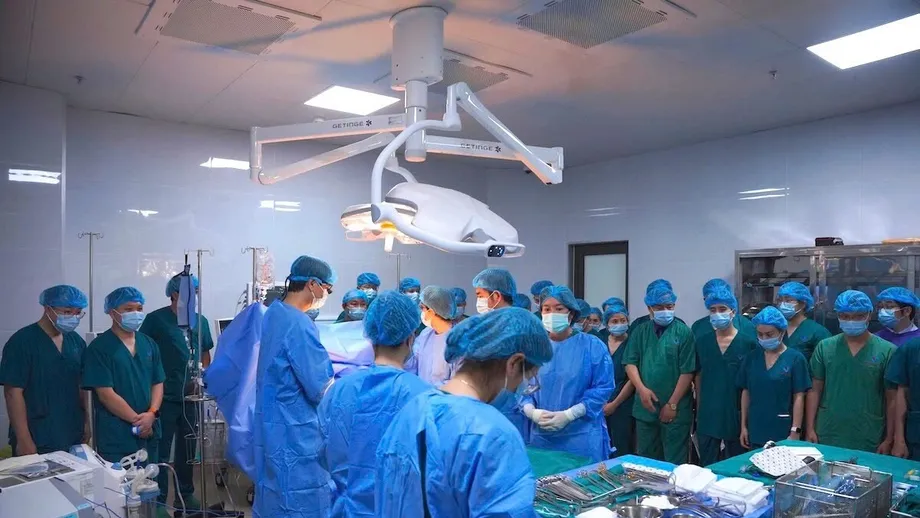
Children need organs that match their blood type, immune characteristics and body size. An adult organ may be too large for a small child, while differences in blood vessel size can make surgery harder. Younger deceased donors could provide suitable organs for some children who otherwise struggle to find a match.
The ministry cited more than 80 children with chronic kidney failure at its final stage at Children's Hospital 2 in 2022. Associate Professor Pham Duy Hien, deputy director of the National Children's Hospital, also gave a current figure of 65 children awaiting liver transplants there, including 25 in urgent need. The ministry's annual waiting figures and Hien's current waiting list describe different measures of demand.
Nguyen Lan Hieu, a National Assembly delegate and director of Hanoi Medical University Hospital, supports expanding access with strict safeguards. He has described treating children with severe heart and kidney failure who could not wait long enough for a suitable organ.
How the school survey became the flashpoint
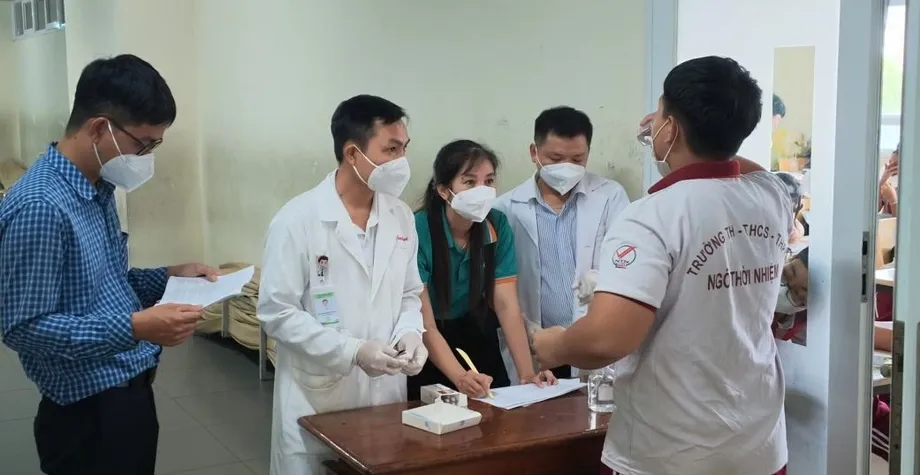
Consultation notices sought responses from children aged seven to under 18 between October 12 and 21. School distribution instructions also set an October 25 deadline, while the online survey reportedly closed on the afternoon of October 22. The Medical Services Administration confirmed on October 22 that the ministry had conducted the survey.
Official Letter No. 63, circulated through youth organizations in Ho Chi Minh City, reportedly directed primary and lower secondary school units to distribute it and sought participation by all children in the area. Instructions said children should answer for themselves rather than have instructors answer on their behalf.
The online form reportedly requested names, gender, birth year, ethnicity, location and school level. Its question about organ recovery from deceased minors offered two principal choices, both permitting recovery under different registration conditions. Children wishing to object had to use an additional response field.
Parents questioned whether that design gave children a straightforward way to disagree. They also raised concerns about asking young pupils for personal information and presenting a complex medical and legal choice in a school setting, where a request from an adult may feel compulsory.
The ministry's October 23 clarification explained the donation safeguards but left unanswered why identifying information was requested, how school participation targets were set, how responses would be used and why the online form closed before the school deadline.
The consultation and parliamentary presentation unfolded over less than two weeks:
- October 12, 2026: Requests to conduct the consultation began circulating through health and youth organizations.
- October 13: The donation and transplantation registration portal posted survey information.
- October 21: Health Minister Dao Hong Lan presented the draft to the National Assembly.
- October 22: The ministry confirmed the survey; the online form reportedly closed.
- October 23: The ministry issued its clarification on donation by minors.
- January 1, 2028: The proposed date for the revised law to take effect.
Listening to children without placing them under pressure
Nguyen Lan Hieu argued that children should receive information suited to their age and have an opportunity to express their views. He also warned against placing responsibility on them for choices beyond their understanding.
Hieu, speaking as a doctor and hospital director, described the balance this way:
Listening to children does not mean making them bear a decision beyond their capacity.
He also defended children's ability to take part in discussion:
Protecting children does not mean stripping them of the right to speak.
Parents concerned about the consultation argued that parental supervision is necessary when children are asked about death, bodily integrity and organ donation. Their objections also reflect longstanding fears of kidnapping and organ trafficking.
A consultation asks what the law should permit. A donation decision concerns an individual child's body and requires medical assessment and consent safeguards. The draft's proposed protections would therefore need to operate separately from any questionnaire used to gather views on policy.
Why family consent needs independent checks
Pham Khanh Phong Lan, a National Assembly delegate and director of Ho Chi Minh City's Food Safety Department, urged reconsideration of the provisions involving minors. She argued that saving patients must go together with protecting children's safety and rights.
Lan warned that pressure can come from within a family. A child may depend emotionally and financially on the same adults seeking permission for donation. Gender discrimination or other household pressures could also affect whose wishes are heard.
The National Assembly committee's legislative review calls for closer assessment of psychological, ethical and social consequences, including coercion through dependent relationships. It also requests a review of who counts as a family member eligible to receive a donation or authorize one.
The committee said a child's objection should always receive priority and advised against recovery from minors whose deaths involved unknown circumstances or signs of violence or abuse. Lan separately argued that relatives' statements about a deceased child's wishes should not alone determine whether organs are recovered.
The draft would prohibit exploiting guardianship, alternative care or adoption to obtain tissues or organs unlawfully. It would also require verification of donors' identities and their relationships with recipients, alongside independent assessment and counseling.
Fair allocation and protections beyond childhood
Adults aged 18 to under 25 would face a new restriction: they could donate an organ while alive only to a family member. Living donors giving to someone outside their family would have to be at least 25. The ministry presents this change as protection against organ trafficking disguised as voluntary donation.
Organs and tissues that cannot regenerate would have to pass through the national coordination system. The ministry describes allocation using national codes and a fair waiting list, rather than arrangements made outside that system.
The parliamentary committee asked for clear, consistent national transplant priorities and suggested considering an allocation algorithm. Such a system would use defined criteria to rank patients, making the basis for decisions easier to check.
The draft also bans trafficking, coercion, theft and brokerage, as well as unlawfully organizing travel abroad for donation or transplantation. Its protections depend on several checks working together: confirming identity, assessing consent independently, determining death independently and controlling allocation.
A broader revision with international reference points
Health Minister Dao Hong Lan presented a draft containing seven chapters and 39 articles, organized around four policy groups: expanding donation, protecting donors and preventing abuse, managing tissues and cells, and supporting donation and transplantation services.
The government's bill presentation account gives January 1, 2028 as the proposed effective date. Other provisions address preserving reproductive material for minors, a wife's use of her deceased husband's sperm or the couple's embryos, and access to transplant waiting lists for foreigners legally residing in Vietnam.
The draft would also permit commercial activities involving the production, storage and supply of certain cells, cell products and plasma. Lawmakers requested closer assessment of pricing, particularly for plasma, and possible overlap with the Law on Pharmacy.
International rules offer different models. World Health Organization guidance permits living donation by minors only in exceptional circumstances with strict safeguards. The Council of Europe's Oviedo Convention permits regenerative tissue donation to a sibling under stringent conditions.
For donation after death, Germany allows people aged 16 and above to decide independently. In Italy, parents decide for minors and either parent can block donation. Australia's register accepts consent from adults aged 18 and above, while people aged 16 or 17 can record an expression of their wishes.
Vietnam's immediate task is to settle its own rules for consent, family eligibility, independent oversight and allocation while responding to public concern over the consultation. The ministry says the draft is being revised following public and parliamentary feedback.
Key Points
- Vietnam proposes allowing minors to register for donation after death, with written representative consent and additional safeguards.
- Living minors could donate only regenerative tissue to specified relatives when no suitable adult donor is available.
- Healthy organ removal from living people under 18 would remain prohibited.
- Donation after death would require independent confirmation of death, the child's prior wish and parental or guardian agreement.
- A survey involving children as young as seven prompted objections over understanding, privacy, response choices and participation pressure.
- Lawmakers want stronger checks on family pressure, clearer consent rules and transparent national allocation.
- The bill remains under review, with January 1, 2028 proposed as its effective date.