Seven decades of manga, and generations of artists shaped
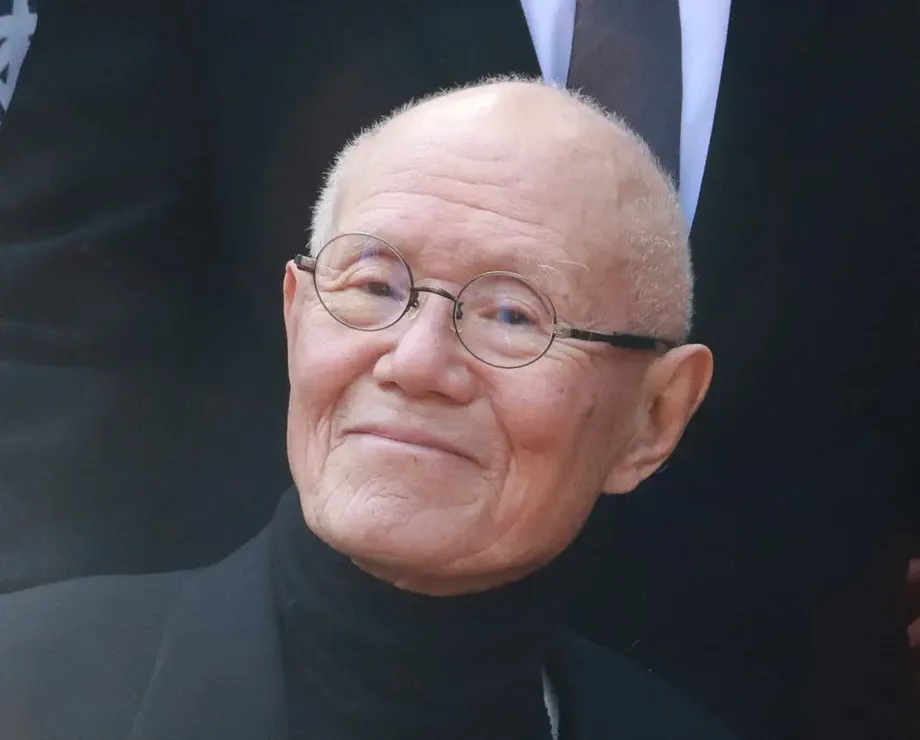
Tetsuya Chiba, the artist behind Ashita no Joe and the first manga creator to receive Japan's Order of Culture, died at 6 p.m. on October 22, 2026, at a Tokyo hospital. He was 87. Kodansha announced his death on October 27, prompting tributes from publishers, former students and artists whose careers he helped launch.
Contents
- Seven decades of manga, and generations of artists shaped
- A family farewell after a working life
- How Ashita no Joe reached beyond manga
- A boxing story that kept finding new audiences
- From a childhood in China to professional drawing
- The final manga returned to his own memories
- The mentor behind other artists' careers
- Recognition that reached the Imperial Palace
- Publishers remember an artist who supported the profession
- Key Points
Chiba's death was attributed to myelodysplastic syndrome, a group of blood cancers in which the bone marrow, the tissue inside bones that makes blood cells, produces abnormal cells and too few healthy ones. He had continued publishing his autobiographical manga Hinemosu Notari Nikki until August, completing a professional career that began in 1956 and lasted 70 years.
His influence reached beyond the pages he drew. Kodansha credited the Chiba Tetsuya Award, established to discover and encourage new artists, with helping newcomers enter the profession over 46 years. George Morikawa, creator of Hajime no Ippo, traced his ambition to become a manga artist to reading Chiba as a child. Kingdom creator Yasuhisa Hara remembered Chiba's continuing support after he won the award and made his debut.
A private family funeral has already taken place. His family has asked that relatives not be approached with inquiries and has declined condolence money, flowers, offerings, telegrams and visits. A public memorial is being considered, but no date has been announced.
Chiba leaves both an internationally recognised boxing story and a much broader body of work, including Ore wa Teppei, Notari Matsutaro, Harris no Kaze and Ashita Tenki ni Naare. The tributes describe an artist who kept creating while making time for people trying to follow him into the profession.
A family farewell after a working life
Yukiko Chiba, his wife and chief mourner, announced his death in a statement published through Big Comic's official website. She thanked the people involved in his work and the readers who had supported him throughout his career.
Yukiko described her husband's life in words translated from Japanese:
Throughout his 87 years of life, he remained active, and receiving the support of so many readers over a long artistic career of 70 years made his life as a manga artist truly happy.
Her statement placed his relationship with readers at the centre of the farewell. Chiba had remained a practising artist into his final year, drawing memories of his childhood, his working life and the people he had met and lost.
The family's request for privacy also appeared in the Japan Cartoonists Association's announcement, dated October 27, 2026. The association said the funeral had been restricted to close relatives in accordance with his wishes.
How Ashita no Joe reached beyond manga
Ashita no Joe began in Weekly Shonen Magazine's issue dated January 1, 1968, which went on sale in December 1967. Its serialisation continued until 1973. Chiba drew the manga, while Asao Takamori, the pen name of Ikki Kajiwara, wrote the story.
The series follows Joe Yabuki, a young drifter without family support who discovers boxing and an opponent who changes his life, Toru Rikiishi. Trainer Danpei Tange recognises Joe's talent. The story follows Joe's commitment to the ring, the sacrifices of his rivals and the personal cost of their ambitions.
Rikiishi's severe efforts to lose weight so he can fight Joe became one of the story's defining episodes. Joe later faces opponents including Carlos Rivera and Kim Yong-bi before a decisive contest with world champion Jose Mendoza. Its famous final image presents Joe exhausted in the ring, his energy spent.
Readers encountered a sports story in which defeat received as much attention as victory. Manga artist Ami Shibata, known for Nangoku Shonen Papuwa-kun, recalled that scenes from Ashita no Joe came naturally to mind when she struggled to draw battles. She said she learned to portray the people who lose as carefully as those who win.
That lesson helps explain the work's reach across different kinds of manga. Its influence lay in the physical movement of its boxing scenes and in the attention Chiba gave to the emotions of people on both sides of a contest.
A boxing story that kept finding new audiences
Ashita no Joe moved into television animation in 1970 and again in 1980. Animated films followed in 1980 and 1981, while live action films and stage productions also brought the story to audiences beyond its original magazine readers.
Megalobox reimagined the manga in a science fiction setting with new characters in 2018, crediting Ashita no Joe as its origin. Its sequel, Megalobox 2: Nomad, premiered in April 2021. Those productions carried the older work's connection between boxing and personal struggle into a different fictional world.
English readers received the first official English edition of the manga, titled Ashita no Joe: Fighting for Tomorrow, in December 2024. That release came 51 years after the original serialisation ended in 1973, opening a new route to the work more than half a century later.
Voice actor Hikaru Midorikawa, known for playing Kaede Rukawa in Slam Dunk and Heero Yuy in Mobile Suit Gundam Wing, recalled that Ashita no Joe was the manga that absorbed him most as a child. He remembered practising shadowboxing while dreaming of becoming a boxer.
From a childhood in China to professional drawing
Chiba was born on January 11, 1939, at St. Luke's Hospital in Tsukiji, Tokyo. His family moved in January 1941 to Fengtian, now Shenyang in China's Liaoning province, in what was then Japanese controlled Manchuria. He returned to Japan in 1946, after the war.
His involvement in manga began before his professional debut. In 1950, he joined Manga Club, an independently produced manga magazine made by a friend. Six years later, while still a high school student aged 17, he made his professional debut with a book.
Several milestones show how quickly drawing became his working life:
- 1956: Chiba made his professional debut with a book length manga.
- 1958: Mama no Violin began his work in magazine serialisation.
- 1961: Chikai no Makyu marked his debut in a weekly magazine for boys.
- December 1967: Ashita no Joe began publication in the issue dated January 1, 1968.
- December 2015: His autobiographical essay manga Hinemosu Notari Nikki began in Big Comic.
- August 7, 2026: Episode 248, Natsu no Inori, became his final published instalment.
Chiba's catalogue also included Yuki no Taiyo, Shidenkai no Taka and Misokkasu. Publishers remembering his career pointed to that range alongside his best known boxing work.
The final manga returned to his own memories
Hinemosu Notari Nikki gave Chiba a place to draw his own experiences in full colour. Its subjects included his return from China after the war, the demanding years of his manga career, everyday life, friendships and bereavements.
The series began in Big Comic in December 2015, and its first collected volume appeared in 2018. The seventh volume was published in November 2025. An eighth volume is scheduled for December 28, 2026, giving readers a further collection after his death.
The August 7 episode, number 248, was titled Natsu no Inori, meaning Summer Prayer. The series formally went on hiatus on September 25 because of his poor health.
Chiba had experienced several health problems in his later years. He underwent a procedure to place a stent in a coronary artery in January 2022. A stent is a small tube used to help keep a blood vessel open. He also described treatment for a throat tumour and, in a 2024 blog post, eye surgery.
The mentor behind other artists' careers
George Morikawa's connection to Chiba began with Harris no Kaze, which he read in elementary school. The manga helped inspire him to become an artist. His interest in boxing, together with Chiba's work on Ashita no Joe, later helped draw him towards the genre that became his own life's work in Hajime no Ippo.
Morikawa admired Chiba's drawing technique and expression, and the two remained in contact for many years. His tribute, translated from Japanese, was brief:
Thank you very much!
Yasuhisa Hara offered a different example of Chiba's lasting support. The Kingdom creator said he had come through the Chiba Tetsuya Award and that Chiba continued watching over him after his debut. Kodansha said many recipients of the award had entered professional careers and remained active.
Shigetaka Narita, creator of Muteki no Subaru, remembered Chiba as a teacher at Bunsei University of Art. When Narita was trying to establish a basketball club and needed a faculty adviser, Chiba readily agreed. He subsequently came to watch games at university sports events.
Narita described Chiba as one of the teachers who helped him become a manga artist. His recollection brought the wider tributes down to a personal scale: an established creator accepting a student's request and continuing to show up.
Junji Ito also remembered Chiba's approachable manner, recalling a friendly conversation at a Shogakukan gathering. Across these recollections, his support took several forms, from formal awards and teaching to sustained personal attention.
Recognition that reached the Imperial Palace
Chiba's awards began decades before his highest national honour. In 1962, he received the Kodansha Children's Manga Award for 1, 2, 3 and 4, 5, Roku and Sakana-ya Champion. Ore wa Teppei earned the children's manga category of the Kodansha Publication Culture Award in 1976.
Notari Matsutaro received the Shogakukan Manga Award in the general and young adult category, as well as a special prize from the Japan Cartoonists Association. His later honours included the Minister of Education, Culture, Sports, Science and Technology Award in 2001, the Medal with Purple Ribbon in 2002 and the Order of the Rising Sun, Gold Rays with Rosette, in 2012.
Japan named Chiba a Person of Cultural Merit in 2014. He became an honorary citizen of Tokyo's Nerima ward in 2017 and joined the Japan Art Academy in 2022, alongside Yoshiharu Tsuge as its first manga creators.
The announcement that he would receive the Order of Culture came on October 25, 2024. On November 3, he received the decoration from the Emperor at the Imperial Palace. He was the first manga artist to receive it and also won the Kikuchi Kan Prize that year.
Those honours followed a career that had already crossed generations of readers. By 2024, Chiba was receiving national recognition while still creating new manga, rather than having left drawing behind.
Publishers remember an artist who supported the profession
Kodansha's comics editorial department described Chiba's contribution to manga as irreplaceable. Its tribute paired his many works with his faith in manga as a creative form and the opportunities his award had created for newcomers.
Shogakukan's comics division remembered the warmth towards people and wishes for peace expressed in his work. Shueisha, including the Grand Jump and Weekly Shonen Jump editorial departments, honoured both his creative achievements and his work supporting younger artists.
The Japan Cartoonists Association said Chiba had served as both its director general and president. It credited him with promoting manga, supporting creative activity and improving the standing of manga and its creators. His responsibilities therefore extended from making individual stories to representing people working throughout the profession.
His death followed other losses in manga during 2026, including Masako Watanabe, whose death at 97 was announced in October, and Keiko Okamoto and Tak Kiriko, whose deaths became public in May. The tributes to Chiba focused on the particular breadth of his contribution: an active artist for 70 years, a teacher, an award mentor and a representative of his profession.
Key Points
- Tetsuya Chiba died at a Tokyo hospital on October 22, 2026, aged 87. His death was announced on October 27.
- He drew Ashita no Joe, written by Asao Takamori, and numerous other celebrated manga.
- In 2024, he became the first manga artist to receive Japan's Order of Culture.
- His teaching and the Chiba Tetsuya Award helped younger creators enter and remain in the profession.
- His final published Hinemosu Notari Nikki episode appeared on August 7. Its eighth collected volume is scheduled for December 28, 2026.
- A private funeral has been held. A public memorial is under consideration, and the family has requested privacy.