Two schools affected as preventive treatment reaches thousands
Ho Chi Minh City recorded five students with meningococcal disease during October 14 to 20, 2026, including one who died, prompting preventive antibiotics, contact tracing and daily health checks. Four cases involved Hai Ba Trung Secondary School in Hiep Phuoc Commune. The fifth involved a student at Ngo Thoi Nhiem School in Binh Duong Ward who lives in Thuong Tan Commune.
Contents
- Two schools affected as preventive treatment reaches thousands
- What happened at Hai Ba Trung?
- A second student's illness began on October 13
- The dates behind the response
- Contact tracing extends beyond the classroom
- Why group B matters for vaccination
- Symptoms require action before a rash appears
- Preventive antibiotics need medical direction
- Schools remain open while regional surveillance continues
- Key Points
The response has reached well beyond the five patients. At Hai Ba Trung, health authorities identified 177 close contacts and expanded preventive antibiotics to a total of 2,031 students and school personnel. Following the Ngo Thoi Nhiem case, another 99 close contacts were listed for preventive treatment and monitoring.
All four Hai Ba Trung patients had meningococcal serogroup B infection. On October 21, the Pasteur Institute in Ho Chi Minh City also identified group B in the Ngo Thoi Nhiem student, a boy aged 12 receiving treatment at Children's Hospital 2. By the October 22 update, he had no fever or vomiting and his headache had eased.
The city's immediate concern sits within a wider regional increase. Southern Vietnam had recorded 42 cases and seven deaths from the start of 2026 to the latest update, compared with 39 cases and six deaths throughout 2025. The Pasteur Institute said all eight provinces and cities in its southern surveillance area had recently recorded increases in invasive meningococcal disease.
For families, the urgent advice is straightforward: seek medical care quickly when fever appears with severe headache, vomiting, neck stiffness, unusual drowsiness or a bleeding rash. Health officials warn against waiting for every symptom, or for a rash, before taking a sick child to hospital.
What happened at Hai Ba Trung?
The four students at Hai Ba Trung Secondary School developed symptoms between October 12 and 15, according to Nguyen Vu Thuong, deputy director of the Pasteur Institute in Ho Chi Minh City. The cluster was recorded during October 14 to 17. One student, a boy aged 12, died on October 14.
The three surviving students were receiving treatment at the Hospital for Tropical Diseases and were in stable condition as of October 19. Authorities said they would continue their prescribed antibiotic treatment before discharge.
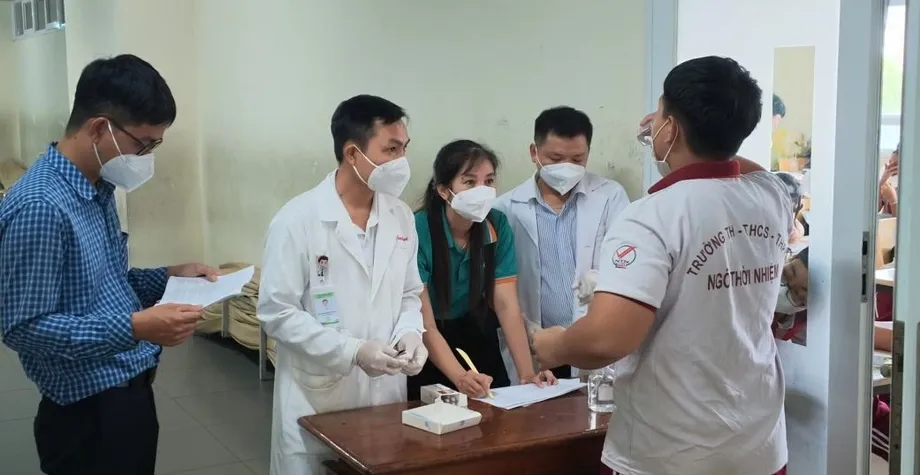
HCDC, the Ho Chi Minh City Center for Disease Control, identified 163 students and 14 relatives or people sharing patients' homes as close contacts. All 177 had completed preventive antibiotics by October 19 and were under daily health surveillance.
Health teams also arranged cleaning and disinfection and widened preventive treatment across the school community. The figure of 2,031 recipients covered the expanded response, including students, teachers and other personnel. The 177 close contacts were the group receiving particularly close daily monitoring.
A second student's illness began on October 13
The Ngo Thoi Nhiem student developed symptoms on October 13, including fever, sore throat, neck pain and headache. His family kept him home from school. At a medical visit on October 14, he was diagnosed with a viral infection.
Persistent high fever led the family to seek care again on October 15. Doctors suspected meningitis and directed the family to Children's Hospital 2. There, clinicians diagnosed a bloodstream infection and investigated possible bacterial meningitis.
A PCR test on cerebrospinal fluid detected Neisseria meningitidis, the bacterium responsible for meningococcal disease. Cerebrospinal fluid surrounds the brain and spinal cord; PCR testing looks for genetic material from a germ to help identify the cause of an infection.
Thuong Tan Commune Health Station received notification of the case on October 20. The Pasteur Institute identified serogroup B on October 21. HCDC described the boy's illness as an isolated case and said the affected contacts and settings had been identified for control measures. No connection between his infection and the Hai Ba Trung cluster was announced.
The dates behind the response
The five cases were counted within one reporting week, although symptoms, hospital visits, laboratory confirmation and contact investigations happened on different dates. The sequence explains why health activity continued after the first school cluster was declared under control.
- October 12 to 15: The four Hai Ba Trung students developed symptoms.
- October 13: The Ngo Thoi Nhiem student became ill.
- October 14: One Hai Ba Trung student died. The Ngo Thoi Nhiem student attended an initial medical examination.
- October 15: The Ngo Thoi Nhiem student's family sought further care, leading to referral to Children's Hospital 2.
- October 17 to the morning of October 19: Authorities detected no new cases among contacts linked to the Hai Ba Trung cluster.
- October 20: Thuong Tan Commune Health Station received notification of the additional student's infection.
- October 21: The Pasteur Institute identified group B in that patient.
- October 25: Scheduled end of close contact monitoring for the Hai Ba Trung cluster.
The October 19 finding of no new cases covered the contacts being followed at that point. Health authorities still required continued checks through October 25, including for people who had already taken preventive medicine.
Contact tracing extends beyond the classroom
The Ngo Thoi Nhiem student had spent the two weeks before his illness mainly at home, at school and at the Ms Huyen English language center. Health workers therefore investigated contacts across more than one educational setting, coordinating with the health station in Tan Uyen Ward over the language center.
The first household investigation identified four relatives. An early update said his parents had taken preventive medicine and his maternal grandparents had been instructed to take it as prescribed. By October 22, HCDC said 99 close contacts had been listed for preventive azithromycin and health monitoring.
School staff cleaned and disinfected classrooms and washed blankets, pillows and sleeping mats used by students who stay at school during the day. Household environmental cleaning also formed part of the response.
Each contact was to be monitored for 10 days after their last exposure to the patient. Because that starting date depends on the person's last contact, the monitoring period for the 99 people follows their exposure history rather than the October 25 deadline set for the Hai Ba Trung group.
Why group B matters for vaccination
The Ngo Thoi Nhiem student had previously received one dose of meningococcal vaccine covering groups A, C, W and Y, but had not received a vaccine against group B. His infection highlights a practical issue for parents checking vaccination records: meningococcal vaccines cover particular bacterial groups.
A serogroup is a way of classifying meningococcal bacteria according to features of their outer covering. A vaccine directed at A, C, W and Y targets those groups. Protection against B requires an appropriate vaccine covering B.
The Pasteur Institute said about 94% of recent invasive meningococcal infections recorded in the southern region belonged to group B. Children aged 11 to 15 accounted for the largest share of cases, at 28.6%. Those figures make both the bacterial group and the patient's age relevant when families seek vaccination advice.
Nguyen Vu Thuong advised people to choose a vaccine with medical guidance, taking account of age, health and the serogroups requiring protection. A vaccinated person who qualifies for preventive antibiotics after close contact still needs that medicine and continued monitoring under health authority instructions.
Symptoms require action before a rash appears
Meningococcal bacteria can cause meningitis, an infection of the protective tissues around the brain and spinal cord, or a serious bloodstream infection. Health officials use the term invasive disease when the bacteria enter parts of the body such as the blood or cerebrospinal fluid.
Patients need urgent assessment when fever comes with severe headache, vomiting, a stiff neck, marked tiredness, reduced alertness or a bleeding rash. Parents should tell clinicians about any known contact with a meningococcal patient or involvement in an affected school community.
The Ngo Thoi Nhiem boy's illness began with symptoms that included a sore throat and headache, followed by repeated medical visits as fever persisted. The Pasteur Institute urged medical facilities to consider unusual presentations as well as familiar symptoms and to avoid delaying treatment when meningococcal disease is suspected.
Luong Chan Quang, head of infectious disease control at the Pasteur Institute in Ho Chi Minh City, also urged vigilance during the rise in seasonal respiratory illness. He said:
Currently, it is the season for increased acute respiratory infections, especially seasonal flu, so it is necessary to continue monitoring, early detection, and advising people with fever or respiratory symptoms to seek examination at medical facilities for appropriate treatment guidance,
Preventive antibiotics need medical direction
Close contacts should be assessed and receive preventive antibiotics as soon as possible, ideally within 24 hours after the related patient's diagnosis is confirmed, according to the Pasteur Institute. The purpose is to reduce their chance of developing disease after exposure.
Health monitoring continues for 10 days from the last exposure, even after the medicine has been taken. Anyone developing suspicious symptoms during that period needs prompt medical attention.
Authorities selected azithromycin for the 99 contacts associated with the Ngo Thoi Nhiem student. Residents were warned against buying antibiotics themselves or taking them widely without instructions. The broad distribution at Hai Ba Trung was an organized health authority response to a specific cluster.
HCDC said between 5% and 25% of people in the community may carry meningococcal bacteria in their nose or throat without symptoms. Its prevention advice includes frequent handwashing with soap, covering coughs and sneezes, avoiding shared cups and water bottles, and keeping homes and classrooms well ventilated.
Schools remain open while regional surveillance continues
Ho Chi Minh City's health and education departments agreed that normal classroom teaching could continue at Hai Ba Trung after an inspection on October 19. They did not adopt online lessons requested by some parents who had temporarily kept their children home.
The decision followed completion of preventive antibiotics for close contacts, wider school treatment, environmental cleaning and the absence of newly detected cases among monitored contacts from October 17 to the morning of October 19. Daily health checks remained part of the conditions supporting continued attendance.
Across southern Vietnam, the 42 cases recorded in 2026 had already exceeded the 39 recorded during all of 2025 by three. Deaths had risen from six to seven. The Pasteur Institute identified particular concerns in crowded communities, places with poor sanitation, and schools or other settings where people gather and membership changes.
The institute had held four regional professional meetings since 2025, supported laboratory testing and case investigations, and worked with hospitals and local health teams on surveillance. Its immediate priorities remained early detection, prompt treatment and careful management of patients and their contacts.
Key Points
- Ho Chi Minh City recorded five student meningococcal cases during October 14 to 20, 2026, including one death.
- Four cases involved Hai Ba Trung Secondary School; the fifth involved a Ngo Thoi Nhiem student living in Thuong Tan Commune.
- All five infections were identified as serogroup B.
- Preventive antibiotics reached 2,031 people in the Hai Ba Trung response; another 99 contacts were identified around the additional student.
- Hai Ba Trung close contact monitoring was scheduled through October 25, while normal classroom teaching continued.
- Close contacts need medical assessment, preventive treatment when indicated and monitoring for 10 days after their last exposure.
- Fever with severe headache, vomiting, neck stiffness, unusual drowsiness or a bleeding rash requires urgent medical attention. Do not wait for every symptom.