A million files, 30 hearings and a report awaiting publication
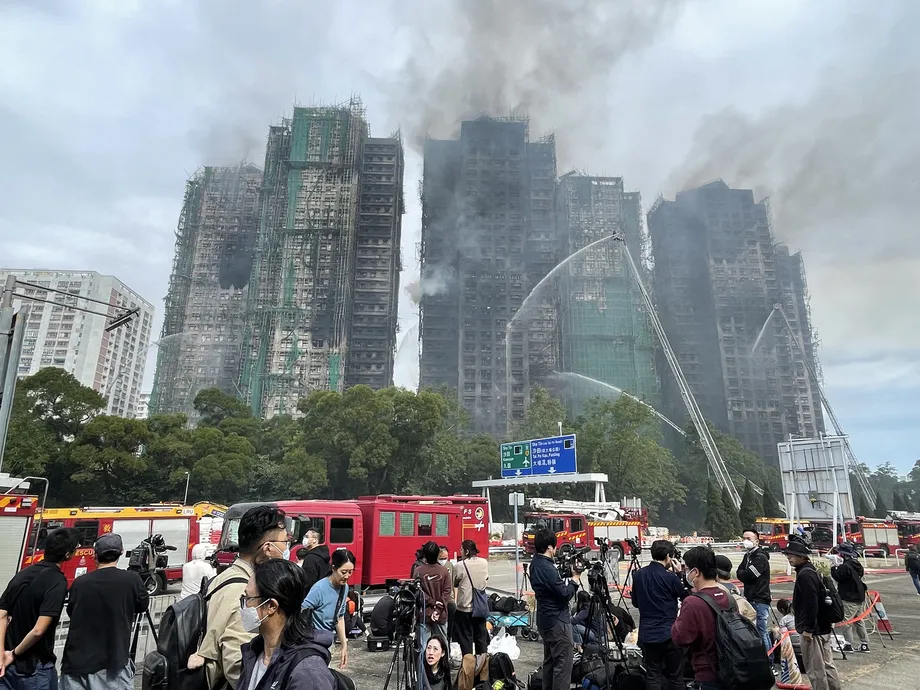
Hong Kong Chief Executive John Lee received the independent committee's report into the Wang Fuk Court fire on October 22, 2026, after an inquiry that heard 80 witnesses and collected more than one million files. He promised to announce comprehensive reforms and arrangements for pursuing accountability shortly, while seeking legal advice before releasing the findings.
Contents
- A million files, 30 hearings and a report awaiting publication
- Why criminal proceedings affect publication
- How the inquiry reached this point
- Who faces criticism over the renovation?
- What happened when inspectors checked the mesh?
- Certificates, sampling and a policy not shared
- Repeated visits missed fire safety problems
- A smoking complaint and 17 inspections
- What reforms are being prepared?
- Key Points
The inquiry examined the disaster at the Tai Po housing estate and the supervision of major building maintenance projects. Its evidence included testimony from residents, government officials, experts and fire service contractors, alongside written submissions and arguments from lawyers representing those involved.
The report is understood to run to hundreds of pages in two volumes, with more than 10 chapters and versions in Chinese and English. Details emerging ahead of publication point to criticism of the main contractor, the works consultant and four government bodies, with the Housing Bureau's Independent Checking Unit facing the strongest criticism among the departments.
The government has committed to publication, but has given no release date or firm date for its reform announcement. Lee said people connected with the fire had already been charged with criminal offences, requiring care over material that could affect their trials.
For residents and bereaved families, the submission marks a new stage in the search for answers about dangerous renovation materials, missed warnings and fire safety equipment. The immediate decisions now concern what the government will publish, which recommendations it will adopt and how responsibility will be pursued.
Why criminal proceedings affect publication
Lee said the government would obtain legal advice on handling passages connected with criminal proceedings. The issue is how to release the inquiry's findings while protecting the fairness of trials in which courts must decide the charges against individual defendants.
Explaining that decision, Chief Executive John Lee said:
"As various individuals implicated in the Wang Fuk Court fire have been charged with different criminal offences, it is incumbent upon the government to identify and consider how best to handle those parts of the report that may be involved in the criminal trials, so as not to prejudice the court proceedings," he said.
The inquiry's work covers a broader set of decisions than any individual prosecution: how the renovation was carried out, how public bodies supervised it and what changes are needed to prevent another disaster. Criminal proceedings will address the offences charged against particular people.
How the inquiry reached this point
Justice David Lok chaired the committee, with members Chan Kin-por and Rex Auyeung. Lee announced its establishment on December 12, 2025, and it formally began work on December 19, 2025.
The committee held 30 hearings across six rounds between March and July 2026. Its 80 witnesses gave factual and expert evidence. The inquiry also considered written submissions from individuals and organisations, other evidence and legal arguments. Its files contained more than two trillion bytes of data, equivalent to more than two terabytes.
The key dates trace a process that extended beyond its original September reporting target:
- July 2024: The Labour Department received a complaint about workers smoking on scaffolding at Wang Fuk Court.
- October 28, 2024: The Independent Checking Unit tested scaffolding mesh that continued burning after 10 seconds.
- December 12, 2025: Lee announced the independent committee.
- December 19, 2025: The committee formally began work.
- March to July 2026: Six rounds of hearings examined the fire and related responsibilities.
- September 2026: The original reporting target passed after the committee sought an extension.
- October 22, 2026: The committee submitted its report to Lee.
The report follows the early demands for accountability after the disaster. By December 3, 2025, at least 128 deaths had been recorded and about 150 residents remained unaccounted for. Those were figures from that stage of the emergency, when searches and identification work were continuing.
Who faces criticism over the renovation?
The main contractor, identified as 宏業, and the works consultant, 鴻毅, are understood to be assigned major responsibility in the report. The four public bodies facing criticism are the Housing Bureau's Independent Checking Unit, the Buildings Department, the Fire Services Department and the Labour Department.
The findings described ahead of publication place the greatest responsibility among those bodies on the Independent Checking Unit. They are also understood to assign comparatively less responsibility to the Labour Department and to leave politically appointed officials outside the report's discussion of responsibility.
The hearings exposed a dispute about how to explain the disaster. Victor Dawes, the committee's lead representative and a senior counsel, identified regulatory responsibilities across the four bodies. In closing submissions in July, he argued that reform needed structural changes rather than small adjustments.
Jenkin Suen, the senior counsel representing the government, argued that unlawful conduct by private parties, including contractors and professionals, directly caused the fire and the heavy loss of life. He acknowledged weaknesses in supervision that allowed violations to escape detection, while rejecting the view that all responsibility should fall on the government.
Those positions put two connected issues at the centre of the inquiry: the conduct of the people carrying out the work, and the effectiveness of the public safeguards intended to detect dangerous practices.
What happened when inspectors checked the mesh?
The Independent Checking Unit's handling of scaffolding mesh is among the most concrete examples examined at the hearings. On October 28, 2024, staff tested mesh at Wang Fuk Court. It continued burning after 10 seconds and had to be blown out manually.
Fire resistance matters because mesh surrounds scaffolding close to a building's exterior. Material that keeps burning can add fuel beside residents' windows and escape routes. The inquiry examined why the test result did not lead to effective follow through.
The unit visited the estate 10 times before the fire. Eight visits were announced in advance, leaving two without prior notice. In practical terms, 80% of its visits gave advance warning. The report is understood to criticise that practice because it gave the contractor an opportunity to change the mesh before inspection.
Senior building maintenance surveyor Ku Siu-ping acknowledged during the hearings that he had not paid particular attention to foam boards covering windows or openings made in rear stairways that affected escape stair structures. Residents' complaints and the response to them also formed part of the examination.
For occupants, these were conditions around their homes: what covered their windows, what surrounded the towers and whether routes used to escape a fire remained protected. The inquiry connected those physical conditions with the decisions inspectors made during visits.
Certificates, sampling and a policy not shared
The Buildings Department's supervision raised another problem: reliance on paperwork without checks at the site. Assistant Director Cheung Yuk-ching acknowledged that the department had conducted no physical sampling of mesh used in maintenance projects before the fire.
The department relied on certificates submitted by contractors, while lacking a mechanism to verify whether those certificates were genuine. A certificate is a document stating that a product or piece of work meets a standard. Its usefulness depends on whether it is authentic and applies to the material actually installed.
The hearings also examined a policy introduced by the Buildings Department in 2023. It required site inspections of a 20% sample of minor works covered by supervision plans. The Independent Checking Unit learned about the policy only after the fire.
The report is understood to criticise communication between the two bodies. A policy requiring inspectors to visit one in five qualifying projects depends on the officials responsible for supervision knowing that the requirement exists and applying it to their work.
Repeated visits missed fire safety problems
The Fire Services Department visited Wang Fuk Court 26 times during more than 10 months of renovation work, according to evidence examined at the hearings. Inspectors did not enter the fire pump rooms or test the fire alarms during those visits.
The hearings described a main power switch left off for a prolonged period and a water tank that remained dry for seven months. Pumps, water supplies and alarms perform different jobs: pumps move water, tanks store it and alarms warn people to leave. Checking that each works requires more than visiting the estate.
Dawes also criticised the department's approach to its responsibilities. Issues involving construction materials, fire risks during works and protective features built into the structure were treated as matters for the Buildings Department. Foam covering windows and openings in rear stairways were among the concerns examined.
The report is understood to distinguish those shortcomings in prevention from the emergency response. Its assessment reportedly finds no fault with the firefighting operation and rejects suggestions that crews needed to drop water bombs, use drones to extinguish the blaze or seek help from mainland China.
A smoking complaint and 17 inspections
The Labour Department received a resident's complaint in July 2024 about workers smoking on scaffolding surrounded by protective mesh. It referred the complaint to the Fire Services Department rather than immediately carrying out a full investigation itself.
The department also told the resident in writing that the safety legislation it enforced did not cover fire resistance standards for scaffolding mesh or other materials. At the hearings, it acknowledged that none of its 17 inspections had detected workers smoking.
The report is understood to assign the Labour Department less responsibility than the other departments. Its role still forms part of the wider account of how a warning moved between agencies while residents were living alongside the works.
The complaint, the mesh test and the inspection records give specific points at which officials received information or visited the site. Together, they explain why the inquiry examined the handling of warnings and coordination between departments as well as the actions of contractors.
What reforms are being prepared?
Lee said the government's response would cover supervision of building maintenance works, building management and regulation of fire service installations. Those areas reach from the organisation of renovation projects to the equipment intended to protect people when a fire breaks out.
Setting out the intended scope, Chief Executive John Lee said:
"The government will make comprehensive reforms in areas including the supervision of building maintenance works, building management and regulation for fire service installations," Lee added.
Lee said the September 2026 Policy Address had already introduced priority measures and that preparations for broader changes were under way. He pledged to study the committee's recommendations and announce the reform and accountability plans shortly.
Recommendations described ahead of publication include stronger supervision of professionals and the introduction of criminal penalties. They also include electronic submission of certificates for fire service installations and equipment, and ending the use of fax to pass requests for help from police to the Fire Services Department.
Electronic submission would change how safety records reach the department. Replacing fax referrals would change how emergency requests pass between services. Both proposals address practical steps in systems that residents depend on, alongside the larger decisions about inspections, professional duties and punishment for breaches.
For families affected by Wang Fuk Court, the next stage is the government's response: publication of the findings, decisions on the recommendations and an explanation of how it will pursue responsibility. The report's submission brings the inquiry's evidence gathering to an end and places those decisions with the administration.
Key Points
- John Lee received the Wang Fuk Court fire inquiry report on October 22, 2026.
- The committee held 30 hearings, heard 80 witnesses and collected more than one million files.
- The government will seek legal advice before publication because related criminal proceedings are under way.
- Details emerging before publication point to criticism of the main contractor, the works consultant and four government bodies.
- Hearing evidence covered burning scaffolding mesh, reliance on certificates and inspections that missed fire safety problems.
- Lee promised reforms covering building maintenance supervision, building management and fire service installations, with accountability arrangements to be announced shortly.