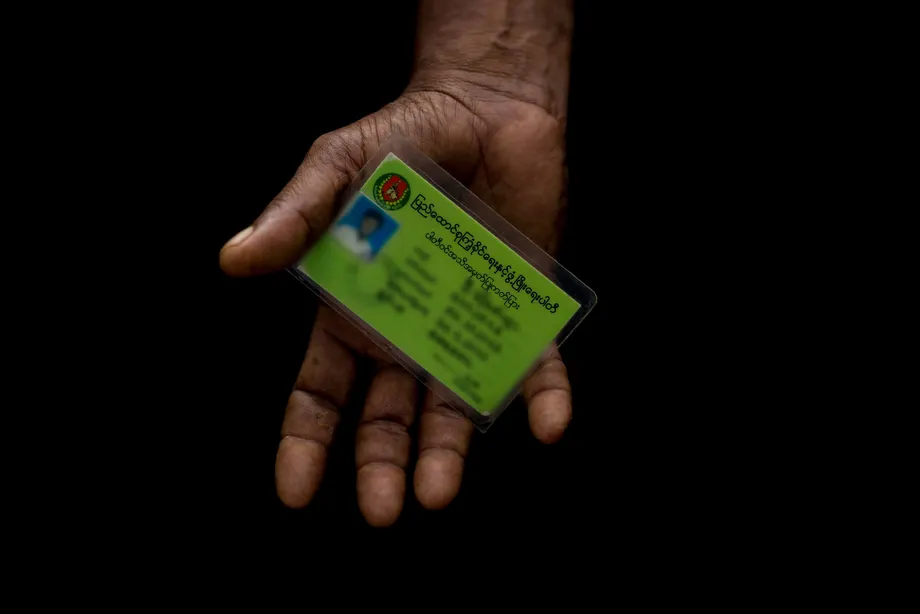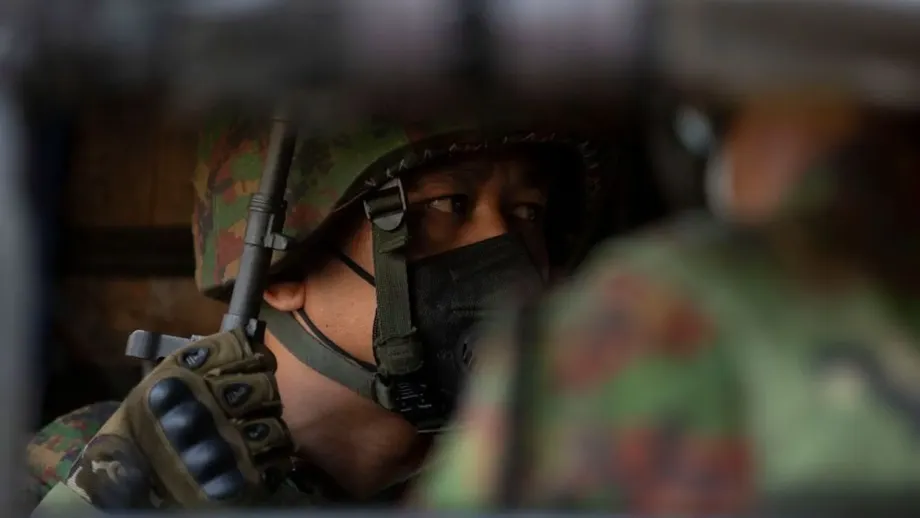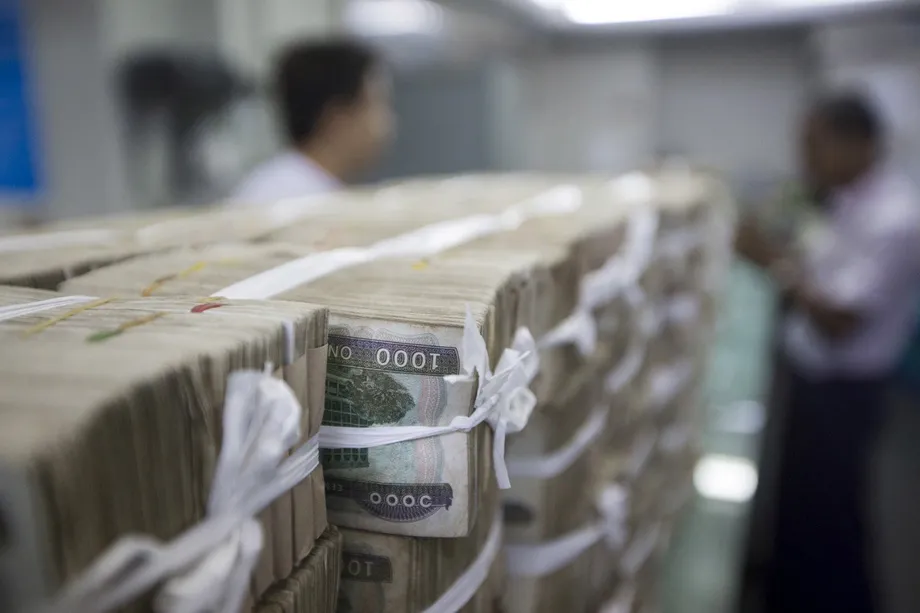
The financial test goes beyond Myanmar's civilian titles
Myanmar's unfinished money laundering action plan dates to February 2020, before the military seized power, and its deadline expired in September 2021. Years later, the Financial Action Task Force is still demanding evidence that authorities investigate suspicious wealth, prosecute cases matching the country's criminal risks and confiscate the proceeds.
Contents
- The financial test goes beyond Myanmar's civilian titles
- What the blacklist requires from banks
- How the deadlines have moved
- Better rules and effective enforcement are separate tasks
- Military power has repeatedly reshaped private wealth
- The banking reforms interrupted by the coup
- Inflation shifts the burden toward savers
- Scam compounds put enforcement under scrutiny
- Protecting legitimate payments while pursuing criminal money
- Key Points
The watchdog's February 2026 statement kept Myanmar under enhanced due diligence, meaning closer checks on financial dealings. It said countermeasures would be considered if the country made no further progress by June 2026. A subsequent decision resolving that warning is not documented here, leaving the outcome of that review uncertain.
The financial scrutiny runs alongside Min Aung Hlaing's effort to gain acceptance as president after leading the February 1, 2021 coup. His election by a parliament dominated by the military has changed his office, while the economic questions concern who controls banks, who benefits from rising property prices and whether investigators can follow money to powerful people.
For ordinary households, those questions are immediate. Three months after the coup, a bank in Sittwe allowed only 50 customers a day to withdraw their own money. Yangon condominium prices have since roughly doubled, partly as buyers sought protection against inflation. Savers struggling to obtain cash and owners watching property values rise have experienced very different versions of the same economy.
What the blacklist requires from banks
Myanmar entered the FATF's list of high risk jurisdictions subject to a call for action on October 21, 2022, following a Paris plenary held on October 20 and 21. It joined Iran and North Korea, although the financial measures applied to the three countries differ.
The FATF's February 2026 statement calls for countermeasures against Iran and North Korea. Myanmar remains in the category requiring enhanced due diligence. Banks dealing with Myanmar must increase monitoring to identify unusual or suspicious activity, with the intensity of checks matched to the risk.
Enhanced due diligence can mean asking more questions about a customer's identity, the origin of funds, the purpose of a payment and the people who ultimately own a business. Countermeasures are a stronger response and can involve restrictions on financial relationships. The February statement leaves any future package for Myanmar undecided.
An Asia Pacific Foundation analysis of the 2022 designation explained that extra scrutiny and reporting could discourage companies and financial institutions from doing business in Myanmar. It also recorded the central bank's response that Myanmar faced a different position from Iran and North Korea.
The foundation's analysis reported that Yangon and Ayeyarwady received 70 percent of investment entering Myanmar earlier that fiscal year. That concentration helps explain why financial restrictions can have uneven effects across the country, with investment and access to formal banking already distributed unequally.
How the deadlines have moved
The FATF process began with deficiencies identified in Myanmar's 2018 mutual evaluation. Authorities agreed to an action plan in February 2020, during the elected government's term, but the plan remained unfinished after its September 2021 deadline.
The watchdog's October 2025 statement, issued on October 24 after the October 22 to 24 plenary, credited Myanmar with improving the management of seized assets so they retained value pending confiscation. It described progress as slow and warned that countermeasures could be considered in February 2026. The February statement subsequently moved that warning to June.
- 2018: A mutual evaluation identified weaknesses in Myanmar's financial safeguards.
- February 2020: Myanmar committed to an action plan.
- February 1, 2021: The military overthrew the elected government.
- September 2021: The action plan expired.
- October 21, 2022: Myanmar was placed on the FATF high risk list.
- October 24, 2025: The FATF retained enhanced checks and warned of possible countermeasures in February 2026.
- February 13, 2026: Enhanced checks continued, with June 2026 named as the next threshold for possible escalation.
Myanmar must complete its full action plan to leave the call for action list, according to the FATF. The review therefore turns on the work still required, rather than a change in the government's title.
Better rules and effective enforcement are separate tasks
Myanmar has improved parts of its legal and regulatory framework. The FATF's page presenting the 2024 follow up report records seven recommendations rated compliant, 19 largely compliant and 14 partially compliant.
Those figures put 26 of the 40 recommendations, or 65 percent, in the top two categories. Two recommendations, numbered 7 and 25, moved from noncompliant to partially compliant. These ratings assess technical compliance, including whether required rules and institutions are in place.
The February 2026 action plan demands practical results across four areas: stronger use of financial intelligence, investigations and prosecutions matching money laundering risks, international cooperation on cases crossing borders, and increased freezing, seizure and confiscation of criminal assets.
Financial intelligence means examining information such as suspicious transaction reports to identify possible criminal activity. Freezing prevents an asset from being moved or sold; seizure places it under official control; confiscation permanently takes it away through a legal process.
Myanmar's authorities have claimed completion of 13 of 15 action items. The FATF's February statement still lists the four areas requiring work. The central issue for banks and investigators is whether suspicious transactions lead to cases and whether those cases lead to criminal proceeds being recovered.
Military power has repeatedly reshaped private wealth
Myanmar's financial problems sit within a much longer history of military control over economic life. General Ne Win seized power on March 2, 1962, arresting the elected prime minister and ethnic leaders meeting in Rangoon over proposals for a federal union.
The 1987 cancellation of banknotes wiped out an estimated 80 percent of money in circulation. Families holding the affected notes lost savings abruptly, showing how decisions made at the top could destroy household wealth.
Under General Than Shwe, 782 state enterprises were sold below market rates, largely to military families and connected businesspeople. Under Min Aung Hlaing, 55 of 107 factories in one ministry department have been transferred to private buyers, including military conglomerates. That is just over half of the department's factories.
Military governments between 1988 and 2011 typically allocated more than 40 percent of the budget to defense and only 1 to 2 percent to education. Those choices directed public resources toward the armed forces while leaving schools with a much smaller share.
The recurring economic concern is concrete: control over public assets, bank credit and state spending can give connected owners opportunities unavailable to ordinary citizens. Tracking the real owners behind companies and property transactions is therefore central to understanding where wealth has gone.
The banking reforms interrupted by the coup
Sean Turnell, the economist who advised Aung San Suu Kyi's National League for Democracy government, described the relationship between private banks and connected business groups in blunt terms.
little more than corporate cash boxes
Large borrowers repeatedly renewed loans secured against land. Starting in 2017, the civilian era central bank required banks to classify loans using international standards, convert continuing overdrafts into loans with repayment obligations and maintain adequate capital.
Bank capital is the financial cushion that absorbs losses when borrowers fail to repay. The International Monetary Fund warned that the reforms were exposing rising bad loans and capital that was already weak. The pandemic pushed the compliance deadline back to 2023.
The coup interrupted that reform effort. Turnell was detained within days and spent 650 days in prison. He later said he believed a core of connected conglomerates had been complicit in the takeover, an allegation that places the interests of major borrowers within the wider debate over the coup's beneficiaries.
For depositors, the practical concern is whether banks recognize losses honestly and retain enough resources to meet withdrawals. Independent audits would help establish the condition of loan books and the exposure of public deposits to large borrowers and government financing.
Inflation shifts the burden toward savers
The World Bank has described Myanmar's deficits since 2021 as financed mainly through central bank money creation and, more recently, through commercial banks holding public deposits. These channels connect government spending to the value of money and the use of household savings.
Inflation can reduce the burden of a fixed debt while eroding the purchasing power of cash. A borrower still owes the same number of kyat, but those kyat buy less. The benefit depends on the borrower's income and ability to repay; a struggling business can still fail.
An illustrative comparison uses a loan of 10 billion kyat, worth about US$7.5 million in 2020. At the exchange rates used in that example, its value falls to about US$4.8 million at the official rate or US$2.2 million at the market rate, while the land securing it roughly doubles in price. The example describes a mechanism rather than a named company's accounts.
The official exchange rate is set by authorities, while the market rate reflects the price available in market trading. Their different values explain why the same kyat debt can produce very different dollar amounts. Its domestic repayment amount remains 10 billion kyat.
Savers, workers and pensioners face the other side of inflation. Prices have risen near or above 20 percent for years, alongside fuel shocks, war and the 2025 earthquake. About 16.4 million people have been reported below the national poverty line, while displacement involving some 3.5 million people has increased pressure on housing in cities such as Yangon.
The authorities also widened a tax amnesty introduced in 2019, charging as little as 3 percent on undeclared money used to buy property or vehicles. Such arrangements make checks on the origin of money especially important: paying tax and investigating whether funds came from crime are different tasks.
Scam compounds put enforcement under scrutiny
Myanmar's border scam economy offers a direct test of the FATF's demands for investigations, international cooperation and asset recovery. The military presented its October 2025 operation at KK Park near Myawaddy as a crackdown, followed by demolition of buildings.
After the KK Park demolitions, estimates still placed 50,000 to 100,000 people in scam hubs around Myawaddy. The military had reported 2,198 arrests at KK Park and plans to demolish 148 buildings, while workers fled across the Moei River into Thailand.
The international consequences were visible when India began repatriating escaped citizens on November 6, 2025. An initial flight carried 270 people from Mae Sot. They were among 465 Indian passport holders who had reached Thailand after fleeing the compound.
Myanmar's authorities later gave broader Myawaddy totals of 14,730 foreigners detained and 13,553 deported. They said 662 people were being prosecuted on immigration and drug charges. Those totals cover a wider operation than the earlier KK Park arrest count.
The financial work requires identifying organizers, tracing payments and recovering criminal proceeds across borders. Investigators also need to distinguish people running fraud networks from workers trafficked through false job offers and forced to conduct scams.
Jay Kritiya, an advocate against human trafficking, described the accountability sought for those responsible for the networks.
must be arrested, prosecuted, and have all their assets seized.
Protecting legitimate payments while pursuing criminal money
The FATF explicitly requires protection for humanitarian assistance, legitimate nonprofit activity and remittances, the money people working abroad send home. Its February statement also singles out earthquake relief and warns against excessive scrutiny of legitimate financial flows.
The FATF, the intergovernmental body setting these standards, states that such flows should be protected when countries apply enhanced checks.
neither disrupted nor discouraged
For families, that protection means keeping lawful channels open to receive money for food, rent and medical treatment. For aid groups, it means being able to pay staff, buy supplies and deliver assistance while meeting appropriate financial checks.
Calls for stronger action have focused on institutions controlled by the regime, including Myanma Foreign Trade Bank and Myanma Investment and Commercial Bank, which the US Treasury sanctioned in 2023. Other proposals seek disclosure of the real owners of property and concession deals, independent bank audits and priority protection for small depositors.
Diplomatic engagement is advancing alongside these demands. During Min Aung Hlaing's Malaysia visit on October 7 and 8, 2026, he met Prime Minister Anwar Ibrahim and addressed business leaders. Malaysia supported Myanmar's fuller participation in ASEAN while negotiating returns of Myanmar nationals.
Recognition, investment and access to foreign banks matter to Myanmar's leadership and business elite. The FATF's stated requirements remain specific: investigate money laundering according to risk, cooperate internationally, recover criminal assets and preserve legitimate payments. Meeting those requirements would affect both the security of the financial system and the daily survival of people who depend on it.
Key Points
- Myanmar entered the FATF high risk list in October 2022 after failing to complete an action plan agreed in February 2020.
- The February 2026 statement retained enhanced due diligence and named June 2026 as a threshold for considering countermeasures.
- The FATF seeks stronger investigations, prosecutions, international cooperation and recovery of criminal assets.
- The 2024 technical review rated 26 of 40 recommendations compliant or largely compliant.
- Inflation, displacement and rising housing costs have put pressure on households while some property owners and borrowers have benefited.
- The FATF requires safeguards for humanitarian aid, legitimate nonprofit activity, remittances and earthquake relief.