Explosions at KK Park send workers fleeing into Thailand
Myanmar's military reported 2,198 arrests at KK Park and plans to demolish 148 buildings, yet estimates suggest 50,000 to 100,000 people still work in scam hubs around Myawaddy. By November 11, 2025, the crackdown had sent more than 1,500 people fleeing across the Moei River into Thailand while leaving the wider criminal business operating.
Contents
- Explosions at KK Park send workers fleeing into Thailand
- A vast workforce behind the border walls
- False job offers turn into threats and debt
- Militias, investors and the protection business
- What arrests and demolition figures show
- India's flights and the wider regional response
- Satellite internet keeps the scam floors connected
- Courts, sanctions and cryptocurrency seizures
- What sustained pressure would need to reach
- What to Know
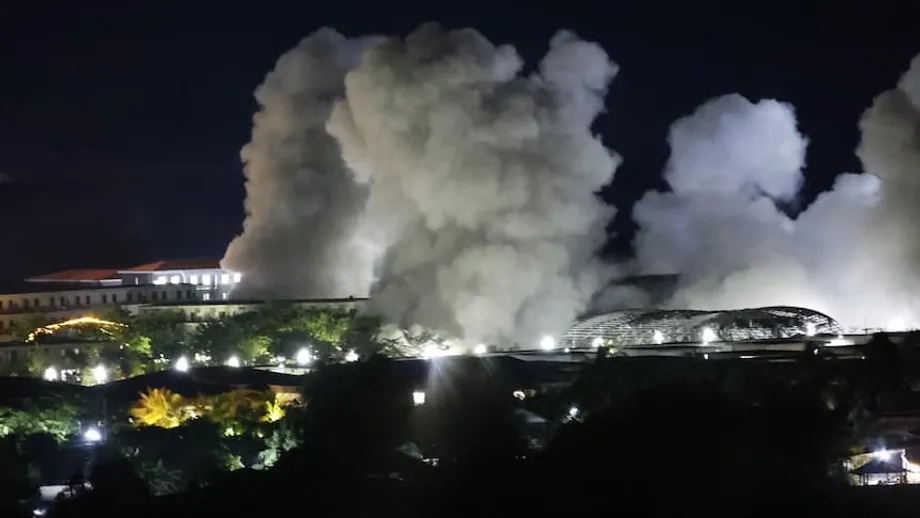
The explosions began after sunset on October 24. Residents of a Thai village along the river heard blasts from KK Park, a sprawling complex outside Myawaddy accused of hosting one of the largest cyber fraud operations in the world. Bombing and secondary explosions continued over several nights, sending smoke above the forested riverbanks. Debris landed in Mae Sot, damaging houses on the Thai side.
Workers escaped through the shallow river, some floating on foam boxes and others wading with bags held above their heads. A handful died trying to flee. Thai soldiers and border police directed survivors into makeshift shelters for questioning and health checks.
The arrivals carried passports from at least 28 countries. Many were Indian, Chinese or Filipino. Others came from Vietnam, Pakistan and African countries including Ethiopia and Kenya. Thai authorities began screening them to identify people who had been trafficked and those who had crossed illegally for work.
KK Park is one part of a much larger operation. More than 40 fortified compounds along the 2,400 kilometer border between Myanmar and Thailand run online scams targeting people worldwide. The business generates billions of dollars each year and is tied to money laundering, illegal gambling and networks that recruit, transport and threaten workers.
A vast workforce behind the border walls
UN researchers estimated in 2023 that at least 120,000 people across Myanmar were trapped in scam work after accepting false job offers. Thai police and Chinese officials believe 50,000 to 100,000 people still work in the hubs around Myawaddy alone.
Analysts studying the criminal networks estimate that KK Park may have housed 25,000 workers at its peak. Removing several thousand people can weaken a visible compound temporarily, but recruiters, transporters and operators remain able to move workers and restart operations.
KK Park covers hundreds of hectares and resembles a technology park from outside. Its buildings include dormitories, villas, restaurants, a clinic and even a bank. Inside, call rooms and open offices accommodate teams running investment fraud, romance scams and fake cryptocurrency schemes.
The most common tactic is called pig butchering. A scammer uses an attractive profile on a messaging app to build trust over weeks, then persuades the target to put money into a convincing trading platform. The deposits go into accounts controlled by the criminal group.
Workers face a different kind of trap. Guards take passports and restrict movement. Cameras monitor corridors, while fences and watchtowers surround the grounds. People who try to leave can face fines or beatings. Those who escape describe electric baton attacks, forced overtime and being sold from one operator to another within the same town.
Companies offer bonuses and perks to workers who bring in the most money. Those who miss targets risk violence. Housing, food supplies and independent internet access help the compounds function like closed cities, allowing operators to resume activity quickly after a raid.
False job offers turn into threats and debt
A survivor from the Philippines said an online advertisement promised her a customer service job. Instead, she faced daily messaging quotas and threats inside a scam operation. She asked for her name to be withheld for safety.
Every day I had to message hundreds of people. If I missed targets they slapped me and shocked me. When I begged to quit, they sold me to another team and raised the debt they said I owed.
University graduates from Asia and Africa were promised customer service roles in Thailand. Skilled technology workers were attracted by offers of high salaries, housing and visas. Some entered Thailand without needing a visa, then were taken across the river at night.
Recruiters and handlers took away identity documents. During the first weeks, workers faced long shifts and fines for small mistakes. Later, threats followed if they refused to contact new targets.
Thai investigators say early interviews suggest hundreds of people initially went to Myawaddy voluntarily in search of better pay, then became trapped in scam work. Others accepted jobs in online gambling or technical support and were forced onto fraud teams.
Thai Police General Thatchai Pitaneelaboot, who leads operations around Mae Sot, has asked counterparts in several countries to help assess individual cases. His aim is to identify trafficking victims for assistance, criminal suspects for prosecution and people ready for repatriation.
"We need careful investigations to distinguish criminals from victims, and we need to move people home quickly so we can keep pushing on the gangs," he said.
The screening process must account for what happened after recruitment as well as why someone travelled. A person seeking better pay may later have faced confiscated documents, confinement or violence. Investigators also need to identify those who ran scams or abused other workers.
Militias, investors and the protection business
Myanmar's scam economy grew in areas where the central state and ethnic forces compete for territory and income. After the military coup in 2021, the army increasingly relied on allied militias and business clans to hold ground.
Local power brokers licensed criminal ventures in exchange for money, jobs and a share of proceeds. Along the Thai frontier, large compounds with Chinese investors and managers opened in ceasefire areas or territories overseen by groups aligned with the army.
Myanmar's military denies protecting the crime sites and blames the Karen National Union and other ethnic forces. Major General Zaw Min Tun, the military spokesman, has described the operations as a necessary law and order campaign against criminal syndicates and accused Karen leaders of involvement in scam projects around Myawaddy.
Researchers say the largest centers tend to operate in areas where militia partners of the army, or groups under ceasefire arrangements, face little obstruction. Western governments have sanctioned operators connected to compounds in Myanmar and Cambodia.
Jason Tower, an analyst who has tracked the industry for years, argues that headline raids have not reached the financiers and protection rackets behind the business. In an interview in November, he said partial demolitions and public arrests were intended to answer foreign pressure while maintaining business relationships that benefit the state and its allies.
The crackdown is political theatre. The military controls the compounds, and there is no real effort to prosecute the people who run them.
Operators often move to another nearby building after troops detain workers and seize equipment. Across Myanmar, removing 10,000 workers makes only a limited dent in a workforce numbering at least 120,000 under the 2023 UN estimate. The networks can continue hiring, moving and exploiting people even when individual workplaces are disrupted.
What arrests and demolition figures show
Myanmar state media said soldiers raided KK Park in October and detained 2,198 people. Officials identified 148 buildings, including dormitories, a gym and a karaoke hall, and said more than 100 had been demolished, with the rest being prepared for demolition. Satellite images reviewed by independent analysts indicated that roughly a quarter of the site appeared destroyed or damaged.
The images showed large central areas built in recent months still intact. Fences and gates continued to surround much of the property. Nearby compounds had expanded, adding docks and warehouses along the river.
Troops displayed seized satellite devices, phones and computers. Thai units stationed along the river reported that explosions continued for days as demolition crews set charges.
Thai officials said more than 1,000 people crossed into Mae Sot during three days at the peak of the exodus. The wider flight from the compounds brought more than 1,500 people into Thailand in the days after the bombing began.
Thailand has removed more than 5,000 people from scam hubs since February and helped send more than 3,000 home. Chinese, Indian and Filipino nationals are among the largest groups. Many others remain in shelters waiting for documents and flights.
Human rights groups and regional researchers point to a campaign that hits selected buildings and workers at lower levels while leaving major operators intact. Continued construction nearby and the movement of teams between buildings help explain why arrests and demolitions have not stopped the wider business.
India's flights and the wider regional response
India has flown home hundreds of citizens who escaped from KK Park and nearby compounds. One air force flight carried 270 people, followed by more flights days later. About 465 Indians were repatriated from Mae Sot during that week.
Later flights brought back nearly 200 more Indians who emerged after the first raids. Returnees are being questioned about recruiters and handlers, and many will receive support as trafficking victims.
China has pressed for action as more Chinese citizens have been victimized. Chinese officials coordinated with Thai police after a Chinese actor was kidnapped in January, an incident that made the border scam hubs a prominent subject on social media.
Since then, tens of thousands of Chinese nationals connected to the centers have been returned from Myanmar, either as suspects or as workers removed from compounds. The different roles of those returning make individual investigations central to the process.
The events leading to the latest crackdown span several years:
- 2021: Myanmar's military coup was followed by growing reliance on allied militias and business clans to hold territory.
- 2023: UN researchers estimated that at least 120,000 people in Myanmar were trapped in scam work after false job offers.
- January 2025: The kidnapping of a Chinese actor prompted coordination between Chinese officials and Thai police.
- From February 2025: Thailand removed more than 5,000 people from scam hubs and helped return more than 3,000 to their countries.
- October 2025: Myanmar's military raided KK Park and reported 2,198 arrests.
- October 24, 2025: Explosions began after sunset, followed by several nights of blasts and an exodus across the Moei River.
- By November 11, 2025: Repatriation, screening and demolition operations were continuing while other scam sites remained active.
Satellite internet keeps the scam floors connected
Thailand has cut electricity, fuel and internet connections that supplied compounds across the border. Internet access is essential to operations built around messaging targets and directing them to fraudulent trading platforms.
When connections through cables were cut, compounds turned to satellite internet. Thai police say they intercepted shipments of Starlink terminals bound for the sites and seized terminals at checkpoints and border warehouses. Myanmar troops later seized dozens during raids.
Space companies say they disabled more than 2,000 satellite devices around suspected scam sites after learning of misuse. Compounds installed dishes on rooftops to keep messages moving when wired connections went dark.
Satellite terminals give operators another way to reach victims without relying on the same cross border cables. That helps explain why cutting electricity and internet services has created disruption while the scam networks continue to adapt.
Operators also move people temporarily into Laos or Cambodia, then return them to Myanmar when pressure eases. Some build farther inside Karen State, away from easy observation from Thailand. Others divide teams among smaller sites and move equipment frequently.
The movement extends beyond individual buildings. Personnel can be sent inland, new compounds can be built away from main roads, and operations can cross national borders. An arrest operation at one location can leave work to be taken up elsewhere.
Courts, sanctions and cryptocurrency seizures
Thai judges have approved the extradition of She Zhijiang, a Chinese businessman accused of running large fraud and trafficking operations from Myanmar's border towns. His case is part of a wider effort to pursue people accused of enabling the centers.
The United States, Canada and the United Kingdom have imposed coordinated sanctions on companies and individuals connected to the operations. Such measures target the businesses and people that support the compounds, alongside police action against the sites themselves.
United States agents have seized millions of dollars worth of cryptocurrency tied to romance and investment scams. Investigators are tracing funds through payment service providers and offshore banks.
The financial investigations follow money beyond the scam floor. Victims are persuaded to deposit funds into platforms controlled by gangs, while money laundering networks help handle criminal proceeds. Following those transfers offers a route toward the people collecting and moving the profits.
These legal and financial actions have created friction for the gangs. Operators have responded by relocating workers, dividing teams and shifting equipment. No date was given for She Zhijiang's extradition or for completion of KK Park's planned demolitions.
What sustained pressure would need to reach
Workers need protection so they can explain what happened without fear. Temporary shelters, prompt processing and a clear route home can help people who were trafficked. Those accused of running scams or abusing workers need fair trials.
Telecommunications and satellite providers can tighten checks on service use, monitor suspicious clusters of terminals and shut connections where there is clear evidence of misuse. The switch from cables to satellite dishes shows why enforcement needs to follow changes in how compounds stay connected.
Payment companies and cryptocurrency exchanges can strengthen checks on customer identities, flag patterns linked to pig butchering and block transfers tied to known fraudulent platforms. Banks in the region can share information about accounts used to move criminal money and about frequent withdrawals.
Warnings about fake jobs need to reach young job seekers in India, China, the Philippines, Vietnam and other countries. The recruitment accounts show how promises of customer service work, high salaries, accommodation and visas can lead people into confinement.
Financiers, recruiters, transporters and security patrons who receive a share of profits remain central to the business. Targeted sanctions, asset freezes and joint investigations involving Myanmar's neighbors can increase pressure on those actors.
KK Park's bombing and demolition have disrupted a major site and brought workers across the border. The wider challenge is to reach the people, money and protection arrangements that allow teams to move elsewhere and keep using the same scam scripts.
What to Know
- Explosions began at KK Park after sunset on October 24, 2025. More than 1,500 people fled into Thailand, debris damaged homes in Mae Sot and a handful died crossing the river.
- Thai authorities processed people from at least 28 countries. More than 1,000 crossed during three days at the peak of the exodus.
- Myanmar state media reported 2,198 arrests and plans to demolish 148 buildings. Officials said more than 100 had been demolished; satellite analysis indicated damage or destruction across roughly a quarter of the site.
- Thai police and Chinese officials estimate that 50,000 to 100,000 people still work in Myawaddy's scam hubs. UN researchers estimated at least 120,000 people were trapped in scam work across Myanmar in 2023.
- Thailand cut electricity, fuel and internet supplies. Operators turned to satellite connections, while space companies said they disabled more than 2,000 devices near suspected sites.
- India repatriated about 465 citizens in one week and nearly 200 more on later flights. Thailand has helped return more than 3,000 people since February.
- A Thai court approved She Zhijiang's extradition. Western sanctions and United States cryptocurrency seizures target operators and financial networks.
- Workers and equipment continue to move between buildings, inland sites and neighboring countries, keeping the wider scam business active.