Laos Defends New Aviation Facility
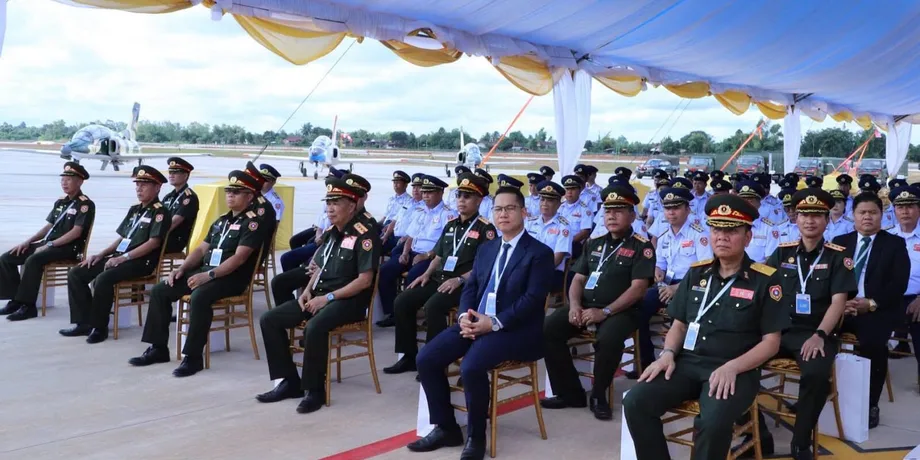
Laos stands firmly behind its newly expanded military aviation facility at Ban Keun Airport, which has drawn intense international scrutiny and mixed reactions on social media following its formal opening on 29 September 2026. The Ministry of National Defense addressed security concerns raised by foreign media reports and commercial satellite imagery revealing light attack jets and military vehicles stationed at the airfield, located roughly 50 kilometers north of the capital city of Vientiane. Officials explained that the military upgrade became necessary because the Lao Air Force previously had to share civilian runways at Wattay in Vientiane and Thong Hai Hin in Xieng Khouang Province, making military training inconvenient.
Contents
Domestic budget constraints and high construction costs led Laos to partner with China to develop the dedicated training site, officially designated as the China-Laos Joint Support and Training Center and the China-Laos Friendship Aviation Academy. According to official statements, the facility will train Lao pilots, develop personnel, boost overall air force aviation capabilities, support disaster relief, and serve as a backup civilian airport, while remaining strictly defensive and not aimed at any country. The ministry also recalled Laos historical trauma from the 1960s to 1970s Indochina War bombing campaigns, when Ban Keun was built by United States and Royal Lao forces, arguing that modernizing defenses prevents history from repeating itself and remains a legitimate sovereign right.
Satellite Images and Regional Security Concerns
International scrutiny intensified in early October after commercial satellite imagery from Vantor taken on 30 September was reported by major news organizations. The images showed eight light attack and trainer jets resembling the Chinese-made Hongdu JL-8, which is also known as the K-8, alongside more than two dozen military vehicles and ongoing runway expansion at the Ban Keun site. Security analysts warned that the strategic outpost could mark China's first full-fledged military base in mainland Southeast Asia, raising anxieties about Beijing extending its regional power projection.
Regional governments have responded with varying levels of concern to the new development. Security experts noted that the facility features a runway measuring about 2,000 meters, which currently suits training rather than offensive power projection, though construction could potentially extend it by another 1,000 meters. While nations like Thailand have adopted a watchful stance, with Thai officials stating the project poses no immediate concern for Bangkok, other neighbors view the base through the lens of long-term geopolitical encirclement.
Strategic Implications for Neighboring Nations
The strategic footprint of the Ban Keun facility carries profound implications for neighboring Vietnam, which watches Beijing's growing footprint with quiet apprehension. Hanoi issued a diplomatic statement hoping its neighbor develops in peace, independence, and self-reliance, even as commentators warned that the outpost nearly completes a ring of potential Chinese military pressure around Vietnam. Analysts compared Beijing's patient regional strategy to weiqi, an ancient board game of gradually surrounding an opponent until it has no room to move.
Unlike wartime scenarios where Chinese combat aircraft could already reach all of Vietnam from bases inside mainland China, peacetime operations present different challenges regarding access and operating permissions. With Vientiane's consent, the Ban Keun facility could eventually host sustained Chinese aviation activity, radar installations, drones, and intelligence-gathering aircraft capable of monitoring military movements along Vietnam's western edges and neighboring Thailand. Beijing has previously established similar dual-use facilities abroad, such as its military logistics base in Djibouti and a joint presence at Cambodia's Ream Naval Base.
Timeline of Key Developments
- Late 2025: Construction begins on the expanded airfield at Ban Keun using an old CIA-operated airfield site.
- September 22, 2026: Satellite images show a runway approximately 2,000 meters long, an apron, and five hangars.
- September 29, 2026: The China-Laos Joint Support and Training Center and Friendship Aviation Academy officially open.
- September 30, 2026: Satellite imagery reveals eight K-8 trainer jets and more than two dozen military vehicles.
- November 5, 2026: Hanoi issues a diplomatic response regarding the strategic development on its western border.
- November 20, 2026: The Lao Ministry of National Defense posts a detailed official defense of the project online.
Comparative Regional Context
The arrival of eight K-8 aircraft at Ban Keun represents a notable expansion for a small military force. According to data from the International Institute for Strategic Studies, Laos previously operated a listed fleet of only four K-8 aircraft, meaning the eight visible airframes effectively double that reported inventory. By comparison, China maintains extensive overseas military infrastructure, including its base in Djibouti inaugurated in 2017 and major military-grade airfield installations built on artificial islands in the disputed South China Sea since 2014.
The Pentagon previously cataloged dozens of countries where Beijing held plans for military facilities, though Laos was not listed among them prior to the Ban Keun development. Defense analysts suggest the selection of the Lao site reflects a target of opportunity rather than a desperate operational necessity, given existing railway infrastructure and close political ties between the ruling Lao People's Revolutionary Party and Beijing.
What Remains Unknown
Several key operational details concerning the Ban Keun facility remain undisclosed by both the Lao and Chinese governments. The exact financial cost of the airfield upgrade, the total construction duration, and the precise number of Chinese military personnel assigned to the station have not been made public. Furthermore, the formal legal terms governing long-term Chinese military access and the division of operational control between Vientiane and Beijing remain unspecified.
Regional military attachés continue to monitor whether the base will eventually host larger combat aircraft or permanent logistical support elements beyond basic pilot training. As security monitors track further runway expansions and infrastructure additions, the exact parameters of future joint exercises remain subject to ongoing bilateral arrangements between the two allied nations.
The Bottom Line
- Laos and China inaugurated the joint aviation facility at Ban Keun on 29 September 2026 to train Lao pilots and reduce reliance on civilian runways.
- Satellite imagery revealed eight K-8 trainer jets and over two dozen military vehicles stationed at the 2,000-meter runway north of Vientiane.
- The Lao Ministry of National Defense defended the project as a legitimate sovereign right aimed at preventing a recurrence of historical wartime devastation.
- Regional observers and security analysts noted that the base deepens Beijing's institutional and logistic footprint in mainland Southeast Asia.