Record 29 Agreements Reached at Annual Bilateral Forum
Singapore and China signed 29 cooperation agreements on November 23, 2026, setting a new record for their highest annual bilateral forum as both nations moved to open digital trade corridors, expand renminbi financing, and widen food supply chains.
Contents
- Record 29 Agreements Reached at Annual Bilateral Forum
- Free Trade Upgrade Targets Digital Commerce and Data
- New Renminbi Facilities and Instant Payment Links
- Artificial Intelligence Shifts to Factories and Safety Rules
- Hainan Becomes First Chinese Province Approved for Poultry and Eggs
- Flagship Joint Projects Expand Beyond Original Borders
- High Level Diplomacy and Regional Ties Ahead of 2027
- Timeline of Recent Singapore and China Milestones
- What to Know
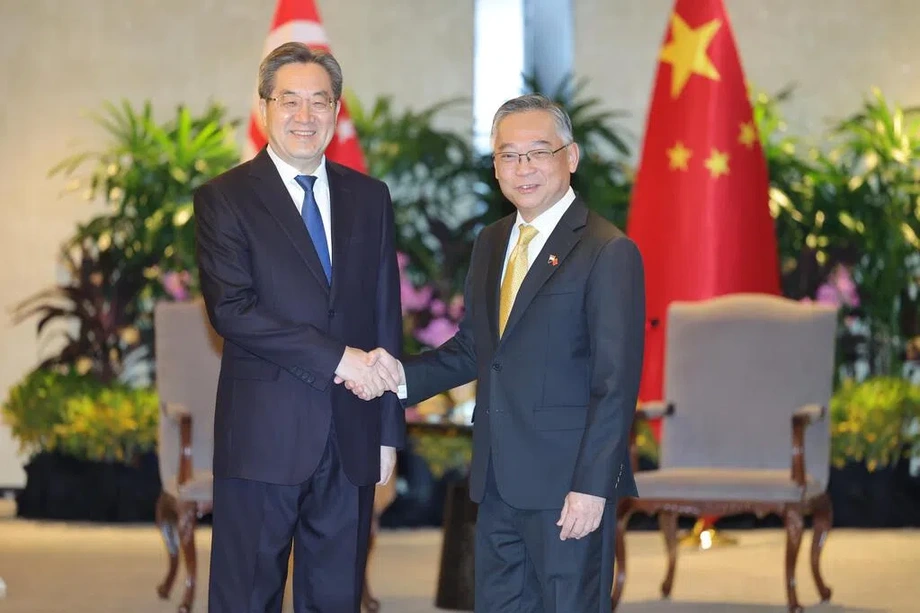
Deputy Prime Minister Gan Kim Yong, who also serves as Minister for Energy, Trade and Industry (Trade), jointly chaired the 22nd Joint Council for Bilateral Cooperation (JCBC) with Chinese Vice Premier Ding Xuexiang at the Shangri-La Singapore hotel. Ding is a member of the Communist Party of China Politburo Standing Committee, placing him among the country's most senior policymakers. Their talks lasted more than two hours and produced two more agreements than the 27 deals concluded in Chongqing in 2025, an increase of 7.4 percent, and four more than the 25 agreements reached in Singapore in 2024, representing a 16 percent rise.
Officials published the full list of 29 deliverables in the Prime Minister's Office statement and in the Ministry of Foreign Affairs statement, while details from Singapore ministers appeared in the official interview transcript. Ten Singapore political office holders joined Gan at the forum, including Minister for Digital Development and Information Josephine Teo, Minister for Education Desmond Lee, Minister for National Development Chee Hong Tat, Senior Minister of State for Energy, Trade and Industry Low Yen Ling, and Senior Minister of State for Sustainability and the Environment Janil Puthucheary. Ding was accompanied by Chinese Ambassador to Singapore Cao Zhongming, State Council Deputy Secretary-General Wang Yang, Vice Foreign Minister Hua Chunying, Vice Minister of Commerce Yan Dong, and Vice Minister of Science and Technology Zhang Guangjun.
Gan told delegates at the close of the bilateral meeting that the long partnership has stayed durable through shifting global economic conditions because both governments focus on practical results.
Even as circumstances change, both sides have continued to adapt, build on our complementary strengths, and find new areas of practical cooperation.
Established in 2004, the JCBC meets once a year, alternating between Singapore and China, to review progress across existing partnerships and approve new projects. Both leaders used the November 23 session to reaffirm their commitment to open trade, multilateral cooperation, and an international order built on shared rules.
Free Trade Upgrade Targets Digital Commerce and Data
Singapore and China launched formal negotiations to update the China-Singapore Free Trade Agreement (CSFTA) to Version 4.0, marking the fourth revision of a pact that originally entered into force in 2009. A free trade agreement reduces tariffs and legal friction between trading partners so goods and services move more cheaply across borders. Prime Minister Lawrence Wong and Chinese President Xi Jinping had announced the memorandum of understanding to start these upgrade talks three days earlier, on November 20, 2026, during their meeting in Shenzhen.
Gan told reporters after the JCBC that updating the treaty is a major undertaking that may take one to two years to complete, with no final completion date set yet. Once finished, Version 4.0 will add a dedicated digital economy chapter covering digital trade, government procurement, digital payments, and rules allowing business data to move securely across international borders. Senior Minister of State Low Yen Ling welcomed the negotiations as a way to keep commercial rules aligned with modern technology.
Singapore looks forward to building on this momentum with China to deepen our trade and innovation co-operation.
Both governments also renewed a 2013 agreement on trade in services, opening wider market access for firms in healthcare, eldercare, tourism, legal services, and environmental sustainability. Singapore Customs and China's General Administration of Customs signed two pacts to build smart customs controls using automated data systems, including a twinning project linked to Tianjin. Meanwhile, Singapore's Ministry of Energy, Trade and Industry (METI), China's Ministry of Commerce, and the Chongqing Municipal Government signed an agreement to promote recognition of electronic trade documents between Southeast Asia and western China.
New Renminbi Facilities and Instant Payment Links
Financial regulators from both countries unveiled new banking channels to lower currency conversion costs for companies and everyday travellers. Under an agreement backed by the People's Bank of China (PBOC), the Monetary Authority of Singapore (MAS) will introduce a new corporate facility offering businesses longer repayment periods for loans denominated in renminbi, China's official currency. Companies can use these funds to pay for trade invoices, daily operating expenses, and major equipment purchases.
Minister Chee Hong Tat said MAS is also joining the PBOC repo facility for foreign central banks and sovereign wealth funds, a mechanism that lets monetary authorities borrow temporary cash by pledging securities as guarantees. Regulators are separately studying whether to accept China Government Bonds as eligible collateral under the MAS renminbi facility, though officials have not announced a start date or collateral limits. In the private banking sector, DBS Bank has started renminbi clearing services in Singapore to process regional payments faster.
MAS and the PBOC are additionally exploring a direct link between their fast payment networks for transfers of small sums, which would allow consumers and small merchants to send money nearly instantly across borders. Singapore has already connected its PayNow service to Thailand's PromptPay, Malaysia's DuitNow, and India's UPI. Any link with China remains at an early planning stage with no launch schedule announced, and would complement a digital currency pilot introduced in December 2025 that lets Singapore visitors open and load Chinese e-CNY wallets at home before travelling.
Capital market ties will expand alongside payment channels through stock index and fund collaborations involving Singapore Exchange (SGX), the Shanghai Stock Exchange, and the Shenzhen Stock Exchange. Both countries pledged to help companies list shares and raise capital in each other's markets, while extending staff exchanges between MAS, the China Securities Regulatory Commission, and the National Financial Regulatory Administration.
Artificial Intelligence Shifts to Factories and Safety Rules
Artificial intelligence (AI) featured prominently in this year's talks, moving beyond research papers into factory floors and regulatory rulebooks. Minister Josephine Teo outlined three practical ways AI cooperation can help Singapore businesses: automating heavy physical work, building public confidence through safety rules, and removing manual paperwork from international shipping. She noted that Singapore's small and medium enterprises can adopt industrial AI tools already tested in China to stretch limited staff and budgets.
Teo pointed to robotics, smart manufacturing, quality inspection, and predictive maintenance as immediate priorities for local firms facing tight labour supply.
Such uses of AI could help to overcome our manpower constraints.
Beyond factory automation, officials from both countries held technical talks on AI governance, including how to set guardrails for agentic AI, which refers to software systems that can plan and carry out complex sequences of tasks with minimal human prompting. Discussions also covered incident reporting when algorithms fail and clear labelling of digital content created by AI. Teo said Singapore and China will conduct joint testing and technical exchanges to keep AI deployment safe and trustworthy.
In other words, we want to work on ensuring that the way AI is deployed in our economy, in our society, reach a certain level of safety, and there is a responsible attitude by the developers as well as the deployers, so that we can sustain a high level of trust in the use of this technology.
Minister for Education Desmond Lee is leading bilateral work on embodied AI, a field that combines AI software with physical robots and sensors, through the Suzhou Industrial Park. Under a new agreement signed on November 23, Singapore's industrial developer JTC Corporation and the Suzhou Industrial Park Administrative Committee will help embodied AI firms attract investment, test prototypes in live industrial settings, and expand into international markets.
Hainan Becomes First Chinese Province Approved for Poultry and Eggs
Singapore food importers gained a new supply source after the Singapore Food Agency accredited China's island province of Hainan to export frozen and chilled poultry, frozen and chilled pork, and poultry shell eggs. Senior Minister of State Janil Puthucheary explained that Hainan is the first Chinese province authorised to ship frozen and chilled poultry and shell eggs to Singapore, widening the country's food import network to guard against supply shocks.
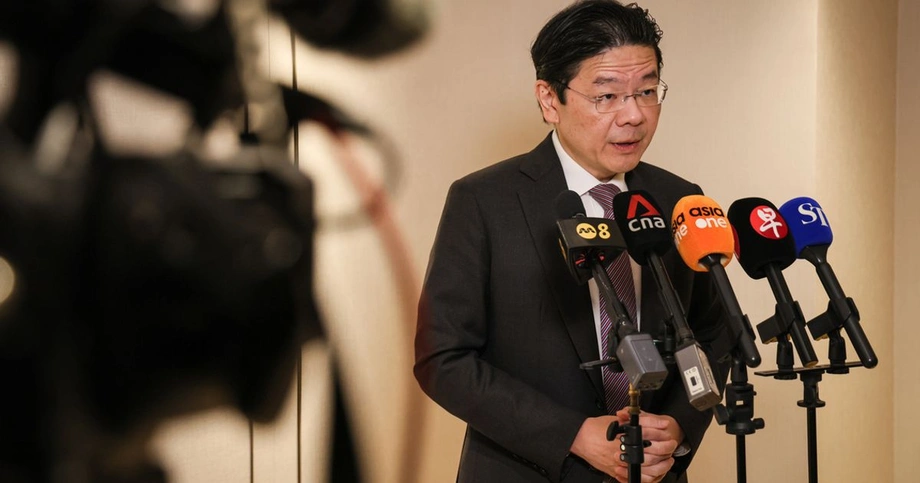
Puthucheary told reporters after the JCBC that the approval creates commercial openings on both sides.
This means more choices for Singapore consumers and importers, and new opportunities for Hainan's producers.
He added that the clearance will soon bring familiar regional dishes to local kitchens.
Singaporeans can look forward to products such as chilled Wenchang chicken and Hainanese goose.
Health and science agencies signed nine additional research and regulatory agreements alongside the food trade approval. The Singapore Food Agency partnered with the Chinese Academy of Agricultural Sciences on farming technology, while Singapore's Communicable Diseases Agency and Health Sciences Authority signed pacts with Chinese disease control, medical product, and forensic science authorities. Researchers at Singapore's Agency for Science, Technology and Research (A*STAR) also sealed four laboratory agreements with Zhejiang University's First Affiliated Hospital, the Hangzhou Institute of Medicine, and Zhejiang Cancer Hospital to study infectious diseases, diagnostics, and cancer bioinformatics.
Flagship Joint Projects Expand Beyond Original Borders
Gan and Ding also jointly chaired the annual Joint Steering Council meetings for the three flagship intergovernmental projects that anchor Singapore and China cooperation: the 27th meeting for the Suzhou Industrial Park, the 18th for the Tianjin Eco-City, and the 10th for the China-Singapore (Chongqing) Demonstration Initiative on Strategic Connectivity. Officials also reviewed the China-Singapore Guangzhou Knowledge City, a national cooperation zone that marked its 15th year in 2025.
Suzhou Industrial Park, launched in 1994, is shifting focus from conventional manufacturing toward biomedical research and advanced robotics under a cooperation plan running from 2024 to 2033. Just five days before the JCBC, on November 18, 2026, the China-Singapore Life Sciences Park, known as Biosparc, officially opened inside the Suzhou zone to connect researchers, biotech startups, and investors from both nations.
Tianjin Eco-City is expanding its geographic reach beyond urban planning into the wider Beijing, Tianjin, and Hebei region, known locally as Jing-Jin-Ji. Enterprise Singapore, the Tianjin Eco-City committee, and the Xiong'an New Area committee agreed to build a joint economic corridor connecting northern China with Southeast Asia, following the third China-Singapore Green Development Forum held in Xiong'an earlier in 2026. Singapore and Tianjin officials will also draft an updated development blueprint ahead of the Eco-City's 20th anniversary in 2028, covering housing, research, and business investment.
Chongqing's connectivity initiative is linking western China more tightly to Southeast Asian ports through digital logistics and new waterways. Minister Josephine Teo noted that China's Pinglu Canal opened in September 2026, shortening cargo shipping routes to the Beibu Gulf by more than 500 kilometres and feeding directly into rail and freight corridors between Chongqing, Singapore, and Central Asia.
High Level Diplomacy and Regional Ties Ahead of 2027
Vice Premier Ding's visit to Singapore ran from November 22 to 23, 2026, and included separate meetings with Prime Minister Lawrence Wong and Senior Minister Lee Hsien Loong at the Istana. Ding told Singapore leaders that China wants to connect its 15th national development plan covering five years with Singapore's economic priorities, following Wong's talks with President Xi Jinping and Premier Li Qiang in China the previous week.
Senior Minister Lee wrote in a social media post after hosting Ding that successive generations of leaders in both nations have kept cooperation aligned with changing economic needs.
I am confident that we will continue to build on these strong foundations and deepen our close ties and mutually beneficial partnership in the years ahead.
Ding expressed optimism for future exchanges when wrapping up the November 23 forum and invited his counterparts to China for the 23rd JCBC.
I look forward to welcoming our Singapore colleagues in China next year.
Regional diplomacy will play a larger role in 2027, when Singapore assumes the rotating chairmanship of the Association of Southeast Asian Nations (ASEAN) during a year designated as the ASEAN and China Year of AI Cooperation. Minister Chee Hong Tat said Singapore will push for stronger financial links across Southeast Asia so Chinese and international firms can base regional headquarters in Singapore before expanding into neighbouring countries. Beyond economics, the two nations signed a sports agreement between the Singapore National Olympic Council and the Chinese Olympic Committee, alongside an exchange programme linking Singapore's Civil Service College with Suzhou officials.
Timeline of Recent Singapore and China Milestones
Senior diplomatic visits and major infrastructure openings over the past two years paved the way for the 29 agreements concluded in November 2026.
- 2024: The 20th JCBC in Singapore produces 25 agreements, while the Suzhou Industrial Park marks 30 years with a new cooperation plan spanning 2024 to 2033.
- October 25, 2025: Chinese Premier Li Qiang visits Singapore during the 35th anniversary of diplomatic relations, signing pacts on green development, digital commerce, food safety, and maritime shipping corridors.
- December 2025: The 21st JCBC in Chongqing yields 27 agreements and introduces a pilot allowing Singapore travellers to use Chinese e-CNY digital wallets.
- September 2026: China's Pinglu Canal opens, cutting cargo shipping distances between inland waterways and the Beibu Gulf by over 500 kilometres.
- November 18, 2026: The China-Singapore Life Sciences Park (Biosparc) opens in Suzhou to support biomedical research and commercialisation.
- November 20, 2026: Prime Minister Lawrence Wong meets Chinese President Xi Jinping in Shenzhen, where both sides announce negotiations for CSFTA Version 4.0.
- November 22 to 23, 2026: Chinese Vice Premier Ding Xuexiang visits Singapore and jointly chairs the 22nd JCBC and three Joint Steering Council meetings on November 23, concluding 29 agreements.
What to Know
- Singapore and China signed 29 agreements on November 23, 2026, surpassing the 27 deals reached in 2025 and 25 in 2024.
- Both countries opened talks on Version 4.0 of the China-Singapore Free Trade Agreement, targeting digital trade, data transfers across borders, and AI governance over an estimated one to two years.
- MAS will launch a renminbi corporate facility with longer repayment periods and is studying fast payment links and China Government Bond collateral with the PBOC.
- Hainan became the first Chinese province approved to export frozen and chilled poultry and shell eggs, alongside pork, to Singapore.
- The three flagship bilateral projects in Suzhou, Tianjin, and Chongqing are expanding into biomedical science, embodied AI, and regional corridors linking western China and northern China with Southeast Asia.
- Singapore will assume the ASEAN chairmanship in 2027, coinciding with the ASEAN and China Year of AI Cooperation.