Washington is turning attention to the routes through Southeast Asia
U.S. Treasury officials met regulators and national security authorities in Singapore and Malaysia this week, urging them to watch for Iranian front companies in shipping, aviation, procurement, banking and legal services. The message reaches beyond governments: Washington is also pressing banks and law firms operating in the two financial and trade hubs to check who they are doing business with.
Contents
- Washington is turning attention to the routes through Southeast Asia
- Why are ship transfers drawing attention?
- New allegations put Malaysian waters in the spotlight
- Iran's airline links face a parallel squeeze
- What the sanctions can mean for companies
- Key dates in the pressure campaign
- What is still undecided?
- Key Points
The focus is on commercial links that can keep money and goods moving despite U.S. sanctions. Iranian crude can be transferred between ships at sea, while airlines and their service providers can carry passengers, cargo and equipment. Front companies are businesses that hide who really owns or controls them. Treasury officials warned that the United States would target such networks once it identified a commercial "lifeline."
The pressure comes amid a widening U.S. campaign against Iran's overseas business interests. The Trump administration launched Operation Economic Outcast in August, after U.S. and Israeli strikes on Iran began in February. Washington says it is seeking to cut revenue that supports the Iranian government and bring the conflict to a swift end.
A Treasury official described the warning to regional businesses in direct terms:
We want it to be understood, too, that we're going to target these lifelines, and it's not going to be a negotiation when we find a lifeline that needs to be targeted.
The meetings put Singapore and Malaysia under closer scrutiny because oil, shipping services and international finance pass through or operate near both countries. The practical test for companies is whether they can identify the real owners of customers, verify where cargo comes from and notice when ships or businesses conceal their activities.
Why are ship transfers drawing attention?
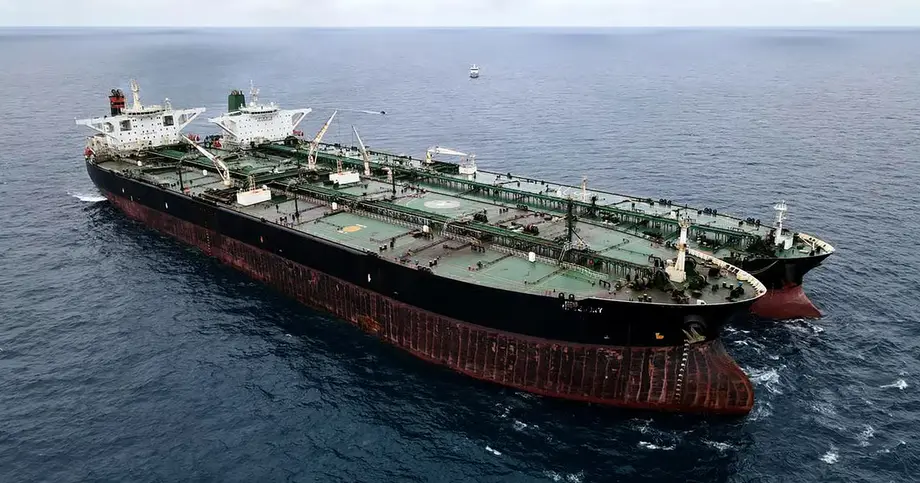
Tankers have for years transferred Iranian oil to other vessels in waters around Malaysia, Singapore and Indonesia. Such a transfer can make the oil's journey and origin harder to trace, particularly when ships use false paperwork, change names or flags, or manipulate their location signals.
A U.S. Treasury action on December 3, 2024, offers a specific example. In its December 2024 notice, the department said it was sanctioning 35 entities and vessels under Executive Order 13902. Treasury identified the tanker CERES I as having transferred nearly 300,000 metric tons of Iranian crude near Singapore in January 2024. The department also said the vessel was involved in a collision and oil spill in international waters near Malaysia in July that year, when its tracking signals did not match its position.
The example shows why regulators are being asked to check both the paperwork and the activity around a shipment. A vessel's owner, manager, flag and route may involve businesses in several countries. If an oil transfer is concealed, the next buyer may have difficulty confirming where the crude originated.
Malaysia said last year it would tighten rules governing transfers between ships. In February, Malaysian authorities seized two tankers and their cargoes. The U.S. Navy has enforced a blockade against vessels heading to Iran through the Strait of Hormuz since April, while U.S. enforcement widened in November to movements across Iran's land borders and through the Caspian Sea.
New allegations put Malaysian waters in the spotlight
A November 16 account of a complaint by United Against Nuclear Iran, a watchdog group, added a sharper allegation about activity off Malaysia. UANI said it had tracked a floating network of more than 200 tankers and cargo ships operating about 70 kilometres from the Malaysian coast. It said the ships used deceptive practices, including false location signals and transfers between vessels, and that Malaysian and foreign supply ships provided logistical and refuelling support.
UANI said it had documented hundreds of transfers in the Eastern Outer Port Limits anchorage since 2019. The anchorage is about 45 miles from Johor. The group alleged that Iranian crude was transferred there and relabelled as a "Malaysian blend" before being sent to buyers. UANI said it sent a letter on October 2 to Malaysia's foreign ministry, copying U.S. officials and members of Congress, and also wrote to the operator of the Pengerang Integrated Petroleum Complex.
Those claims are allegations by UANI, not findings announced by Malaysian authorities. The group said it had received no reply to its letters. Malaysia's government also did not respond to requests for comment on the Treasury meetings. A State Department spokesperson said Malaysia had recently adopted an Exclusive Economic Zone law intended to strengthen marine protection, regulate high risk shipping and curb illicit activity.
The concern is not only whether a cargo can evade sanctions. A crowded area of older vessels operating with misleading identity or location information can also create hazards for other ships and coastal communities. Treasury's account of the CERES I collision and oil spill is one documented example of the risks associated with activity in the region.
Iran's airline links face a parallel squeeze
Treasury officials also raised Iranian airline service to Malaysia, without naming a carrier. Public flight records show Iran Airtour, a privately owned Iranian airline, operated scheduled flights between Tehran and Kuala Lumpur as recently as November 14. A flight scheduled for November 17 did not depart. Iranian media said Iran Airtour resumed Malaysia service in November 2025 after many Iranian airlines had largely stopped flying there in 2022, when U.S. sanctions affected refuelling.
Washington has already targeted companies it says support Iran's aviation sector. On September 8, the United States sanctioned dozens of companies in the United Arab Emirates, Britain, Malaysia, Turkey and Kazakhstan, accusing them of helping move weapons, personnel and illicit cargo. The following day, Iran Air officials met Malaysia's ambassador to Iran to discuss resuming direct flights between Tehran and Kuala Lumpur.
A separate U.S. sanctions action targeted 36 entities, including 27 Iranian airlines, as well as companies in several other countries that supported aviation operations. A Treasury official described the effort as effectively removing Iran's aviation sector from the market. Treasury Secretary Scott Bessent warned that people dealing with Iranian airlines still operating could risk exclusion from the global financial system. Iran Airtour did not respond to a request for comment.
Airlines depend on more than aircraft. They need fuel, maintenance, airport services, cargo handling and sales agents. Sanctions directed at those supporting businesses can therefore disrupt routes even when the airline itself is not the only target. That is why Treasury's warning to banks and law firms matters alongside its focus on airlines and shipping companies.
What the sanctions can mean for companies
U.S. sanctions can block property under U.S. jurisdiction and restrict transactions involving designated people or companies. Treasury's 2024 notice said businesses owned at least 50 percent, directly or indirectly, by one or more blocked persons are also blocked under the rules it described. It also warned that some people taking part in certain transactions with designated parties could face sanctions or enforcement action.
For a company in Singapore or Malaysia, exposure can arise through a customer, ship manager, cargo buyer, bank or service provider. A business may need to check the beneficial owner, meaning the person who ultimately owns or controls a company, rather than relying only on the name on a contract. It may also need to check whether a vessel's identity or cargo record has changed in suspicious ways.
Both Singapore and Malaysia implement United Nations Security Council sanctions on Iran through domestic law. The U.S. campaign adds pressure through its own sanctions rules and its ability to restrict access to U.S. property and transactions. The distinction matters to regional businesses: compliance with United Nations measures does not by itself remove the risk of exposure under separate U.S. rules.
Singapore's government said it was committed to preventing companies from being misused and had strengthened vigilance in shipping and finance this year.
We are firmly committed to doing our part" and "preventing bad actors from abusing our corporate vehicles.
U.S. officials say sanctions are beginning to erode Iranian revenue, citing the country's worst gross domestic product contraction in 40 years and its highest inflation since World War II. The officials did not provide the underlying figures in the statements described here. Treasury has also imposed measures on more than 50 people, companies and ships linked to Iranian oil businessman Mohammad Hossein Shamkhani, targeting financial facilitators, shipping executives, logistics firms and vessel operators.
Key dates in the pressure campaign
December 3, 2024: Treasury sanctions 35 entities and vessels linked to Iranian petroleum shipping, and describes the CERES I's oil transfer near Singapore and later collision near Malaysia.
February 2026: U.S. and Israeli strikes on Iran begin, according to accounts of the current campaign.
April 2026: The U.S. Navy begins enforcing a blockade against shipping reaching Iran through the Strait of Hormuz.
August 2026: The Trump administration launches Operation Economic Outcast.
September 8 and 9, 2026: The United States sanctions companies accused of supporting Iran's aviation sector; Iran Air officials then meet Malaysia's ambassador to discuss direct flights.
October 2 and November 16, 2026: UANI sends its letter concerning activity off Malaysia and its allegations are later publicised.
November 14 and 17, 2026: Iran Airtour operates a Tehran to Kuala Lumpur flight on the first date; a scheduled flight on the second date does not depart.
What is still undecided?
No specific company was named by Treasury officials at the meetings, and neither government has announced a new enforcement deadline in response. Malaysia has not publicly answered the latest requests for comment. The U.S. warning signals that scrutiny is increasing, but any future designation or penalty would depend on the action Washington takes and the evidence it cites.
For banks, law firms, traders and shipping businesses, the immediate task is to examine counterparties and cargo routes more closely. For coastal communities and other maritime operators, the same scrutiny concerns the safety of waters used by commercial shipping. Whether tighter checks lead to new seizures or sanctions has not been announced.
Key Points
U.S. Treasury officials urged Singapore and Malaysia to watch for Iranian front companies in shipping, aviation, procurement, banking and legal services.
Transfers between ships near Malaysia, Singapore and Indonesia can make Iranian oil harder to trace.
UANI alleges that a network of more than 200 vessels operates off Malaysia and helps move Iranian oil; the claims have not been confirmed by Malaysian authorities.
Iran Airtour flew between Tehran and Kuala Lumpur as recently as November 14, while a November 17 scheduled flight did not depart.
U.S. sanctions can block property under U.S. jurisdiction and create risks for businesses involved in certain transactions with designated parties.