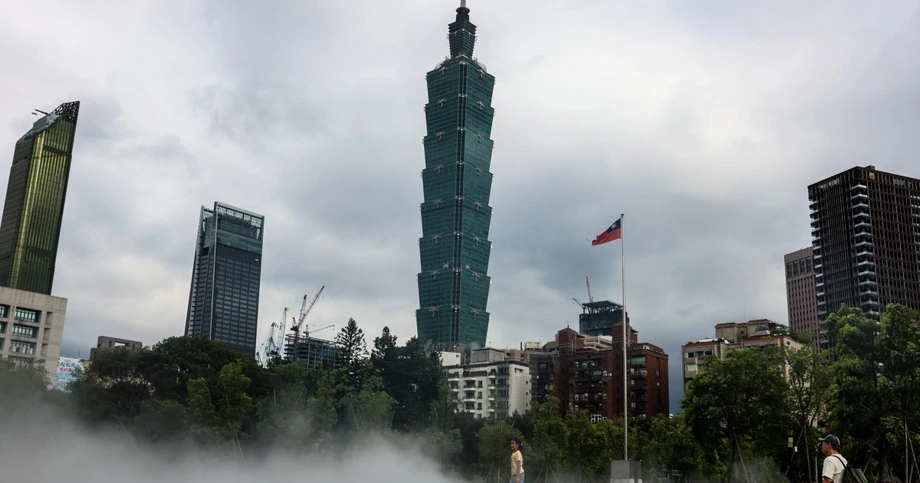
Investment talks stall while trade accelerates
Taiwan has suspended investment negotiations with Malaysia following Prime Minister Anwar Ibrahim's remarks about Taiwan, interrupting an economic dialogue as bilateral trade reaches new heights. Malaysia's official figures show trade totalled RM213.50 billion in January through August 2026, up 39.9% from the same period in 2025.
Contents
- Investment talks stall while trade accelerates
- What was postponed?
- How Anwar's interview became a diplomatic dispute
- Why the two sides interpret the remarks differently
- The official numbers show what is at stake
- Penang's chip factories give the dispute a local impact
- Existing factories and future projects face different pressures
- Communication continues beyond the negotiating table
- Key Points
Taiwan Foreign Ministry spokesperson Hsiao Kuang-wei confirmed the pause on November 10, citing sovereignty, economic security and the protection of Taiwanese investors. The negotiations had been scheduled for late October under the 11th Malaysia-Taiwan Economic Cooperation Committee meeting.
Malaysia's representative in Taiwan offered a narrower description on November 11: the investment working group meeting had been put on hold, while other groups within the committee had already met. Malaysian business representatives described the wider committee meeting as postponed rather than cancelled.
The immediate concern is where Taiwanese companies will put their next factories and expansion projects. Business leaders say existing operations have largely continued, but some investors are becoming more cautious about committing new money, particularly in semiconductors.
Malaysia says Taiwanese investment remains welcome and its policy towards Taiwan has not changed. Taipei says it is maintaining communication with Kuala Lumpur and wants Malaysia to recognise the importance of their investment relationship and longstanding trust.
What was postponed?
The Malaysia-Taiwan Economic Cooperation Committee, known as MTECC, is an annual mechanism for discussing economic cooperation. Taiwan's Ministry of Economic Affairs proposed it as part of the New Southbound Policy, which began in 2016 to strengthen links with countries including those in Southeast Asia. Hosting alternates between Taiwan and Malaysia, with Malaysia due to host this year.
The committee has four groups covering investment, trade, small and medium enterprise development, and business advice. Malaysia's chief representative in Taiwan, Huang Yi-rui, said the trade and small business groups had already met. The business advisory group held its seventh joint meeting in Kuala Lumpur on September 22, gathering industry recommendations for the committee.
Huang said Malaysia's Friendship and Trade Centre and Taiwan's economic ministry traditionally coordinate the investment group's agenda. After a date was agreed for a meeting by video, Malaysia emailed proposed agenda items and cooperation initiatives but received no reply, he said. Taiwan subsequently requested that the meeting be put on hold.
Federation of Malaysian Manufacturers president Li Zu-guo said the wider committee meeting was delayed because one working group had yet to meet. He said business and investment activity was continuing as usual. The postponed discussions have also drawn attention to plans to upgrade the bilateral investment agreement. No replacement meeting date or timetable for that upgrade has been announced.
How Anwar's interview became a diplomatic dispute
Anwar's interview, broadcast on August 16, prompted the disagreement. Asked about Taiwan, Malaysia's prime minister described his position in categorical terms:
as part of China, period
The interviewer also asked whether Anwar would condemn Beijing if it used force against Taiwan. Anwar responded by comparing the situation with a Malaysian state attempting to leave the federation, saying he would use force to preserve Malaysia's unity.
Taiwan's Foreign Ministry condemned the remarks on August 18. It said the comparison portrayed Taiwan as a separatist Chinese province and rationalised Beijing's position on using force. The ministry also warned that the comments could damage political trust and confidence among Taiwanese businesses investing in Malaysia.
Anwar defended Malaysia's longstanding One China policy on August 20 while stressing that a peaceful resolution was the best approach. Huang later said Malaysia did not regard the interview response as a formal policy statement and therefore had not issued a separate official clarification. He said Anwar had explained that he held no ill will towards Taiwan.
The main steps in the dispute unfolded over nearly three months:
- August 16: Anwar's interview aired, including his comments about Taiwan and the comparison with Malaysian national unity.
- August 18: Taiwan's Foreign Ministry condemned the remarks and warned about damage to trust and investment confidence.
- August 20: Anwar reaffirmed Malaysia's One China policy and support for a peaceful resolution.
- September 22: The committee's business advisory group met in Kuala Lumpur.
- Late October: The planned investment discussions did not proceed.
- November 10 and 11: Taiwan confirmed the suspension, and Malaysia's representative said Taiwanese investment remained welcome.
Why the two sides interpret the remarks differently
Hsiao said Taiwan paused the negotiations to protect national sovereignty, economic security and investors' rights. Taipei's concern connects political language with practical business risk: officials warned that Anwar's remarks could weaken confidence in Malaysia as an investment destination.
Huang said Malaysia's One China policy had remained unchanged since 1974 and that economic cooperation with Taiwan had continued under that policy. He described the committee as a forum for economic matters rather than politics and said Malaysia had imposed no discriminatory measures against Taiwanese investors.
The wording matters because Beijing's One China principle and the policies adopted by other governments have different formulations. Beijing's principle includes its claim that Taiwan is part of China and must be unified with the mainland. Other governments set their own diplomatic positions while maintaining varying forms of unofficial relations with Taiwan.
For Taipei, Anwar's comparison involving force crossed a sensitive line. For Malaysia's representatives, his subsequent support for peace and the continuation of existing investment policies are central to understanding Kuala Lumpur's position.
Kat W. Wong, executive director and chief strategic analyst at Malaysian think tank CASR, said Anwar was discussing how he would preserve the Malaysian federation when he referred to force, rather than explicitly endorsing a Chinese attack on Taiwan. She also said the remarks had hurt Taiwan and could damage bilateral relations. Wong expects the disagreement to be repairable if both sides work to restore their established understanding.
The official numbers show what is at stake
Malaysia's Ministry of Investment, Trade and Industry recorded rapid growth in its August trade report. Trade with Taiwan rose from RM152.62 billion in January through August 2025 to RM213.50 billion in the same months of 2026, an increase of about RM60.88 billion.
Malaysia's exports to Taiwan climbed 75.5% to RM95.13 billion, supported by electrical and electronic products as well as optical and scientific equipment. Imports from Taiwan increased 20.3% to RM118.37 billion. Taiwan was Malaysia's fourth largest trading partner and third largest source of imports.
August alone produced RM35.96 billion in bilateral trade, up 80.8% from August 2025 and equal to 10.2% of Malaysia's total trade that month. Malaysian exports to Taiwan more than doubled to RM14.32 billion, while imports reached RM21.64 billion. It was the 17th consecutive month of bilateral trade growth of at least 10%.
Trade in goods totalled approximately RM233.02 billion for all of 2025. The first eight months of 2026 had already reached about 91.6% of that previous annual total. Trade counts goods moving between the two economies, while investment covers spending on assets such as factories and equipment. The dispute is affecting the government channel for discussing investment cooperation while a large flow of goods continues.
Penang's chip factories give the dispute a local impact
Taiwanese businesses have accumulated approximately US$17 billion in investment in Malaysia over many years. Penang is a major centre for their semiconductor operations, with activity extending from chip packaging and testing to materials supply and precision manufacturing.
Packaging protects a semiconductor chip and connects it to the device in which it will operate. Testing checks that the chip works correctly. Those stages form an essential part of producing usable chips, creating demand for machinery, specialist services and local suppliers.
Siliconware Precision Industries broke ground in 2024 on a packaging and testing facility involving NT$48.5 billion in investment. Its parent, ASE Technology Holding, opened its fifth packaging and testing plant in Penang as part of an expansion worth NT$9.83 billion.
Chipbond Technology opened a Penang factory in February involving nearly NT$6.56 billion. Phison Electronics has invested NT$808 million through its subsidiary MaiStorage, which specialises in chip design and storage technology and is based in Selangor.
William Ng, president of the Small and Medium Enterprises Association of Malaysia, said Taiwanese manufacturers rely on Malaysian suppliers for precision tooling, metal fabrication, automation equipment and packaging services. Decisions about future factories therefore affect businesses well beyond the companies making chips. Local Taiwanese business organisations also maintain close contact with Penang's state government.
Existing factories and future projects face different pressures
Lin Kai-min, honorary president of the Taiwan Chamber of Commerce in Malaysia, said existing operations were unlikely to face an immediate impact because companies had already committed substantial capital. New projects and expansion plans are more open to reconsideration.
Lin described Malaysia as attractive while pointing to competition elsewhere in the region:
Malaysia remains an attractive place for Taiwanese investment, but we should not forget that investors have other choices in Southeast Asia,
Lin said companies serving European and United States customers increasingly consider supply chain security, technology protection and compliance with export controls. Export controls are rules governing where certain products or technologies may be sold or transferred. Companies must consider those requirements when choosing where to place sensitive operations.
Ng said he had seen no sudden cancellation of orders or factory closures among Taiwanese businesses. He warned, however, that future investment could move to Vietnam or Thailand if investors believed Malaysia's neutrality had changed.
Some Taiwanese manufacturers take a more reassuring view, expecting major investments and new projects to continue because Malaysia still welcomes their capital and technology. Wong likewise does not expect the dispute to cause a major investment shock. The range of business views puts the focus on decisions still being made, especially where companies locate their next expansion.
Communication continues beyond the negotiating table
Taiwan's Foreign Ministry says communication with Malaysia is continuing, with the aim of creating conditions for negotiations to resume. Malaysia's representatives have stressed that their economic relationship remains close and that Taiwanese businesses continue to receive a welcome.
Wong said Malaysia also remained open to Taiwan recruiting students and talent. Those connections sit alongside trade, tourism and cultural exchanges, giving the relationship several channels through which contact can continue during the diplomatic disagreement.
Malaysia's role in Taiwanese education has already been changing. Following Vietnam's rise in enrollment, Malaysia recorded 9,686 students in Taiwan in 2024, falling below 10,000 for the first time in a decade. Vietnam recorded 39,695. Malaysian students nevertheless remain a substantial part of the educational relationship.
The investment working group provides a more direct route for addressing business concerns. Its agenda and cooperation proposals had already been exchanged before the postponement, and industry recommendations had been gathered in September. Restoring that channel would allow officials to return to practical investment issues while businesses assess future projects.
Malaysia's welcome for Taiwanese capital and Taiwan's willingness to keep talking provide room for renewed discussions. The central task is to rebuild enough political trust for the investment dialogue to resume, while preserving the factory operations, supplier relationships and commercial exchanges already in place.
Key Points
- Taiwan confirmed on November 10 that it had suspended investment negotiations with Malaysia, citing sovereignty, economic security and investor protection.
- The dispute followed Anwar Ibrahim's August remarks about Taiwan and his comparison involving force to preserve Malaysian unity.
- Malaysia says its policy is unchanged, Taiwanese investment remains welcome and the committee process has been postponed rather than cancelled.
- Official figures show bilateral trade reached RM213.50 billion in January through August 2026, up 39.9% from a year earlier.
- Business leaders report limited immediate disruption to existing operations, with greater concern about future projects and expansion decisions.
- Both sides remain in communication, but no new date has been announced for the investment talks.