23 sorties reported across the Taiwan Strait median line
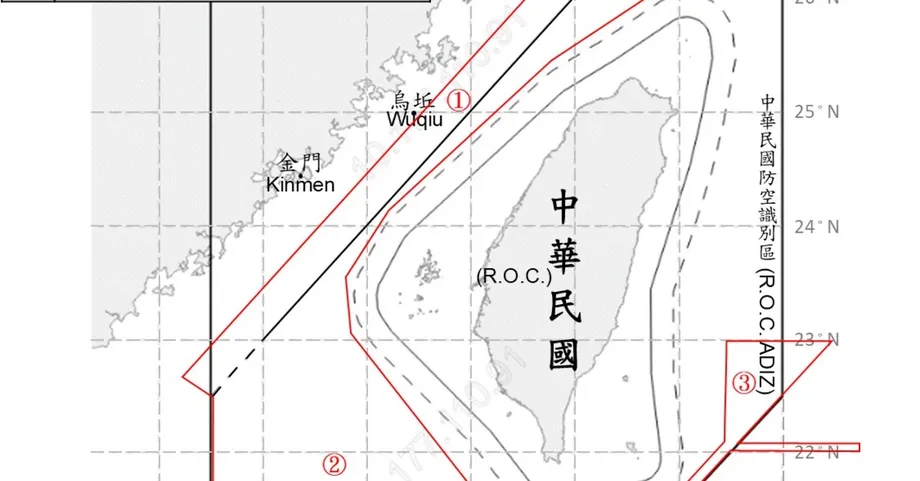
Taiwan's Ministry of National Defense was cited as detecting 29 Chinese military aircraft sorties, six naval vessels and nine official ships around the island during a monitoring period ending at 6 a.m. on the 21st. Of those aircraft sorties, 23 crossed the Taiwan Strait median line, with activity recorded to Taiwan's north, center, southwest and east.
Contents
- 23 sorties reported across the Taiwan Strait median line
- What the aircraft and ship counts mean
- Flights reached Taiwan's eastern approaches
- A patrol paired with longer distance training
- Repeated activity and pressure on Taiwan
- Fewer patrols in the first nine months
- Shipbuilding adds a longer term dimension
- What the daily response involves
- Key Points
Taiwan responded with military aircraft, naval ships and coastal missile systems. The reported aircraft included fighters, bombers, an airborne early warning aircraft and drones, while the vessels operated across waters stretching from northwest of Taiwan to waters off its eastern coast.
A conflicting entry appears on the ministry's English website. Its military activity bulletin, labeled August 20 to August 21, lists seven Chinese naval ships, six official ships and no Chinese military aircraft. The account describing the 29 sorties identifies the operation as occurring on October 20, with the daily totals released the following morning. The dates and totals cannot be reconciled from the published information, so the August bulletin and the October account are presented separately here.
The central development in the October account is the combination of aircraft and vessels operating across several approaches to Taiwan. The 23 reported median line crossings represented about 79% of the day's 29 sorties. A sortie means one aircraft flight for a mission; several sorties can involve the same aircraft flying more than once.
What the aircraft and ship counts mean
The reported October maritime total of 15 consisted of six Chinese naval vessels and nine official ships. Keeping those categories separate matters: naval vessels belong to the military, while official ships are government vessels whose specific agencies and types were not identified in the account.
The August English bulletin uses the abbreviation PLAN for the People's Liberation Army Navy, China's navy. Its seven naval ships and six official ships add up to 13 vessels. The ministry says Taiwan's armed forces monitored those vessels and employed combat air patrol aircraft, navy ships and coastal missile systems in response.
Taiwan can send patrol aircraft to monitor ships even when no Chinese aircraft are detected. In both descriptions, the response involved watching activity at sea and maintaining forces able to react. The reported response was monitoring and military deployment, with no exchange of fire described.
Flights reached Taiwan's eastern approaches
The detailed flight account lists J-10 and J-16 fighters, JH-7 fighter bombers, H-6 bombers, KJ-500 airborne early warning aircraft and drones. These aircraft serve different purposes: fighters can protect other aircraft or conduct attacks, bombers carry weapons over longer distances, and early warning aircraft use radar to help track activity and coordinate forces.
The geographic breakdown records 19 sorties in western areas, including 13 in northern and central areas. It also lists seven sorties in the southwest and three in the east. The aircraft in the eastern area were described as combat aircraft and drones.
The northern and central figure sits within the western total. It should therefore be read as a more detailed description of where some aircraft flew, rather than added to every other figure. The ministry's headline total remained 29 sorties, with 23 reported as crossing the median line.
The median line is an unofficial dividing line in the Taiwan Strait that has served as a practical buffer between the two sides. An air defense identification zone is a wider area where authorities seek to identify approaching aircraft. Aircraft operating in such a zone can prompt monitoring while still being outside territorial airspace.
A patrol paired with longer distance training
China's military was described as conducting a joint combat readiness patrol alongside training involving longer flights over distant waters on the morning of October 20. Taiwan's ministry identified aircraft taking off in succession and operating with naval vessels.
A joint patrol brings different parts of the armed forces into the same operation. Here, aircraft and ships were reported operating together across several areas around Taiwan. Such activity gives participating forces opportunities to practice coordination while Taiwan tracks their movements and decides how to respond.
The reported sequence was:
- October 20, morning: Taiwan began detecting Chinese fighters, bombers, an early warning aircraft and drones operating with naval vessels.
- October 20, 6 a.m., to October 21, 6 a.m.: The daily monitoring period covered the reported 29 aircraft sorties, six naval vessels and nine official ships.
- October 21, morning: Taiwan released the daily totals and described its response using aircraft, ships and coastal missile systems.
The maritime activity was described as extending from northwest of Taiwan around its southern approaches to waters off Taitung in the east. For Taiwan's armed forces, activity across several directions requires surveillance covering more than the central Taiwan Strait.
Repeated activity and pressure on Taiwan
China has increased military aircraft and naval activity around Taiwan since September 2020. Such operations are commonly described as gray zone tactics: pressure intended to pursue security goals while staying below the level of a major armed conflict.
Repeated patrols require Taiwan to devote personnel, aircraft, ships and surveillance equipment to tracking movements and maintaining readiness. The practical burden comes from repetition as well as the size of any single operation. Aircraft need crews and maintenance, ships require personnel and supplies, and commanders must keep assessing movements across different areas.
A tally accompanying the report of 29 sorties put the month's cumulative detections at 163 aircraft sorties and 252 ship detections. These are counts of observed activity over time. A vessel detected on several days can contribute repeatedly to a monthly tally, just as an aircraft can fly multiple sorties.
The nine official ships also show why the maritime picture extends beyond the navy. Taiwan's monitoring covers government vessels as well as military ships, even though the daily figures provide different levels of detail about their roles.
Fewer patrols in the first nine months
Taiwan's National Security Bureau, in a report submitted to the legislature, put Chinese aircraft activity associated with the operations it described at more than 1,450 sorties from January through September. It recorded 28 joint combat readiness patrols during that period, compared with more than 3,000 sorties and 31 patrols in the corresponding period a year earlier.
The patrol count fell by three, or about 9.7%, from 31 to 28. The aircraft figures also show a substantial decline, although both were given as totals above a threshold, so a precise percentage change cannot be calculated from them.
The later tally accompanying the October 21 account put cumulative joint patrols at 32 and associated aircraft sorties at more than 1,510. That indicates four additional joint patrols after the first nine months. These figures describe the activity covered by that tally, while the separate monthly detection count measures aircraft and ships tracked around Taiwan.
The bureau also described Chinese aircraft and vessels gathering information during Taiwan's Han Kuang 42 exercise, when Taiwanese forces were testing their combat capabilities. Observing an opponent's exercise can provide information about how its forces deploy, communicate and respond under pressure.
Shipbuilding adds a longer term dimension
The World Defense Shipbuilding Report provides a broader measure of naval construction. It lists 636,208 tonnes of Chinese combat vessels built during 2024 and 2025, compared with 270,509 tonnes for the United States. China's total was about 2.35 times the American figure.
The comparison was different in 2022 and 2023, when the report listed 202,520 tonnes for China and 245,703 tonnes for the United States. Between the two periods, China's reported construction tonnage rose to more than three times its earlier level, while the American figure increased by about 10%.
Tonnage measures the combined size of the vessels being counted. Naval capability also depends on weapons, sensors, training, maintenance and the types of ships available. The construction figures describe the pace and scale of production, while Taiwan's daily detection figures describe forces operating near the island during a particular period.
The connection for Taiwan is practical: a navy with more vessels has more capacity to sustain deployments, conduct training and rotate ships through operations. Daily patrols and shipbuilding operate on different timescales, but both affect the resources Taiwan must consider when planning its defense.
What the daily response involves
Taiwan's stated response combined aircraft, navy ships and coastal missile systems. Aircraft can identify and follow airborne activity, ships can track movements at sea, and missile units provide a defensive capability from land. Using them together gives commanders several ways to observe and respond.
The October figures place most of the reported aircraft sorties across the median line, with activity extending to eastern approaches as well as areas west and southwest of Taiwan. The accompanying vessels added a maritime component to the operation. For Taiwan's military, the immediate task was to maintain awareness across those areas and keep forces ready as the activity developed.
The National Security Bureau's figures add a second point: fewer patrols over a nine month period can coexist with continued pressure through individual operations, longer distance training and observation of Taiwanese exercises. The daily totals and the longer period counts answer different questions about the scale and persistence of activity.
Key Points
- The October account cited 29 Chinese aircraft sorties, six naval vessels and nine official ships around Taiwan.
- Twenty-three sorties, about 79% of the total, were reported as crossing the Taiwan Strait median line.
- A ministry English bulletin dated August 20 to 21 instead lists seven naval ships, six official ships and no aircraft.
- The reported October operation involved fighters, bombers, an early warning aircraft and drones, with activity extending to Taiwan's eastern approaches.
- Taiwan responded with military aircraft, navy ships and coastal missile systems.
- The National Security Bureau recorded 28 joint patrols in January through September, compared with 31 in the corresponding period a year earlier.