Three boccia titles take Indonesia beyond its goal
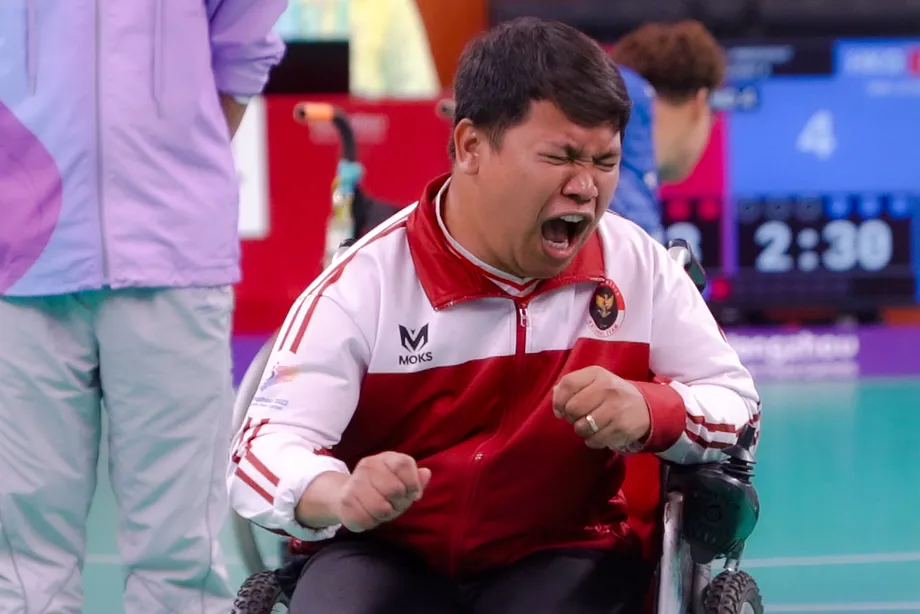
Indonesia surpassed its target of seven gold medals at the 2026 Aichi-Nagoya Asian Para Games on October 21, when Felix Ardi Yudha defeated Thailand's Phakphum Linchum 5-3 in the men's individual BC2 boccia final. His victory followed gold medals for Gischa Zayana and Handayani, turning a successful afternoon at Nagoya General Gymnasium into the delegation's biggest contribution of golds from a single sport.
Contents
- Three boccia titles take Indonesia beyond its goal
- Handayani turns a 1-4 deficit into gold
- Gischa wins another final by a single point
- Felix keeps calm to secure the eighth gold
- What BC1 and BC2 mean
- Karisma's sprint starts a day of four golds
- The other champions behind Indonesia's total
- How the results compare with the original targets
- From Seoul success to the remaining events
- Key Points
Indonesia's Ministry of Youth and Sports confirmed in its boccia results statement that the three victories lifted the national total to eight golds. The ministry described the Games as being in their fourth day, with further medal opportunities still ahead.
By the standings update at 9 p.m. Western Indonesian Time on Wednesday, Indonesia had eight gold, eight silver and 22 bronze medals, a total of 38, and occupied ninth place. The delegation had already exceeded its planned medal total of 32, while remaining inside its target of a finish among the top 10 nations.
Boccia supplied three of Indonesia's eight golds, or 37.5 percent. Its athletes had arrived with a target of one gold. Gischa's victory brought Indonesia to six, Handayani's comeback secured the seventh, and Felix's win carried the team beyond its national goal.
Handayani turns a 1-4 deficit into gold
Handayani, 30, won the women's individual BC1 final 5-4 against Malaysia's Angeline Melissa. After three ends, she trailed 1-4 and needed a strong finish to reverse the match.
The Indonesian scored four points in the fourth and final end, moving from three points behind to a victory by one point. Her gold was the result that brought Indonesia level with the target announced before departure for Japan.
An end is a round of play in boccia. Players try to place their balls close to a target ball, with scoring determined by which balls finish nearest. Several points can be scored in one end, making a late reversal such as Handayani's possible even when an opponent has built a substantial lead.
Gischa wins another final by a single point
Gischa Zayana secured the women's individual BC2 title by beating Hong Kong's Yeung Hiu Lam 6-5. Her victory came shortly before Handayani's, setting up the chance for Indonesia to reach its target with another win.
Gischa gained a point in the opening end that proved decisive. The players then shared success across the next two ends, while the fourth end was described as level. The ministry recorded a final score of 6-5; an earlier description said the match was level after four ends, without explaining an additional deciding stage.
Both women's finals ended with a margin of one point. For Indonesia, those narrow victories produced two golds in quick succession and moved boccia alongside swimming and athletics as a sport contributing multiple titles.
Muhammad Syafa also contested a medal match in men's individual BC1 but lost 5-6 in the contest for bronze. His result illustrated how close the margins were across Indonesia's boccia matches that day, including for athletes who finished outside the medals.
Felix keeps calm to secure the eighth gold
Felix Ardi Yudha, 33, completed Indonesia's three boccia victories with his 5-3 win over Phakphum Linchum. He said composure helped him recover after falling behind by three points across the opening two ends.
Felix moved ahead in the third end and protected that advantage in the fourth. His explanation focused on waiting for the right moment to respond rather than allowing the early deficit to dictate the rest of his match.
Rima Ferdianto, deputy secretary general of Indonesia's National Paralympic Committee, confirmed that Felix's result had taken the delegation beyond its goal.
"The initial target of seven gold medals has been officially surpassed today, with the Indonesian team successfully securing an eighth gold," said Rima Ferdianto.
Youth and Sports Minister Erick Thohir, who attended the finals, praised the athletes' technical ability, calmness and competitive mentality. The ministry presented those qualities as decisive in matches where Indonesia had to recover from deficits or protect a narrow advantage.
What BC1 and BC2 mean
Boccia is a precision ball sport for athletes with severe physical impairments. Its classification system groups competitors according to how their impairments affect the movements needed to play, so athletes compete in categories suited to their functional abilities.
BC1 athletes can receive permitted assistance from an assistant. BC2 athletes generally have better hand function and seated balance than those in BC1. The categories help explain why Handayani competed in a different individual event from Gischa and Felix.
Indonesia won the women's individual BC1 event and both the women's and men's individual BC2 events. The results gave the delegation success across two classifications, rather than three medals from a single competition.
The three titles also changed the balance of Indonesia's gold tally. Boccia moved ahead of swimming and athletics, which had supplied two golds each, while cycling accounted for the remaining gold.
Karisma's sprint starts a day of four golds
Karisma Evi Tiarani won Indonesia's fifth gold earlier on Wednesday in the women's T63 100 metres at Nagoya City Mizuho Park Athletic Stadium. She finished in 14.59 seconds, ahead of Japan's Tomomi Tozawa in 16.08 and Kaede Maegawa in 16.67.
Karisma's winning margin over Tozawa was 1.49 seconds. Her sprint victory, followed by the three boccia titles, doubled Indonesia's gold tally from four to eight during the day.
Karisma, who had recorded a personal best of 14.26 seconds at the Paris 2024 Paralympics, said she was pleased to contribute while still seeing room to improve.
"Actually, I am still somewhat dissatisfied because I have not been able to break my personal record. But it should still be appreciated. The important thing for now is to meet the target, which is to give the best. Perhaps later we can make evaluations for the future as well," said Karisma Evi Tiarani.
Her sprint gold followed a bronze medal on October 20 in the combined T42/T44/T61-64 long jump, where her best effort measured 3.91 metres. She therefore contributed medals in two events on consecutive days.
The other champions behind Indonesia's total
Maulana Rifky Yavianda supplied two of Indonesia's first four golds, winning the men's S12 100 metres freestyle and 100 metres backstroke. His two swimming titles accounted for a quarter of the delegation's eight gold medals.
I Kadek Dwi Purwana Yasa won the men's F57 discus with a throw of 49.75 metres, described in the competition roundup as a world record. Muhammad Fadli Imammuddin added the men's C4 individual pursuit title over 4,000 metres in cycling.
Those four victories gave Indonesia the platform from which Wednesday's sprint and boccia results carried it beyond the target. Across the eight golds, six individual athletes had reached the top of the podium, with Maulana winning twice.
Indonesia also added silver medals through para archers Ken Swagumilang and Arif Firmansyah, and through para athlete Saptoyogo Purnomo. Cyclist Nur Fendi earned bronze in the men's B time trial. Para judo, powerlifting and table tennis were also among the sports contributing medals to the delegation.
How the results compare with the original targets
Chef de Mission Reda Manthovani announced targets of seven gold, eight silver and 17 bronze medals at the contingent's send-off in Surakarta, Central Java, on October 12. Indonesia sent 103 athletes to compete in 12 sports.
Reda said the goals reflected the National Paralympic Committee's assessment of athlete potential, training performances and qualification achievements, using Asian Paralympic Committee criteria. The intended outcome was a place among the top 10 delegations.
The Wednesday night total of eight gold, eight silver and 22 bronze put Indonesia one gold and five bronze medals above those targets, while matching the silver goal. Its 38 medals were six more than the planned 32.
China led the standings with 107 golds, 62 silvers and 57 bronzes. Japan and Uzbekistan each had 29 golds, with Japan second on 36 silvers against Uzbekistan's 30. Thailand stood sixth with 14 golds, six more than Indonesia, while Kazakhstan was eighth with 10.
Indonesia's ninth place fulfilled its ranking objective at that stage of the competition. The standings remained provisional, with events still to come before the Games' scheduled conclusion on October 24.
From Seoul success to the remaining events
Indonesia's boccia results followed another successful international appearance. According to the sports ministry, the team finished first at the 2026 World Boccia Championship in Seoul in September with three gold medals and one silver.
Erick linked the repeat success to sustained athlete development. He said Indonesia needed consistent preparation that could produce results across successive competitions, and urged the delegation to keep pursuing medals after reaching its initial goal.
The main dates show how the campaign developed:
- September 2026: Indonesia's boccia team won three golds and one silver at the World Boccia Championship in Seoul, according to the ministry.
- October 12: Reda announced the delegation's medal and ranking targets in Surakarta.
- October 13: The contingent was scheduled to leave for Japan.
- October 20: Karisma won long jump bronze with a best effort of 3.91 metres.
- October 21: Karisma and three boccia players won gold, bringing Indonesia's total to eight.
- October 24: The Asian Para Games were scheduled to conclude.
National Paralympic Committee officials identified further opportunities in athletics, swimming, para badminton and the boccia team event. Rima also named Taufik Abdul Karim among athletes still competing. No detailed timetable for those remaining appearances was given.
Ambassador to Japan Nurmala Kartini P. Sjahrir praised the athletes and expressed confidence that further golds were possible. For the competitors still awaiting their events, the immediate task remained the same: turn those opportunities into additional medals.
Key Points
- Indonesia surpassed its seven gold target when Felix Ardi Yudha won men's individual BC2 boccia 5-3.
- Gischa Zayana and Handayani won women's boccia finals 6-5 and 5-4 respectively.
- Three boccia titles accounted for 37.5 percent of Indonesia's eight gold medals.
- Karisma Evi Tiarani won the women's T63 100 metres in 14.59 seconds.
- Wednesday night's tally was eight gold, eight silver and 22 bronze medals, placing Indonesia ninth.
- Further medal opportunities remained before the scheduled October 24 conclusion.