Months of negotiations end with a withdrawal
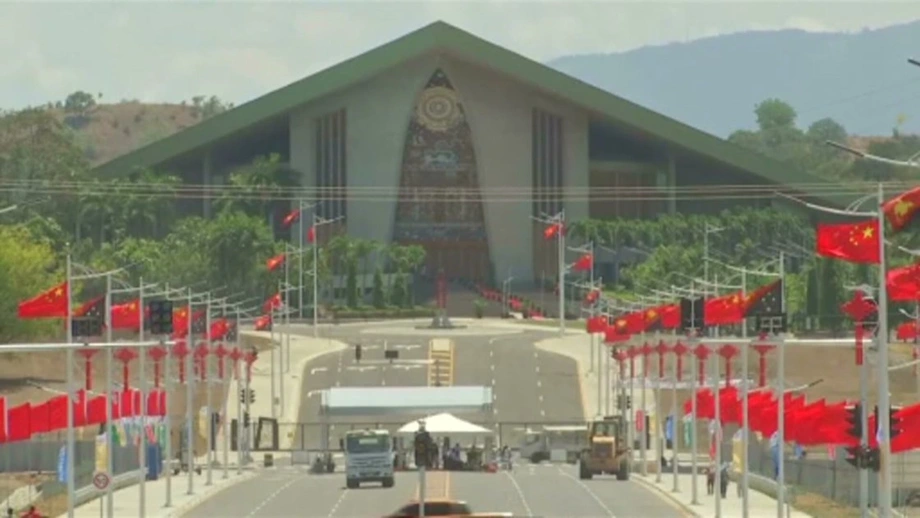
Taiwan announced on November 6, 2026, that it would close its representative office in Port Moresby, withdraw all stationed personnel and end assistance programs in Papua New Guinea after months of unsuccessful negotiations over demands to shut the mission. The decision also confirms a halt to purchases of Papua New Guinea liquefied natural gas through the spot market, affecting a commercial relationship that Taiwan says accounts for roughly one third of the Pacific country's LNG exports.
Contents
- Months of negotiations end with a withdrawal
- How the dispute developed
- What Papua New Guinea and Taiwan say
- Why an office matters without formal diplomatic ties
- Agricultural, medical and education programs will end
- What stopping spot LNG purchases means
- How much economic pressure does the gas decision create?
- Taiwan says alternative supplies are secured
- Australia and China shape the wider calculation
- Key Points
Papua New Guinea first announced the office's immediate closure in July, citing its One China policy. Taiwan resisted, kept the office operating and continued talks. Renewed demands for staff to leave within a deadline brought that effort to an end.
Taiwan's Ministry of Foreign Affairs said the government had decided to withdraw immediately after assessing national dignity, diplomatic autonomy and the national interest. Ministry spokesperson Hsiao Kuang-wei described the closure as Taiwan's own diplomatic decision and said resources would be allocated according to its diplomatic priorities and the practical results of cooperation.
The consequences reach beyond the office itself. Agricultural assistance, medical services, scholarships and training programs will end, while Taiwan redirects gas purchases to other suppliers. Papua New Guinea loses a channel for cooperation with an important trading partner, and Taiwan loses a physical presence in a region where its international relationships are already limited.
How the dispute developed
July's announcement did not immediately close the office. Taiwan initially said it would continue normal operations, protect its interests and provide necessary services to its nationals. Officials also sought support from countries with similar diplomatic positions while trying to persuade Papua New Guinea to reconsider.
The sequence shows how Taiwan moved from resisting closure to ending the relationship's principal operating arrangements:
- In 2023, Papua New Guinea closed its trade office in Taiwan and replaced it with a reduced presence called the PNG Taipei Economic Office.
- In July 2026, Papua New Guinea announced that Taiwan's representative office should close immediately.
- On July 28, Taiwan said it had stopped spot LNG purchases within a week of receiving the closure notification, while continuing assistance and office operations.
- In September, Taiwan's newly appointed representative, Chiu Chen-yu, took his oath by video after arriving in Papua New Guinea.
- On October 6, Taiwan said the mission remained operational and regular meetings with Papua New Guinea officials continued.
- On November 6, Taiwan announced the withdrawal of all stationed personnel and the termination of assistance programs following renewed demands to leave.
The November decision therefore ends an effort lasting several months to preserve the mission through negotiation. Taiwan had kept both its staff presence and development cooperation in place even after imposing the initial gas purchasing restriction.
What Papua New Guinea and Taiwan say
Papua New Guinea Foreign Minister Justin Tkatchenko presented the removal of Taiwan's office as a step toward strengthening trust with Beijing and reaffirming his government's One China policy. In his earlier closure statement, he described Taiwan's presence in these terms:
no longer recognised or required
Taiwan challenged both the decision and the process. Lin Chao-hung, director general of the foreign ministry's Department of East Asian and Pacific Affairs, said in July that Tkatchenko had issued a letter without prior consultation with Taiwan and had bypassed the normal civil service decision process. Tkatchenko, by contrast, said Papua New Guinea's foreign affairs department had communicated with the Taipei office before the announcement.
Taiwan's foreign ministry attributed the pressure to Beijing. In its statement announcing the withdrawal, the ministry said Papua New Guinea's actions:
reflect China's continued use of political pressure and economic influence to interfere in other countries' diplomatic decisions and suppress Taiwan's international space
China welcomed the earlier closure announcement, while Washington expressed concern. Neither Papua New Guinea's nor China's foreign ministry immediately responded to requests for comment on Taiwan's November decision. The departure deadline and arrangements for completing the withdrawal were not publicly specified.
Why an office matters without formal diplomatic ties
Papua New Guinea briefly maintained formal diplomatic relations with Taiwan in 1999. The Port Moresby mission later provided a way to conduct economic, trade and other practical cooperation without the relationship of two countries exchanging officially recognised embassies.
Taiwan has formal diplomatic ties with just 12 countries, including three Pacific island states: Palau, Tuvalu and the Marshall Islands. It also maintains a representative office in Fiji. Losing the Port Moresby office reduces the places in the Pacific where Taiwan can maintain staff to manage cooperation and assist its nationals.
Beijing claims Taiwan as its territory and opposes arrangements that give it the standing of a separate state. Taiwan's government rejects that claim. In announcing the closure, its foreign ministry reiterated that Taiwan is sovereign and independent, that it is not subordinate to the People's Republic of China, and that its people have the right to determine their future.
The dispute is also about how Papua New Guinea chooses its partners. Taipei says countries should be free to cooperate with Taiwan without pressure from a third party. Port Moresby has instead placed its One China policy at the centre of its explanation for removing the mission.
Agricultural, medical and education programs will end
Taiwan's withdrawal goes further than shutting an administrative office. The foreign ministry said it would terminate technical cooperation and assistance, including technical and medical missions, scholarships and programs for developing professional skills.
The change reverses Taiwan's position in July. At that stage, Lin said agricultural assistance, medical referrals and scholarships were continuing to demonstrate Taiwan's willingness to cooperate. He also warned that the programs would be reviewed according to Papua New Guinea's subsequent response.
For people involved in those programs, the November announcement turns a diplomatic dispute into a practical change. Medical cooperation requires arrangements for patients and providers, scholarships involve students and institutions, and technical projects depend on staff and local partners. The ministry said it would handle existing projects appropriately and protect the safety and rights of those affected.
Taiwan did not give a public timetable for winding down each program or details of how current scholarship holders and patients would be accommodated. Its commitment to manage existing obligations will determine how the withdrawal affects people already receiving support.
What stopping spot LNG purchases means
Liquefied natural gas, or LNG, is natural gas cooled into liquid form so ships can transport large quantities. Buyers can obtain it through contracts running for years or through the spot market, where individual cargoes are purchased for delivery over a shorter period.
Taiwan's announced restriction covers the spot market: it has stopped buying Papua New Guinea LNG through that channel and will not sign new spot purchase contracts with the country. The November announcement reaffirmed a measure already taken in July.
The foreign ministry's November account described about 500,000 metric tons as the spot volume originally planned for the first half of 2026; Lin's July 28 briefing, citing figures from the Ministry of Economic Affairs and CPC Corporation, Taiwan's state energy company, described 500,000 tons as purchases already made during that period. The accounts leave the completed volume unclear.
Lin also identified an annual contract with ExxonMobil for 1.2 million metric tons, supplied from more than Papua New Guinea alone. Taiwan's stated action concerns new spot purchases, while the ExxonMobil arrangement belongs to a different category of procurement. The ministry did not announce cancellation of that annual contract.
How much economic pressure does the gas decision create?
Taiwan is Papua New Guinea's fifth largest trading partner, with Papua New Guinea's exports to Taiwan worth more than $2 billion annually and consisting mainly of LNG. Taiwan's foreign ministry says Taiwanese purchases account for roughly one third of Papua New Guinea's total LNG exports.
That share explains why Taipei chose energy procurement as an early response. Losing purchases from an important customer can require an exporter to find alternative buyers, negotiate new sales and adjust delivery arrangements. Foreign exchange earnings are the money earned in foreign currencies from sales abroad, which helps a country pay for imports and other international obligations.
The ministry said the purchasing change would have a substantial effect on Papua New Guinea's gas exports and foreign exchange earnings. It gave no estimate of lost revenue. The financial result will depend on how much gas is redirected to other customers and the prices obtained.
The two figures describe different parts of the relationship: roughly one third refers to Taiwan's share of Papua New Guinea's LNG exports, while the 500,000 tons relates specifically to spot purchasing in the first half of 2026. The immediate commercial change is the removal of Taiwan as a buyer of new spot cargoes from Papua New Guinea.
Taiwan says alternative supplies are secured
Taiwan's foreign ministry said it had completed an assessment of domestic gas demand and supply, adjusted purchasing arrangements and found alternative sources. It said energy supplies would remain stable and sufficient despite the end of spot purchases from Papua New Guinea.
CPC had already assured officials in July that supplies were secure before the purchasing restriction was imposed, according to Lin. He said spot cargoes could be bought from other countries. Neither the replacement suppliers nor the cost of the changes was disclosed.
Taiwan is also pursuing supply arrangements with a much longer timetable. Its planned Alaska LNG purchases, announced in October, involve 6 million metric tons annually and a possible investment of up to $4.4 billion. Taiwan's Ministry of Economic Affairs said deliveries could begin as early as 2032, with commercial terms, reviews and approvals still required.
Replacement purchases for current demand and possible Alaska deliveries from 2032 address different periods. Taiwan's immediate assurance rests on procurement changes it says are already arranged, while the Alaska proposal would add another source later if negotiations and project development proceed.
Australia and China shape the wider calculation
Papua New Guinea's relations with Australia provide another part of the diplomatic setting. The Pukpuk Treaty commits the two countries to defend each other in the event of a military attack. Lowy Institute research director Mihai Sora interpreted the decision against Taiwan's office as reassurance to Beijing while Papua New Guinea deepened security cooperation with Australia.
Sora said Papua New Guinea wanted to signal that it valued trade and economic relations with China and retained its own foreign policy choices. His assessment helps explain why Port Moresby might make a concession sought by Beijing while moving closer to Canberra on defence.
Tkatchenko had also publicly criticised a Chinese missile test in the Pacific shortly before an earlier closure announcement. Papua New Guinea's relationship with China therefore included public disagreement over security as well as efforts to strengthen political trust.
Taiwan's response now combines withdrawal, the termination of assistance and a change in energy buying. Its foreign ministry said limited diplomatic resources would move toward existing allies, countries sharing Taiwan's outlook and other places where cooperation could produce practical results. The immediate outcome is a smaller Taiwanese presence in Papua New Guinea and fewer channels connecting the two economies and their people.
Key Points
- Taiwan announced on November 6, 2026, that it would close its Port Moresby office and withdraw all stationed personnel.
- Papua New Guinea first demanded closure in July, but the office continued operating during months of negotiations.
- Taiwan will end technical and medical missions, scholarships and other assistance while arranging the handling of existing projects.
- Spot LNG purchases stopped in July, and Taiwan says it will sign no new spot purchase contracts with Papua New Guinea.
- Taiwan says its purchases account for roughly one third of Papua New Guinea's LNG exports and that alternative gas supplies are secured.
- Taipei blames Chinese pressure; Papua New Guinea has cited its One China policy.