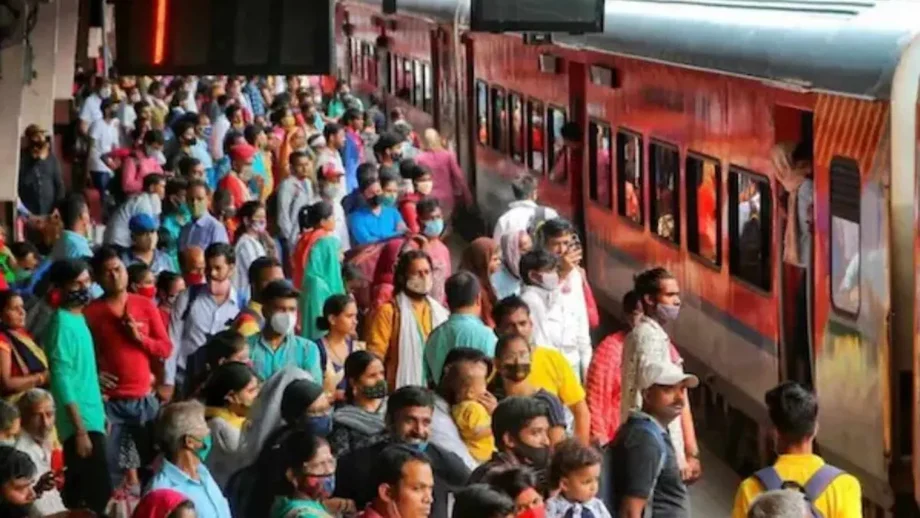
More trains, but a difficult journey home
Indian Railways is operating about 18,000 special train services for the 2026 festival season, roughly 6,000 more than last year, as passengers heading home for Durga Puja, Diwali and Chhath face crowded stations, long waiting lists and sharply higher prices for alternative transport.
Contents
- More trains, but a difficult journey home
- How much extra capacity is being added?
- Delhi stations separate queues from platforms
- Waiting areas bring toilets and ticket counters closer
- Which routes are getting special services?
- Dates passengers need to check
- Full trains push families towards expensive alternatives
- Earlier seasons show the demand for more services
- Station rebuilding extends beyond the festival rush
- Key Points
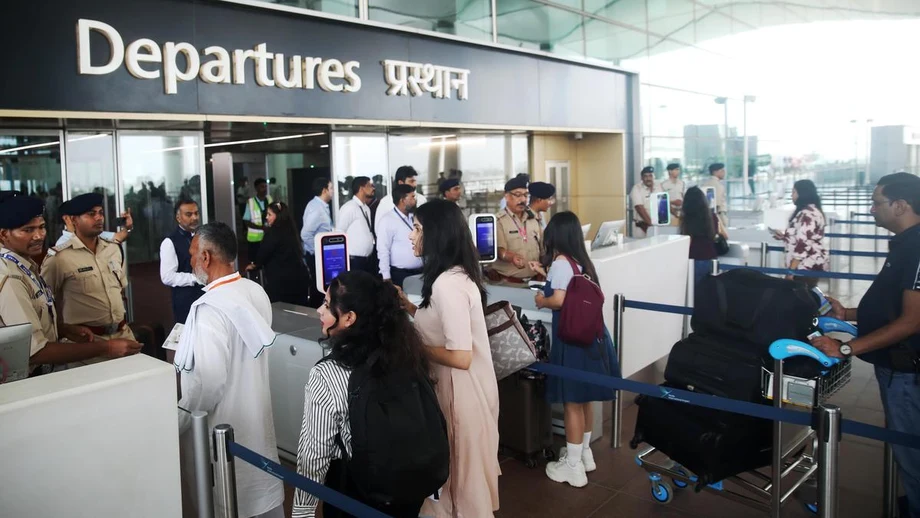
Railway Minister Ashwini Vaishnaw outlined the arrangements after inspecting New Delhi railway station and also discussed expanded passenger facilities in Jaipur. At New Delhi, daily passenger traffic rises from more than 500,000 on ordinary days to around 800,000 during festivals. Railway authorities have installed more than 700 cameras equipped with artificial intelligence and created separate waiting areas for passengers with reserved and unreserved tickets.
The nationwide expansion combines extra departures, more coaches and larger spaces where passengers can wait before approaching platforms. New Delhi and Udhna station in Surat each have holding areas capable of accommodating about 20,000 people at a time.
Passengers travelling towards Bihar, eastern Uttar Pradesh and Jharkhand still face intense competition for seats. Waiting lists on several busy routes have passed 100, and some have exceeded 200. Bookings have closed for certain trains and dates because their booking limits have been reached.
Northern Railway chief spokesperson Himanshu Shekhar Upadhyay said seats remained available on several announced special trains and that further services would be introduced according to demand. For families deciding whether they can afford to travel, availability on a particular route and date remains the immediate concern.
How much extra capacity is being added?
Vaishnaw put the number of special festival services at approximately 18,000, compared with around 12,000 in the previous season. Using those rounded figures, the increase is about 50%, or one additional service for every two operated last year.
The railway had also projected approximately 340,000 regular train trips between October 1 and November 30, against 330,000 in the corresponding period a year earlier. That represents an increase of about 3% in regular trips, alongside the much larger percentage expansion in special services.
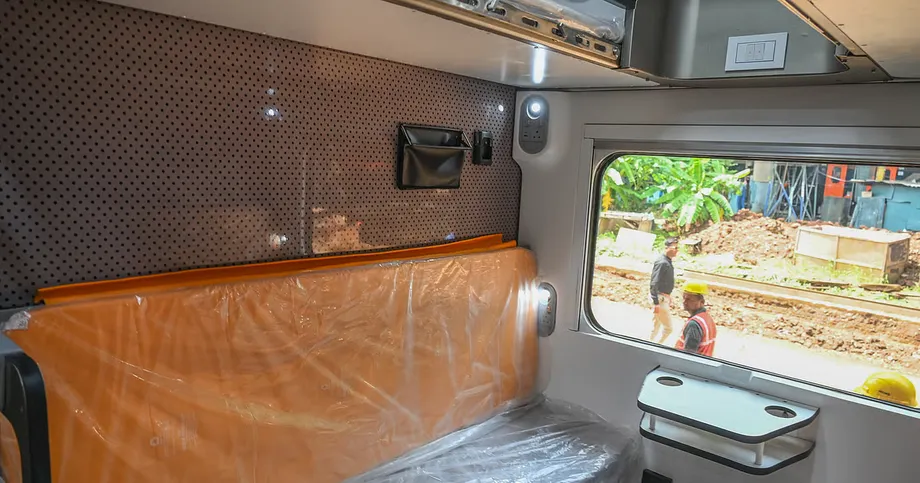
Railways announced 412 additional coaches for regular trains, including 75 general coaches. General accommodation provides an option for passengers travelling without an individually reserved seat or sleeping berth. The 75 coaches account for about 18% of the announced additions.
Train trips, train pairs and coaches describe different parts of the capacity increase. A trip is a departure on a particular date. A pair generally consists of services in opposite directions between two places. A coach is one carriage attached to a train. A recurring special service can therefore contribute many trips over several weeks.
The distinction matters for passengers: the national total describes the scale of the operation, while the train number, operating date and available accommodation determine whether a particular journey is possible.
Delhi stations separate queues from platforms
New Delhi railway station is handling roughly 300,000 more passenger movements a day during the festival rush than its ordinary daily baseline of more than 500,000. The railway response includes additional Railway Protection Force personnel, separate entry and exit arrangements, and shelters against sunshine and rain.
Reserved and unreserved passengers have separate waiting areas this season. Similar arrangements have been introduced at other major stations with heavy festival traffic. Keeping waiting passengers in designated spaces helps staff regulate how many people approach platforms and boarding points at once.
Northern Railway has deployed 2,040 Railway Protection Force personnel at major Delhi stations, including 1,300 additional personnel. The deployments cover New Delhi, Anand Vihar, Hazrat Nizamuddin and Old Delhi.
Dog squads and dedicated control rooms support security operations and live monitoring. At New Delhi, the network of more than 700 cameras equipped with artificial intelligence supports observation of passenger movement. Railway authorities have not detailed the specific automated functions used by those cameras.
Railway officials have urged passengers to remain alert and report suspicious people or unattended objects to police or railway staff. Security checks and crowd control are being carried out alongside the expansion of train services.
Waiting areas bring toilets and ticket counters closer
New Delhi, Anand Vihar Terminal and Udhna are among the congested stations receiving large passenger holding areas. At New Delhi and Udhna, each facility can accommodate around 20,000 people simultaneously.
Vaishnaw said the facilities include additional toilets and improved air circulation. Ticket counters have been moved into the holding areas so passengers can obtain tickets without crossing heavily crowded station spaces.
A holding area serves a different purpose from an extra train. It gives passengers somewhere to wait while staff manage access to boarding areas. More departures address transport demand; waiting space addresses the number of people gathering at the station before departure.
Northern Railway has also suspended platform ticket sales from November 3 to 14 at New Delhi, Old Delhi, Hazrat Nizamuddin, Ghaziabad, Anand Vihar Terminal and Anand Vihar Halt. Platform tickets normally allow people who are not travelling to enter platform areas.
Exemptions apply to people accompanying elderly, sick, disabled and other passengers who need assistance. The restriction is intended to reduce the number of accompanying visitors entering already crowded station areas while preserving support for travellers who require help.
Which routes are getting special services?
Bihar and Uttar Pradesh are major destinations in the festival operation. Northern Railway has added services between New Delhi and Gorakhpur, with departures on November 6 and 13, and between Anand Vihar Terminal and Chhapra on selected dates through November 17.
Additional unreserved services have been introduced between Hazrat Nizamuddin and Jhansi, and between Ghaziabad and Aligarh. These provide options for passengers travelling without reserved accommodation.
East Central Railway chief public relations officer Saraswati Chandra said that, as of November 3, 2026, the zone had announced 103 pairs of special trains originating or terminating at its stations. Another five pairs operated within its jurisdiction, while 51 pairs passed through stations under the zone.
A separate announcement covered 11 pairs of Puja special trains connecting cities including Hubballi, Bengaluru, Nagpur, Udhna, Amritsar, Delhi, Gorakhpur and Tatanagar with destinations in or through Bihar and Uttar Pradesh. Routes include Hubballi to Muzaffarpur, Yeshwantpur in Bengaluru to Saharsa, and Tatanagar to Buxar.
Central Railway has extended 16 special train services, adding 36 trips. These connect Mumbai and Pune with Samastipur, Banaras, Madgaon, Mau, Danapur, Sanganer, Ghazipur City and Thiruvananthapuram North. Some continue until November 30, extending travel options beyond the main outward rush.
Dates passengers need to check
November schedules include short runs on specific dates as well as services operating repeatedly over several weeks. North Central Railway chief public relations officer Dr Shivam Sharma said additional trains were being operated in response to festival demand and advised passengers to check the latest status before starting their journeys.
The announced calendar includes the following services and restrictions:
- October 1 to November 30: the period covered by the projection of about 340,000 regular train trips.
- November 3 to 14: suspension of platform ticket sales at six Northern Railway stations, with assistance exemptions.
- November 6 and 13: special departures from New Delhi to Gorakhpur.
- November 10: a further departure of train 05087 from Mau to Anand Vihar Terminal; train 05088 returns on November 11.
- November 9 and 16: departures of train 05091 from Gorakhpur to Bandra Terminus; train 05092 returns on November 11 and 18.
- Through November 17: selected departures of the Anand Vihar Terminal to Chhapra special.
- Through December 2: scheduled Wednesday departures of the Saharsa to Yeshwantpur special, providing an option after the main festival period.
Passengers can check current running information through the railway website, the National Train Enquiry System, known as NTES, or the railway helpline. This is especially useful for services that run only on selected dates and for departures close to midnight.
Full trains push families towards expensive alternatives
Delhi passengers seeking travel to Patna, Darbhanga, Muzaffarpur, Saharsa, Bhagalpur and Jaynagar face particularly heavy demand. Sleeper and third class air conditioned accommodation are among the most sought after categories.
On the Vikramshila Express, third class air conditioned bookings had reached the no room stage for November 6 to 9. Sleeper bookings were closed for November 7 and 8. No room means the booking system has stopped accepting further reservations for that class and date.
Private bus prices illustrate the cost of switching transport. Advertised fares for air conditioned sleeper buses from Delhi to Patna on November 6 ranged from Rs 6,199 to Rs 6,599, compared with Rs 1,599 to Rs 1,999 for travel after November 27. Even the lowest festival fare was more than three times the highest fare in that later range.
Delhi to Gorakhpur bus fares for November 6 ranged from Rs 5,399 to Rs 6,409, against Rs 3,379 to Rs 3,599 after November 27. Delhi to Lucknow fares ranged from Rs 3,530 to Rs 4,296, compared with Rs 2,090 later in the month. These quoted prices apply to particular dates and services; booking prices change with demand and availability.
Air travel also placed a heavy burden on household budgets. Delhi to Patna fares around the festivals reached about Rs 17,000, compared with a usual range of Rs 4,000 to Rs 6,000. Delhi to Darbhanga fares were around Rs 25,000 on November 7 and Rs 26,000 on November 14, against a usual figure of about Rs 6,700. At those festival prices, four tickets could cost a family around Rs 100,000 for a journey in one direction.
Government buses offer cheaper choices on some routes. Services from Anand Vihar to several Uttar Pradesh cities have distance based fares of about Rs 300 to Rs 800. Listed fares from Patna to Delhi range from Rs 1,182 for a seat without air conditioning to Rs 1,935 for an air conditioned sleeper, although travellers still need to secure available accommodation.
Earlier seasons show the demand for more services
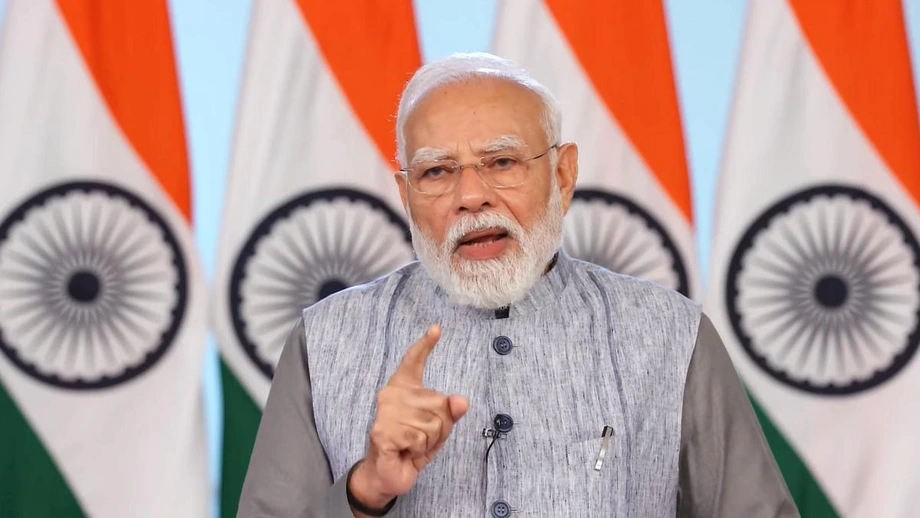
Vaishnaw acknowledged that the extra arrangements still face very high demand. The railway minister described the effort as an annual process of improving service:
There is still much work to be done; we strive for continuous improvement every year, aiming to provide better service than the previous year, though the demand remains extremely high.
For the 2024-25 festival period, Vaishnaw had announced 5,975 approved special trains from a sanctioned total of 12,500, along with additional general coaches for 108 regular trains. He said more than 10 million passengers were expected to benefit. The figure given for services operated during the 2023-24 festival season was 4,429.
Those earlier announcements distinguish sanctioned services, approved services and completed operations. The current figure of about 18,000 describes this season's announced operating programme, while the minister's comparison with approximately 12,000 last year provides the direct basis for the stated 50% increase.
Upadhyay said Northern Railway would continue publicising seats available on special services and introduce further trains according to demand. That leaves passengers with a practical choice to investigate: a regular train may be full while an additional service on the same broad corridor still has accommodation.
Station rebuilding extends beyond the festival rush
Vaishnaw said redevelopment work has been undertaken at around 1,300 railway stations across India, with approximately 400 completed. On those rounded figures, about 31% of the stations in that programme have been finished.
The projects are intended to prepare stations for passenger requirements over the next 50 years. The minister identified greater passenger capacity and local architectural styles as features of the work, citing regional designs in places including Jaipur, Jodhpur, Ahmedabad, Tamil Nadu and Kerala.
Railway operations are continuing during construction, according to Vaishnaw, with safety a stated priority. For passengers, this means station improvements are being carried out while trains continue to arrive and depart, rather than through prolonged closures.
The festival measures address both sides of the immediate pressure: extra trains and coaches carry more people, while waiting areas, controlled entrances and security deployments manage the crowds gathering before departure. Families still need a service with space on the date they can travel, especially where alternative fares consume a large share of their budget.
Key Points
- Indian Railways is operating about 18,000 special festival services, compared with approximately 12,000 last year.
- About 340,000 regular trips were projected for October and November, with 412 additional coaches announced.
- New Delhi's daily passenger traffic rises from more than 500,000 to around 800,000 during festivals.
- New Delhi and Udhna each have holding areas for about 20,000 passengers.
- Platform ticket sales are suspended at six Northern Railway stations from November 3 to 14, with exemptions for people assisting passengers.
- Special services cover major routes to Bihar and Uttar Pradesh, with some return options extending into December.
- Long waiting lists and higher bus and air fares continue to make festival travel difficult for families.