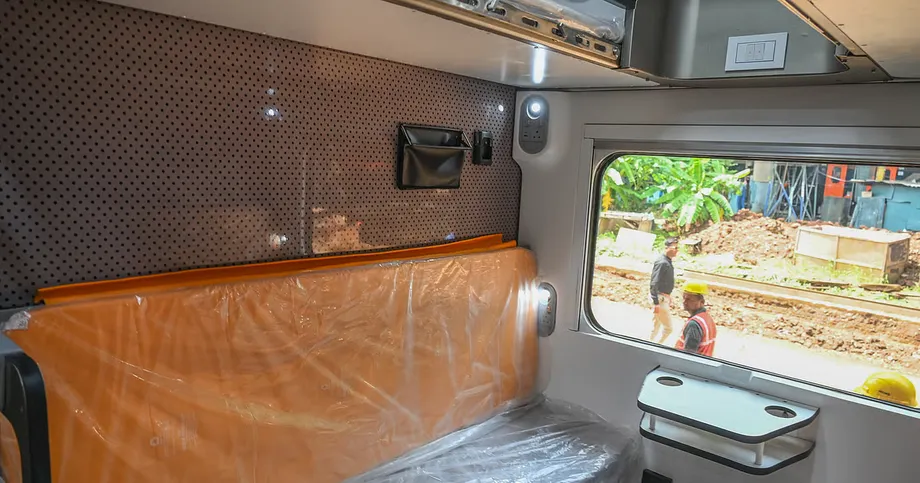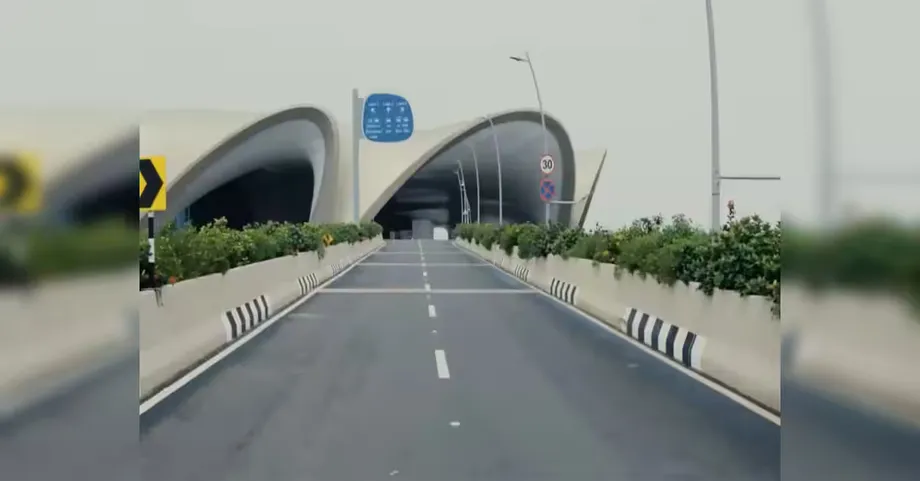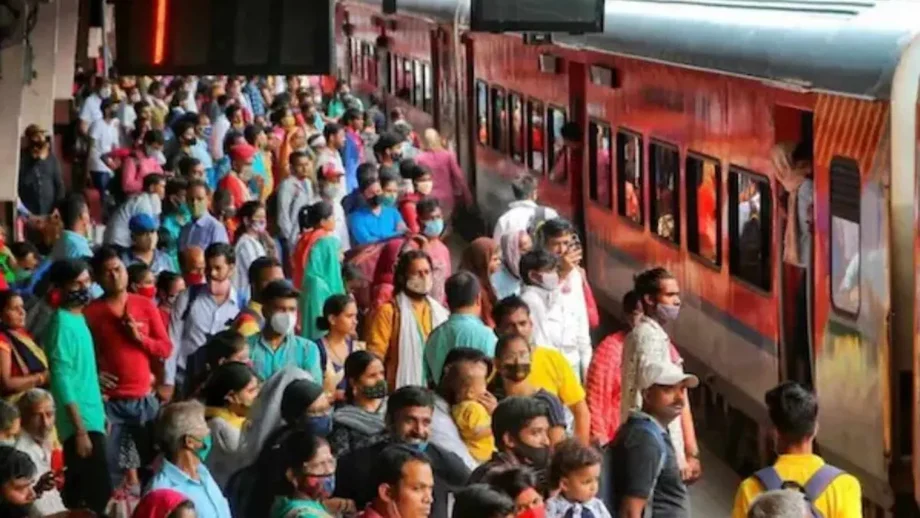
A new rail connection for Pune's IT workforce
Pune's 23.203 km Pink Line was inaugurated on November 3, 2026, connecting Maan and the Hinjewadi IT hub with District Court station in Shivajinagar. Passenger services were scheduled to begin at 6 am on November 4, initially serving 17 of the corridor's 23 stations.
Contents
- A new rail connection for Pune's IT workforce
- Where the Pink Line goes
- Opening hours and stations still to come
- Women at the controls and solar power on site
- Tickets and connections beyond the station
- How the project was financed and built
- Four corridors to extend the network
- A five year target and an alignment debate
- Pune's expansion within India's metro growth
- Key Points
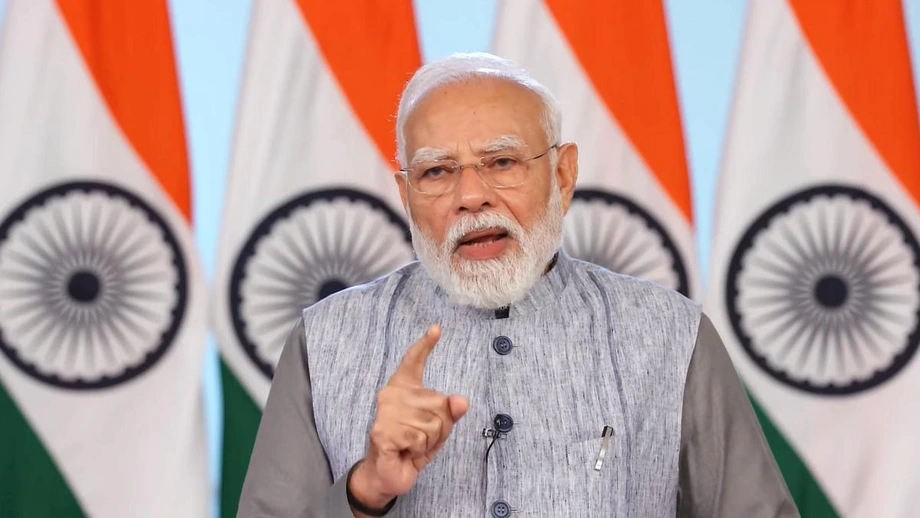
Prime Minister Narendra Modi inaugurated the elevated route by video conference and laid the foundation stone for four additional corridors under Pune Metro Phase II. Together, the opening and proposed expansion represent investment of around Rs 21,800 crore: more than Rs 8,300 crore for the Pink Line and approximately Rs 13,500 crore for Phase II.
The Prime Minister's Office described the route and expansion in its Pune Metro announcement. The government expects the projects to reduce reliance on private vehicles, ease congestion and improve connections between employment centres and residential neighbourhoods.
For commuters, the immediate change is a railway connection between western Pune's major IT district and the existing metro network. The Pune Metropolitan Region Development Authority (PMRDA) estimates that the Pink Line could carry between 200,000 and 250,000 passengers daily. Its opening schedule includes further station completions through January 2027.
Where the Pink Line goes
The Pink Line, also called Line 3, runs from Maan through the Rajiv Gandhi Infotech Park in Hinjewadi towards Shivajinagar, a major administrative and commercial centre. Along the corridor, it serves areas including Wakad, Balewadi, Aundh and Savitribai Phule Pune University.
District Court station is the key connection to Pune's other metro routes. Passengers can transfer there to Maha Metro's Line 1, between Pimpri-Chinchwad and Swargate, and Line 2, between Vanaz and Ramwadi. Those transfers extend the usefulness of the new corridor beyond people travelling directly between Hinjewadi and Shivajinagar.
PMRDA expects the line to ease road congestion in Hinjewadi IT Park, Aundh, Baner, Balewadi, Mhalunge, Ganeshkhind Road and Shivajinagar. Workers travelling to offices in Hinjewadi gain another option for journeys that have often involved lengthy and unpredictable traffic delays.
Maharashtra Chief Minister Devendra Fadnavis bought the first ticket and took an inaugural ride with Deputy Chief Ministers Eknath Shinde and Sunetra Pawar. Their trip covered about 6 km, from the Shiv Chhatrapati Sports Complex in Balewadi to Hinjewadi Phase 2.
Pavanjit Mane of the Forum for IT Employees, who joined the ride, welcomed the service while calling for more stations to become available. He said:
Authorities should open the Baner stations soon.
Opening hours and stations still to come
Pink Line trains were scheduled to run every six minutes during peak periods and every 12 minutes at other times. Both directions begin service at 6 am, but their final departures differ: 10.30 pm from Maan towards District Court and 11.40 pm from Shivajinagar towards Maan.
Seventeen stations were scheduled to open on November 4. Authorities expected to finish work at two more by the end of November 2026, with the remaining four completed in stages by January 2027. That makes the station nearest a passenger's home or workplace an important part of planning an initial journey.
Seven stations were scheduled to begin with only one staircase available: Maan, Maan-MIDC Circle Phase 2, Maan Bus Depot, Hinjawadi Phase 2 Circle 1, Padmabhushan Chowk, Agricultural College, and District and Sessions Court. Access arrangements are especially relevant for passengers carrying luggage or travelling with children.
The opening and completion schedule is:
- September 23, 2026: Final safety approval for the remaining section was granted by the Commissioner of Metro Railway Safety.
- November 3, 2026: Modi inaugurated Line 3 and laid the foundation stone for four Phase II corridors.
- November 4, 2026: Passenger services were scheduled to start at 6 am, with 17 stations open.
- End of November 2026: Work at two additional stations was expected to be completed.
- January 2027: The remaining four stations were scheduled for completion in phases.
Women at the controls and solar power on site
Around 100 women have been trained to operate Pink Line trains. The Prime Minister's Office describes the use of an entirely female team of train operators as a first of its kind. Lead train pilot Pragati Biradar was at the controls during the inaugural journey, with Aishwarya Suryapujari also serving as train pilot.
Fadnavis said women accounted for around half of the project's workforce and had held engineering responsibilities during construction. Their participation therefore extends beyond the driving cab into technical work involved in building and running the railway.
The corridor also has 7.60 megawatts of installed solar capacity, comprising 6.10 megawatts at stations and 1.50 megawatts at the depot. Megawatts measure a power system's generating capacity; the amount of electricity produced over time depends on operating conditions, including sunlight.
The government expects solar generation to meet approximately 30% of the line's electricity requirements. Alongside the proposed shift from private vehicles to public transport, this is a central part of the project's plan to reduce emissions. The corridor also includes cycle tracks, wider footpaths and pedestrian crossings.
Tickets and connections beyond the station
PMRDA is arranging connections through PMPML buses, auto rickshaws, taxis booked through apps and electric bicycles. Pickup and dropoff areas, along with parking at selected stations, are also being provided. These services cover the part of a journey between a metro station and a passenger's actual destination.
For an office worker, a frequent train is only one part of the trip. Reaching the station from home and then travelling from the arrival station to an office will affect the total time and cost. The planned bus and street connections are therefore directly tied to how useful the railway becomes.
Fadnavis said a common ticketing application would allow travel across the existing Maha Metro network and Line 3 through the same platform. A shared application would bring ticket purchases together for passengers using routes run under different arrangements.
Shravan Hardikar, managing director of Maharashtra Metro Rail Corporation Limited, explained why Line 3 fares were comparatively higher:
The fares were slightly higher because the agreements with the implementing agencies had been signed at different times. The line also involves private development and operation.
Hardikar also said peak service intervals on the existing metro network were expected to improve from seven minutes to five minutes following expansion of services. Pink Line's announced opening timetable is every six minutes during peak periods.
How the project was financed and built
The Pink Line's detailed project cost is Rs 8,313 crore, including land acquisition and the relocation of utilities and other facilities. PMRDA developed the project, while Pune IT City Metro Rail Limited, involving Tata and Siemens interests, implemented it.
The project uses a public-private partnership, often shortened to PPP. This means a public authority and private companies share responsibilities under an agreement, rather than the government carrying out every part of the project itself.
For Line 3, the arrangement follows a design, build, finance, operate and transfer framework under the National Metro Rail Policy, 2017. In simple terms, the private partner takes on responsibilities for designing the railway, building it, arranging finance and running it before transferring it under the agreement's terms.
Modi highlighted this partnership as an example of government and private companies working together on infrastructure. Hardikar's explanation of fares shows how the contract arrangements also reach passengers through the price of travel. Alongside service frequency and station access, affordability will shape everyday decisions about using the line.
Four corridors to extend the network
Pune Metro Phase II comprises Lines 2A, 2B, 4 and 4A. Their published lengths add up to approximately 44.39 km, nearly twice the Pink Line's approximately 23 km. The estimated investment of Rs 13,500 crore covers all four proposed corridors.
Lines 2A and 2B will extend the existing east to west network by a combined 12.75 km. Line 2A runs from Vanaz to Chandani Chowk, while Line 2B runs from Ramwadi to Vitthalwadi. The eastern extension is intended to improve access to growing residential, commercial and IT areas around Kharadi and Wagholi.
- Line 2A: Vanaz to Chandani Chowk, approximately 1.12 km.
- Line 2B: Ramwadi to Vitthalwadi, approximately 11.63 km.
- Line 4: Kharadi to Khadakwasla, approximately 25.52 km.
- Line 4A: Nal Stop to Manik Baug, approximately 6.12 km.
Line 4 is the largest component, accounting for about 57% of the proposed 44.39 km expansion. Its route will link the Kharadi side of the city with Khadakwasla through areas including Magarpatta, Hadapsar and Swargate. Line 4A adds a connection between Nal Stop and Manik Baug.
The Prime Minister's Office also identifies Nanded City, Pune Cantonment and Warje among the places to gain connections through the new corridors. Planned interchanges at Swargate, Nal Stop and Kharadi Bypass will link the expansion with existing metro services and intercity buses.
A five year target and an alignment debate
Maha Metro is targeting completion of Phase II within five years. Hardikar said work on the Swargate to Katraj extension was already underway, while the PCMC to Bhakti Shakti extension remained to be completed. Pune will therefore have several expansion projects at different stages.
The proposed Kharadi to Khadakwasla corridor has also prompted discussion about where the railway should run. Mayor Manjusha Nagpure suggested following the canal or the Mutha river instead of building above congested Sinhagad Road, where an elevated metro above a flyover could inconvenience residents.
Hardikar indicated that the alignment could be reconsidered following her suggestion. A final decision on that proposed change and exact Phase II opening dates were not announced. For residents along the route, the alignment will determine both station access and where construction takes place.
Infrastructure responsibilities will be shared. The Maharashtra State Infrastructure Development Corporation is expected to develop some proposed infrastructure, while Maha Metro will undertake infrastructure work on Paud Road and Karve Road. Coordination will matter where railway construction meets existing roads and other public works.
Pune's expansion within India's metro growth
Modi placed the Pune projects within a wider expansion of urban rail. He said India's operational metro network had grown from 248 km in 2014 to around 1,200 km, while the number of cities with metro services rose from five to 26.
Those figures represent an increase of 952 km, making the network about 4.8 times its 2014 length. Modi said more than one crore people, or 10 million, travel by metro daily and described India as having one of the world's three largest metro networks.
Maharashtra's operational network grew from 11 km in 2014 to nearly 200 km, according to Modi, with work underway on more than 680 km. He put investment in the state's metro infrastructure at more than Rs 2.5 lakh crore, equivalent to Rs 2.5 trillion.
The prime minister linked faster travel with economic activity. He said:
The expansion of Pune Metro would improve connectivity, save commuting time and boost the city's productivity.
Modi also referred to the Urban Challenge Fund, approved by the Centre in February 2026 with Rs 1 lakh crore in central assistance intended to attract investment in urban development. In Pune, Fadnavis placed metro expansion alongside ring roads, a High Capacity Mass Transit Route and proposed tunnels, and said Rs 5,000 crore would be made available through the Centre for the PMR Growth Centre.
Pune's immediate transport change is more specific than those wider plans: a new rail route into Hinjewadi, transfers at District Court, and a staged opening of stations. The next milestones are the remaining Pink Line stations through January 2027 and progress towards Maha Metro's five year target for the four new corridors.
Key Points
- Pune's Pink Line was inaugurated on November 3, 2026, linking Maan and Hinjewadi with District Court in Shivajinagar.
- Passenger services were scheduled from November 4, initially at 17 of 23 stations.
- Peak trains were scheduled every six minutes, with services every 12 minutes at other times.
- Around 100 women train operators will run the line, while solar power is expected to supply about 30% of its electricity.
- The Rs 8,313 crore corridor connects with existing Lines 1 and 2 at District Court.
- Four Phase II corridors total approximately 44.39 km, with an estimated cost of Rs 13,500 crore and a completion target of five years.