Agreement Expands Beyond Teachers to Other Public Workers
Indonesia's government and House of Representatives have agreed to move government employees with part-time work agreements, known as PPPK, into full-time PPPK positions across several professions, with implementation set to begin gradually on January 1, 2027.
Contents
- Agreement Expands Beyond Teachers to Other Public Workers
- What the Change in Employment Status Means
- Why the Government Broadened the Plan
- 231,246 Teachers Form a Major Part of the Transition
- Contract Extensions Address the December Deadline
- Two Recruitment Timetables Run Alongside the Changes
- The Dates Workers Need to Track
- What Changes for Public Services
- Key Points
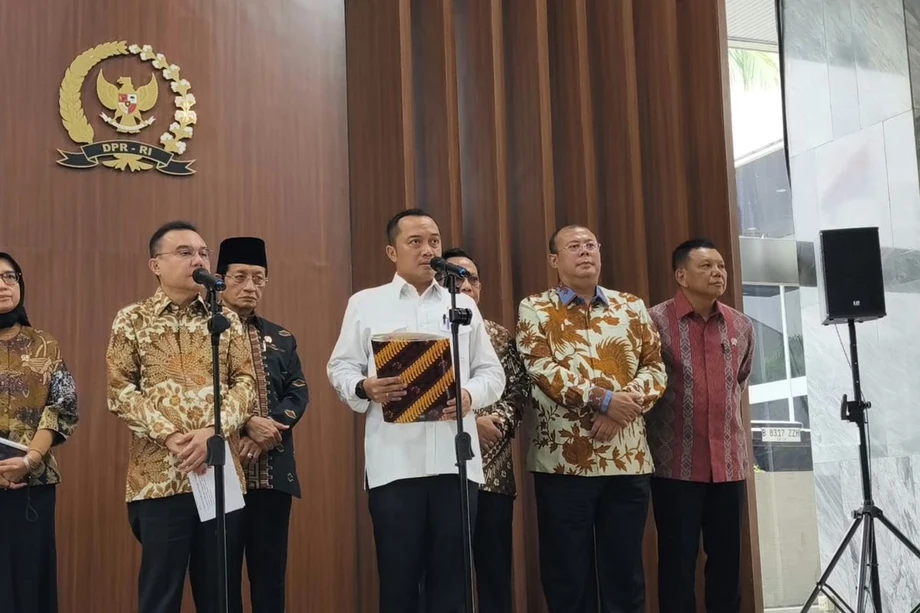
Minister of State Secretary Prasetyo Hadi announced the decision on November 6, 2026, after a coordination meeting at the parliamentary complex in Senayan, Jakarta. The agreement expands an earlier plan focused on teachers to include lecturers, firefighters, municipal public order officers, healthcare and medical workers, technical staff, service personnel and other operational employees.
The package also addresses contracts approaching their expiry dates and access to future civil servant recruitment. Eligible teachers whose contracts expire in December 2026 are to receive extensions, with the same arrangement applying to healthcare and medical personnel. Workers appointed to full-time PPPK positions will also have an opportunity to compete in civil servant recruitment in 2027.
Prasetyo, the minister responsible for the state secretariat, described the decision at the press conference:
"Today, we have decided that part-time PPPK employees will be appointed as full-time PPPK employees," Prasetyo said.
The January start is the beginning of a gradual process. Employees across the covered professions are therefore facing a transition during 2027, rather than a single date on which every appointment changes at once.
What the Change in Employment Status Means
PPPK is short for Pegawai Pemerintah dengan Perjanjian Kerja, or government employees with work agreements. These employees work for the government under an employment agreement. The announcement concerns moving workers from the part-time category into the full-time category within that system.
PNS, the Indonesian term for civil servants, is a different employment category. CPNS refers to the recruitment route for prospective civil servants. Moving into a full-time PPPK position and entering civil servant recruitment are therefore two steps: the first changes an employee's PPPK appointment, while the second involves taking part in a selection process.
For an affected teacher, nurse or technical worker, the immediate policy concerns their existing government employment. The opportunity announced for 2027 concerns a further application through civil servant recruitment. Prasetyo said the government was still considering special age provisions for certain fields.
Why the Government Broadened the Plan
Prasetyo said the broader agreement followed calculations and discussions involving several ministries, sectors and the House. An earlier proposal had covered part-time PPPK teachers, but the final discussions brought other public service professions into the policy.
Deputy House Speaker Sufmi Dasco Ahmad said concerns about the employment status of teachers, healthcare workers, technical personnel and other government employees had been raised with parliament. He described how those concerns were considered:
"All the aspirations we received were discussed one by one at the House of Representatives together with the government," Dasco said.
Firefighters and Satpol PP personnel are among the groups now included. Satpol PP is the municipal public order service, whose officers help enforce local regulations and maintain public order. The expanded scope brings workers responsible for emergency response, local administration and public services into the same announced transition as education staff.
The agreement also covers technical, service and other operational personnel. Its reach extends beyond the most visible professions, such as teachers and doctors, to employees who help government offices and public facilities function.
231,246 Teachers Form a Major Part of the Transition
Administrative and Bureaucratic Reform Minister Rini Widyantini put the number of part-time PPPK teachers at 231,246. That figure describes teachers alone; the broader agreement also covers employees in health, emergency services, public order and other government work.
Rini described part-time status as a temporary solution for teachers previously employed on honorary arrangements who had not met the requirements for appointment as full-time PPPK employees or civil servants. The planned conversion would move this large group out of that temporary employment arrangement.
The teacher policy covers personnel under both the Ministry of Primary and Secondary Education and the Ministry of Religious Affairs. Nunuk Suryani, director general for teachers and education personnel at the education ministry, said the transition to full-time PPPK appointments would begin in January 2027.
The education plans also include transferring teachers into central government ASN status. ASN is the umbrella term for Indonesia's state civil apparatus, which includes both PNS and PPPK employees. A transfer into central government ASN status concerns the administration of their employment; the route to PNS status described in the announcement still involves selection.
Contract Extensions Address the December Deadline
December 31, 2026, is an important date for teachers working outside the ASN system. Ministry of Primary and Secondary Education Circular No. 7 of 2026 sets that date as the end of assignments for non-ASN teachers employed by regional governments.
The circular provides a reference for local governments handling the employment status of teachers previously described as honorary staff. The terminology is changing under the ASN legal framework, while schools still need clarity about who will teach when the current assignments end.
The agreement includes extending contracts for non-civil-servant teachers in public schools who are registered in Dapodik, the Basic Education Data system. It also covers teachers under the Ministry of Religious Affairs whose contracts expire in December 2026.
Dapodik registration matters because it is an explicit condition identified for the public school teachers covered by this extension arrangement. For those teachers, the contract extension addresses continuity of employment as the government begins the next stage of staffing changes in January.
Prasetyo said the same extension arrangement would apply to healthcare and medical personnel. The package therefore deals with both a longer transition into full-time PPPK appointments and the nearer deadline facing workers whose current contracts are ending.
Two Recruitment Timetables Run Alongside the Changes
November 2026 and 2027 appear in the recruitment plans for different reasons. Prasetyo said the government planned to open civil servant recruitment registration in November 2026, subject to fiscal capacity. He also said workers appointed as full-time PPPK employees would have an opportunity to participate in CPNS recruitment in 2027.
Fiscal capacity means the government's ability to pay for the positions it recruits. It makes the planned November opening dependent on the money available to support appointments.
The education arrangements similarly describe recruitment using the current year's allocation of positions, followed by selection in stages during 2027. In practical terms, announcing or opening positions and completing the tests can happen in different periods.
The announcement did not give a total number of workers across all sectors, a detailed conversion schedule, salary figures, the length of the contract extensions or final age rules for recruitment. Those details will determine when individual employees move and which selection conditions they face.
The Dates Workers Need to Track
The package links a November announcement and planned recruitment opening with contracts ending in December and a gradual transition beginning in January. Keeping these dates separate helps explain which decision affects existing employment and which concerns a new application.
- November 6, 2026: Prasetyo announced the broader agreement after the government and House coordination meeting in Senayan, Jakarta.
- November 2026: The government plans to open civil servant recruitment registration, subject to fiscal capacity.
- December 2026: Contracts covered by the extension agreement are due to expire.
- December 31, 2026: The education ministry circular sets the end of regional government assignments for non-ASN teachers.
- January 1, 2027: Gradual implementation of the employment policy is scheduled to begin.
- During 2027: Full-time PPPK employees are to have an opportunity to enter civil servant selection, with teacher selection also planned in stages.
January is consequently the starting point for implementation, while the rest of 2027 includes further appointments and recruitment activity. The contract extensions address the immediate gap between expiring employment arrangements and those later processes.
What Changes for Public Services
Schools and health services sit at the centre of the contract extension decision because both depend on personnel whose employment arrangements are approaching an expiry date. Extending those arrangements gives the government a way to retain staff while it carries out the broader transition.
Teachers are the only occupational group for which a headcount was given, at 231,246 part-time PPPK employees. The addition of firefighters, public order officers, lecturers and technical personnel makes the scope wider than the original education proposal, without providing a combined workforce total.
Prasetyo presented the package as the result of discussions about connected staffing problems across government. Its practical effect will depend on several decisions moving together: extending eligible contracts, converting appointments in stages, funding recruitment and setting the conditions for civil servant selection.
Key Points
- The government and House agreed to move part-time PPPK employees across several professions into full-time PPPK positions.
- Implementation is scheduled to begin gradually on January 1, 2027.
- The policy expands an earlier teacher proposal to health workers, lecturers, firefighters, public order officers and other personnel.
- Rini Widyantini put the number of part-time PPPK teachers at 231,246.
- Eligible teacher contracts expiring in December 2026 will be extended, with the same arrangement applying to healthcare and medical personnel.
- Full-time PPPK employees will have an opportunity to compete in civil servant recruitment in 2027.
- The planned November 2026 recruitment opening depends on fiscal capacity, while special age provisions remain under consideration.