A Manila handover sets the course for ASEAN's 60th year
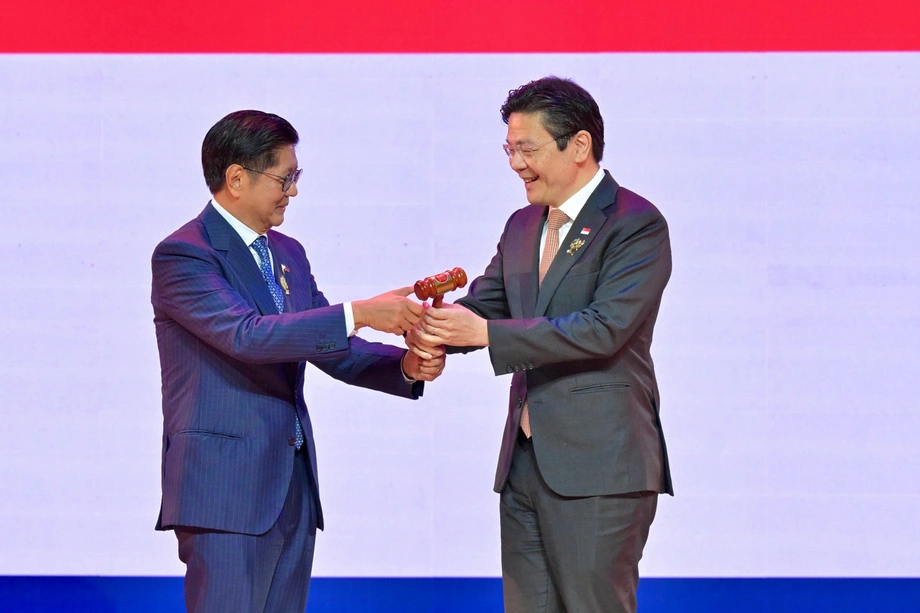
Singapore will begin its ASEAN chairmanship on January 1, 2027, after Philippine President Ferdinand Marcos Jr. handed the symbolic gavel to Singapore Prime Minister Lawrence Wong on November 17, 2026, at the Philippine International Convention Center in Pasay City, Metro Manila.
Contents
- A Manila handover sets the course for ASEAN's 60th year
- What deeper integration would mean
- Digital trade moves from agreement to practical use
- Trade and minerals agreements add to the economic agenda
- Electricity links and haze prevention become shared priorities
- A wider network beyond Washington and Beijing
- AI cooperation meets pressure over advanced chips
- South China Sea talks remain unfinished
- Security and disaster decisions also pass to the next chair
- A rotating chair with work extending beyond one year
- Key Points
The ceremony closed the 49th ASEAN Summit and Related Summits, with ASEAN Secretary-General Dr. Kao Kim Hourn witnessing the handover. Singapore's term will coincide with the association's 60th anniversary and follow the Philippines' year as chair.
Wong set out a programme under the theme "Deeper Integration, Wider Partnerships": stronger connections in finance, digital technology and energy, alongside closer relationships with countries outside Southeast Asia. He also identified unfinished responsibilities, including South China Sea negotiations, energy security and smoke pollution that crosses national borders.
The economic ambition is substantial. Wong said ASEAN's combined economy, currently worth about US$4.5 trillion, could reach US$10 trillion by the early 2040s if members pursue further integration, reform and growth. Those figures imply an increase of US$5.5 trillion, taking the economy to more than twice its current size.
Singapore will inherit both agreements ready for implementation and disputes still requiring negotiation. Leaders acted on more than 100 outcome documents in Manila, including measures on digital commerce, electricity connections and disaster assistance, while leaving a proposed South China Sea code of conduct unfinished.
For businesses and households, the agenda connects regional diplomacy with practical concerns: selling goods abroad, making digital payments, keeping electricity supplies dependable and reducing the risk of dangerous encounters at sea. Wong's central argument was that ASEAN cannot control global rivalries or distant conflicts, but its members can choose a more coordinated response.
What deeper integration would mean
Wong called for further progress towards a single regional market, where companies can operate across national borders more easily and people have more opportunities to work and invest. His priorities focus on making separate national systems connect more effectively.
Finance, digital technology and energy are central to that effort. A business expanding into another ASEAN country may need to receive payments, follow different rules for customer information and arrange reliable power for its operations. Cooperation in these areas can make regional expansion more manageable.
ASEAN now has 11 members following Timor-Leste's admission in 2025. Singapore's task will involve advancing common goals across economies with different resources, regulations and development needs.
Wong, Singapore's prime minister, explained at the closing ceremony how internal cooperation and external relationships support one another:
A more integrated ASEAN will be a more valuable partner to the world. And a wider network of partnerships will create more opportunities and help sustain peace and stability in our region.
Digital trade moves from agreement to practical use
ASEAN signed the Digital Economy Framework Agreement, known as DEFA, at the Manila summit. The pact seeks to bring greater consistency to rules covering electronic commerce, data privacy and digital payments across the region.
The agreement is projected to help double ASEAN's digital economy to US$2 trillion by 2030. That projection concerns economic activity conducted through digital technologies, rather than the US$4.5 trillion figure Wong gave for the region's entire economy.
Singapore intends to focus on making the agreement usable. Wong said governments could produce practical guides so companies understand how to take advantage of its provisions when expanding across borders.
For an online seller, the practical issues include how to handle a customer's personal information and receive payment from another country. More consistent rules could make those transactions easier to manage. Turning the agreement into clear instructions for businesses will therefore be part of Singapore's work.
Trade and minerals agreements add to the economic agenda
ASEAN members secured domestic approvals for the upgraded ASEAN Trade in Goods Agreement, or ATIGA, and the ASEAN-China Free Trade Agreement 3.0 ahead of schedule. These agreements address different parts of the region's commercial relationships.
ATIGA governs trade in goods within ASEAN. Its upgraded provisions include commitments concerning essential products, such as food and medical supplies, during crises. The ASEAN-China upgrade extends cooperation into digital trade, green technology and stronger supply chains, the networks that move materials and products from suppliers to customers.
Leaders also adopted a declaration titled "ASEAN critical minerals for regional resilience and sustainable growth". It affirmed members' sovereign rights over their natural resources while recognising that some countries produce these minerals, some consume them and some do both.
The declaration identified opportunities to retain more economic value within the region, from exploration and extraction to processing and refining. Its recognition of different national circumstances shows the balance Singapore will have to manage: closer cooperation alongside each government's authority over its resources and economic priorities.
Electricity links and haze prevention become shared priorities
Energy resilience will be another focus of Singapore's chairmanship. A memorandum agreed in Manila advanced work on a regional power grid, which would allow participating countries to exchange electricity through connected networks.
Marcos said the first undersea cable for this power sharing would be laid between Sabah in Malaysia and Mindanao in the Philippines. The connection would put physical infrastructure behind the broader goal of linking national electricity systems.
ASEAN Plus Three leaders, meeting with China, Japan and South Korea, also adopted a statement addressing maritime trade, logistics, energy and food security amid supply shocks. Marcos pointed to Philippine and Japanese proposals to stockpile energy as governments sought ways to manage disruption.
Wong also called for cooperation against transboundary haze, smoke from fires that spreads into neighbouring countries. Following fires in Sumatra and Kalimantan that affected parts of Southeast Asia, he said action should address the source of the problem, prevent repeated fires and target companies responsible for wrongdoing.
Wong discussed relations with Indonesian President Prabowo Subianto during the summit and described their meeting as candid and constructive. Singapore's energy and environmental priorities will require sustained cooperation with neighbours because electricity connections and drifting smoke both cross national boundaries.
A wider network beyond Washington and Beijing
Singapore wants ASEAN to broaden its relationships with partners including Canada, the European Union and the Gulf Cooperation Council, rather than allow every regional decision to revolve around competition between the United States and China.
The 2027 calendar offers several diplomatic milestones. ASEAN will mark 50 years of relations with the United States, Canada and the European Union, as well as 30 years of ASEAN Plus Three cooperation with China, Japan and South Korea.
Wong met US President Donald Trump during the ASEAN-US special summit in Manila. He said Singapore was working with the US administration on how to mark the anniversary and argued that a stable, prosperous Southeast Asia creates opportunities for American companies as well as regional businesses.
Canada is another part of that diversification effort. Before the Manila gathering, ministers had set a target of completing ASEAN-Canada trade negotiations by the summit, ahead of a planned signing in 2027. Wong's chairmanship agenda places such relationships within a broader effort to give ASEAN more choices in trade and diplomacy.
Cyprus, Slovakia and Slovenia also joined ASEAN's Treaty of Amity and Cooperation during the summit, bringing its parties to 65. Their accession widened participation in a treaty built around peaceful relations and cooperation.
In a signed article ahead of his China visit, Wong argued that regional cooperation should bring countries closer rather than divide them into opposing camps. He linked openness with resilience, saying more varied economic connections and clear rules can help countries withstand shocks.
AI cooperation meets pressure over advanced chips
China proposed designating 2027 the Year of AI Cooperation between China and ASEAN. Wong welcomed the proposal and identified potential projects involving autonomous vehicles, industrial applications of artificial intelligence and advanced manufacturing.
Singapore wants those projects to deliver practical benefits for businesses and workers while addressing cybersecurity and data privacy. AI systems can help analyse information or automate tasks, but their use also requires decisions about protecting the data they handle.
US technology restrictions illustrate the external pressures surrounding this agenda. On November 16, the US Commerce Department's Bureau of Industry and Security announced that exports of advanced AI chips to Singapore and four other countries would require licences. Wong said Singapore was studying the measures and their possible effects.
Wong explained that much of the chip trade associated with Singapore involves goods sent onward or shipped directly elsewhere. His government was particularly concerned about chips actually delivered to local businesses and data centres, and he said Singapore could help US authorities verify their deployment.
South China Sea talks remain unfinished
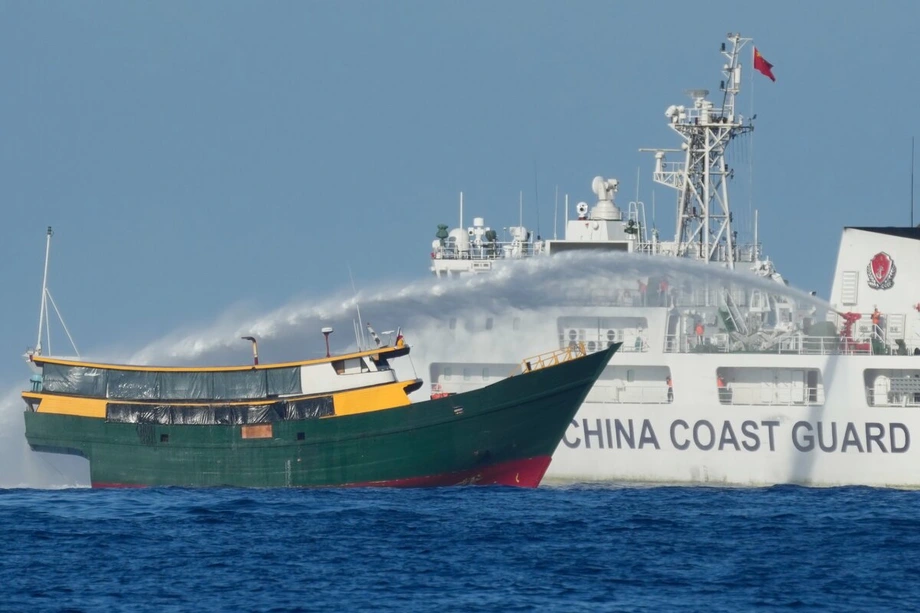
The proposed South China Sea Code of Conduct will be among Singapore's most difficult inherited negotiations. The agreement is intended to help manage conduct in disputed waters, where confrontations affect vessels, fishing communities and regional security.
Philippine Foreign Secretary Ma. Theresa Lazaro put negotiations at about 80 percent complete on November 15. Marcos gave a later estimate of 85 to 90 percent at the summit's close, saying definitions of terms still required agreement. Lazaro also said three of four milestone issues remained open, including whether the code would be legally binding.
The remaining issues carry substantial weight. A legally binding agreement would create legal obligations for its participants. Negotiators must also settle the language describing the conduct and areas covered by the code.
The Manila meetings followed deepening maritime tensions between the Philippines and China. Foreign ministers had agreed in 2023 to work towards completing the code within three years, but the summit closed without a finished agreement. No new completion date was announced.
Wong said Singapore would help advance negotiations while Malaysia, ASEAN's coordinator for dialogue relations with China, worked to bring together members' positions. Differences exist within ASEAN as well as between ASEAN and China because members have different interests and only some claim territory in the disputed waters.
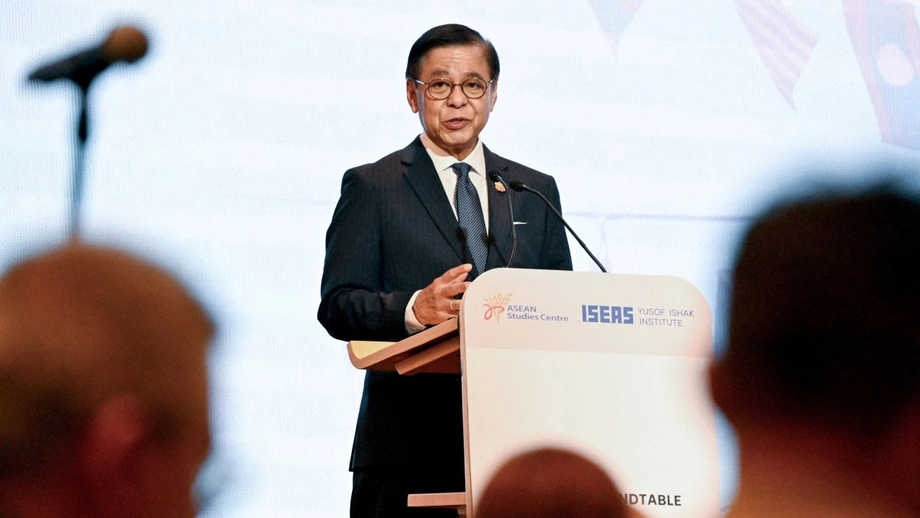
Wong, whose country is not a claimant, said Singapore wanted a code consistent with international law, including the United Nations Convention on the Law of the Sea. Describing the remaining negotiations, he said:
There is another 20% more to be negotiated. That is usually the hardest part.
Security and disaster decisions also pass to the next chair
Myanmar remained on the summit agenda. ASEAN leaders agreed to keep leaders of its military backed government excluded from top level meetings, while allowing for a gradual restoration of full political representation if there is sustained, concrete progress on ASEAN's five point peace plan.
Leaders also adopted a disaster response framework that formalised assistance Marcos said member countries had previously provided informally. The measure gives regional cooperation on emergencies a more structured basis.
At the East Asia Summit, participating leaders adopted a declaration on regional stability and a statement promising closer law enforcement cooperation and information sharing against online scams. These commitments add security and public protection responsibilities to the economic programme Singapore will help carry forward.
A rotating chair with work extending beyond one year
Singapore's Ministry of Foreign Affairs has begun preparing the agenda and organisational arrangements, with other government agencies also involved. Wong encouraged businesses, educational institutions and young people to strengthen exchanges with people across ASEAN.
The coming sequence places Singapore between the Philippines' completed summit programme and the countries that will continue the work:
- 2025: Timor-Leste joined ASEAN as its 11th full member.
- November 17, 2026: Marcos handed the chairmanship gavel to Wong at the closing ceremony in Metro Manila.
- January 1, 2027: Singapore's chairmanship begins as ASEAN marks its 60th anniversary.
- 2028: Thailand is scheduled to take the chair.
- 2029: Timor-Leste is expected to chair ASEAN.
Wong said the role requires more than arranging meetings. With the chairmanship rotating annually, governments must keep longer projects moving across successive terms. Digital trade implementation, electricity infrastructure and maritime negotiations all extend beyond a single summit calendar.
For Singapore, the immediate task is to convert the Manila agreements into work that businesses and residents can use, while maintaining cooperation on the disputes and shared risks that remain unresolved.
Key Points
- Singapore begins its ASEAN chairmanship on January 1, 2027, under the theme "Deeper Integration, Wider Partnerships".
- Lawrence Wong prioritised finance, digital technology, energy and broader external relationships.
- Singapore plans to help businesses use ASEAN's Digital Economy Framework Agreement.
- South China Sea negotiations remain unfinished, including the question of whether the code will be legally binding.
- Energy connections, haze prevention, disaster assistance and action against online scams form part of the continuing agenda.
- ASEAN marks its 60th anniversary in 2027, before Thailand takes the chair in 2028.