Water, technology and ministerial ties move to the centre
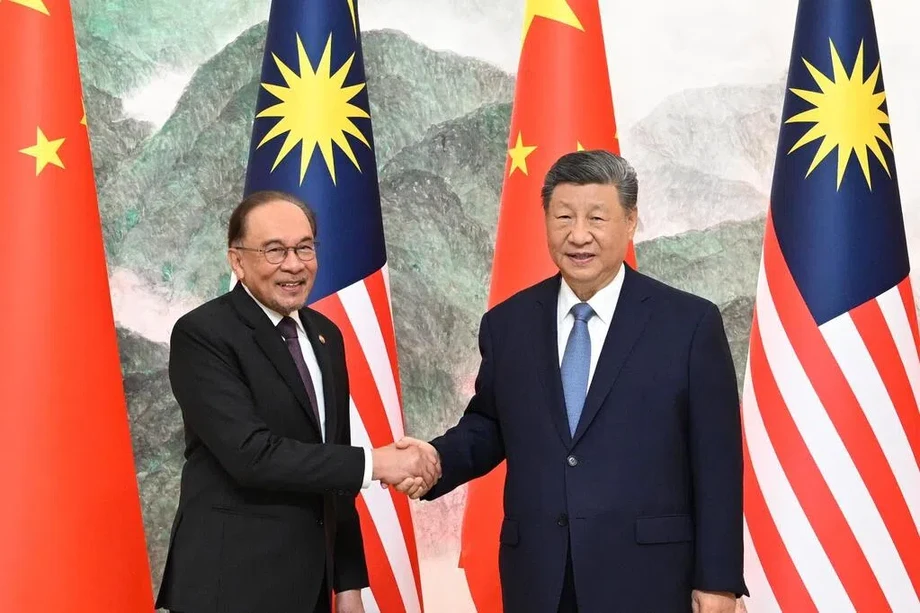
Malaysia and China agreed to expand cooperation on water supply, artificial intelligence, trade and investment during a 20-minute meeting between Prime Minister Anwar Ibrahim and President Xi Jinping in Shenzhen on November 20, 2026. The talks also set out plans for a new ministerial forum covering foreign affairs, defence and home affairs, while Anwar restated a firm condition for rare earth cooperation: raw materials must be processed in Malaysia, not exported unprocessed.
Contents
- Water, technology and ministerial ties move to the centre
- What the new 3+3 mechanism would do
- Rare earth cooperation comes with a local processing rule
- Investment plans are measured by jobs and technology transfer
- Why Anwar praised Xi's role in a US-China-Russia summit
- Cooperation also reaches education and cultural exchange
- Xi's other meetings show a wider regional agenda
- Key dates in Anwar and Xi's meetings
- The Bottom Line
The meeting at Qilin Villa State Guest House took place during the Asia-Pacific Economic Cooperation (APEC) Economic Leaders' Week. It was the fourth formal meeting between Anwar and Xi since Anwar became prime minister. The two leaders had previously met in Beijing on November 7, 2024, in Putrajaya on April 16, 2025, and again in Beijing on September 2, 2025.
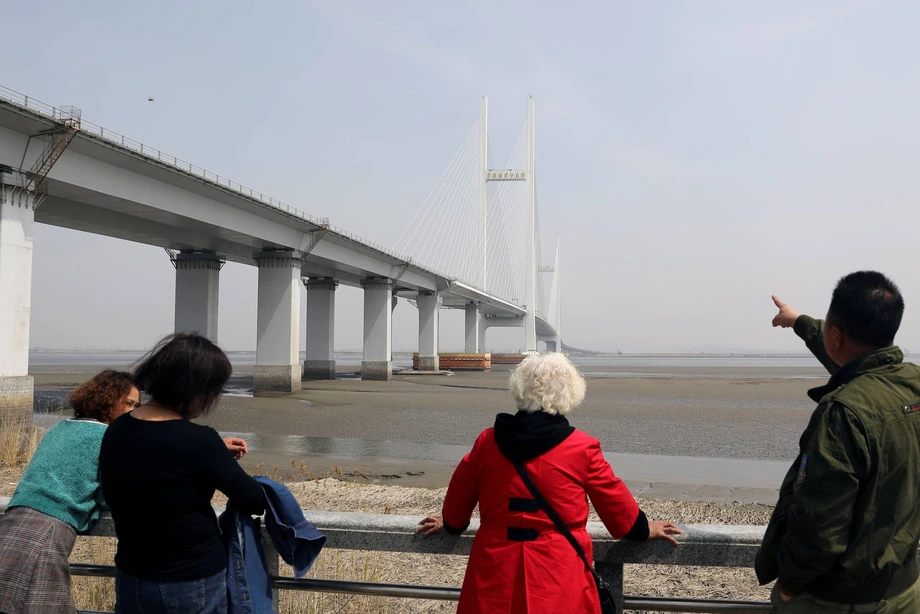
The economic agenda included an approved project to bring water from the Perak River to Penang and preparations for the East Coast Rail Link (ECRL). China plans to send a senior official to lead a delegation to a December event marking the start of the rail project's implementation phase. Anwar also raised the need to increase Malaysian exports to China and expand university cooperation in technical and vocational education and training, known as TVET.
China's meeting statement said Xi urged the countries to strengthen strategic coordination, support each other's sovereignty and development interests, and make major projects work well. It also described the relationship as having a strong political foundation and wide room for cooperation.
The discussions build on an April 2025 understanding to create a high-level strategic community with a shared future and begin a new "Golden 50 Years" in bilateral relations. That phrase presents the next period as a fresh stage in a relationship that began with diplomatic ties in 1974.
What the new 3+3 mechanism would do
Anwar said the two countries intend to establish a "3+3" ministerial cooperation mechanism. It would bring together their foreign ministers, defence ministers and home affairs ministers for regular discussions. Home affairs ministries handle domestic security and law enforcement, among other responsibilities.
The arrangement would widen official contact beyond meetings led by the two heads of government. Anwar said the mechanism could allow more thorough discussion of investment, education and other cooperation, with the foreign ministers helping coordinate the work. No date for the first meeting or detailed schedule was announced.
The security element connects with the leaders' discussion of artificial intelligence. Anwar said AI could help address smuggling and border management, improving how authorities identify and respond to enforcement problems. The technology can support analysis of information, but decisions and action remain the responsibility of government agencies.
Malaysia has already debated whether to expand facial recognition cameras in crime hotspots and tourist areas after talks with Chinese officials about policing technology. The earlier facial recognition proposal included questions about camera coverage, costs and how security agencies might use the systems. Anwar's comments in Shenzhen point to a broader discussion about technology and law enforcement, extending from monitoring places to cooperation between agencies.
Rare earth cooperation comes with a local processing rule
Malaysia is open to working with China and other countries to develop its rare earth industry, Anwar said, but the country will not export unprocessed rare earth materials. Companies must process the materials in Malaysia. He said the same condition applies to the United States and France.
Rare earths are a group of minerals used in products such as powerful magnets, electronics and equipment for energy technologies. Processing separates and prepares the materials for industrial use. Keeping that work in Malaysia is intended to build domestic industrial activity rather than send raw materials abroad for processing.
The rule connects the new talks to Malaysia's wider effort to develop a local supply chain. The country already hosts a major rare earth processing operation, and the earlier rare earth supply chain report described the role of a Malaysian plant in producing materials for manufacturers outside China. The latest talks leave the national processing requirement in place while allowing foreign companies to participate under Malaysian rules.
Xi called for closer cooperation in emerging industries and for stronger agricultural trade, tourism and education links. The two sides also agreed to increase imports of Malaysian goods, according to Anwar's account of the meeting. No export targets or timetable for increasing trade were announced.
Investment plans are measured by jobs and technology transfer
The leaders' meeting followed several days of investment discussions in Shenzhen. Anwar met Chinese companies working in medical devices, battery materials, semiconductors, electronics, optical communications and energy storage. Malaysia's stated priorities were technology transfer, skilled jobs and a larger role for local businesses in supply chains.
Some proposals are still being studied. Shenzhen Mindray is exploring a medical device factory or service hub in Malaysia. Guangzhou Tinci Materials has plans for lithium battery electrolytes and specialty chemicals, while XTC New Energy Materials is considering a cathode material plant in Selangor. Capchem, which already operates at Kulim Hi-Tech Park in Kedah, is studying a second factory.
Other discussions included a possible printed circuit board facility at Kulim by Guangzhou Fastprint, and technical support from battery research company Sion Energy for a partner setting up a research and development facility in Kedah. Anwar also met Shenzhen Fastrain Technology, China General Nuclear Power Group and Kingfa Science and Technology.
These discussions do not all represent final investment decisions. The government's stated test is whether proposed projects can strengthen Malaysian industry, bring technical knowledge into the country and create better paid work. Anwar has linked those aims to Malaysia's New Industrial Master Plan 2030 and urged collaboration with universities and TVET institutions so young people can gain the skills businesses need.
In remarks at the Malaysia-China High-Level Trade and Investment Dialogue on November 18, Anwar said Malaysia's economy grew 5.5 percent in the third quarter and could reach 5.6 percent. He described China as an important trade and investment partner. In the official speech text, he said political stability, clear policies and incentives help attract business investment, and argued that economic growth should lead to jobs, better wages and public benefit.
Why Anwar praised Xi's role in a US-China-Russia summit
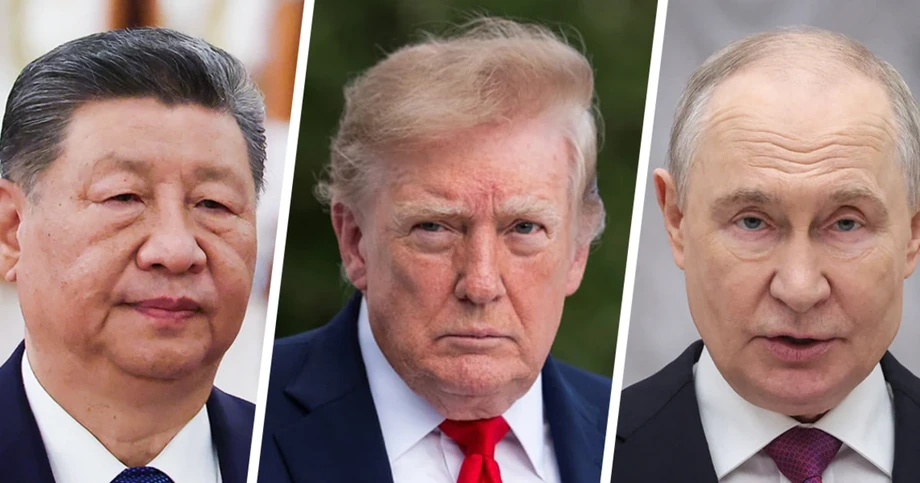
Anwar used the meeting to defend his support for Xi despite pressure over Malaysia's close engagement with China. The day before, Xi had brought together US President Donald Trump and Russian President Vladimir Putin for a three-way summit in Shenzhen. Anwar described the gathering as important for regional and global peace and stability.
At the bilateral meeting, Anwar said he did not regret backing Xi and praised his ability to bring major powers together. He also said stability mattered directly to Malaysia's trade, including its oil imports from Russia. The summit's leaders issued a Declaration Toward Peace, which Anwar described as strategically significant in the current international situation.
Xi's statement said Anwar reaffirmed that Malaysia upholds the one-China policy and regards Taiwan as an internal matter for China. The statement also said Anwar supported stronger strategic coordination and cooperation between the two countries. The official account listed Cai Qi, Wang Yi, Huang Kunming and Wang Xiaohong among the Chinese officials attending.
Anwar has also described Malaysia's approach to international relations as one of neutrality and "centrality," meaning it seeks friendly ties with different powers rather than choosing one side. At the November 18 investment dialogue, he argued that such relations can help create stable conditions for commerce.
Cooperation also reaches education and cultural exchange
The agenda was wider than security and business. Xi called for expanding cooperation in tourism and education, strengthening agricultural trade, and supporting a Confucianism-Islam Civilizational Dialogue. Anwar said Malaysian universities would work with China on research and understanding between Islamic and Confucian traditions.
That cultural effort adds an academic and social dimension to ties that are often discussed through trade and infrastructure. Anwar said the two countries could cooperate through universities, while Xi's statement called for building on earlier work to make the civilizational dialogue successful. The leaders also called for more exchanges between communities and local governments.
The two governments have also discussed academic cooperation through TVET. Such programs combine classroom learning with practical job skills, often in fields such as manufacturing and engineering. In Malaysia's investment discussions, officials have presented that training as a way to prepare workers for new factories and technical industries.
Xi's other meetings show a wider regional agenda
Xi also met Indonesian President Prabowo Subianto and Thai Prime Minister Anutin Charnvirakul in Shenzhen. The separate meetings showed how the APEC gathering was being used to discuss trade, infrastructure and regional security with several Southeast Asian partners.
With Prabowo, Xi announced the start of negotiations on a China-Indonesia Comprehensive Economic Partnership Agreement. The Indonesian government said the leaders also discussed investment and prospects for joint development in the South China Sea. Prabowo described the relationship as stronger than ever and said progress had been made on joint maritime development.
Xi and Anutin discussed trade, the environment and crime. Their agreements included work to address toxic pollution in rivers that cross borders, plans to advance trade in 500,000 tonnes of Thai rice, and efforts to speed up a rail network connecting China, Laos, Thailand, Malaysia and Singapore. Xi also urged joint action against online gambling and scams, which Anutin said could help restore Chinese tourists' confidence in travelling to Thailand.
Xi said China was willing to support an early improvement in relations between Thailand and Cambodia. He also called for coordination through organisations including the United Nations, APEC and the Association of Southeast Asian Nations (ASEAN). For Malaysia, the regional discussions matter because proposed transport links and efforts against cross border crime involve several countries, not only Kuala Lumpur and Beijing.
Key dates in Anwar and Xi's meetings
- November 7, 2024: Anwar and Xi meet in Beijing.
- April 16, 2025: The leaders meet in Putrajaya and agree on a new strategic vision for bilateral ties.
- September 2, 2025: Their third meeting takes place in Beijing.
- November 18, 2026: Anwar attends a Malaysia-China trade and investment dialogue in Shenzhen and meets Chinese companies.
- November 20, 2026: The leaders hold their fourth formal meeting in Shenzhen, during APEC Economic Leaders' Week.
- December 2026: A senior Chinese delegation is expected in Malaysia for an event marking the ECRL implementation phase.
The Bottom Line
- Malaysia and China agreed to deepen cooperation in water, AI, trade, investment, education and tourism.
- A proposed 3+3 mechanism would bring their foreign, defence and home affairs ministers together regularly.
- Malaysia says rare earth materials must be processed domestically, with no export of unprocessed material.
- China plans to send a senior delegation to the ECRL implementation event in December.
- Investment proposals are being assessed against local jobs, technology transfer and Malaysian participation in supply chains.
- Anwar backed Xi's effort to bring together the leaders of China, the United States and Russia, linking peace and stability to Malaysia's trade interests.