A new airfield rises on a 1,458 acre island
China is building what satellite imagery indicates will be a runway about three kilometres long on Antelope Reef, turning a once small outpost in the disputed Paracel Islands into a major new base for aircraft and ships. Analysts expect a first landing by mid-2027, potentially giving Beijing its second operational airstrip in the archipelago.
Contents
- A new airfield rises on a 1,458 acre island
- How big has Antelope become?
- What the runway imagery shows
- Aircraft and ships could stay closer to their patrol areas
- Surveillance may matter as much as the airstrip
- Why analysts disagree about the scale of the change
- China's civilian explanation meets regional objections
- Diplomatic resistance faces a divided region
- Vietnam is expanding too, at an environmental cost
- From dredging to a possible first landing
- Key Points
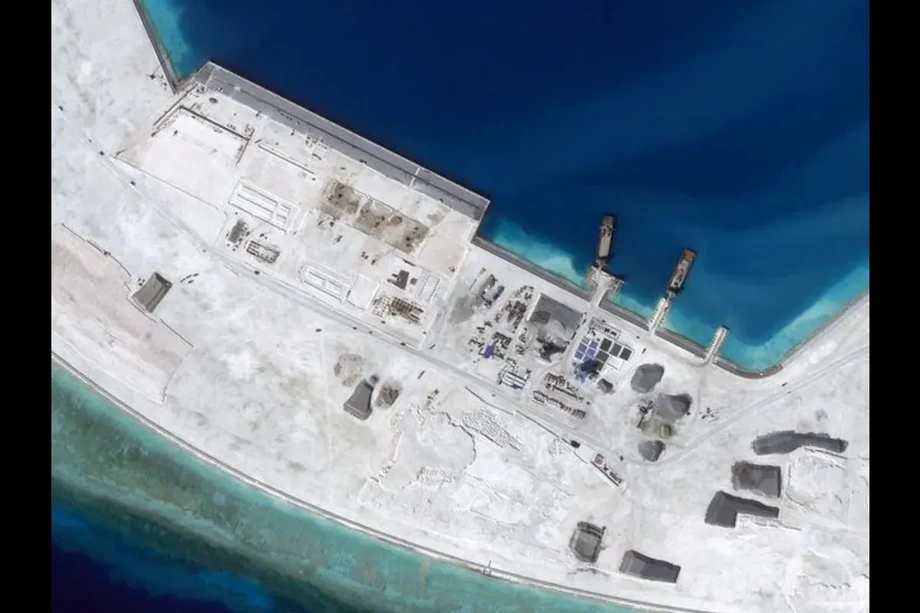
The Asia Maritime Transparency Initiative (AMTI), part of the Center for Strategic and International Studies, measured the completed artificial landmass at 1,458 acres in August 2026. Images taken on September 25 subsequently showed runway grading, construction materials, cranes used to compact the ground and a loaded gravel barge approaching a new wharf.
Antelope lies approximately 162 nautical miles from Sanya on China's Hainan Island and 216 nautical miles from Da Nang, Vietnam. Its position places the new facilities near Vietnam's coast, major shipping routes and the approaches to Chinese naval bases on Hainan.
China describes development in the Paracels as civilian construction. Military specialists see a location capable of supporting larger aircraft, more persistent maritime patrols and surveillance equipment. The immediate change is practical: more land, another harbour and a prospective airfield give Chinese forces additional places to operate, resupply and shelter equipment.
How big has Antelope become?
Major dredging began in October 2025, according to AMTI's initial Antelope assessment. Dredging removes material from the seabed; reclamation deposits it to create land above the water. At Antelope, that process produced an island approximately six kilometres long in less than a year.
AMTI's August measurement of 1,458 acres puts Antelope well above Woody Island's approximately 890 acres, making it about 64 percent larger than China's established air and naval hub in the Paracels. It is close in size to Mischief Reef, China's largest Spratly outpost, measured at 1,504 acres.
The island's scale creates room for much more than an airstrip. AMTI's early imagery identified more than 50 small structures, a helipad, several jetties and foundations for a building measuring 100 by 60 yards. Later images showed an increasingly developed administrative area, with additional buildings, green spaces and paved parking.
Lowell Bautista, author of a Lowy Institute analysis, described a transformation over approximately 10 months from one of China's smallest Paracel outposts into an island able to rival its largest. Antelope is also Beijing's first substantial new artificial island project in the South China Sea since 2017, according to AMTI.
What the runway imagery shows
AMTI's August runway assessment, published on August 14, 2026, identified an unfinished strip extending about 4,300 feet along the island's northwestern edge. No paving had been laid at that stage. The likely completed runway would measure approximately 10,000 feet long and 180 feet wide, matching the dimensions of China's other major South China Sea airstrips.
Nearby excavation included a foundation measuring 200 by 200 feet, similar to larger aircraft hangars at Woody Island and China's Spratly airfields. Two concrete plants had appeared along the lagoon's northwestern and southern edges in late spring, providing materials for the next construction phase.
September imagery showed further preparation of the runway surface. Compaction cranes press loose reclaimed ground into a firmer foundation before paving, an essential step when constructing heavy infrastructure on newly created land.
Ben Lewis, founder of the military tracking platform PLATracker, based his timetable on China's earlier airfield construction at Fiery Cross Reef:
If Fiery Cross is the guide, I'd expect the runway paved in the first half of 2027 and a first landing by mid-2027, possibly earlier,
Beijing has not announced an opening date or a final military layout. Lewis said he had yet to identify excavation for ammunition and fuel storage, facilities needed to sustain a large military base.
Aircraft and ships could stay closer to their patrol areas
Bonji Ohara, director of the Japanese intelligence firm Deep Dive and a former defence attaché in China, assessed that the runway could accommodate fighters, transport aircraft, aerial refuelling tankers and bombers. Transport aircraft move personnel and supplies; tankers allow other aircraft to remain airborne longer by supplying fuel in flight.
Antelope would join Woody Island in the Paracels and Fiery Cross, Subi and Mischief reefs in the Spratlys as locations with runways of comparable size. Bautista said those facilities, together with Hainan, help to "create an integrated network of runways, harbours and sensors stretching across the sea".
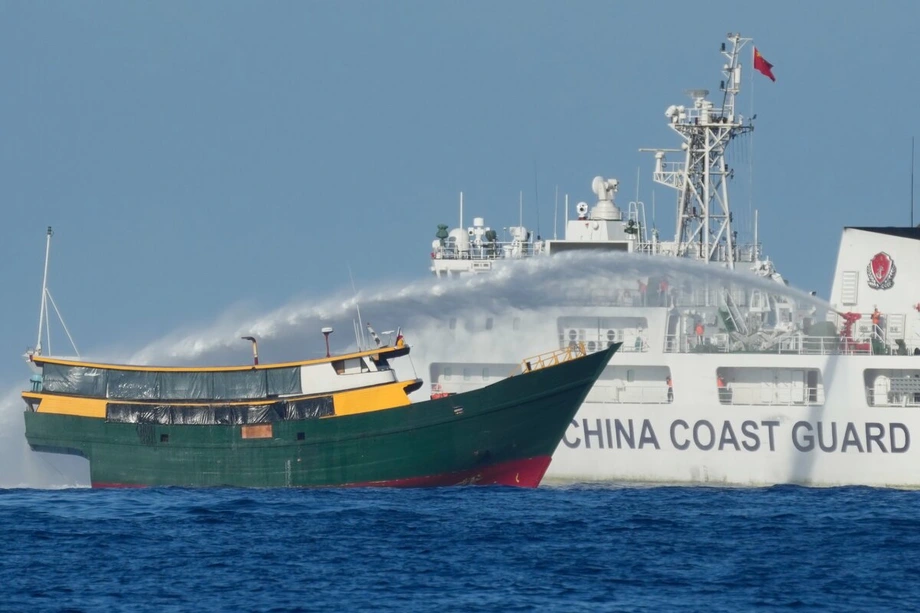
The harbour is another major part of the project. August imagery showed a quay approximately 680 metres long, and a China Coast Guard vessel was reported docked there. Ships able to replenish supplies nearer their patrol areas can spend less time travelling back to distant ports.
AMTI assesses that Antelope's large lagoon could support more coastguard vessels and maritime militia. Maritime militia are civilian vessels and crews used to support state maritime objectives, including maintaining a presence around disputed features.
Surveillance may matter as much as the airstrip
Antelope's location could extend Chinese radar and other sensing coverage closer to Vietnam. Surveillance installations gather information about aircraft, ships and electronic activity, helping commanders build a more continuous picture of movement across the northern South China Sea.
Greg Poling, the senior fellow overseeing AMTI, has identified sensing from installations on land as a principal benefit, alongside more persistent coastguard, militia and aerial patrols. AMTI also assesses that the island has enough space for power plants, underground storage, coastal defences, missile facilities and electronic warfare equipment. Those are possible future uses of the available land.
Harrison Pretat, deputy director of AMTI, described the value of the runway and harbour in terms of extra capacity and resilience for Chinese military and paramilitary operations. Resilience here means having alternative locations available when another facility is unavailable or under pressure.
The geography also connects Antelope to Hainan, where China bases submarines carrying nuclear armed ballistic missiles. A new operating location to the south could help Chinese forces monitor and protect approaches to those bases.
Why analysts disagree about the scale of the change
Ohara argues that Antelope could help China restrict access by American and allied forces during a regional conflict. In his assessment, Beijing wants the South China Sea to function as a protected operating area where foreign military forces would face difficulty entering during a crisis.
AMTI's institutional assessment is more measured. It describes the likely gains from another major Paracel outpost as incremental rather than monumental, adding capacity and backup facilities to an existing network. China already operates several large island bases, so Antelope expands an established presence.
Pretat also pointed to the continuing activities of other claimant states:
Southeast Asian claimants have still largely maintained access to offshore resources and occupy their own outposts,
China's interest in defending the waters around the Paracels also appeared in a September 2025 AI sea mine proposal by Chinese military researchers. That research envisaged sensors and seabed terrain helping mines identify selected submarines. The initiative was a research proposal, with no deployment date given.
China's civilian explanation meets regional objections
China, Vietnam and Taiwan claim the Paracels. Beijing has controlled the archipelago since a brief naval battle with South Vietnam in 1974, in which more than 70 Vietnamese personnel were killed. Vietnam continues to reject Chinese control.
A Chinese foreign ministry spokesperson said in March that reclamation involved "necessary construction" for "improving living and working conditions on the islands and growing the local economy". Beijing says the Paracels have a small resident population consisting mainly of fishers. Chinese state media have also described weather forecasting, maritime research and scientific work as intended uses for Antelope.
Vietnam called construction at Antelope "completely illegal" in August and demanded that "such activities cease immediately". In October, Australian Defence Minister Richard Marles described China's military expansion as creating a "condition of pressure" in Southeast Asia and urged closer cooperation among partners.
The wider dispute includes China's expansive maritime claims. A tribunal ruling in 2016 rejected a legal basis for Chinese historic rights beyond the maritime entitlements allowed under the United Nations Convention on the Law of the Sea. Sovereignty over the Paracels remains contested.
Diplomatic resistance faces a divided region
Pretat has argued that international attention and resistance have been weaker than the scale of construction warrants, partly because other global crises have drawn attention away. Antelope's expansion has proceeded while confrontations between Chinese and Philippine vessels elsewhere in the South China Sea have repeatedly caused collisions and injuries.
Hunter Marston of the Lowy Institute said differing views of China among members of the Association of Southeast Asian Nations make a unified regional position difficult. Some governments have direct territorial disputes with Beijing, while their priorities and relationships with China vary.
Other developments show the wider setting for Antelope's construction. New installations have been observed on nearby Yagong Island, including a structure with three branches whose function analysts have yet to determine. China also confirmed a joint military support facility in Laos in the week of the October 2 reporting on Antelope's progress.
For Vietnam, the immediate issue is a much larger Chinese operating location closer to its coast. For Australia and the United States, the concern centres on how a wider network of ports, airfields and sensors could affect naval access during a crisis.
Vietnam is expanding too, at an environmental cost
China's project is unfolding alongside extensive Vietnamese construction in the Spratlys. AMTI's Vietnam construction assessment records approximately 2,771 acres of Vietnamese reclaimed land, including 534 acres added since its March 2025 measurement.
The same assessment puts China's reclaimed land at approximately 5,460 acres after including Antelope, nearly twice Vietnam's total. It estimates reef destruction at 6,224 acres for China and 4,120 acres for Vietnam. Reef destruction includes both land covered by fill and seabed dredged for channels and harbours, which explains why those figures exceed the area of new land.
Vietnam's harbour network is also growing. AMTI counts 15 harbours, including three taking shape at Grierson, Petley and South reefs, and identifies the beginnings of another likely harbour at Landsdowne Reef. Eleven of the 15 have been created since 2021.
At Barque Canada Reef, Vietnam installed what appears to be a DVOR navigation beacon between August 2025 and April 2026. The equipment sends radio signals that help aircraft determine their direction relative to the beacon, potentially supporting navigation within about 100 nautical miles.
AMTI assesses that Vietnam's overhaul could have a greater effect on the operating environment than another Chinese base built to an existing pattern. Hanoi is creating capabilities across many outposts, while Beijing is adding another large facility to a network it already operates.
From dredging to a possible first landing
Satellite imagery traces Antelope's rapid transition from land creation to infrastructure construction. The next major milestone is paving the runway, followed by aircraft operations and the development of facilities to sustain them.
- 1974: China takes control of the Paracels after fighting South Vietnamese forces.
- October 2025: Major Chinese dredging begins at Antelope, according to AMTI.
- August 2026: AMTI measures 1,458 acres of completed land and identifies initial runway preparations.
- September 25, 2026: Imagery shows grading, construction materials, compaction cranes and a gravel barge.
- First half of 2027: Lewis expects runway paving, with a possible first landing by mid-2027.
The facilities built after the runway will determine how intensively China can use the island. Hangars, storage, ship support and surveillance installations would turn additional space into a more durable operating presence.
Key Points
- China is preparing a runway approximately three kilometres long on Antelope Reef in the disputed Paracels.
- The completed artificial island measures 1,458 acres, about 64 percent larger than Woody Island.
- Analysts expect a possible first aircraft landing by mid-2027; China has announced no opening date.
- The runway and harbour could support longer patrols, additional aircraft and wider surveillance coverage.
- Beijing describes civilian purposes, while Vietnam demands an end to construction.
- China and Vietnam are both expanding disputed outposts, with thousands of acres of reef affected by dredging and landfill.