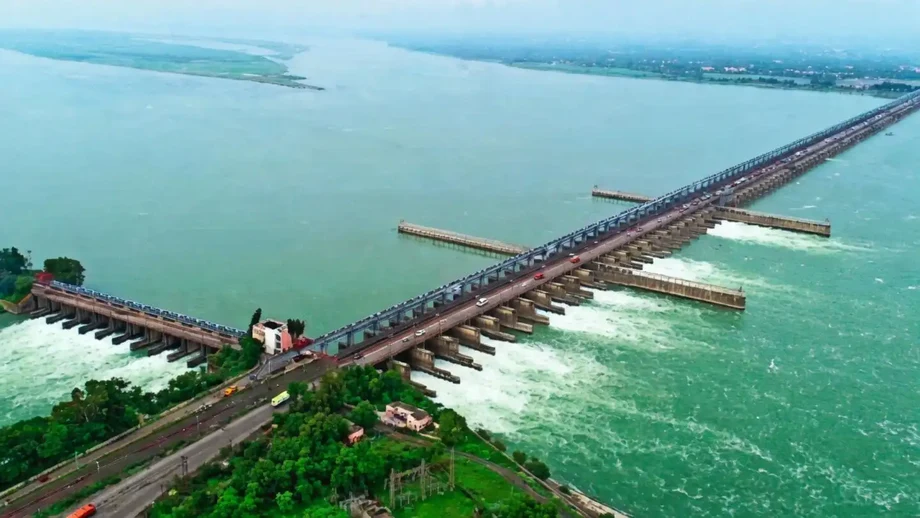
Dhaka presses India to start formal talks before the Ganges treaty expires
Bangladesh has urged India to begin formal negotiations on the renewal of the Ganges Water Sharing Treaty before its current term ends on December 12, saying all preparations are complete. The treaty, signed on December 12, 1996, governs how the two countries share the river's water at the Farakka Barrage during the dry season.
Contents
- Dhaka presses India to start formal talks before the Ganges treaty expires
- What the 1996 treaty does, and where it falls short
- Why the Ganges matters to millions
- Bangladesh's team and its shifting position
- India says the Joint Rivers Commission is the route
- Geopolitics and the wider region
- What a future agreement could look like
- Rizwana Hasan criticises Bangladesh's environmental record
- Key Points
Rashed Al Mahmud Titumir, finance and planning adviser to the prime minister and head of Bangladesh's technical committee on the Ganges, said Dhaka hopes New Delhi will act before the expiry date. He said:
Bangladesh has already completed all necessary preparations related to the treaty. Bangladesh hopes that India will take the required steps before the expiry of the current term of the treaty to pave the way for the commencement of formal negotiations.
The request came as the 91st meeting of the Bangladesh-India Joint Committee on the implementation of the treaty was held in Dhaka on November 22. The meeting, which ran from November 21 to 23, finalised the annual report on the treaty's implementation for 2026. Bangladesh's delegation of six members was led by Md Anwar Kadir, a member of the Joint Rivers Commission. India's delegation was led by Sharad Chandra, commissioner and member of India's Joint Rivers Commission.
Officials described the meeting as a routine exercise to finalise the committee's annual report. The issue of renewal was not on the formal agenda, and the Joint Committee does not have a mandate to decide on extension or renewal. With only weeks left before the expiry date, the meeting was seen as the last under the current treaty.
What the 1996 treaty does, and where it falls short
The Ganges Water Sharing Treaty was signed by the then prime ministers of Bangladesh and India, Sheikh Hasina and H D Deve Gowda, on December 12, 1996. It set a term of 30 years for sharing the waters of the Ganges at Farakka, a barrage in West Bengal that diverts water into the Hooghly River to keep Kolkata port navigable.
Under the treaty, the two countries share water from January 1 to May 31, the dry season. The allocation is set every 10 days. When the flow at Farakka is 70,000 cusecs or less, the two countries split the water equally. When the flow is higher, Bangladesh receives a fixed 35,000 cusecs and India takes the rest. A cusec is one cubic foot per second, about 28 litres per second.
The formula was based on river flows measured between 1949 and 1988, a period that does not reflect today's climate. A critical gap is the absence of a minimum guaranteed flow during extreme droughts. If the flow at Farakka drops below 50,000 cusecs in any period of 10 days, Article II of the treaty requires immediate consultations. That is not a guarantee of water. The 1977 agreement between the two countries had a guarantee clause, but it was omitted from the 1996 treaty.
Water Resources Minister Shahiduddin Chowdhury Anee has said restoring that clause is a priority. He said at an event in Dhaka in August:
Our main priority will be to bring back the guarantee clause that was included in the 1977 agreement.
Bangladesh wants a new or revised agreement that protects its share of flows during the dry season.
Why the Ganges matters to millions
The Ganges is a lifeline for both Bangladesh and India. For Bangladesh, a lower riparian country, the river supports agriculture, fisheries and the daily needs of millions of people. Across the border, West Bengal and Bihar depend on the same water for drinking, irrigation and industry. The two countries share 54 transboundary rivers, but the Ganges is the only one covered by an agreement on sharing water.
Bangladesh has repeatedly accused India of withholding water during the peak demand months of March and April. Indian leaders in West Bengal and technical experts say the agreement has become inequitable because India's own water needs have grown. The demand for drinking water, irrigation and industrial use has risen on both sides.
West Bengal Chief Minister Mamata Banerjee has opposed water sharing deals in the past. She blocked the proposed Teesta River deal in 2011 and has demanded a larger share of Ganges water after 2026. In comments cited by researchers, she said, 'There is no water to spare for Bangladesh.'
India has been preparing internally for the treaty's renewal. The Ministry of Jal Shakti set up an internal committee on July 24, 2023, with representatives from Bihar and West Bengal. West Bengal nominated its representative on August 25, 2023. The committee met on August 22, 2023, October 30, 2023, March 15, 2024, and May 31, 2024. West Bengal communicated its drinking water and industrial water needs on April 5, 2024. The committee submitted its final report on June 14, 2024, which is under examination. India later established a Joint Technical Committee to start discussions with Bangladesh.
Indian negotiators have floated the idea of renewing the treaty for a shorter term of 10 to 15 years, instead of another 30 years. They argue that a shorter period gives both sides flexibility to adjust to changing water availability and domestic needs.
Bangladesh's team and its shifting position
Bangladesh formed a technical committee at a high level in June 2026 to prepare for negotiations. The committee of 10 members is headed by Titumir. Dhaka informed India of the decision and asked New Delhi to notify Bangladesh about the formation of its own technical committee. Bangladesh renewed that request in August 2026.
Water Resources Minister Anee sent a letter to his Indian counterpart, C R Patil, on November 17 through diplomatic channels. He urged India to start negotiations immediately, saying Bangladesh had completed its preparations and hoped formal discussions would begin before December 12.
Foreign Minister Dr Khalilur Rahman told Parliament on August 27 that Bangladesh had formed a team to prepare a new agreement and had informed Indian authorities. 'We are now waiting for their response,' he said, replying to a question from Bagerhat-4 lawmaker Abdul Aleem. Khalilur has also said Bangladesh wants either a new or revised treaty that ensures the essential water needs of its people. 'These are common rivers, and we have common legacies here, common interests and, as I said, there's no other alternative but to seek a solution that is durable and will win public trust,' he said on the sidelines of the ninth Indian Ocean Conference in Mauritius.
Bangladesh's public position has shifted at times. Earlier, Dhaka demanded a completely new agreement. More recently, officials have said they want negotiations on renewal before the expiry date. Anee has described the goal as a new or revised agreement with a guarantee clause. Titumir said preparations are complete and India should take effective measures for equitable and fair sharing of the Ganges waters.
India says the Joint Rivers Commission is the route
Indian External Affairs Ministry spokesperson Randhir Jaiswal has said the Joint Rivers Commission is the established mechanism to discuss all water related and transboundary river issues between the two countries. He said:
The Ganga Water Treaty was signed in 1996 for a period of 30 years and all water-related issues, river-related issues between India and Bangladesh are discussed as part of the agenda of the bilateral Joint Rivers Commission.
Jaiswal told reporters in New Delhi that India remains committed to a constructive relationship. 'The government of India remains committed to a constructive and forward-looking relationship with Bangladesh while safeguarding India's interest,' he said. He also said further meetings of the Joint Committee of the Ganges Water Treaty were continuing at the technical level. Asked whether the Dhaka meeting was technical in nature, he said he had no update. He declined to comment on the possibility of renewing the agreement through an interim arrangement without the involvement of the top political leadership of both countries.
The Joint Rivers Commission was established in 1972 to oversee cooperation on shared rivers. Article IV of the 1996 treaty created a Joint Committee under the two countries' Joint Rivers Commission representatives to monitor implementation. Since 1997, the committee has deployed joint monitoring teams at Farakka and at the Hardinge Bridge point on the Ganges and Padma rivers. It meets three times a year. In 2026, the 89th meeting was held in Dhaka on April 8 and the 90th in Kolkata on May 22. The November 22 meeting in Dhaka was the 91st. Officials say the Joint Committee does not have a mandate to decide on renewal or extension. That decision rests with the top political leadership of both countries.
Geopolitics and the wider region
Syeda Rizwana Hasan, environment and water resources adviser of the former interim government, said geopolitics may shape the treaty's fate more than the technical details. She said:
I think it's more geopolitics that will dictate things about this treaty.
Rizwana spoke on the sidelines of an event organised by the ARCED Foundation at The Westin Dhaka to launch the publicly accessible Brick Kiln Tracker. She said Bangladesh should keep engaging India but must ensure the treaty is not treated as part of broader tensions between the two countries. She also said Dhaka should take its concerns to a wider international audience rather than rely only on bilateral talks.
Rizwana referred to the 1992 UN Water Convention, which outlines principles for managing transboundary rivers and offers international platforms for countries like Bangladesh. Other analyses point to the 1997 UN Convention on the Law of the Non-Navigational Uses of International Watercourses. Article 20 of that convention requires countries to protect and care for the ecosystems of international rivers. Article 23 explains that the riverine ecosystem includes the delta and estuary. Articles 6 and 7 deal with equitable and reasonable use and the obligation not to cause significant harm.
The treaty talks are unfolding against wider strains in Bangladesh-India relations. The Awami League government fell in August 2024. Former prime minister Sheikh Hasina has remained in India, which is a source of friction. A proposed visit to India by Prime Minister Tarique Rahman has not materialised. Progress on the proposed Teesta water sharing agreement and border management has also been difficult.
India's suspension of the Indus Waters Treaty with Pakistan after the Pahalgam terror attack in 2025 has added urgency to how New Delhi views old water agreements. India is also advancing a project to transfer water between basins that aims to divert water from the Brahmaputra basin to western and southern India. It plans to build the Tipaimukh dam on the Barak River, a tributary that feeds the Meghna, Bangladesh's third largest river, and the Fulertal barrage in Cachar district. If built, these projects could reduce water in the Meghna basin and change seasonal river flows.
What a future agreement could look like
Experts say a successor treaty cannot simply repeat the old language. They call for dynamic sharing mechanisms that respond to river flows in real time, expanded data transparency, joint flood management, and features to help during droughts. A comprehensive review should involve economists, urban planners, sociologists and environmentalists, and not just engineers and diplomats.
Economist Nazrul Islam, a professor at the Asian Growth Research Institute and former head of UN Development Research, has argued for an approach to rivers based on nature rather than a commercial one. In a commercial view, rivers are resources and water that reaches the sea is wasted. In an approach based on nature, rivers are part of the Earth's water cycle and each river sustains its own ecosystem. Protecting that natural role, he argues, is also the best way to protect the river's economic role over the long term.
Bangladesh's past attempts to secure water through commercial arguments have not worked well, Nazrul Islam writes. After the Farakka Barrage was built, Bangladesh developed the Ganges-Kobadak project across Kushtia, Jessore and Khulna districts to claim it needed Ganges water for irrigation. India built the Gajoldoba Barrage, and Bangladesh built the Teesta Barrage at Dalia in the 1980s. Neither stopped the upstream projects. The G-K project could not move beyond the first unit of its first phase, and the Teesta Barrage in Bangladesh has suffered from unstable flows.
Nazrul Islam points to the UN conventions as evidence that international law increasingly recognises the natural role of rivers. Article 23 of the 1997 convention, for example, treats the riverine ecosystem as including the delta and estuary. That matters for Bangladesh because the Ganges delta and its tidal flats depend on regular flows.
Rizwana Hasan criticises Bangladesh's environmental record
At the same event where she spoke about the treaty, Rizwana Hasan welcomed Parliament's passage of environmental laws introduced during the interim government's tenure but criticised their implementation. She said the government was building paved roads through natural forests despite legal protections, splitting the forests into separate sections. 'There are areas for frustration,' she said, adding that although the government had retained the laws, it was not fully complying with their provisions.
She also questioned the lack of enforcement against brick kilns in Aminbazar, under Savar upazila, which was declared a degraded airshed during her time as an adviser. 'I am yet to see the government drive against brickfields that are preparing to launch,' she said.
Rizwana criticised the decision to raise the average daily tourist limit for Saint Martin's Island from 2,000 to 3,500. She said the previous restrictions were based on scientific assessments and questioned the rationale for relaxing them. She believed the decision was made under pressure from resort and ship owners affiliated with political parties.
Key Points
- The Ganges Water Sharing Treaty expires on December 12, 2026, after a term of 30 years.
- Bangladesh has urged India to begin formal negotiations before expiry, saying its preparations are complete.
- The 91st meeting of the Bangladesh-India Joint Committee was held in Dhaka on November 22 and finalised the 2026 implementation report.
- The 1996 treaty shares water at Farakka from January 1 to May 31. It splits flow equally at 70,000 cusecs or less and gives Bangladesh a fixed 35,000 cusecs when flow is higher.
- The treaty has no guaranteed minimum flow during extreme droughts below 50,000 cusecs. Bangladesh wants the guarantee clause from the 1977 agreement restored.
- India says the Joint Rivers Commission is the established route for water talks. Bangladesh formed a committee of 10 members in June 2026 and sent a letter to India on November 17.
- West Bengal Chief Minister Mamata Banerjee has demanded a bigger share of Ganges water and previously blocked the Teesta deal.
- Wider strains include the fall of the Awami League government in August 2024, Sheikh Hasina's stay in India, and unresolved Teesta and border issues.
- Experts call for dynamic water sharing, data transparency and an approach based on nature that protects the river's ecosystem.