A $54.93 Billion Gap to a Historic Milestone
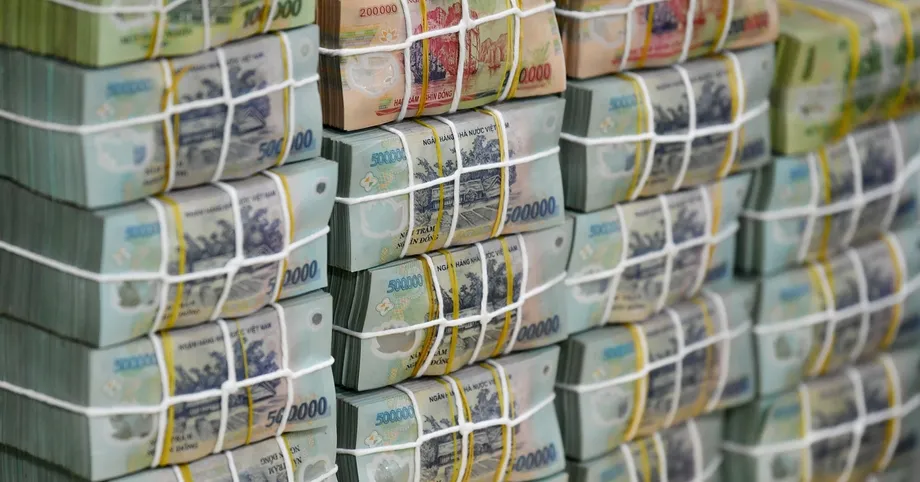
Vietnam's trade in goods reached an estimated $945.07 billion by October 15, 2026, up 31.43% from a year earlier, putting the country within $54.93 billion of its first $1 trillion trading year. Preliminary Vietnam Customs figures show that exports gained speed in the first half of October while imports declined, helping reduce a trade deficit built up earlier in the year.
Contents
- A $54.93 Billion Gap to a Historic Milestone
- How Quickly Has Trade Expanded?
- Exports Are Starting to Close the Gap
- Electronics Drive Both Sides of the Ledger
- Why the Import Bill Has Risen
- Factory Expansion Adds to Demand for Inputs
- Food, Clothing and Footwear Broaden Export Earnings
- Businesses Prepare for a Wider Global Role
- Keeping More Value Inside Vietnam
- Key Points
Exports totaled about $463.7 billion and imports $481.36 billion through October 15. The resulting deficit stood at roughly $17.6 billion. Vietnam therefore approaches the milestone with two different developments unfolding together: a rapid expansion in the value of goods crossing its borders and a recent improvement in the balance between what it sells and buys.
The country could reach $1 trillion by the end of October if trade maintains its pace from the first half of the month, when transactions totaled $56.68 billion. Another period of the same value would bring cumulative trade to approximately $1.002 trillion. The timing remains conditional on the value recorded in the second half of October.
For businesses, the immediate issue is how much of that expanding trade becomes income retained in Vietnam. Electronics dominate both exports and imports, while officials are seeking stronger domestic suppliers and more Vietnamese companies capable of selling and investing abroad.
How Quickly Has Trade Expanded?
Vietnam's total merchandise trade rose from less than $14 billion in 1995 to about $930 billion at the end of 2025. The 2025 figure was more than 66 times the 1995 level. By mid October 2026, the country had already exceeded the previous full year's total by approximately $15 billion.
Trade turnover means exports plus imports. A component brought into Vietnam for manufacturing counts as an import; a finished product shipped abroad counts as an export. This measure captures the scale of trade passing through an economy, while the trade balance measures the difference between exports and imports.
The recent sequence shows both the growth in turnover and the change in the balance:
- January through September 2026: Trade reached $888.02 billion, up 30.4% from a year earlier, with a cumulative deficit of $19.42 billion.
- September: Monthly trade reached $117.69 billion, up 7.3% from August and 42.4% from September 2025. The month recorded a $1.27 billion surplus.
- October 1 to 15: Trade totaled $56.68 billion, with exports exceeding imports by approximately $1.82 billion.
- October 15: Cumulative trade reached $945.07 billion, with the deficit reduced to roughly $17.6 billion.
- November 4: The Ministry of Industry and Trade is scheduled to hold the Vietnam Export Promotion Forum 2026.
The Ministry of Finance's National Statistics Office published its monthly trade tables for the September reference period on October 22. The preliminary dataset covers exports, imports, trading partners and major goods, providing the official framework for examining where trade is growing.
Exports Are Starting to Close the Gap
Vietnam exported $29.25 billion in goods during the first half of October, an increase of 12.41% compared with the first half of September. Imports fell 4.9% to $27.43 billion over the same comparison period, producing the approximately $1.82 billion surplus.
Those movements worked together to narrow the cumulative deficit. Export receipts increased while the import bill declined by about $1.41 billion. Total trade still rose 3.31%, showing that the improvement in the balance came alongside continued growth in transactions.
The first nine months had followed a different pattern. Exports rose 24.5% from a year earlier, but imports increased 36.7%. That gap in growth rates explains why a country recording strong export gains could still accumulate a substantial deficit.
Trinh Thi Thu Hien, deputy director of the Agency for Foreign Trade under the Ministry of Industry and Trade, said at an October 7 ministry press conference that sustaining export growth in the final quarter could help bring the annual deficit below $10 billion. She also discussed a target of increasing exports by 15% to 16%.
From the approximately $17.6 billion deficit recorded on October 15, reaching a full year deficit below $10 billion would require a net surplus of more than $7.6 billion over the rest of the year. That gives businesses and policymakers a concrete measure of the improvement still needed.
Electronics Drive Both Sides of the Ledger
Computers, electronic products and components remained Vietnam's largest traded category. Cumulative exports reached $135.3 billion, while imports reached $201 billion. Together, those flows amounted to $336.3 billion, or approximately 35.6% of total merchandise trade through mid October.
The category's imports exceeded its exports by $65.7 billion. Its scale helps explain why developments in electronics can strongly influence the national trade balance, even when other industries are expanding their overseas sales.
During the first half of October, exports of computers, electronic products and components reached approximately $11.59 billion. They increased 21.17%, or more than $2.03 billion, compared with the first half of September, the largest absolute increase among the major export categories.
Electronics accounted for about 39.6% of all exports during that fortnight, calculated from $11.59 billion out of $29.25 billion. The export recovery therefore depended heavily on one major group of products, with smaller contributions from machinery, clothing and footwear.
Why the Import Bill Has Risen
Hien attributed part of the increase in import values to higher prices for electronics and semiconductor inputs. She said prices for some chips and solid state drives, storage devices used in computers and other equipment, had risen by 300% to 500%.
Higher prices mean companies can spend much more on imports even when the number of items purchased grows more slowly. Manufacturers buying expensive components may face a larger bill before they receive payment for the finished goods they later export.
Some businesses also increased inventories to protect production schedules as demand for technology products grew. Hien linked that demand partly to the rapid development of artificial intelligence, which requires computing equipment and components.
Some firms doubled the amount of time their inventories could cover production, from roughly six weeks to 12 weeks. In one business cited by Hien, inventory value increased from $100 million to $700 million. The company was not identified.
For a manufacturer, holding more stock can reduce the risk of a production stoppage when deliveries are delayed. It also ties up more money in materials and can increase imports before those materials generate export sales. Both higher input prices and larger stockpiles contributed to the pressure described by the ministry official.
Factory Expansion Adds to Demand for Inputs
Hien also connected rising imports with investment in manufacturing capacity. She cited Samsung's $1.5 billion expansion in Thai Nguyen province, Intel's relocation of part of its supply chain from Costa Rica to Vietnam, and the expansion and upgrading of BYD's plant in Phu Tho province.
Factories expanding production often need machinery, equipment and components from abroad. Their purchases enter the import figures as they arrive, while exports from the additional capacity follow the production and sales schedule.
Machinery and equipment trade totaled $115.4 billion through mid October, comprising $58.6 billion in exports and $56.8 billion in imports. Unlike electronics, this category recorded a modest surplus of approximately $1.8 billion.
Machinery, equipment, tools and spare parts generated around $3.58 billion in exports in the first half of October, up 5%, or $170.41 million, from the first half of September. The figures show that machinery contributed to the recent export improvement alongside the much larger electronics increase.
Food, Clothing and Footwear Broaden Export Earnings
Seafood exports reached $9.7 billion through mid October, while fruit and vegetable exports totaled $7.77 billion. Cashew exports approached $4.1 billion and rice exports reached $3.17 billion. These sectors provide export earnings beyond the large manufacturing categories.
By the end of 2026, seafood exports are forecast to exceed $12 billion, fruit and vegetable exports to reach $10 billion, and cashew exports to total approximately $5.2 billion to $5.3 billion. Those forecasts require further sales of more than $2.3 billion for seafood, approximately $2.23 billion for fruit and vegetables, and roughly $1.1 billion to $1.2 billion for cashews after mid October.
Clothing and footwear also contributed to the October gains. Textile and garment exports totaled approximately $1.57 billion in the first half of the month, up 2.8% from the first half of September. Footwear exports approached $980 million, increasing 23.82%.
The different growth rates matter for understanding the recovery. Footwear rose quickly from a smaller base, while electronics supplied the largest increase in dollar terms. Export growth was concentrated in several major categories rather than spread evenly across all goods.
Businesses Prepare for a Wider Global Role
The Ministry of Industry and Trade will hold the Vietnam Export Promotion Forum 2026 on November 4 under the theme Go Global: Supporting Businesses to Reach the World. The program connects the immediate push for exports with longer term plans to help Vietnamese companies build operations and commercial relationships abroad.
By 2030, the program aims to train 10,000 businesses in global investment and business, help 1,000 companies prepare international expansion plans, and provide detailed support to 100 businesses investing overseas.
Other targets include helping 100 companies join regional and global value chains and helping 100 businesses operate successfully on commerce platforms that sell across borders. A value chain is the series of businesses involved in making and delivering a product, from suppliers of parts to manufacturers and distributors.
The targets cover different levels of support. Training is intended to reach a broad group, while smaller groups would receive assistance with expansion plans, investment, supply relationships or online sales. For participating companies, the practical task is turning access to overseas markets into sustained orders and viable operations.
Keeping More Value Inside Vietnam
Vietnamese businesses have been using free trade agreements to expand their international reach while facing technical requirements and strong competition. Such agreements can reduce trade barriers, but exporters still have to meet the standards applied to their products in destination markets.
Hien said the Agency for Foreign Trade would focus over the longer term on strengthening Vietnamese enterprises, increasing the share of inputs supplied domestically and raising the domestic value added of products.
Domestic value added is the portion of a product's value created within Vietnam, including local work, services and materials. When a manufacturer buys more suitable inputs from Vietnamese suppliers, more of the spending associated with production stays in the country.
The $1 trillion milestone measures the extraordinary scale Vietnam's trade has reached. The next economic task is more specific: sustain export growth, narrow the remaining deficit and help domestic businesses capture a larger share of the income generated by those trade flows.
Key Points
- Vietnam's goods trade reached an estimated $945.07 billion by October 15, 2026, up 31.43% from a year earlier.
- Another $54.93 billion in trade would take the country to $1 trillion, potentially by the end of October if the recent pace continues.
- The first half of October generated a $1.82 billion surplus, reducing the cumulative deficit to roughly $17.6 billion.
- Electronics accounted for approximately 35.6% of cumulative trade and nearly 40% of exports during the first half of October.
- Higher component prices, larger inventories and factory expansion helped push up import spending.
- The November 4 export forum will focus on helping Vietnamese businesses expand internationally, with support targets running to 2030.