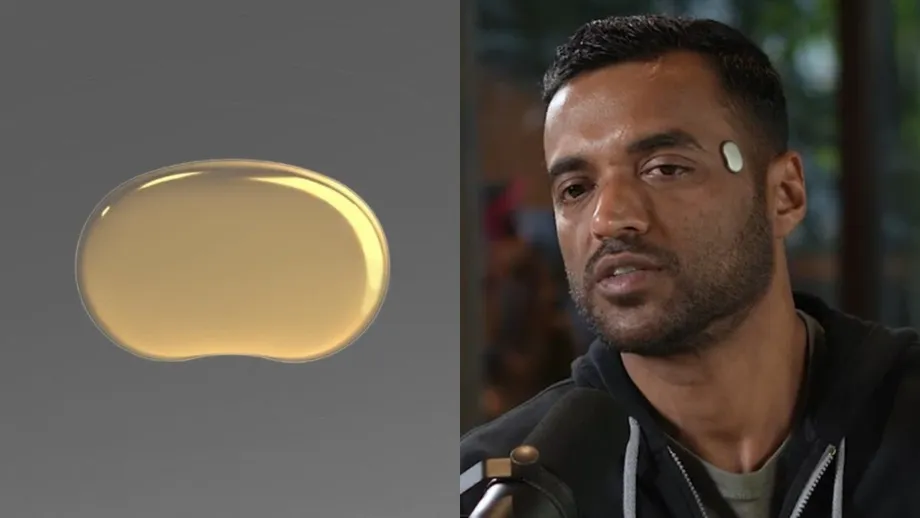
A small launch for a wearable with a big price
Deepinder Goyal's Temple wearable is scheduled to open for preorders on November 1, 2026, with early access invitations listing a price of Rs 85,000 including a lifetime subscription. Buyers could wait up to three months for delivery of the small device, which attaches near the temple and tracks signals associated with blood flow in the brain.
Contents
- A small launch for a wearable with a big price
- What does the Rs 85,000 invitation include?
- Why delivery could extend into 2027
- How the launch plans developed
- What BrainFlow is designed to measure
- How to understand the Entropy score
- What the preliminary studies examined
- Where medical care fits
- What wearing Temple involves each day
- Swimming, colours and the first public appearances
- Key Points
The Zomato cofounder's venture is preparing a limited release called Temple Batch 01, with purchases handled through its mobile app. The company has not formally confirmed the final retail price or subscription terms. A figure of 30 devices has circulated for the opening batch, while subsequent reporting says the company has not disclosed the quantity.
Temple's pitch is different from counting steps or recording a workout. Its BrainFlow system is intended to help users follow physiological changes during stress, exercise, rest and recovery. A separate Entropy score translates those measurements into a number between 1 and 250.
The purchase involves more than choosing a colour. Customers will be buying a device made after an order is placed, wearing it with disposable adhesive attachments and interpreting a new type of wellness measurement. Preliminary studies offer some detail about its performance, while independent validation and its usefulness in clinical care remain unresolved.
Temple is intended for wellness and research. For prospective buyers, the central issues are what the purchase includes, how long delivery takes and what the readings can help them understand about daily activity.
What does the Rs 85,000 invitation include?
An early access invitation shared by X user Tharun M on October 23 lists Temple at Rs 85,000 with a lifetime subscription. Goyal had previously suggested a price of roughly US$1,000. The invitation gives prospective customers a more specific purchase figure, pending the company's final announcement.
Goyal has also said the price includes an unlimited supply of Grips, the adhesive attachments that hold Temple against the skin. Those attachments are consumables: removing the device means using a fresh Grip before putting it back on.
The combination of software access and replacement adhesives matters because Temple is designed for repeated, extended use. Customers will need both to keep using it as described. The final purchase terms will determine the precise scope of those commitments.
Invited buyers are expected to order through the Temple app and sign in with the same email address that received the invitation. Earlier access applications were directed through Temple's website, with people already on the waitlist receiving priority.
Why delivery could extend into 2027
Goyal said on October 25 that Temple would be made to order, with delivery within three months of purchase. Someone ordering on November 1 could therefore wait until around February 1, 2027, if fulfilment takes the full period.
Goyal, Temple's founder and chief executive, described the production arrangement in these words:
Each Temple is hand-made to order and delivered to you within three months of your purchase.
The company plans to build units against customer orders rather than begin with a large stock ready for immediate dispatch. Goyal has cited quality control and serving each customer well as reasons for the gradual approach, which he calls "grow slow".
The delivery window leaves room for some orders to arrive sooner than others. No exact dispatch calendar or schedule for later batches has been announced. Customers outside the opening allocation therefore have no confirmed date for a wider release.
How the launch plans developed
Temple's November preorder date follows several earlier announcements about test devices, smaller hardware and launch timing. The sequence helps explain why an order date and a delivery date are different milestones.
- May 2026: Goyal said the first 100 devices were ready for selected early users, including athletes, scientists, doctors, founders and creators.
- August 2026: He revealed smaller hardware and said the limited launch edition would ship before the end of the year.
- October 1, 2026: Goyal said preorders might open the following week, subject to finalising remaining details, with priority for the early access waitlist.
- October 23, 2026: Tharun M shared an early access invitation listing a price of Rs 85,000.
- October 25, 2026: Goyal described delivery within three months of purchase.
- November 1, 2026: Preorders for Batch 01 are scheduled to begin.
The latest delivery window extends beyond the August target for shipments before the end of 2026. The 100 devices mentioned in May were intended for selected early users; Batch 01 is the named release now being offered to invited buyers.
What BrainFlow is designed to measure
Temple sits between the forehead and the ear. Goyal says its BrainFlow system uses photoplethysmography, or PPG, a sensing technique that shines light into tissue and records changes in the light returning to a sensor.
Blood absorbs light differently from surrounding tissue. Changes in the detected light can therefore carry information about circulation. Smartwatches also use PPG, commonly for pulse measurements, while Temple aims to extract signals associated with cerebral blood flow, meaning blood moving through the brain.
Dr Pallav Mishra, director of internal medicine at ShardaCare Healthcity, described BrainFlow as using light to collect signals from tissue and blood vessels around the temple. Temple's product descriptions also refer to signals associated with oxygenation and cognitive load, the mental effort involved in a task.
The company's proposed everyday use is to follow changes as someone exercises, rests, changes posture or experiences stress. Turning those signals into useful information depends on how accurately the sensor captures them and how the software explains the results.
How to understand the Entropy score
Temple's Entropy score ranges from 1 to 250 and is described as updating every second. Goyal presents it as a measure of physiological strain, affected by sleep, physical activity, stress, caffeine and meditation.
Goyal says the bottom of the scale represents the deepest rest recorded by the system, while the top reflects the highest levels of physical output and flow. He has associated the lowest observed readings with highly fit, experienced meditators and the highest with elite athletes performing at their peak.
A high reading during intense exercise fits a different situation from a reading taken while resting. Users would need to consider what they were doing, how they slept and whether they had consumed caffeine when following changes in their score.
Entropy is Temple's own metric. Its proposed benefit is to bring several physiological changes into a number that users can follow over time. The practical value of that number will depend on further testing and on whether the app makes its meaning understandable during ordinary daily use.
What the preliminary studies examined
Goyal has shared preliminary research comparing BrainFlow with established measurement techniques. One study involving 23 healthy adults reportedly compared Temple's readings with transcranial Doppler, which uses ultrasound to measure the speed of blood moving through a major brain artery.
A second study involving 60 participants reportedly compared Temple with time-domain near-infrared spectroscopy, a method that uses light to study changes in blood and oxygenation in tissue. The company reported correlations of 0.84 to 0.91 across three physiological tests.
Correlation describes how closely two sets of measurements move together. On a scale where 1 indicates a perfect positive relationship, values from 0.84 to 0.91 indicate that the readings tracked one another closely during those tests. Accuracy in a specific measurement also involves the size of any differences between the two methods.
The findings were presented in a preprint submitted for peer review. A preprint makes research public before independent specialists have completed the journal review process. The studies Goyal shared had not completed that process.
Everyday performance requires further independent assessment because movement and circulation close to the skin can affect optical signals. The reported studies provide early comparison data; longer use across different people and activities is the next practical test for the product's wellness claims.
Where medical care fits
Temple's stated purpose is wellness and research, while neurological diagnosis involves a clinician examining symptoms and choosing appropriate tests. Mishra addressed how consumers should approach wearable readings.
"Consumers should not interpret the numbers generated by a wearable as a medical diagnosis," said Dr Mishra.
Mishra said persistent neurological symptoms require evaluation by a qualified doctor. Depending on the problem, established investigations can include MRI, CT, scans of blood vessels using those technologies, and Doppler methods.
For a Temple user, the intended activity is following physiological patterns during ordinary life. Someone experiencing persistent symptoms needs a medical assessment rather than an explanation based solely on an app score.
What wearing Temple involves each day
Temple attaches to the side of the head with single use Grips. Goyal says one attachment can last around seven days, roughly matching the device's stated battery life of up to seven days. The company recommends replacing a Grip every two to three days for hygiene.
That recommendation means someone wearing Temple continuously would normally change the adhesive several times during a week, even if the battery lasts throughout. A Grip cannot be reused after removal.
Goyal has described developing the attachments as being as difficult as making the device itself. He says the team has achieved a suitable fit for 99 per cent of its intended audience and that getting accustomed to wearing Temple takes about five minutes.
The company has also discussed compatibility with glasses. Goyal says Temple's smooth edges allow clothing to slide over it and that users can wash their faces, apply skincare products and wear makeup without removing it.
Extended adhesive contact makes skin comfort a practical concern. People with sensitive skin or a history of adhesive reactions should watch for redness, itching, swelling or irritation. Persistent or severe reactions warrant medical advice.
Swimming, colours and the first public appearances
Goyal says Temple can remain attached during running, jumping, swimming, showering and sauna use. Scuba diving is the exception he has identified, describing it as a limitation of the device rather than the adhesive.
Those activity claims come from Goyal and the company. Buyers should follow the final manufacturer instructions for water exposure, heat and everyday care once the device becomes available.
Temple has announced six finishes: True Gold, Rose Gold, Black Mirror, Real Jade, Deep Blue and Purple Funk. The last three have been described as limited editions, although availability across the opening allocation is unclear.
Goyal wore Temple during an appearance on Raj Shamani's YouTube podcast, and badminton player PV Sindhu has been seen wearing it during live matches. Those appearances have given prospective buyers a view of how the small sensor looks when worn away from product photographs.
For the first customers, the experience will combine a visible device near the face, regular adhesive changes and a delivery wait that may run into early 2027. The purchase decision rests on whether that routine, the reported price and the proposed physiological insights fit their needs.
Key Points
- Temple Batch 01 preorders are scheduled for November 1, 2026, through the Temple app.
- Early access invitations list Rs 85,000 including a lifetime subscription; final company pricing and terms remain unconfirmed.
- Goyal says each unit is made to order and delivered within three months of purchase.
- BrainFlow uses optical sensing to track signals associated with cerebral blood flow. Entropy gives a score from 1 to 250.
- Preliminary studies involved 23 and 60 participants; the shared findings had not completed peer review.
- Disposable Grips attach the device to the skin, with replacement recommended every two to three days.
- Temple is intended for wellness and research, with medical symptoms requiring assessment by a qualified clinician.