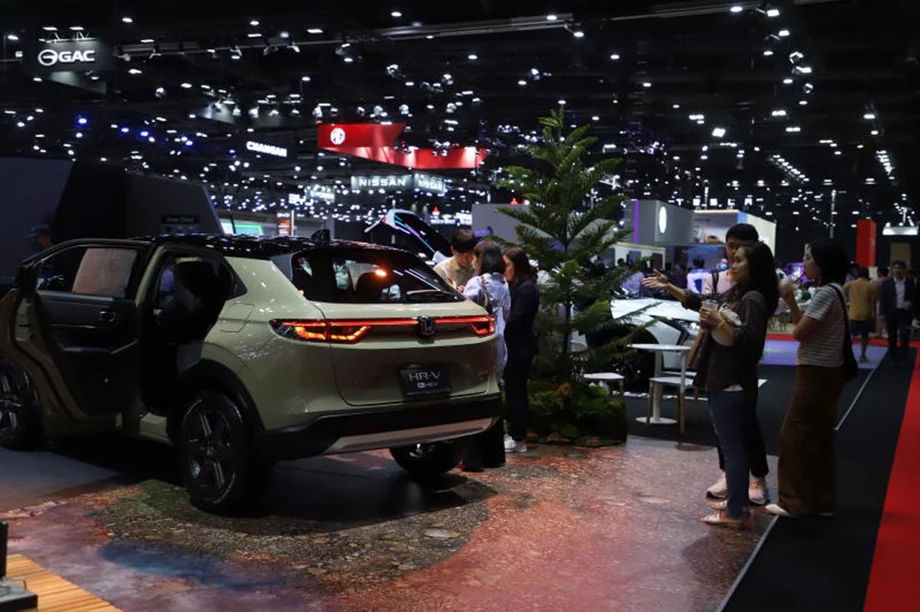
A bigger tax gap puts Thai factories first
Thailand will raise excise taxes on certain imported electric vehicles to 35% from January 1, 2027, pushing manufacturers to build cars and buy components locally in a market where imports accounted for about 70% of EV sales during the first nine months of 2026.
Contents
- A bigger tax gap puts Thai factories first
- What changes in January, and what comes later?
- Why prices may not rise immediately
- A fast growing market still relies on imports
- Chinese brands with Thai plants gain an advantage
- Thai suppliers want more than assembly work
- Japan's manufacturing ties remain central
- The dates that shape the transition
- Factory growth and weaker sales could happen together
- Key Points
The Cabinet approved the change on November 3 at a meeting in Udon Thani. Imported battery electric vehicles covered by the measure will face a rise from 10% to 35%, while the rate for imported vehicles with range extenders will increase from 15% to 35%. Finance Minister Ekniti Nitithanprapas said the measure targets imports without domestic production or locally made parts.
The decision reaches beyond car prices. Thailand wants to protect an automotive manufacturing and export base employing around 800,000 people while turning growing demand for electric cars into orders for Thai factories and suppliers. Consumers, meanwhile, face a possible rush of promotions before January, followed by higher prices for some imported models.
Pichai Phungmai, a 66-year-old Grab driver in Bangkok, illustrates the tension. He converted his Toyota Altis to run on gas rather than petrol, reducing his daily fuel bill to between 200 and 300 baht. An EV appeals to him for its lower running costs, comfort and appearance, but his purchase budget has little room to stretch.
Pichai said an increase of 100,000 baht would put a new car beyond his reach:
If the price of a car increased by 100,000 baht or more, I wouldn't be able to afford it.
Popular EV models currently cost around 500,000 to 900,000 baht, helped by government incentives. Whether those prices remain accessible will depend partly on where each model is made and how manufacturers respond to the new tax.
What changes in January, and what comes later?
An excise tax is a tax charged on a particular product. The January increase is 25 percentage points for imported battery EVs and 20 percentage points for imported range extended EVs. Battery EVs run entirely on stored electricity. Range extended EVs use electric motors to drive the wheels, with a fuel powered engine providing additional electricity.
Qualifying vehicles manufactured in Thailand currently benefit from an excise rate of 2% under existing incentives. A separate proposed system would eventually sort vehicles into three tax tiers according to local production and the use of Thai components.
Finance Ministry Permanent Secretary Lavaron Sangsnit outlined a possible 10% rate for manufacturers with Thai factories that meet new domestic sourcing requirements. Local producers falling short could face approximately 15% or 20%, while fully imported vehicles would face 35%.
The proposed component threshold, intermediate rate, investment concessions and treatment of vehicles ordered in 2026 but delivered after January 1 remain unsettled. Manufacturers would have three years to prepare for the proposed sourcing rules, working with the Federation of Thai Industries.
Excise Department director-general Pornchai Thiraveja said the policy rests on three goals: using imports to attract investment, making Thailand a regional and global EV production centre, and increasing the use of valuable components made domestically. The department has been instructed to discuss special rates with businesses considering new investment.
Why prices may not rise immediately
Krisda Utamote, honorary adviser at the Electric Vehicle Association of Thailand, expects manufacturers to bring in vehicles and clear them through customs before the deadline. Those stocks could then be sold in 2027 under the previous tax structure, delaying price increases for some models.
The Federation of Thai Industries expects imports, bookings and registrations to accelerate during the final two months of 2026, with December's Motor Expo providing a focus for promotions. Its concern is that customers will bring forward purchases they otherwise would have made in 2027, leaving weaker demand afterward.
Industry Minister Varawut Silpa-archa said the government would introduce no further measures to curb imports before January, citing concerns about potential trade barrier complaints. He said competition should continue normally during the transition:
The government will not introduce any further measures during this period. Market competition and free trade principles should be allowed to operate normally,
Retail prices will also depend on whether manufacturers absorb some of the extra tax or pass it to customers. Lavaron estimated that the 35% levy could translate, on a tax inclusive basis, into a burden equivalent to as much as 49% of a vehicle's price. That calculation concerns the tax burden; customers will see individual prices set by each manufacturer and distributor.
Nuntapat Muangprasit, a 46-year-old noodle shop owner considering an EV to replace his diesel pickup, said his fuel spending had nearly doubled. He would consider a locally manufactured model if it met his needs and budget. For buyers like him, the policy could redirect demand toward Thai factories without ending interest in electric cars.
A fast growing market still relies on imports
Thailand sold more than 161,000 battery electric passenger vehicles in the first nine months of 2026, nearly double the previous year's level, according to the Federation of Thai Industries. Yet roughly 70% of EV sales during that period were imported vehicles, leaving around 30% supplied by domestic production.
Government trade figures put imports of electric passenger cars at nearly US$2.4 billion over those nine months. China accounted for 96% of their value, approximately US$2.3 billion. The International Energy Agency estimated that vehicles made in China represented about three quarters of Thailand's electric car sales in 2025.
Earlier EV incentive schemes allowed manufacturers to import vehicles at preferential rates in exchange for later production in Thailand. Lavaron credited the EV 3.0 and EV 3.5 programmes with encouraging consumer acceptance and attracting approximately eight EV manufacturing plants.
Thailand's next objective is to convert that factory presence into a larger share of production and exports. Its national goal is for vehicles with zero emissions to account for at least 30% of domestic vehicle production by 2030. The new tax makes selling imported finished cars less attractive relative to producing locally.
Chinese brands with Thai plants gain an advantage
BYD operates a factory in Rayong with capacity to produce 150,000 vehicles annually. MG, the British automotive brand now under Chinese ownership, manufactures in Chonburi at a plant with capacity of up to 100,000 vehicles a year. GAC Aion has also opened a battery pack assembly facility alongside its vehicle manufacturing operations.
Those investments put established Chinese manufacturers in a stronger position than competitors relying entirely on imports. The policy therefore divides companies by their manufacturing footprint as much as by nationality: Chinese brands building in Thailand can benefit from protection against other Chinese imports.
Leapmotor Thailand general manager Liu Ning said the company plans to begin manufacturing in Thailand in 2027. XPeng vice president James Wu has described Thailand as strategically important, while Leapmotor, XPeng and Dongfeng have been examining local assembly options. Rêver Group chief executive Pratarnwong Phornprapha said the BYD distributor was discussing domestic production of more models.
Lavaron said AAS Auto Service requested a meeting about a potential factory one day after the Cabinet decision, while another company was preparing discussions. Both approaches were requests for talks. Manufacturers considering a factory must still decide whether expected sales, production costs and any negotiated tax treatment justify the investment.
Thai suppliers want more than assembly work
Lavaron's proposed Made in Thailand criteria would require manufacturers to identify actual components produced domestically, such as seats, doors, glass and tyres. He cited 40% as a possible threshold rather than a settled requirement.
Lavaron argued that some existing calculations can count profits and utility expenses toward domestic content, producing figures of 20% to 40% even when relatively few physical parts come from Thai suppliers. The proposed rules would instead focus on components genuinely manufactured in the country.
J Phiphat Autopart Industry, based in Pathum Thani north of Bangkok, has supplied the automotive sector for more than five decades. A representative identified by his nickname, Ko, described increasingly unpredictable orders for conventional vehicle parts as Japanese manufacturers face stronger competition.
Ko said Chinese EV investment offered opportunities, but established supplier networks, tight pricing and the cost of new machinery made winning business difficult:
We would welcome measures that give Thai suppliers a fair opportunity to participate in the EV supply chain,
Pavida Pananond, professor of international business at Thammasat University, said Thailand can adapt existing capabilities in bodies, seats, wiring and glass. Batteries, motors, power electronics and software are harder areas to enter because Chinese manufacturers often keep them within their own groups or established supplier networks.
Pavida said Chinese suppliers benefit from the scale of their home market, making their costs difficult for Thai firms to match. Her assessment points to a concrete challenge for the proposed sourcing rules: factories need domestic suppliers that can deliver the right parts at competitive prices, while suppliers need enough reliable orders to justify new equipment.
Japan's manufacturing ties remain central
Japanese manufacturers built much of Thailand's automotive industry over decades, creating networks of suppliers serving petrol and diesel vehicles. They have lost market share to Chinese EV brands, although many remain focused on hybrids and pickup trucks.
Japan's ambassador to Thailand, Otaka Masato, warned in early November that cheap imported vehicles threatened the country's manufacturing and export base. The Federation of Thai Industries puts the automotive sector at about 10% of gross domestic product, with more than 3,000 connected small and medium enterprises.
Thai officials have rejected suggestions that the tax change was designed to appease Japanese manufacturers. Ekniti said the objective is fair treatment for all businesses investing in Thai factories and employing Thai workers.
Ekniti is scheduled to visit Japan from November 18 to 20 for meetings with Toyota, Honda, Isuzu, Mitsubishi Motors, Mazda and Nissan. More than 40 Thai business representatives are expected to join discussions covering the revised tax structure, investment plans, technology and opportunities for Thai component suppliers.
The dates that shape the transition
Pornchai linked the restructuring to two decisions by the National Electric Vehicle Policy Committee. The timetable now combines an immediate import tax deadline with a longer effort to change how manufacturers source components.
- November 25, 2025: The National Electric Vehicle Policy Committee adopted a resolution later cited as a basis for restructuring.
- September 10, 2026: A further committee resolution instructed the Excise Department to consider implementation.
- November 3, 2026: The Cabinet approved the increase in Udon Thani.
- November 18 to 20, 2026: Thai officials plan meetings with six Japanese automakers in Japan.
- January 1, 2027: The 35% excise rate takes effect for imported vehicles covered by the measure.
- 2030: Thailand aims for vehicles with zero emissions to represent at least 30% of domestic vehicle production.
The remaining weeks of 2026 give importers time to manage inventories. The longer preparation period proposed for domestic sourcing would give manufacturers and Thai suppliers time to identify parts, negotiate contracts and plan production.
Factory growth and weaker sales could happen together
The Federation of Thai Industries forecasts automotive industry growth of at least 7% and production of at least 1.55 million vehicles in 2027. At the same time, it has warned that an EV buying rush before January could weaken demand afterward. Domestic production can expand even while sales of particular imported models decline.
Pavida warned that some brands could drop imported models or leave the market rather than build locally. Such departures would create concerns for owners needing servicing, parts and warranty support. No manufacturer identified in these accounts has announced a departure because of the tax decision.
Thailand also faces a regional trade tension. Chinese manufacturers are expanding elsewhere in Southeast Asia, including Malaysia and Indonesia, while Vietnam has developed a substantial domestic EV market. Higher Thai excise taxes on vehicles made in neighbouring countries could complicate efforts to connect automotive production across ASEAN.
For Thailand, success would mean more than a smaller import bill. It would mean factories producing competitive vehicles, Thai suppliers winning sustained orders and consumers retaining affordable choices. The January tax change addresses the first step by making imports more expensive; the proposed component rules address who receives the manufacturing work.
Key Points
- Thailand will raise excise tax on covered imported battery EVs from 10% to 35% on January 1, 2027. Imported range extended EVs will rise from 15% to 35%.
- Imports represented about 70% of EV sales in the first nine months of 2026, despite investment in approximately eight domestic EV plants.
- A proposed three tier tax system would reward actual Thai component sourcing. A possible 40% domestic content threshold is still under consideration.
- Imports cleared before the deadline could delay some price increases, while purchases brought forward could weaken demand in 2027.
- The government plans November 18 to 20 meetings with six Japanese automakers as it seeks investment and stronger domestic supplier networks.