Four Projects Put Prachin Buri at the Centre of an Electronics Expansion
Thailand's Board of Investment (BOI) has approved four printed circuit board manufacturing projects worth more than 65 billion baht ($2.08 billion) from a joint venture led by Taiwan's Zhen Ding Technology (ZDT), the world's largest PCB manufacturer. The projects in Prachin Buri province are expected to create jobs for more than 5,600 Thai workers and represent one of Thailand's largest investments in advanced electronics manufacturing.
Contents
- Four Projects Put Prachin Buri at the Centre of an Electronics Expansion
- Why Circuit Boards Matter
- A Manufacturer With Global Scale
- From Approval to Production and Expansion
- Why Prachin Buri Was Chosen
- More Than 5,600 Jobs and Five Education Partners
- An Investment Push During Modest Growth
- A Wider Wave of PCB Investment
- What the Expansion Means for Regional Manufacturing
- What to Know
Peng Shen Technology (Thailand) Co., Ltd., the joint venture between ZDT and Thailand's Saha Pathana Inter-Holding Plc, is building a production base for complex boards destined for export markets worldwide. Its first project received approval in 2023 and began commercial production in September 2025. Three further expansion projects have now received BOI approval.
The investment brings together a major international electronics supplier and a Thai business partner at a time when Thailand is seeking investment to revive modest economic growth. It also supports the country's effort to move from traditional manufacturing and assembly toward products that require more sophisticated technology, engineering and production skills.
Narit Therdsteerasukdi, secretary-general of the BOI, said the development reflected Thailand's growing importance in global electronics manufacturing as supply chains shift and demand for advanced components increases. The Prachin Buri operation gives ZDT its first and only manufacturing base outside Taiwan and China.
The project's reach extends beyond factory construction. Peng Shen has also signed cooperation agreements with five Thai educational institutions to develop courses and research connected to PCB production and advanced electronics. Those agreements are intended to help prepare workers for the technical demands of the expanding industry.
Why Circuit Boards Matter
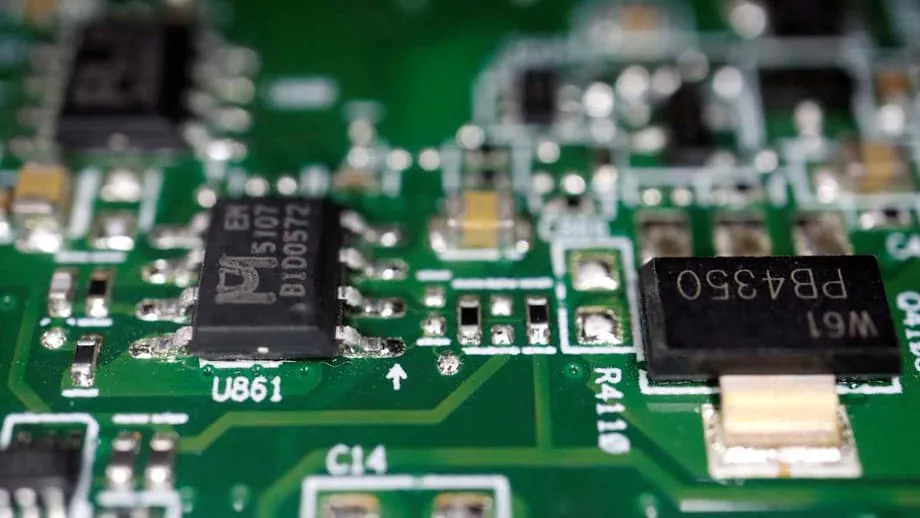
Printed circuit boards, commonly called PCBs, provide the foundation for almost all electronic devices. They connect electronic components so that those components can communicate and work together. A device may contain powerful individual parts, but it needs a reliable connection platform to function as a complete product.
Smartphones, laptops, medical devices, telecommunications equipment and energy infrastructure all depend on circuit boards. The complexity and quality of a board affect the performance, reliability and capabilities of the finished equipment. Producing more advanced boards therefore involves much more than making a simple base on which parts can be placed.
ZDT's expertise includes multilayer boards, flexible boards, substrate-like PCBs and high-density interconnect (HDI) boards. In simple terms, multilayer boards provide connections across several layers, while flexible boards can bend. Substrate-like boards and HDI designs allow many connections to fit into a small space, helping manufacturers build increasingly complex electronic devices.
These technologies serve products with demanding processing requirements, including 5G smartphones, artificial intelligence (AI) servers, data centres, electric vehicles and other advanced electronic equipment. For Thailand, the investment offers a route into the production of components used across several growing technology sectors, rather than relying on a single category of finished goods.
A Manufacturer With Global Scale
Zhen Ding Technology Holding Limited has held the position of the world's largest PCB manufacturer continuously since 2017. The company generates annual revenue exceeding 180 billion baht and employs more than 48,000 people worldwide across its operations in Taiwan, China and now Thailand.
ZDT operates five major manufacturing campuses across Taiwan and China. It also has more than 20 sales offices that provide business and technical services to customers around the world in real time. This network gives the company both a large production footprint and a means of supporting customers in different markets.
Thailand's place in that network is new. The Prachin Buri facility is ZDT's first and only manufacturing base outside its traditional territories, making the expansion an important part of the company's effort to broaden where it produces advanced boards.
Saha Pathana Inter-Holding is ZDT's Thai partner in Peng Shen Technology (Thailand). Through that joint venture, the investment connects an established global PCB producer with Thailand's ambition to attract foreign direct investment in activities that generate greater value and require more specialised skills.
From Approval to Production and Expansion
Peng Shen's investment has developed in stages. The first project secured approval in 2023, and the company acquired more than 40 hectares of land in Prachin Buri in December of that year. Construction began on a site intended to become a major PCB production base.
Commercial production started in September 2025. Following that launch, the company applied for three additional expansion projects, which have now been approved. Together, the four consecutive projects account for the investment of more than 65 billion baht.
- 2023: The first PCB manufacturing project received BOI approval.
- December 2023: Peng Shen acquired more than 40 hectares in Prachin Buri and initiated construction.
- September 2025: The first project began commercial production.
- By January 21, 2026: Three further expansion projects had received approval, bringing the approved programme to four projects.
The first phase includes construction of one factory with production lines for substrate-like PCB (SLP), thick high-density interconnect (HDI) and rigid printed circuit board (RPCB) technologies. Rigid boards retain their shape, while the other named technologies address the connection and construction requirements of more complex electronic products.
ZDT aims to use Thailand as a manufacturing base for highly complex boards serving AI servers, communications infrastructure and optical modules. The manufacturing complex will concentrate on exports to customers worldwide. No start dates for commercial production at the three expansion projects were given.
Why Prachin Buri Was Chosen
Prachin Buri offers industrial land, infrastructure connections to Bangkok and other major economic zones, and proximity to educational institutions that can supply skilled workers. Those advantages help explain the choice of the province for an investment requiring both a large physical site and access to technical talent.
Peng Shen's acquisition of more than 40 hectares gave the company space to develop its production base. The facility's design incorporates advanced manufacturing technologies and automation systems, supporting Thailand's effort to expand its capabilities in modern electronics production.
The location also brings together several practical requirements of a large factory: room for manufacturing operations, connections to other economic centres and access to people who can be trained for specialised work. With four projects approved, Prachin Buri is becoming a focal point for this particular expansion of Thailand's electronics industry.
More Than 5,600 Jobs and Five Education Partners
Peng Shen's projects are expected to create more than 5,600 jobs for Thai workers. The positions will range from manufacturing work to technical and engineering roles, giving the investment a workforce dimension alongside its construction and production spending.
The joint venture has signed cooperation agreements with King Mongkut's Institute of Technology Ladkrabang, King Mongkut's University of Technology North Bangkok, Kasetsart University, the National Institute of Development Administration (NIDA), and Sirindhorn International Institute of Technology (SIIT) at Thammasat University.
The partnerships cover the development of science and engineering curricula and research related to the PCB industry and advanced electronics. Their purpose is to connect education with the skills factories need, helping prepare a continuing supply of workers for specialised manufacturing roles.
Narit said investments in advanced technology create quality jobs, build Thai skills and know-how, and strengthen the country's position as it moves toward more advanced technologies. He connected that progress with the development of Thailand's semiconductor industry in the next phase.
The educational agreements are intended to support Thailand's semiconductor and electronics capabilities over the longer term. For workers, the expected benefit is access to training and knowledge transfer. For manufacturers, it is a workforce better prepared for the demands of complex production.
An Investment Push During Modest Growth
Thailand, Southeast Asia's second-largest economy, has been seeking ways to revitalise a sluggish economy after several years of modest growth. The Bank of Thailand projected growth of 2.2% for 2025, giving the effort to attract investment and create employment added urgency.
The government has used tax incentives, simpler regulatory processes and targeted support for industries considered important to national development. Electronics, particularly advanced components such as PCBs, has become one of the priority areas in that strategy.
The 65 billion baht programme fits Thailand's effort to move beyond traditional manufacturing and assembly into advanced manufacturing, research and development, and design. These activities require deeper technical capabilities and offer a way to increase the value created within the country.
Thailand is seeking to attract multinational companies that want to diversify their supply chains by drawing on its skilled workforce, strategic location and established infrastructure. The ZDT joint venture shows how that policy can translate into a combination of factories, exports, employment and education partnerships.
A Wider Wave of PCB Investment
Thailand's PCB expansion extends well beyond Peng Shen. Narit said that from 2023 through November 2025, the BOI received 214 promotion applications in the PCB related segment, with combined proposed investment of more than 300 billion baht.
That category covers PCB production, printed circuit board assembly (PCBA) and key raw materials used to make circuit boards. Assembly is the stage at which electronic components are fitted to a board, so the application total covers several parts of the production chain rather than board manufacturing alone.
The scale is substantial: the wider investment application total of more than 300 billion baht is over four times the 65 billion baht headline value of the Peng Shen programme. The figures describe different measures, with the wider total covering applications across the sector and Peng Shen's amount covering its four approved projects.
Narit said the investment wave had helped position Thailand as ASEAN's leading PCB production base and among the top five globally. Major PCB factories are gradually beginning operations from 2025 onward, supporting the country's effort to capture a larger share of global production.
A growing concentration of board manufacturers can also attract suppliers and supporting industries. Thailand's expanding PCB capacity provides a foundation for related activities, including electronic assembly, semiconductor packaging and the production of more sophisticated electronic goods.
What the Expansion Means for Regional Manufacturing
ZDT's move comes amid supply chain diversification, rising demand for advanced electronics and geopolitical considerations that have encouraged companies to establish production outside traditional centres such as China. Thailand's established manufacturing culture, improving infrastructure and political stability form part of its appeal as an alternative location.
The investment demonstrates how Southeast Asian countries can compete for sophisticated manufacturing by combining strategic advantages, skilled workers and supportive government policies. As companies change where they produce, the region is becoming increasingly important to electronics manufacturing.
Companies are also developing regional supply chains by placing production closer to end markets or in locations they regard as geopolitically stable. For ASEAN countries, this creates opportunities to progress from simpler assembly work toward more complex manufacturing activities.
Thailand's success in attracting the ZDT programme may encourage regional competitors to improve investment incentives, infrastructure and workforce development. Such competition could accelerate industrial development and technological capabilities across Southeast Asia, although the benefits depend on investments becoming operating factories and productive businesses.
The Thai production base is positioned to serve demand connected to electric vehicles, renewable energy systems, advanced telecommunications infrastructure and AI computing hardware. Each relies on sophisticated circuit boards. The combination of approved expansion, production already under way and educational partnerships gives Thailand several practical routes toward a larger role in those supply chains.
What to Know
- The BOI approved four PCB manufacturing projects worth more than 65 billion baht ($2.08 billion) in Prachin Buri.
- Peng Shen Technology (Thailand) is a joint venture between Zhen Ding Technology and Saha Pathana Inter-Holding.
- ZDT has been the world's largest PCB manufacturer since 2017.
- The first project received approval in 2023 and began commercial production in September 2025.
- The programme is expected to create more than 5,600 jobs for Thai workers.
- Thailand is ZDT's first and only manufacturing base outside Taiwan and China.
- Five Thai educational institutions are partnering with the company on curricula and research.
- From 2023 through November 2025, the BOI received 214 PCB related investment applications worth more than 300 billion baht.
- The investment supports Thailand's move toward advanced manufacturing and stronger electronics and semiconductor capabilities.